What are the advantages of Mesh Bias in Mist CVD? Improve Thin Film Quality & Uniformity.
Updated 3 months ago
Integrating a mesh bias electrode into a mist chemical vapor deposition (CVD) system provides a critical mechanism for controlling precursor aerosol characteristics before they enter the reaction zone. By applying a negative bias to a metal wire mesh at the furnace inlet, operators can use electric field forces to screen and modify charged mist particles, resulting in a significantly more uniform and refined deposition process.
Core Takeaway: The primary advantage of a mesh bias is the refinement of the precursor mist into a higher density of fine, uniformly sized droplets. This precision leads to thin films with lower surface roughness, higher structural density, and superior electrical contact performance.
The Mechanism of Mist Modification
Droplet Size Refinement and Distribution
The application of a negative bias to the wire mesh acts as a physical and electrical filter for the incoming precursor mist. This process effectively narrows the size distribution of the droplets, ensuring that only the most suitable particles proceed to the substrate.
Increasing Number Density
By utilizing electric field forces, the system increases the number density of fine droplets. A higher concentration of smaller droplets allows for a more continuous and homogenous arrival of precursor material at the growth surface.
Impact on Thin Film Quality
Reducing Surface Roughness (RMS)
The transition to finer, more uniform droplets directly translates to improved film morphology. By eliminating large, inconsistent particles, the system significantly reduces the root-mean-square (RMS) roughness of the deposited thin films.
Strengthening the Material Network
A refined mist ensures that the deposition occurs at a molecularly consistent rate, which enhances the density of the titanium dioxide (TiO2) network. This increased density is vital for the structural integrity and long-term stability of the chemical lattice.
Improving Device Performance
The combined effects of lower roughness and higher network density lead to better interfaces between layers. This results in enhanced electrical contact performance, reducing resistance and improving the overall efficiency of the resulting electronic devices.
Understanding the Trade-offs
Potential for Mesh Clogging
While the mesh is highly effective at screening particles, it can become a site for precursor accumulation over time. If the mesh is not regularly maintained or if the bias is incorrectly calibrated, material buildup can restrict flow and cause process drift.
Voltage Sensitivity
The effectiveness of this method is highly dependent on the precise level of the applied bias. A voltage that is too low will fail to screen larger droplets, while an excessively high voltage may lead to mist suppression or unwanted electrical arcing at the furnace inlet.
How to Apply This to Your Project
Installing a mesh bias is a strategic upgrade for processes where film uniformity is the primary bottleneck for device efficiency.
- If your primary focus is reducing film defects: Use the mesh bias to filter out large droplets that typically cause "hot spots" or morphological spikes on the film surface.
- If your primary focus is improving electrical conductivity: Leverage the increased network density provided by the bias to ensure a more robust and continuous path for charge carriers.
- If your primary focus is high-throughput consistency: Implement a stabilized negative bias to ensure that the droplet size distribution remains constant across different production runs.
Properly implementing a biased mesh electrode transforms a standard mist CVD setup into a high-precision tool for advanced semiconductor and coating applications.
Summary Table:
| Key Feature | Technical Benefit | Impact on Thin Film |
|---|---|---|
| Droplet Refinement | Narrows particle size distribution | Reduces RMS surface roughness |
| High Number Density | Consistent precursor arrival rate | Strengthens material network density |
| Electric Screening | Filters out large, irregular droplets | Improves electrical contact performance |
| Applied Voltage | Precision control of mist flow | Ensures high-throughput consistency |
Upgrade Your Mist CVD Performance with THERMUNITS
As a leading manufacturer of high-temperature laboratory equipment for material science and industrial R&D, THERMUNITS provides the precision tools necessary for advanced thin-film research.
Our comprehensive range of thermal solutions includes:
- CVD/PECVD Systems & Tube Furnaces for high-precision deposition.
- Vacuum, Atmosphere, and Muffle Furnaces for diverse heat treatments.
- Rotary, Hot Press, and VIM Furnaces for industrial-scale material processing.
Whether you are refining Mist CVD processes or developing new semiconductor materials, our expert-engineered equipment ensures superior thermal uniformity and control. Contact us today to discuss your project requirements and discover how our thermal elements and laboratory solutions can accelerate your research!
References
- Abdul Kuddus, Hajime Shirai. Spatial and Size Distributions of Ti(C<sub>5</sub>H<sub>7</sub>O<sub>2</sub>)<sub>2</sub>[(CH<sub>3</sub>)<sub>2</sub>CHO]<sub>2</sub> Mist Particles in a Tubular Furnace for Conformal and Uniform Deposition of Amorphous TiO<sub>2</sub> Thin Films. DOI: 10.1002/pssa.202400383
Mentioned Products
- High Temperature Tilting Rotary Tubular Furnace for Continuous Powder Thermal Processing and Controlled Atmosphere Sintering
- High Temperature Rotary Tilt Tubular Furnaces for Advanced Powder Sintering and Material Processing
- Compact High Temperature 1600C Tube Furnace with 50mm Alumina Tube and Vacuum Flanges for Material Sintering
- 1100C Tube Furnace with Vacuum Flange and Programmable Temperature Controller for Material Science and Industrial Heat Treatment
- High Temperature 1700C Vertical Tube Furnace for Powder Spherification and Material Sintering
People Also Ask
- What is the role of a controlled rotary tube furnace in pre-sulfidation of NiMo catalysts? Optimize Active Phase Formation
- How does a rotary tube furnace improve the processing of granular materials? Enhance Uniformity and Reaction Kinetics
- What parameters must operators control to maintain product quality in a rotary furnace? Master Your Heat Treatment.
- What are the typical operating temperature ranges and mechanical specifications for rotary furnaces? A Complete Guide
- Why use a rotary tube furnace for FACS carbonization? Ensure uniform morphology and prevent sphere agglomeration.

Tech Team · ThermUnits
Last updated on Jun 02, 2026
Related Products
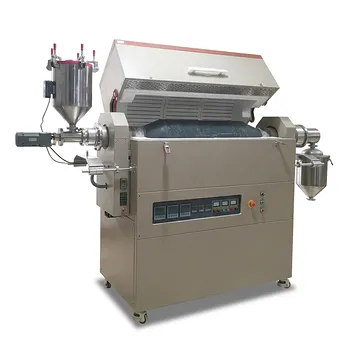
High Temperature Tilting Rotary Tubular Furnace for Continuous Powder Thermal Processing and Controlled Atmosphere Sintering
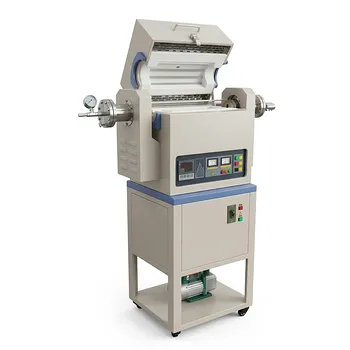
High Temperature Rotary Tilt Tubular Furnaces for Advanced Powder Sintering and Material Processing

Compact High Temperature 1600C Tube Furnace with 50mm Alumina Tube and Vacuum Flanges for Material Sintering

1100C Tube Furnace with Vacuum Flange and Programmable Temperature Controller for Material Science and Industrial Heat Treatment

High Temperature 1700C Vertical Tube Furnace for Powder Spherification and Material Sintering

Vertical 1700C Vacuum and Atmosphere Tube Furnace with 80mm Alumina Tube

Three Zone Tube Furnace with 11 Inch or 15 Inch Quartz Tube and Hinged Flanges for Vacuum Atmosphere Heat Treatment
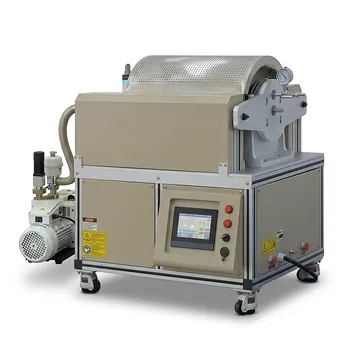
Automated 1200 C Tube Furnace for AI Material Research with 6 Inch OD and Sliding Flange

1800C High Temperature Compact Vacuum Tube Furnace with 60mm OD Alumina Tube and Kanthal MoSi2 Heating Elements
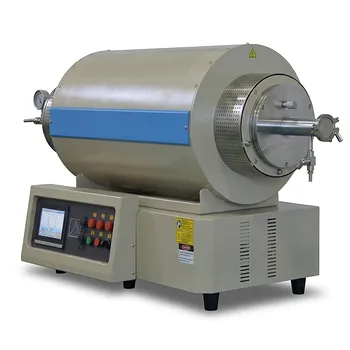
1200C Max Three Zone Tube Furnace 6 Inch OD Max with Tube and Flange

High Temperature 1700C Six Zone Split Tube Furnace with Alumina Tube and Water Cooled Flanges
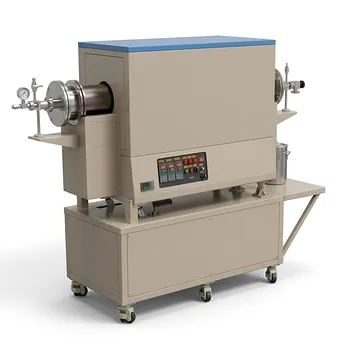
900°C Max Rotary Tube Furnace with 8 Inch 310S Alloy Tube and Optional Multi Zone Heating for Industrial Material Calcination
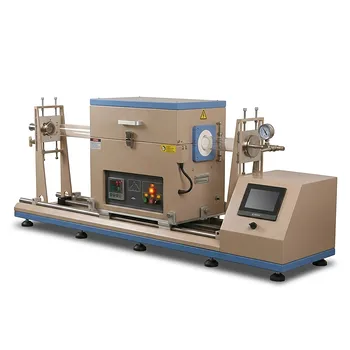
1200C Sliding Tube Furnace for Rapid Thermal Processing and CVD Graphene Growth with 100mm OD Capacity

High Temperature Automated 5 Inch Tube Furnace for Autonomous Material Research and Advanced Laboratory R&D
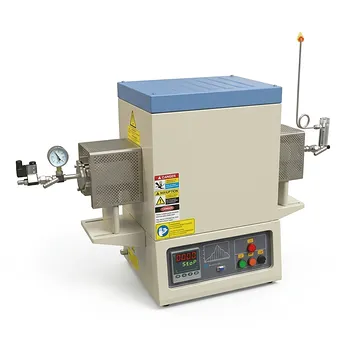
1700C Hydrogen Gas Tube Furnace with 60mm Alumina Process Tube and Integrated Hydrogen Safety Detector

High Temperature 1700C Benchtop Tube Furnace with 5 Inch Heating Zone High Purity Alumina Tube and Vacuum Sealing Flanges
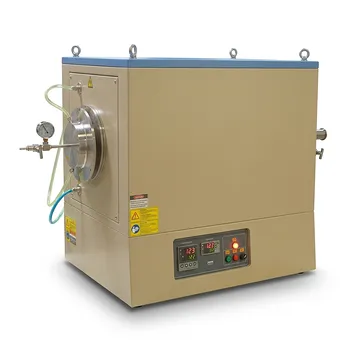
1100°C Large Diameter Quartz Tube Furnace with 24 Inch Heating Zone and Water Cooled Flanges
1200C High Throughput Multi Channel Tube Furnace with 50mm Quartz Tubes for Annealing and Material Phase Diagram Research

1200°C 5 Inch Vertical Quartz Tube Furnace with Stainless Steel Vacuum Flanges
