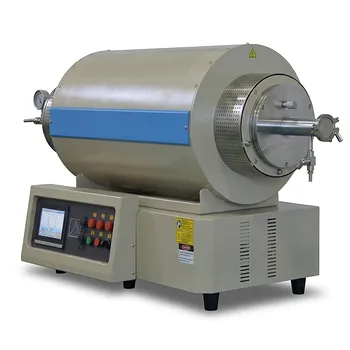
What is the function of an atmosphere tube furnace during the potassium hydroxide (KOH) activation of olive wood biochar?
Updated 3 months ago
The atmosphere tube furnace acts as the controlled reactor that provides the high-temperature thermal energy and inert environment required for potassium hydroxide (KOH) to chemically etch the olive wood biochar. By heating the mixture to approximately 650°C under a nitrogen flow, the furnace facilitates a reaction where potassium metal creates a dense network of micropores and mesopores, transforming the material into a high-surface-area activated carbon.
Core Takeaway: The atmosphere tube furnace is essential for KOH activation because it simultaneously provides the heat necessary to drive chemical etching and the inert atmosphere required to prevent the carbon structure from burning away.
Driving the Chemical Activation Process
Providing Kinetic Energy for Etching
The primary function of the furnace is to supply the thermal energy needed to initiate the chemical reaction between KOH and the biochar carbon skeleton. At temperatures like 650°C, the KOH reacts with the carbon, allowing potassium to intercalate and etch the surface, which is the fundamental mechanism for creating porosity.
Transitioning Surface Area
Without the precise heating provided by the tube furnace, olive wood biochar remains a relatively "closed" structure with a low specific surface area (often around 1.477 m²/g). The furnace enables the transition to a high-activity material, often exceeding 1000 m²/g, by ensuring the activation temperature is reached and maintained consistently.
Facilitating Chemical Exfoliation
The furnace environment supports chemical exfoliation, a process where the internal layers of the carbon are separated and opened. This high-temperature treatment specifically increases the number of micropores and ultramicropores, which are critical for advanced adsorption applications.
Maintaining a Strict Inert Environment
Preventing Oxidative Combustion
Because carbon is highly reactive at high temperatures, the furnace must maintain a strict inert atmosphere, typically using nitrogen or argon. This oxygen-free environment ensures that the thermal energy leads to carbonization and activation rather than the simple combustion of the biomass into ash.
Protecting Pore Architecture
As new pores are created by the KOH, they are extremely vulnerable to being "burned away" if oxygen is present. The airtight sealing and continuous gas flow of the tube furnace protect the structural integrity of these newly formed micropores, ensuring the final product retains its complex internal geometry.
Optimizing Material Yield
By preventing oxidation, the atmosphere tube furnace maximizes the final yield of the activated carbon. In an uncontrolled environment, a significant portion of the fixed carbon would be lost as carbon dioxide; the tube furnace ensures that the maximum amount of precursor is converted into usable, porous material.
Understanding the Trade-offs
Temperature vs. Structural Integrity
While higher temperatures generally increase the specific surface area, exceeding the optimal activation temperature (often above 800°C) can cause the pore walls to collapse. This results in a loss of microporosity and a decrease in the overall effectiveness of the activated carbon.
Inert Gas Consumption and Cost
Maintaining a continuous flow of high-purity nitrogen or helium is necessary for a successful reaction but adds to the operational cost. Researchers must balance the flow rate required to sweep away reaction byproducts with the economic constraints of the production process.
Heating Rate Sensitivities
If the heating rate is too rapid, it can lead to non-uniform activation or "caking" of the KOH-biochar mixture. A precisely controlled ramp rate is required to allow volatiles to escape without rupturing the developing carbon skeleton.
How to Apply This to Your Project
The effectiveness of your activation process depends on how you calibrate the furnace settings to your specific material goals.
- If your primary focus is Maximum Surface Area: Utilize a slower heating rate and a peak activation temperature near 700°C-800°C to allow for deep chemical etching.
- If your primary focus is Micropore Development: Maintain a high-purity nitrogen flow and ensure the furnace is perfectly sealed to prevent even trace amounts of oxygen from widening the pores.
- If your primary focus is High Material Yield: Target the lower end of the activation temperature range (approx. 600°C) to minimize carbon loss while still initiating the KOH reaction.
The atmosphere tube furnace is the definitive tool for transforming low-value biochar into a high-performance industrial adsorbent through precise thermal and atmospheric control.
Summary Table:
| Role in Activation | Specific Mechanism | Impact on Final Material |
|---|---|---|
| Thermal Source | Supplies kinetic energy for KOH etching | Increases surface area to >1000 m²/g |
| Inert Environment | Maintains N2/Ar flow at high temps | Prevents oxidative combustion to ash |
| Structural Protection | Airtight sealing of the reaction tube | Preserves delicate micropore geometry |
| Yield Optimization | Precise temperature & ramp control | Maximizes carbon conversion & consistency |
Elevate Your Material Research with THERMUNITS
Precision is the key to successful chemical activation. At THERMUNITS, we are a leading manufacturer specializing in high-performance Atmosphere Tube Furnaces and advanced thermal processing solutions designed for the most demanding material science and industrial R&D.
Whether you are working on biochar activation, high-temperature heat treatments, or advanced material synthesis, our comprehensive range of equipment ensures superior results:
- Versatile Solutions: Including Muffle, Vacuum, Atmosphere, Tube, Rotary, and Hot Press furnaces.
- Advanced Systems: CVD/PECVD systems, Dental Furnaces, Electric Rotary Kilns, and Vacuum Induction Melting (VIM) furnaces.
- Precision Components: High-quality Thermal Elements and laboratory heat treatment accessories.
We provide the uniform heating and strict atmospheric control necessary to maximize your material yield and pore development. Contact Our Experts Today to find the perfect thermal solution for your laboratory and drive your innovation forward!
References
- Filiz Uğur Nigiz, Serhat Balcı. Production of potassium hydroxide-activated biochar and its use as a filler in polylactic acid for food packaging. DOI: 10.54559/jauist.1541318
Mentioned Products
- Vertical 1700C Vacuum and Atmosphere Tube Furnace with 80mm Alumina Tube
- 1200C Hybrid Muffle and Tube Furnace for Material Research with Dual Atmosphere Control Quartz Tubes
- 1200°C Atmosphere Controlled Automatic Bottom Loading Furnace with 6 Inch Quartz Tube
- Compact Hybrid Muffle and Tube Furnace for 1000C Controlled Atmosphere Laboratory Material Sintering
- Compact Vertical Split Quartz Tube Furnace with Stainless Steel Vacuum Flanges for Rapid Thermal Quenching and Controlled Atmosphere Material Processing
People Also Ask
- How is an industrial-grade vertical tube furnace utilized in smelting leaching residues? Enhance Metal Recovery Efficiency
- What is the function of a laboratory-grade vertical tube furnace in fast pyrolysis? Optimize Composite Research.
- How does a vertical tube furnace facilitate thermoelectric alloy melting? Precision synthesis for material homogeneity.
- Why is a thermocouple sensor indispensable for monitoring the vertical tube furnace during gallium oxide nanowire production? Optimize VLS Growth
- What are the advantages of using a vertical tube furnace for crucible experiments simulating steel-slag interactions?

Tech Team · ThermUnits
Last updated on Jun 02, 2026
Related Products

Vertical 1700C Vacuum and Atmosphere Tube Furnace with 80mm Alumina Tube
1200C Hybrid Muffle and Tube Furnace for Material Research with Dual Atmosphere Control Quartz Tubes
1200°C Atmosphere Controlled Automatic Bottom Loading Furnace with 6 Inch Quartz Tube
Compact Hybrid Muffle and Tube Furnace for 1000C Controlled Atmosphere Laboratory Material Sintering
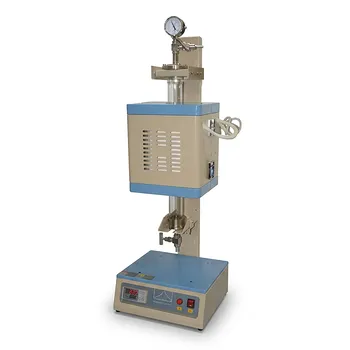
Compact Vertical Split Quartz Tube Furnace with Stainless Steel Vacuum Flanges for Rapid Thermal Quenching and Controlled Atmosphere Material Processing
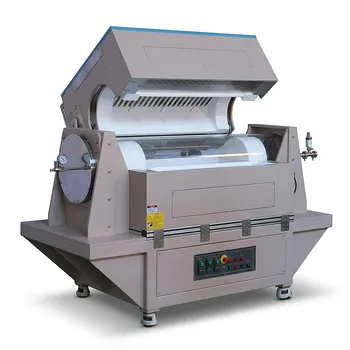
Three Zone Tube Furnace with 11 Inch or 15 Inch Quartz Tube and Hinged Flanges for Vacuum Atmosphere Heat Treatment

1100°C High Temperature Quartz Chamber Furnace 8 Inch OD with 7.6 Liter Capacity and Vacuum Atmosphere Capability
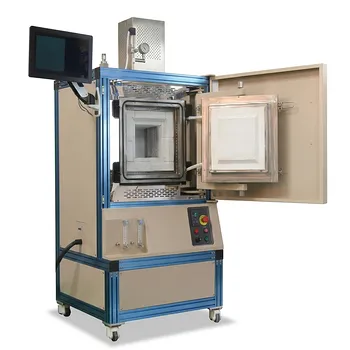
High Temperature Hydrogen Atmosphere Box Furnace 1650C Max Reducing Environment Material Synthesis System 8x8x8 Chamber

High Temperature 1700C Vertical Tube Furnace for Powder Spherification and Material Sintering

Compact High Temperature 1600C Tube Furnace with 50mm Alumina Tube and Vacuum Flanges for Material Sintering

High Temperature 1700C Tube Furnace with High Vacuum Turbomolecular Pump System and Multi Channel Mass Flow Controller Gas Mixer

High Temperature 1700C Six Zone Split Tube Furnace with Alumina Tube and Water Cooled Flanges

1800C High Temperature Compact Vacuum Tube Furnace with 60mm OD Alumina Tube and Kanthal MoSi2 Heating Elements

1100C Tube Furnace with Vacuum Flange and Programmable Temperature Controller for Material Science and Industrial Heat Treatment
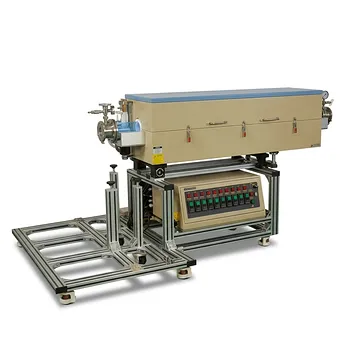
Ten Zone Multi Orientation Laboratory Tube Furnace for 1200C High Temperature Gradient Thermal Processing

High Temperature 1700C Benchtop Tube Furnace with 5 Inch Heating Zone High Purity Alumina Tube and Vacuum Sealing Flanges
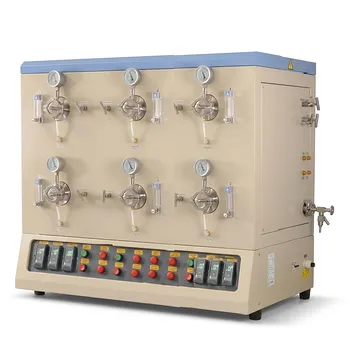
1200C High Throughput Multi Channel Tube Furnace with 50mm Quartz Tubes for Annealing and Material Phase Diagram Research

High Temperature Automated 5 Inch Tube Furnace for Autonomous Material Research and Advanced Laboratory R&D
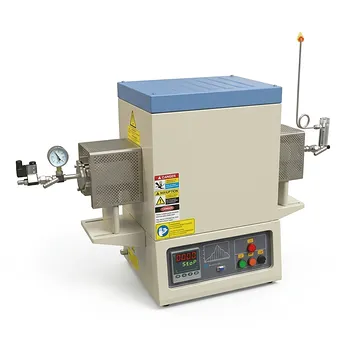
1700C Hydrogen Gas Tube Furnace with 60mm Alumina Process Tube and Integrated Hydrogen Safety Detector