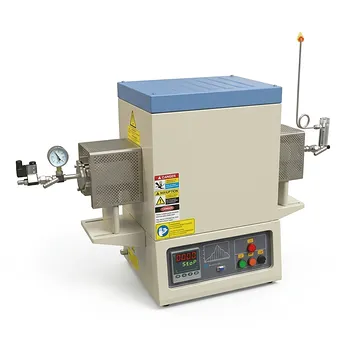
What is the function of an Atmosphere Tube Furnace in SP-Fe3O4-C synthesis? Precision Carbonization Explained
Updated 5 months ago
The Atmosphere Tube Furnace serves as the essential thermal reactor for converting organic precursors into stable, functionalized carbon frameworks. In the synthesis of SP-Fe3O4-C, the furnace provides a strictly controlled nitrogen environment and precise temperature staging at 350 °C and 800 °C. This environment enables a one-step pyrolysis process that simultaneously removes polymer templates, graphitizes the carbon skeleton, and reduces iron ions into uniformly distributed Fe3O4 nanoparticles.
The Atmosphere Tube Furnace acts as a precision "nanostructure builder," utilizing programmed heat and inert gas to transform metal-phenolic networks into highly ordered, conductive, and magnetic mesoporous materials.
Facilitating One-Step Pyrolysis and Carbonization
Template Removal and Pore Development
The furnace facilitates the thermal decomposition of surfactants and polymer templates within the metal-phenolic network (Fe-MPN). As the temperature rises, these organic components are volatilely removed, leaving behind a specific topological structure characterized by mesopores. This process is critical for ensuring the final material possesses the high surface area required for catalytic applications.
Formation of the Graphitized Skeleton
By heating the precursors to 800 °C, the furnace drives the carbonization of phenolic resins into a stable, highly graphitized carbon skeleton. This high-temperature treatment ensures the material is chemically robust and electrically conductive. The controlled environment prevents the carbon from reacting with oxygen, which would otherwise lead to the loss of the material through combustion.
Driving In-Situ Chemical Transformations
In-Situ Reduction of Iron Precursors
A primary function of the furnace is to induce the in-situ reduction of iron ions embedded within the organic matrix. Under the protective nitrogen atmosphere, these ions are converted into Fe3O4 nanoparticles that are uniformly distributed throughout the carbon carrier. This integrated approach prevents the nanoparticles from aggregating, which is vital for maintaining catalytic efficiency.
Stoichiometric Precision and Phase Control
The furnace maintains the specific chemical environment necessary for reactions to occur at exact stoichiometric ratios. By controlling the heating rate and peak temperatures, the furnace ensures the iron precursors transform into the stable Fe3O4 phase rather than unwanted oxides or carbides. This repeatability is essential for producing high-performance functional nanomaterials.
Maintaining Environmental and Thermal Stability
Oxygen-Free Nitrogen Shielding
The furnace provides a strictly controlled inert gas environment that shields the material from oxidation at high temperatures. High-purity nitrogen flow prevents the oxidative loss of the carbon matrix, which is a common failure point in high-temperature synthesis. This protective layer is the foundation for creating nanoreactor structures that remain intact through intense thermal cycles.
Multi-Stage Programmed Temperature Control
The ability to program precise temperature ramps (such as 5 °C/min or 10 °C/min) allows for the gradual removal of volatile impurities. This multi-stage control ensures that the formation of the preliminary microporous structure is not disrupted by rapid gas evolution. Consistent temperature field uniformity within the tube ensures that the entire batch of SP-Fe3O4-C reaches the same degree of carbonization.
Understanding the Technical Trade-offs
Heating Rate vs. Pore Integrity
If the heating rate is too high, the rapid decomposition of templates can generate internal pressure that collapses the mesoporous structure. Conversely, excessively slow heating rates may lead to unnecessary energy consumption and could promote the over-growth of Fe3O4 crystals, reducing their active surface area.
Atmosphere Purity and Carbon Yield
Any leakage of oxygen into the tube can result in the partial gasification of the carbon skeleton, significantly lowering the final yield. Maintaining a high-vacuum or high-purity gas flow is a non-negotiable requirement for achieving the desired conductivity and structural density in the carbonized product.
Optimizing Furnace Parameters for Your Synthesis Goals
How to Apply This to Your Project
To achieve the best results when preparing mesoporous carbon materials, you must align your furnace settings with your specific material objectives.
- If your primary focus is High Electrical Conductivity: Prioritize the 800 °C carbonization stage with a slower heating rate to maximize the degree of carbon graphitization.
- If your primary focus is High Surface Area and Porosity: Focus on the initial 350 °C stage and ensure a steady nitrogen flow to efficiently sweep away decomposed template volatiles without clogging pores.
- If your primary focus is Uniform Nanoparticle Distribution: Use multi-stage programming to ensure the in-situ reduction of iron occurs gradually, preventing the sintering of Fe3O4 particles.
The Atmosphere Tube Furnace is the definitive tool for balancing chemical reduction with structural formation in the synthesis of advanced carbon composites.
Summary Table:
| Key Function | Technical Process | Material Benefit |
|---|---|---|
| Template Removal | Thermal decomposition at 350°C | Develops specific mesoporous topological structures |
| Carbonization | High-temp heating to 800°C | Forms a stable, conductive graphitized carbon skeleton |
| In-Situ Reduction | Controlled iron ion transformation | Ensures uniform Fe3O4 nanoparticle distribution |
| Atmosphere Shielding | Constant Nitrogen (N2) flow | Prevents carbon oxidation and ensures high product yield |
| Thermal Precision | Programmed ramping (5-10°C/min) | Maintains pore integrity and prevents particle sintering |
Elevate Your Material Research with THERMUNITS Precision Furnaces
Are you looking to achieve superior results in the synthesis of mesoporous carbons, magnetic nanoparticles, or advanced composites? As a leading manufacturer of high-temperature laboratory equipment, THERMUNITS provides the thermal precision and atmospheric control necessary for complex R&D and industrial applications.
Our comprehensive range of solutions includes Atmosphere and Vacuum Tube Furnaces, CVD/PECVD systems, Muffle Furnaces, and Vacuum Induction Melting (VIM) units, all designed to offer:
- Exact Atmosphere Management: High-purity gas shielding to prevent oxidation.
- Multi-Stage Programming: Precision ramping to protect delicate nanostructures.
- Industrial-Grade Durability: Built for the rigorous demands of material science laboratories.
Whether you need a Rotary Kiln for continuous processing or a Hot Press Furnace for advanced sintering, our engineering team is ready to support your project.
Optimize your thermal processing today — Contact THERMUNITS now to discuss your custom furnace requirements!
References
- Han Zhang, Yiyong Mai. Fe3O4-doped mesoporous carbon cathode with a plumber’s nightmare structure for high-performance Li-S batteries. DOI: 10.1038/s41467-024-49826-5
Mentioned Products
- Vertical 1700C Vacuum and Atmosphere Tube Furnace with 80mm Alumina Tube
- 1200C Hybrid Muffle and Tube Furnace for Material Research with Dual Atmosphere Control Quartz Tubes
- 1200°C Atmosphere Controlled Automatic Bottom Loading Furnace with 6 Inch Quartz Tube
- Compact Hybrid Muffle and Tube Furnace for 1000C Controlled Atmosphere Laboratory Material Sintering
- Compact Vertical Split Quartz Tube Furnace with Stainless Steel Vacuum Flanges for Rapid Thermal Quenching and Controlled Atmosphere Material Processing
People Also Ask
- How is an industrial-grade vertical tube furnace utilized in smelting leaching residues? Enhance Metal Recovery Efficiency
- What is the function of a laboratory-grade vertical tube furnace in fast pyrolysis? Optimize Composite Research.
- How does a vertical tube furnace facilitate thermoelectric alloy melting? Precision synthesis for material homogeneity.
- Why is a thermocouple sensor indispensable for monitoring the vertical tube furnace during gallium oxide nanowire production? Optimize VLS Growth
- What are the advantages of using a vertical tube furnace for crucible experiments simulating steel-slag interactions?

Tech Team · ThermUnits
Last updated on Apr 14, 2026
Related Products

Vertical 1700C Vacuum and Atmosphere Tube Furnace with 80mm Alumina Tube
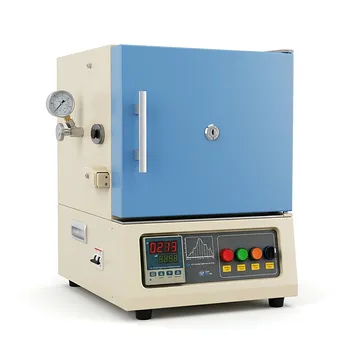
1200C Hybrid Muffle and Tube Furnace for Material Research with Dual Atmosphere Control Quartz Tubes
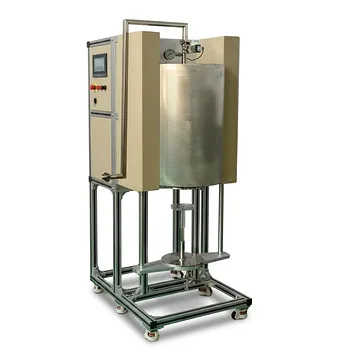
1200°C Atmosphere Controlled Automatic Bottom Loading Furnace with 6 Inch Quartz Tube
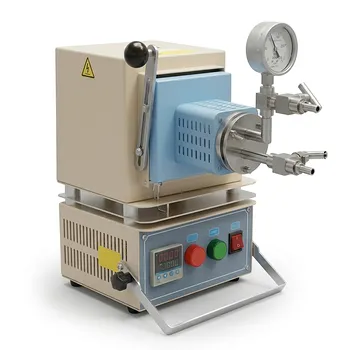
Compact Hybrid Muffle and Tube Furnace for 1000C Controlled Atmosphere Laboratory Material Sintering

Compact Vertical Split Quartz Tube Furnace with Stainless Steel Vacuum Flanges for Rapid Thermal Quenching and Controlled Atmosphere Material Processing
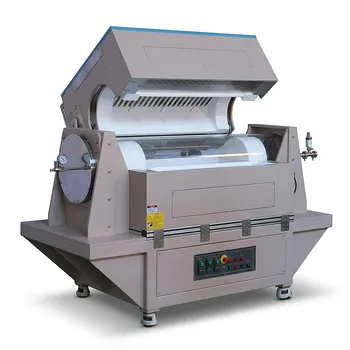
Three Zone Tube Furnace with 11 Inch or 15 Inch Quartz Tube and Hinged Flanges for Vacuum Atmosphere Heat Treatment
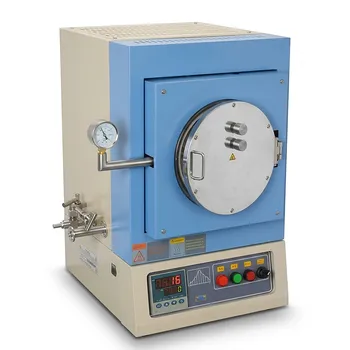
1100°C High Temperature Quartz Chamber Furnace 8 Inch OD with 7.6 Liter Capacity and Vacuum Atmosphere Capability
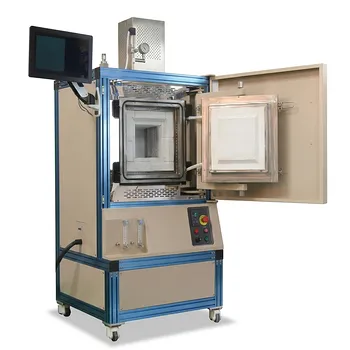
High Temperature Hydrogen Atmosphere Box Furnace 1650C Max Reducing Environment Material Synthesis System 8x8x8 Chamber

High Temperature 1700C Vertical Tube Furnace for Powder Spherification and Material Sintering

Compact High Temperature 1600C Tube Furnace with 50mm Alumina Tube and Vacuum Flanges for Material Sintering

High Temperature 1700C Six Zone Split Tube Furnace with Alumina Tube and Water Cooled Flanges

High Temperature 1700C Tube Furnace with High Vacuum Turbomolecular Pump System and Multi Channel Mass Flow Controller Gas Mixer

1800C High Temperature Compact Vacuum Tube Furnace with 60mm OD Alumina Tube and Kanthal MoSi2 Heating Elements

1100C Tube Furnace with Vacuum Flange and Programmable Temperature Controller for Material Science and Industrial Heat Treatment

High Temperature 1700C Benchtop Tube Furnace with 5 Inch Heating Zone High Purity Alumina Tube and Vacuum Sealing Flanges
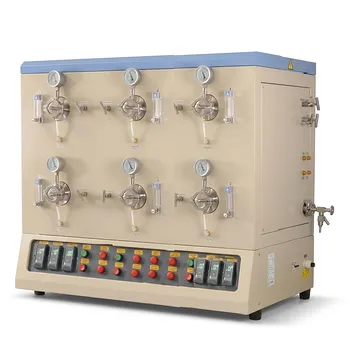
1200C High Throughput Multi Channel Tube Furnace with 50mm Quartz Tubes for Annealing and Material Phase Diagram Research
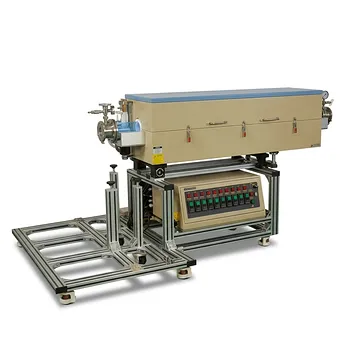
Ten Zone Multi Orientation Laboratory Tube Furnace for 1200C High Temperature Gradient Thermal Processing

High Temperature Automated 5 Inch Tube Furnace for Autonomous Material Research and Advanced Laboratory R&D
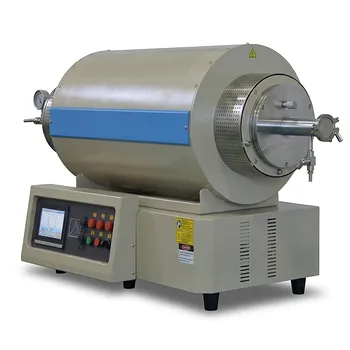
1200C Max Three Zone Tube Furnace 6 Inch OD Max with Tube and Flange