What is the objective of a 100-hour thermal exposure test at 1000 °C on IN625/TiC? Evaluate Microstructural Stability
Updated 3 months ago
The primary objective of a 100-hour thermal exposure test at 1000 °C is to simulate long-term service performance and evaluate the microstructural stability of IN625/TiC composites. This specific duration and temperature allow researchers to observe slow-acting degradation mechanisms, such as grain growth, carbide coarsening, and the precipitation of secondary phases. By subjecting the material to these extremes, engineers can determine if reinforcing particles effectively maintain the alloy's structural integrity over an extended period.
This test serves as a rigorous validation of the composite's ability to resist thermal degradation by monitoring how TiC particles inhibit grain expansion and how the alloy's chemistry reacts to prolonged, high-intensity heat.
Simulating Extreme Service Conditions
Long-Term Service Behavior
Standard mechanical tests often fail to capture how a material evolves during hundreds of hours of operation. A 100-hour exposure provides a compressed timeline to predict how the composite will behave in real-world aerospace or power generation environments.
High-Temperature Stability at 1000 °C
At 1000 °C, most conventional metals begin to lose their structural "memory" as atoms migrate more freely. Testing at this threshold is essential for Inconel 625 (IN625) composites, as it pushes the nickel-based matrix to its operational limits.
Monitoring Microstructural Evolution
Controlling Grain Growth Tendencies
As heat is applied, the internal grains of the metal naturally want to expand, which usually weakens the material. The test measures the grain growth tendencies to see if the microstructure remains fine and high-strength or becomes coarse and brittle.
Carbide Coarsening Rates
Small carbide particles within the alloy provide strength, but extreme heat can cause them to "coarsen" or clump together. This test quantifies the rate of this coarsening, which is a direct indicator of how long the material can maintain its hardness.
The Effectiveness of TiC Pinning
One of the most critical goals is to verify if TiC (Titanium Carbide) particles successfully perform "grain boundary pinning." If the TiC particles are effective, they act as physical barriers that prevent grains from sliding or growing, thereby stabilizing the organization of the entire composite.
Identifying Phase Transformations
The Emergence of the Delta Phase
Prolonged exposure to 1000 °C can trigger the precipitation of the delta phase (δ), a needle-like structure that is generally considered harmful. This test allows researchers to see if the addition of TiC helps suppress or manage the formation of these brittle phases.
Assessing Chemical Homogeneity
Over 100 hours, elements within the alloy may segregate or form new, unintended compounds. The thermal exposure test reveals whether the IN625 matrix and the TiC reinforcement remain chemically compatible or if they degrade into inferior sub-structures.
Understanding the Trade-offs
Accelerated Aging vs. Real-Time Use
While 100 hours is significant, it is still an accelerated test that may not perfectly mirror the cumulative effects of thousands of hours of cycling. Designers must balance the speed of this test with the need for long-term reliability data.
Strength vs. Ductility
The features that provide stability at 1000 °C, such as heavy TiC reinforcement, can sometimes reduce the material's ductility (flexibility). Engineers must use the test results to ensure the material hasn't become too brittle for its intended application.
How to Apply This to Your Project
Recommendations for Material Selection
- If your primary focus is long-term structural stability: Use the test results to identify the TiC concentration that most effectively pins grain boundaries without causing excessive brittleness.
- If your primary focus is resisting phase degradation: Analyze the post-test samples specifically for delta phase formation to ensure the alloy maintains its toughness.
- If your primary focus is cost-efficiency: Evaluate if a shorter or lower-temperature exposure could provide sufficient data, though 1000 °C remains the gold standard for high-stress nickel alloys.
By meticulously analyzing the results of this thermal exposure, you can transition from theoretical modeling to a data-backed understanding of how your composite will survive in the harshest environments.
Summary Table:
| Objective Category | Key Focus Area | Expected Outcome |
|---|---|---|
| Microstructure | Grain Growth Tendencies | Verification of TiC pinning effectiveness to prevent expansion |
| Phase Stability | Delta Phase (δ) Precipitation | Identification of brittle phases that reduce material toughness |
| Reinforcement | Carbide Coarsening Rates | Measurement of how TiC particles maintain hardness over time |
| Performance | Service Simulation | Prediction of long-term reliability in aerospace & power Gen |
| Chemistry | Chemical Homogeneity | Assessment of compatibility between IN625 matrix and TiC |
Elevate Your Material Research with THERMUNITS Precision
Precise thermal exposure testing requires reliable, high-performance equipment. THERMUNITS is a leading manufacturer specializing in high-temperature laboratory solutions for material science and industrial R&D. We empower researchers to accurately simulate extreme environments and validate microstructural stability.
Our comprehensive range of thermal processing equipment includes:
- Furnaces: Muffle, Vacuum, Atmosphere, Tube, Rotary, and Hot Press furnaces.
- Advanced Systems: CVD/PECVD systems and Vacuum Induction Melting (VIM) furnaces.
- Specialized Tools: Dental Furnaces, electric rotary kilns, and high-quality Thermal Elements.
Whether you are studying IN625 composites or pioneering new alloys, our technology ensures the temperature uniformity and control your project demands. Contact our expert team today to find the ideal heat treatment solution for your laboratory!
References
- Serena Lerda, Sara Biamino. Microstructural Stability of IN625 Reinforced by the Addition of TiC Produced by Laser Powder Bed Fusion after Prolonged Thermal Exposure. DOI: 10.3390/ma17184532
Mentioned Products
- 1600C High Temperature Automatic Bottom Loading Furnace for Thermal Shock Cycling and Material Fatigue Testing
- High Temperature Benchtop Muffle Furnace with Quartz Observation Window for Thermal Imaging and Material Analysis
- 1650C Recirculating Steam Corrosion and Thermal Shock Testing Furnace with Integrated Water Vapor Generator and Automated Sample Delivery
- 1800°C Bench Top Ultra High Temperature Muffle Furnace with Sapphire Observation Window and Top Feeding Port for Materials Research and Thermal Processing
- High Temperature 1500C Benchtop Muffle Furnace 3.6L Alumina Fiber Chamber Programmable Controller Sintering Annealing Carbonization Thermal Processing System
People Also Ask
- What are the advantages of using a Bottom-Loading High-Temperature Furnace in Barium Titanate Fast Firing? Superior Microstructure
- How does sintering in a 1600°C box furnace affect high-entropy thermistor ceramics? Achieve 98%+ Densification
- What are the process advantages of using ultrafast high-temperature shock equipment? Revolutionize Anode Recycling.
- How does precise temperature control up to 900 °C impact activated carbon adsorption? Optimize Pore Size & Surface Area
- What function does a ceramic sample boat perform during the reforming of plastic powders? Optimize Thermal Conversion

Tech Team · ThermUnits
Last updated on Jun 02, 2026
Related Products
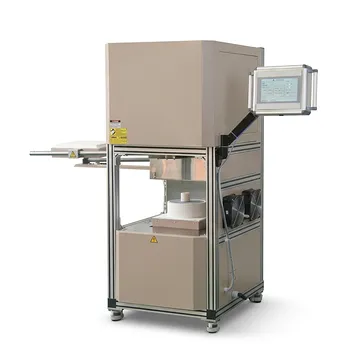
1600C High Temperature Automatic Bottom Loading Furnace for Thermal Shock Cycling and Material Fatigue Testing
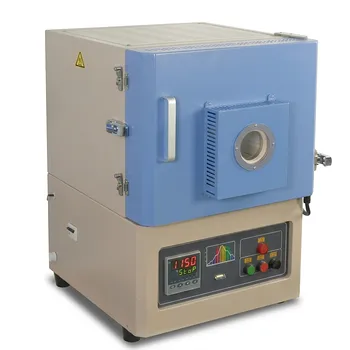
High Temperature Benchtop Muffle Furnace with Quartz Observation Window for Thermal Imaging and Material Analysis
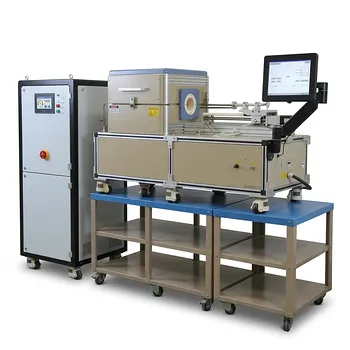
1650C Recirculating Steam Corrosion and Thermal Shock Testing Furnace with Integrated Water Vapor Generator and Automated Sample Delivery
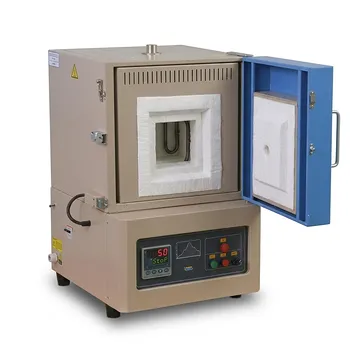
1800°C Bench Top Ultra High Temperature Muffle Furnace with Sapphire Observation Window and Top Feeding Port for Materials Research and Thermal Processing
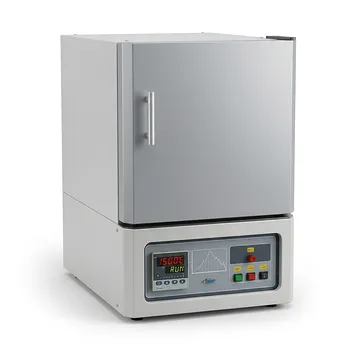
High Temperature 1500C Benchtop Muffle Furnace 3.6L Alumina Fiber Chamber Programmable Controller Sintering Annealing Carbonization Thermal Processing System

High Temperature Tube Furnace 1500C with Sliding Flanges and 50mm OD for Rapid Thermal Processing Fast Heating and Cooling
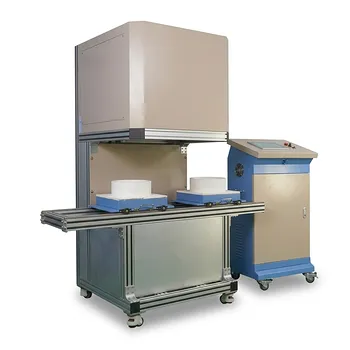
High Temperature Bottom Loading Vertical Furnace 1700C Dual Stage Sample Processing System 18L Large Capacity Thermal Treatment Equipment
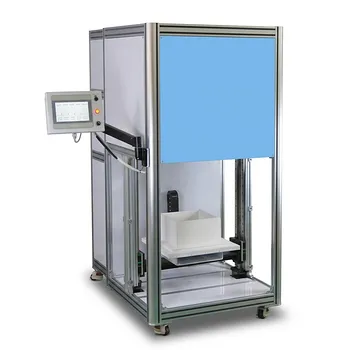
High Temperature 1600°C Three Zone Heated Bottom Loading Box Furnace with Rapid Thermal Processing Chamber 72L Volume
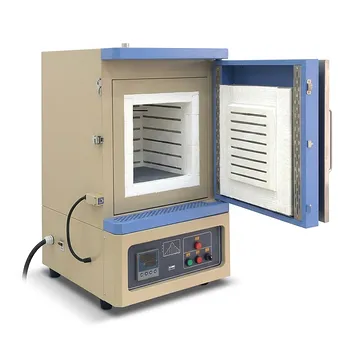
Five Side Heating Muffle Furnace High Purity Alumina Fiber 27L Chamber 1200C High Temperature Thermal Processing System for Sintering Annealing and Materials Research
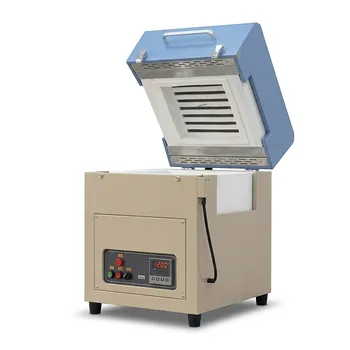
1200 C Maximum Three Sided Heating Top Loading Furnace with 12 x 12 x 8 Inch Chamber for Solid Oxide Fuel Cell Testing and High Temperature RD
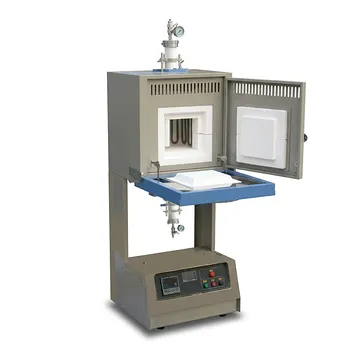
Vertical Hybrid High Temperature Furnace 1500C Alumina Tube SOFC Fuel Cell Testing Laboratory Heat Treatment Research Equipment
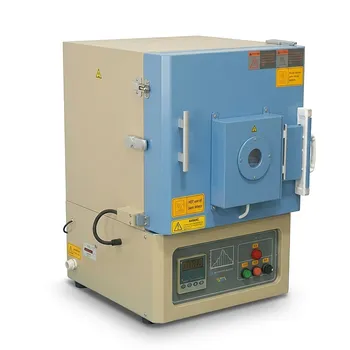
High Temperature Benchtop Muffle Furnace 1500C with 3.6L Chamber and Quartz Observation Window
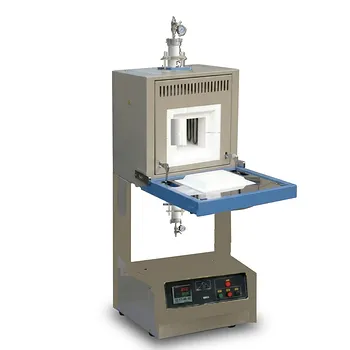
High Temperature Vertical Hybrid Furnace with Alumina Tube and SiC Heating for SOFC Coin Cell Testing and Atmosphere Processing
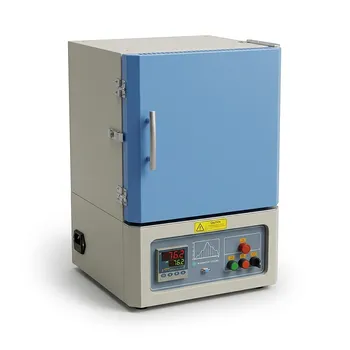
1750C Bench Top Muffle Furnace 3.6L High Grade Molybdenum Disilicide Heating Elements Laboratory Heat Treatment Equipment
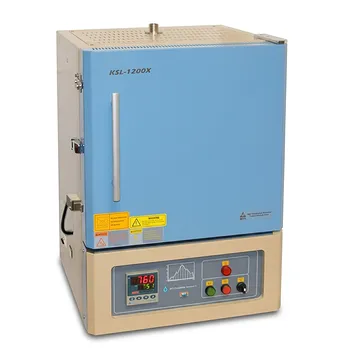
High Temperature 1200C Muffle Furnace 27L Volume 12x12x12 Chamber with Programmable PID Controller for Laboratory Material Science
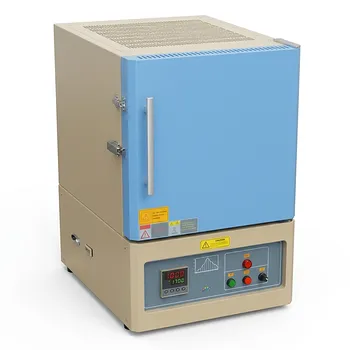
Large Bench Top 1700C High Temperature Muffle Furnace with 19L Chamber for Advanced Material Sintering and Annealing
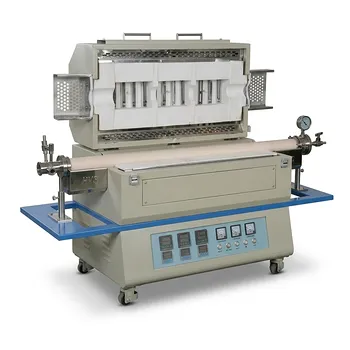
Three Temperature Zone Fast Heating Furnace 1500C Laboratory High Precision Thermal Processing System
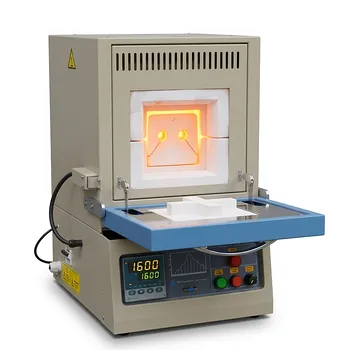
High Temperature Compact Muffle Furnace 1700 C with 30 Segment Programmable Controller and 1.7L Cubic Chamber

1700C High Temperature Alumina Tube Furnace with 18 Inch Heated Zone and Vacuum Sealing Flanges