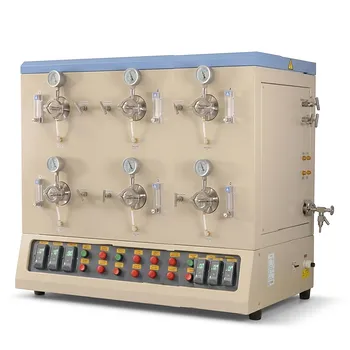
What is the primary function of a high-temperature tube furnace in the synthesis of Ce2S3-RGO nanocomposites?
Updated 6 months ago
The high-temperature tube furnace serves as the critical reactor for the simultaneous sulfuration of cerium precursors and the thermal reduction of graphene oxide. By providing a stable and controlled thermal field, it facilitates the decomposition of sulfur sources to transform cerium oxide into cerium sulfide while restoring the electrical conductivity of the carbon framework.
Core Takeaway: In $Ce_2S_3$-$RGO$ synthesis, the tube furnace is the engine for a dual-purpose calcination process that achieves both the chemical conversion of the metal oxide to a sulfide and the structural transition of graphene oxide into its conductive reduced form.
Facilitating the Chemical Transformation of Precursors
Decomposition of Sulfur Sources
The primary role of the tube furnace is to reach the high temperatures required to break down sulfur-carrying agents, such as thiourea. This decomposition releases active sulfur atoms into the reaction zone, which is necessary for the subsequent chemical bonding with the metal precursor.
Conversion of Cerium Oxide to Cerium Sulfide
Once the sulfur atoms are active, the furnace provides the thermal energy required to drive the sulfuration reaction. This process converts the $CeO_2$-$RGO$ precursor into the final cerium sulfide ($Ce_2S_3$) phase, which is the functional component of the nanocomposite.
Enhancing Material Conductivity and Structure
Thermal Reduction of Graphene Oxide (GO)
The high-temperature environment triggers the thermal reduction of Graphene Oxide into Reduced Graphene Oxide (RGO). This step is vital because it removes oxygen-containing functional groups that hinder electron flow, thereby significantly enhancing the conductivity of the final material.
Achieving Structural Transformation
Beyond chemistry, the furnace ensures the structural integrity of the nanocomposite. The controlled heat treatment promotes a tight interfacial bond between the $Ce_2S_3$ particles and the RGO sheets, resulting in a cohesive architecture that improves overall performance.
The Importance of a Controlled Environment
Maintaining a Stable Thermal Field
Precise temperature uniformity within the furnace chamber is essential for phase purity. Inconsistent heating can lead to incomplete sulfuration or the formation of undesirable intermediate phases, which degrade the material's electrochemical properties.
Atmospheric Control and Protection
Like many high-temperature synthesis processes, the tube furnace allows for a sealed environment where specific gases can be introduced. This prevents the unwanted oxidation of the newly formed $Ce_2S_3$ and ensures the reduction of GO occurs in an environment that favors the removal of oxygen.
Understanding the Trade-offs and Pitfalls
Temperature Sensitivity
If the temperature is too low, the sulfur source will not fully decompose, leading to incomplete conversion of the cerium oxide. Conversely, excessive heat can cause the $Ce_2S_3$ nanoparticles to aggregate, reducing the surface area and the effectiveness of the nanocomposite.
Management of Reactive Byproducts
The sulfuration process often generates gaseous byproducts that must be managed. Failure to maintain proper airflow dynamics within the tube can lead to the redeposition of impurities on the material surface, which compromises the purity of the final $Ce_2S_3$-$RGO$ product.
How to Apply This to Your Synthesis Goals
The use of a high-temperature tube furnace should be tailored to the specific performance metrics you wish to achieve for your nanocomposite.
- If your primary focus is maximizing electrical conductivity: Prioritize the thermal reduction phase by ensuring the furnace maintains a stable temperature profile that favors the complete restoration of the graphene lattice.
- If your primary focus is phase purity of the sulfide: Focus on the precise control of the sulfur source decomposition rate and the dwell time at the peak sulfuration temperature.
- If your primary focus is nanoparticle size control: Implement a strict cooling and heating ramp rate to prevent the overgrowth or sintering of the $Ce_2S_3$ particles during the calcination process.
The high-temperature tube furnace is the indispensable tool that bridges the gap between raw chemical precursors and a high-performance, conductive $Ce_2S_3$-$RGO$ nanocomposite.
Summary Table:
| Function | Key Mechanism | Material Impact |
|---|---|---|
| Sulfuration | Decomposition of sulfur sources (e.g., thiourea) | Converts $CeO_2$ into active $Ce_2S_3$ phase |
| Thermal Reduction | Removal of oxygen-containing groups from GO | Transforms GO to conductive RGO framework |
| Structural Bonding | Controlled thermal field & interfacial reaction | Ensures tight bonding between particles and sheets |
| Phase Protection | Atmospheric control (inert/reducing gas) | Prevents oxidation and ensures high purity |
Elevate Your Material Research with THERMUNITS
Precision is the backbone of high-performance nanocomposite synthesis. THERMUNITS is a leading manufacturer of high-temperature laboratory equipment, providing the advanced thermal processing solutions required for cutting-edge material science and industrial R&D.
Our extensive range of equipment is designed to meet the rigorous demands of your lab:
- Specialized Furnaces: Tube, Muffle, Vacuum, Atmosphere, Rotary, and Hot Press Furnaces.
- Advanced Systems: CVD/PECVD systems, Vacuum Induction Melting (VIM), and Electric Rotary Kilns.
- Lab Essentials: Dental Furnaces, Thermal Elements, and custom heat treatment solutions.
Whether you are focusing on phase purity, electrical conductivity, or nanoparticle size control, THERMUNITS provides the stability and uniformity your experiments need.
Ready to optimize your synthesis process? Contact our experts today to find the perfect thermal solution for your application!
References
- Zengguang Liu, Kang‐Qiang Lu. Graphene Oxide Decorated Ce2S3 Nanocomposite for Efficient Photocatalytic Degradation of Tetracycline. DOI: 10.3390/catal15010021
Mentioned Products
- Two Zone Rotary Tube Furnace for Powder CVD Coating and Core Shell Material Synthesis 1100C
- 1500C 3-Zone Rotary Tube Furnace 60mm with Automatic Powder Feeding and Receiving System for Continuous Material Synthesis
- High Temperature Dual Zone Rotating Tube Furnace 1500C Silicon Carbide Heating for Advanced Material Synthesis
- 1500C Max Dual Zone Rotary Tube Furnace with 60 mm OD Alumina Tube for High Temperature Material Synthesis
- High Temperature Rocking Tube Furnace with Quartz Tube and Vacuum Flange for Materials Synthesis
People Also Ask
- How does a two-zone tube furnace control the quality of Tungsten Diselenide (WSe2)? Optimize Your 2D Material Synthesis
- What is the function of a two-zone furnace in SCA-CVD? Mastering Thermal Gradients for Atomic-Scale MOF Crystals
- Why is a Tube Furnace typically utilized for CVD? Achieve Precision in Graphene and 2D Material Synthesis
- How does a rotary tube furnace improve the processing of granular materials? Enhance Uniformity and Reaction Kinetics
- Why is the precise optimization of residence time essential in the catalyst calcination process? Maximize Your Yields.

Tech Team · ThermUnits
Last updated on Apr 14, 2026
Related Products
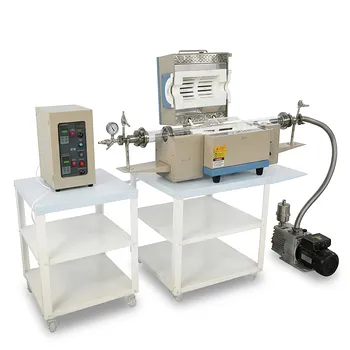
Two Zone Rotary Tube Furnace for Powder CVD Coating and Core Shell Material Synthesis 1100C
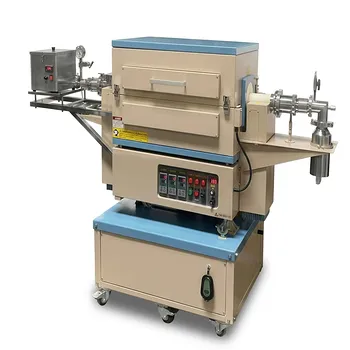
1500C 3-Zone Rotary Tube Furnace 60mm with Automatic Powder Feeding and Receiving System for Continuous Material Synthesis
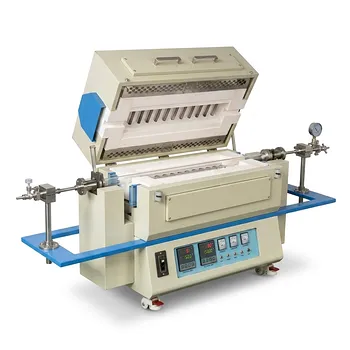
High Temperature Dual Zone Rotating Tube Furnace 1500C Silicon Carbide Heating for Advanced Material Synthesis
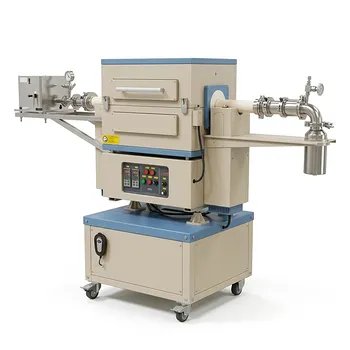
1500C Max Dual Zone Rotary Tube Furnace with 60 mm OD Alumina Tube for High Temperature Material Synthesis
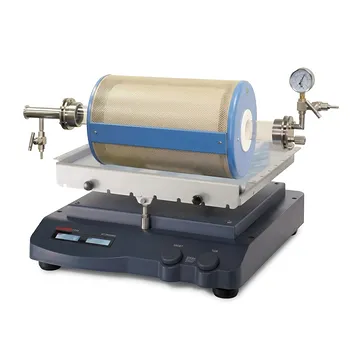
High Temperature Rocking Tube Furnace with Quartz Tube and Vacuum Flange for Materials Synthesis
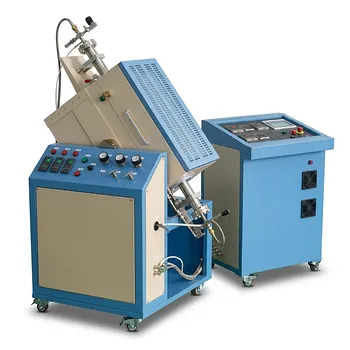
1100C High Pressure Rocking Tube Furnace with 2 Inch Super Alloy Processing Tube for Material Synthesis
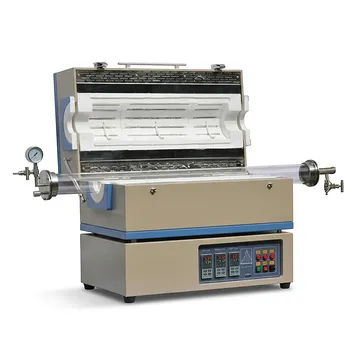
24 Inch Three Zone Split Tube Furnace with Optional Quartz Tube and Vacuum Flange System for High Temperature Material Synthesis
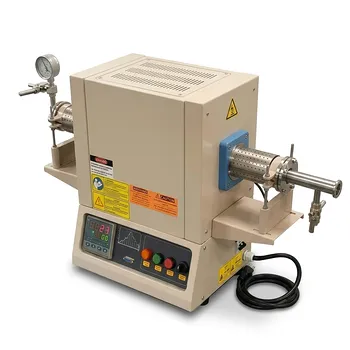
Compact High Temperature 1600C Tube Furnace with 50mm Alumina Tube and Vacuum Flanges for Material Sintering
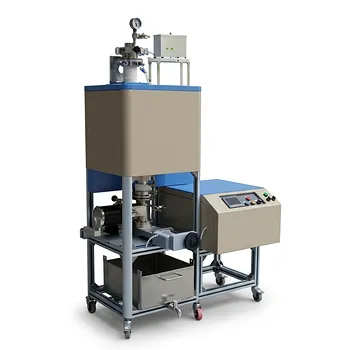
High Temperature 1700C Vertical Tube Furnace for Powder Spherification and Material Sintering
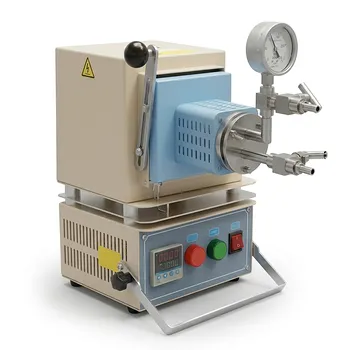
Compact Hybrid Muffle and Tube Furnace for 1000C Controlled Atmosphere Laboratory Material Sintering
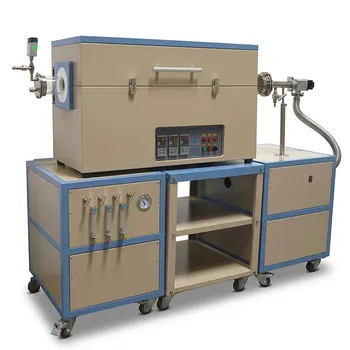
Three Zone Quartz Tube Furnace with 3 Channel Gas Mixer Vacuum Pump and Anti Corrosive Vacuum Gauge
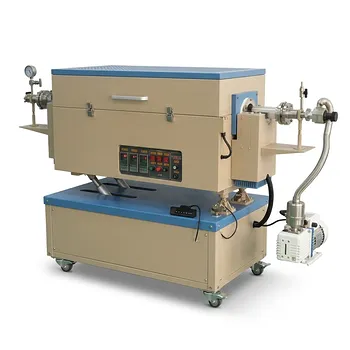
Three Zone Rotary Tube Furnace for High Temperature Powder Processing and Material Research
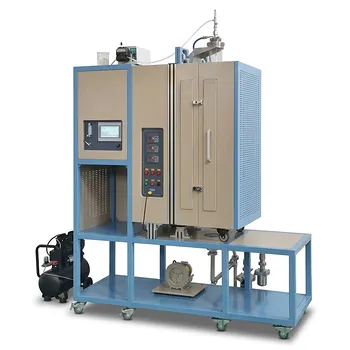
1500C Three Zone Vertical Pyrolysis Furnace for Nanoparticle Synthesis and Advanced Oxide Coating
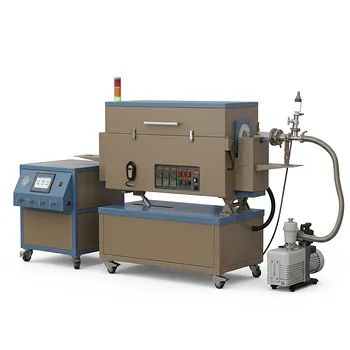
5 Inch Three Zone Rotary Tube Furnace with Integrated Gas Delivery System and 1200C Capability for Advanced Material CVD Processing
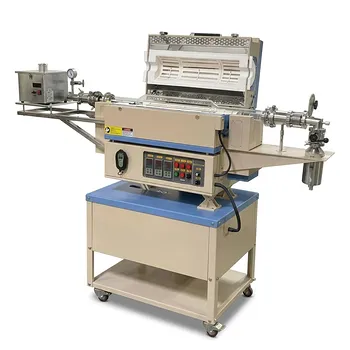
5 Inch Rotary Tube Furnace with Automatic Feeding and Receiving System 1200C Three Zone CVD Powder Processing
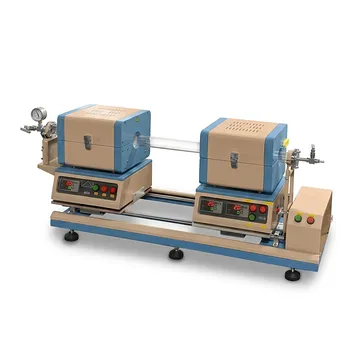
High Temperature 1200C Automatic Sliding Dual Zone Tube Furnace for 2D Transition Metal Dichalcogenides Growth and Material Sublimation Research
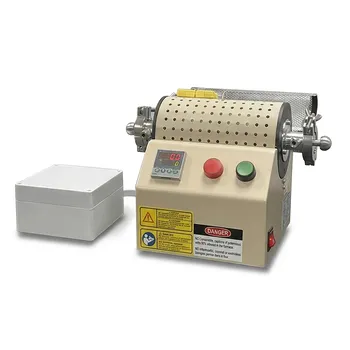
1000C Mini Tube Furnace with 20mm Quartz Tube and Vacuum Flanges for Material Science Research and Controlled Atmosphere Small Sample Processing
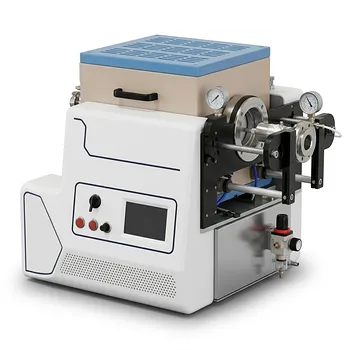
High Temperature Automated 5 Inch Tube Furnace for Autonomous Material Research and Advanced Laboratory R&D
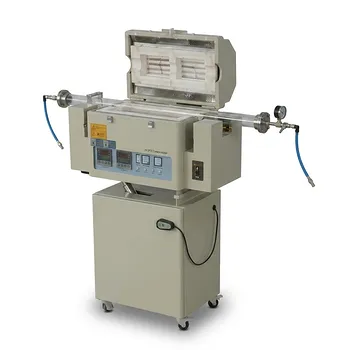
Double Temperature Revolving Tube Furnace with Precision Rotation and Adjustable Inclination for Advanced Material Research