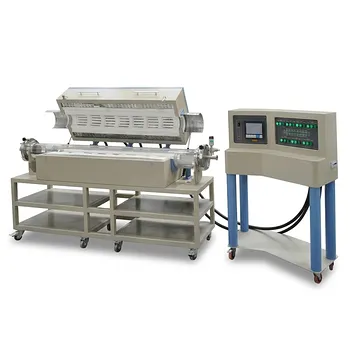
What is the function of a two-zone furnace in SCA-CVD? Mastering Thermal Gradients for Atomic-Scale MOF Crystals
Updated 3 months ago
The primary function of a two-zone tube furnace in SCA-CVD is the establishment of a precise temperature gradient. This thermal gradient allows for the independent sublimation of ligand and metal precursors while simultaneously inducing these vapors to self-condense into a quasi-liquid phase on the substrate.
Core Takeaway: By decoupling the evaporation and growth temperatures, a two-zone furnace transforms solid precursors into controlled vapor phases that spontaneously organize into droplets, providing the necessary liquid-like environment for high-quality MOF nucleation.
Driving the Self-Condensation Mechanism
Independent Vaporization of Precursors
The two-zone configuration allows researchers to set distinct temperatures for different materials, such as 400 °C for one source and 150 °C for another. This ensures that both the metal sources and organic ligands reach their optimal sublimation rates without degrading more sensitive components.
Inducing the Quasi-Liquid Phase
As precursor vapors move through the furnace, the temperature gradient between the zones forces these vapors to reach a state of supersaturation. This leads to self-condensation, where vapors form microscopic droplets on the substrate surface.
Facilitating Atomic-Scale Nucleation
These condensed droplets create a quasi-liquid phase environment that is essential for the growth of single crystals. This environment provides the molecular mobility required for the reactants to orient themselves into the precise, ordered lattices characteristic of atomic-scale MOFs.
Comparison with Conventional Vapor Deposition
Differentiation from Chemical Vapor Transport (CVT)
In standard CVT, a temperature gradient typically acts as a driving force to move material from a hot zone to a cold zone via a transport agent. In SCA-CVD, the gradient is specifically tuned to manage the phase transition from gas to a quasi-liquid droplet rather than just moving gas molecules.
Precision in Vapor Concentration
Unlike single-zone furnaces, the dual-zone setup prevents premature reaction of precursors in the gas phase. By keeping the metal and ligand sources at specific, independent temperatures, the furnace maintains an optimal concentration gradient until the molecules reach the growth substrate.
Understanding the Trade-offs
Sensitivity to Thermal Fluctuations
The primary challenge of using a two-zone furnace is the thermal cross-talk between zones. Because the zones are adjacent, a change in the high-temperature zone can inadvertently shift the temperature in the low-temperature zone, potentially disrupting the delicate self-condensation process.
Complexity of Gradient Calibration
Achieving the perfect "quasi-liquid" state requires exhaustive calibration of the distance between the zones and the gas flow rate. If the gradient is too steep, the precursors may precipitate as powders rather than forming organized single crystals; if too shallow, the precursors may never condense, resulting in no growth.
Applying Furnace Control to Your Research Goals
When configuring a two-zone furnace for advanced material synthesis, your approach must align with the specific physical properties of your precursors.
- If your primary focus is Maximizing Crystal Size: Focus on establishing a stable, gradual temperature gradient that slows the nucleation rate, allowing fewer, larger single-crystal domains to form.
- If your primary focus is Film Uniformity: Prioritize the precise synchronization of sublimation rates between the two zones to ensure a consistent vapor concentration across the entire substrate surface.
- If your primary focus is Processing New Ligands: Use the independent heating zones to identify the exact sublimation threshold of the organic component without risking the over-evaporation of the metal source.
Mastering the thermal gradient of a two-zone furnace is the definitive factor in transitioning from disordered thin films to high-precision, atomic-scale single crystals.
Summary Table:
| Feature | Function in SCA-CVD | Research Benefit |
|---|---|---|
| Dual-Zone Control | Independent heating of ligands and metals | Prevents degradation; ensures optimal sublimation rates |
| Thermal Gradient | Induces precursor self-condensation | Creates the quasi-liquid phase needed for single-crystal nucleation |
| Decoupled Temperatures | Separates evaporation from growth stages | Prevents premature gas-phase reactions and ensures film uniformity |
| Flow Precision | Manages vapor concentration levels | Allows for larger crystal sizes and ordered atomic lattices |
Elevate Your Material Synthesis with THERMUNITS
Precision is the difference between disordered films and high-quality atomic-scale crystals. THERMUNITS is a leading manufacturer of high-temperature laboratory equipment, providing the advanced thermal control necessary for cutting-edge research in material science and industrial R&D.
Our specialized Tube Furnaces and CVD/PECVD systems are engineered to provide the stable, independent temperature zones required for Self-Condensation Assisted Chemical Vapor Deposition (SCA-CVD) and other complex heat treatments. From vacuum and atmosphere furnaces to rotary kilns and hot presses, we offer a comprehensive range of solutions tailored to your specific research goals.
Ready to optimize your thermal processing? Contact THERMUNITS today to discuss your laboratory requirements with our experts and discover how our high-precision equipment can accelerate your innovation.
References
- Lingxin Luo, Jian Zheng. Self-condensation-assisted chemical vapour deposition growth of atomically two-dimensional MOF single-crystals. DOI: 10.1038/s41467-024-48050-5
Mentioned Products
- Two Zone Rotary Tube Furnace for Powder CVD Coating and Core Shell Material Synthesis 1100C
- 1500C Two Zone Split Tube Furnace with Vacuum Flange and 80mm Alumina Tube
- Dual Zone Tube Furnace 1100C with 11 Inch Quartz Tube and Vacuum Flanges for 8 Inch Wafer Processing
- Two Zone IR Heating Rapid Thermal Processing RTP Tube Furnace with 4 Inch ID Quartz Tube and Sliding Sample Holders
- Elongated Two Temperature Zone Pipe Furnace for Industrial Heat Treatment and Material Science Research
People Also Ask
- How does a two-zone tube furnace control the quality of Tungsten Diselenide (WSe2)? Optimize Your 2D Material Synthesis
- Why is a Tube Furnace typically utilized for CVD? Achieve Precision in Graphene and 2D Material Synthesis
- How does a rotary tube furnace improve the processing of granular materials? Enhance Uniformity and Reaction Kinetics
- Why is the precise optimization of residence time essential in the catalyst calcination process? Maximize Your Yields.
- In what ways do rotary tube furnaces enhance chemical and specialty mineral processing? Drive Precision and Uniformity.

Tech Team · ThermUnits
Last updated on Jun 02, 2026
Related Products
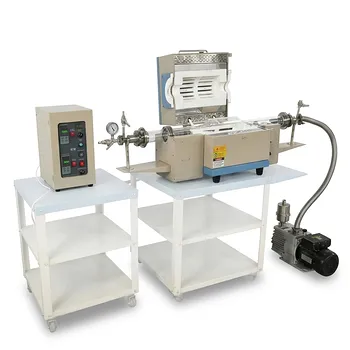
Two Zone Rotary Tube Furnace for Powder CVD Coating and Core Shell Material Synthesis 1100C
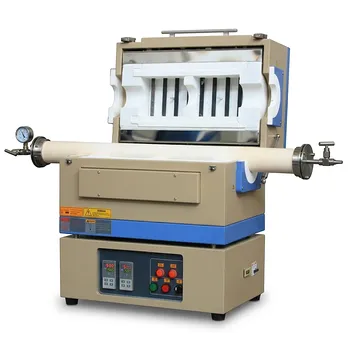
1500C Two Zone Split Tube Furnace with Vacuum Flange and 80mm Alumina Tube
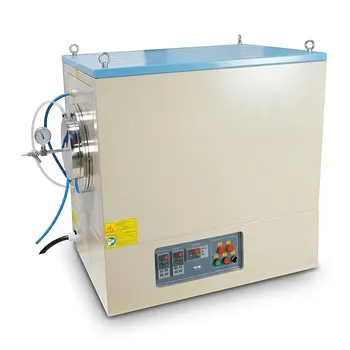
Dual Zone Tube Furnace 1100C with 11 Inch Quartz Tube and Vacuum Flanges for 8 Inch Wafer Processing
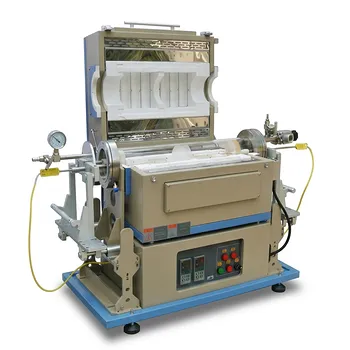
Two Zone IR Heating Rapid Thermal Processing RTP Tube Furnace with 4 Inch ID Quartz Tube and Sliding Sample Holders
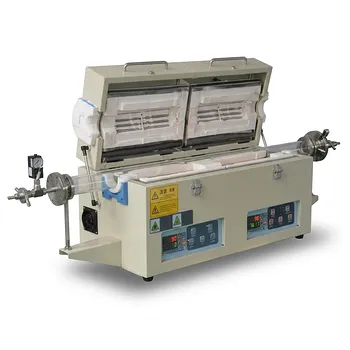
Elongated Two Temperature Zone Pipe Furnace for Industrial Heat Treatment and Material Science Research
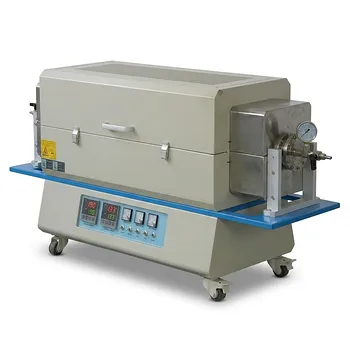
High Temperature Elongated Dual Zone Tube Furnace for Material Research and Industrial Heat Treatment
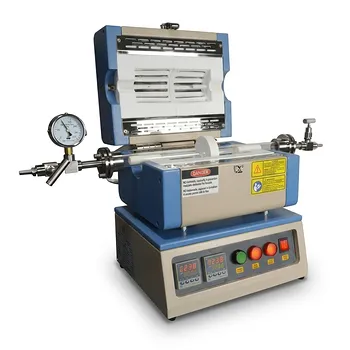
Dual Heating Zone 1200C Compact Split Tube Furnace with Optional 1" - 2" Tube and Vacuum Flanges
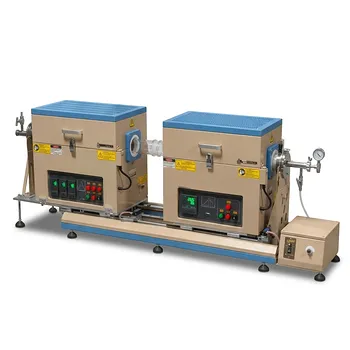
1200C Dual Temperature Zone Slidable Tube Furnace for 2D Material Growth and TCVD Synthesis
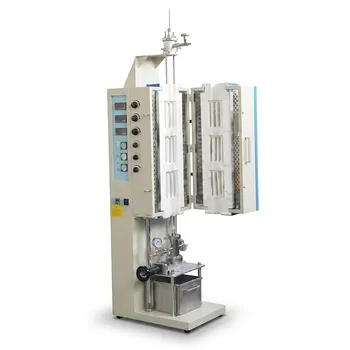
High Temperature Dual Zone Tube Furnace for Material Science Research and Professional Thermal Processing
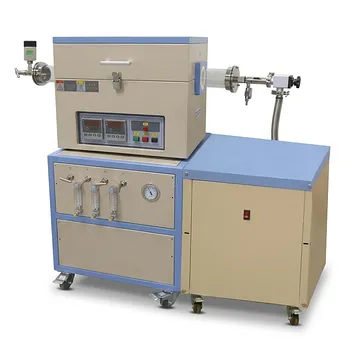
Dual Zone Quartz Tube Furnace with 80mm Diameter 1200C Max Temperature 3 Channel Gas Mixer and Vacuum Pump System
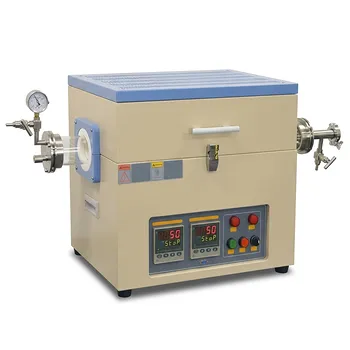
1200C Dual Zone Split Tube Furnace with Fused Quartz Tube and Vacuum Flanges Available in 60mm 80mm and 100mm Diameters
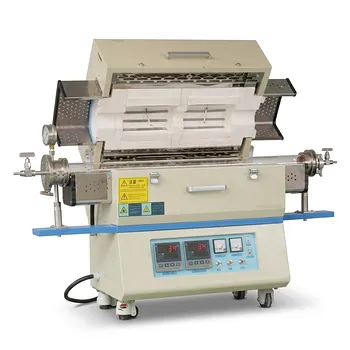
Dual Zone Split Tube Quenching Furnace with High Vacuum Atmosphere Control and Rapid Cooling
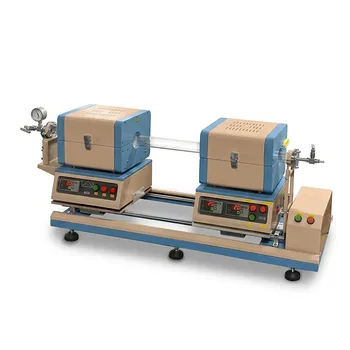
High Temperature 1200C Automatic Sliding Dual Zone Tube Furnace for 2D Transition Metal Dichalcogenides Growth and Material Sublimation Research
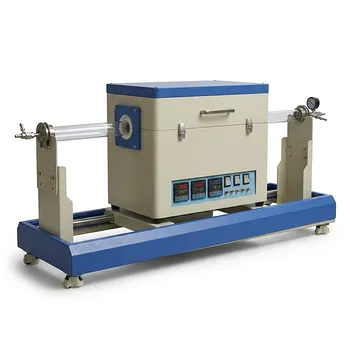
Double Temperature Zone Double Cover Tube Furnace for High Temperature CVD and Vacuum Annealing
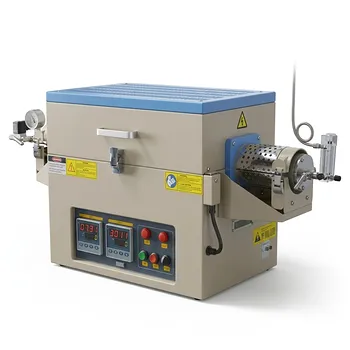
1100C Dual Zone Hydrogen Gas Tube Furnace with Quartz Tube and Integrated H2 Leak Detection System
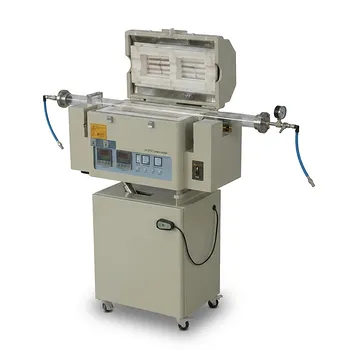
Double Temperature Revolving Tube Furnace with Precision Rotation and Adjustable Inclination for Advanced Material Research
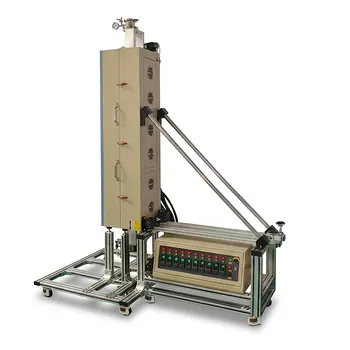
1200°C 10-Zone Split Tube Furnace with Horizontal and Vertical Mounting for Multi-Zone Thermal Gradients and Large Diameter Material Processing
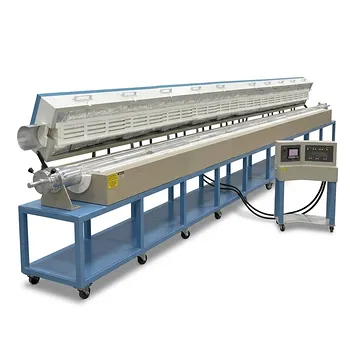
12 Zone Ultra Long Split Tube Furnace with 20 Foot Quartz Tube and 1100C Max Temperature
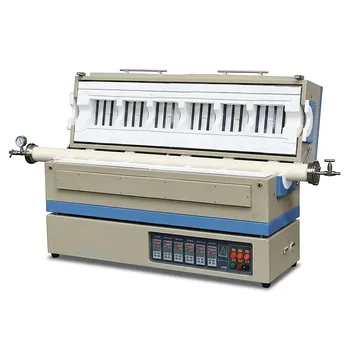
Six Zone Split Tube Furnace with Alumina Tube and Vacuum Flanges for 1500C High Temperature Thermal Processing and CVD