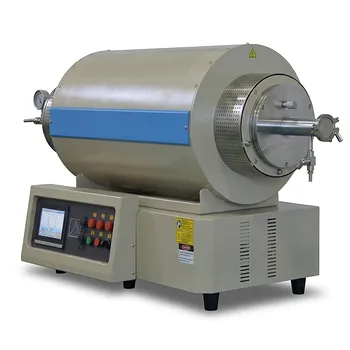
What is the primary function of an atmosphere tube furnace during the carbonization process of titania-carbon aerogels? Expert Guide
Updated 3 months ago
The primary function of an atmosphere tube furnace during the carbonization of titania-carbon aerogels is to provide a strictly controlled, high-temperature, anaerobic environment. This setup facilitates the pyrolysis of organic precursors into a conductive microporous carbon shell while protecting the resulting material from oxidative degradation.
An atmosphere tube furnace acts as a specialized chemical reactor that enables the precise thermal conversion of polymers into carbon frameworks. By maintaining a high-purity inert gas flow at temperatures around 800°C, it ensures titania particles are successfully encapsulated within a stable, conductive carbon matrix.
The Role of Controlled Thermal Transformation
Facilitating Organic Pyrolysis
The furnace provides the intense heat, typically around 800°C, required to break down complex organic precursors. This process, known as pyrolysis, transforms polymer chains into a conductive microporous carbon shell.
Encapsulation of Titania Particles
High-temperature treatment within the tube ensures that titanium dioxide (TiO2) particles are securely embedded within the carbon framework. This encapsulation is vital for creating a stable composite material that maintains its structural integrity during use.
Inducing Crystalline Phase Changes
Beyond simple carbonization, the furnace can be used to induce specific phase transformations in the titania itself. Precise temperature control allows for the transition from an amorphous state to crystalline phases like anatase, which is critical for the material's final photocatalytic properties.
The Necessity of Atmospheric Control
Prevention of Oxidative Degradation
At the high temperatures required for carbonization, carbon will readily react with oxygen and burn away. The furnace uses high-purity argon or nitrogen to create an inert shield, preventing the oxidative loss of the carbon framework and ensuring a high product yield.
Maintaining Chemical Purity
The airtight design of the tube furnace allows for the effective removal of residual organic impurities and non-carbon elements. This ensures the resulting aerogel has the desired chemical stability and high electrical conductivity.
Ensuring Process Consistency
The furnace's long "constant temperature zone" and superior sealing performance provide a uniform thermal environment. This consistency is essential for the thoroughness of the carbonization process, preventing localized defects in the aerogel structure.
Understanding the Trade-offs
Heating Rate Sensitivity
Choosing a heating rate that is too fast (e.g., exceeding 5°C/min) can lead to structural collapse or uneven carbonization. Conversely, a rate that is too slow may be energy-inefficient and lead to unwanted grain growth in the titania particles.
Gas Purity and Flow Dynamics
The quality of the final aerogel is heavily dependent on the purity of the inert gas; even trace amounts of oxygen can degrade the microporous carbon shell. Additionally, the flow rate must be optimized to remove volatile byproducts without causing thermal fluctuations within the tube.
Temperature Limits and Material Fatigue
Operating at the upper limits of the furnace (near 1000°C or higher) can enhance conductivity but may also lead to the carbothermal reduction of titania. This could unintentionally change the chemical composition of the composite, shifting it away from the desired TiO2-carbon state.
How to Apply This to Your Project
Recommendations Based on Research Goals
- If your primary focus is maximizing electrical conductivity: Prioritize higher carbonization temperatures (near 800°C–1000°C) and ensure a strictly inert nitrogen or argon environment to develop a robust carbon framework.
- If your primary focus is preserving specific surface morphology: Utilize a precise, slower heating rate (e.g., 3°C to 5°C per minute) to allow the organic source to carbonize onto templates without distorting the aerogel structure.
- If your primary focus is photocatalytic activity: Carefully calibrate the furnace temperature (often between 250°C and 400°C for calcination) to control the grain size and crystalline phase of the titanium dioxide.
By mastering the balance between thermal energy and atmospheric purity, you can reliably transform fragile organic precursors into high-performance titania-carbon composites.
Summary Table:
| Key Function | Technical Mechanism | Impact on Material |
|---|---|---|
| Organic Pyrolysis | High-temp breakdown (~800°C) | Transforms precursors into conductive carbon shells. |
| Atmospheric Control | Inert gas flow (Argon/Nitrogen) | Prevents oxidative degradation of the carbon framework. |
| Phase Transition | Precise temperature calibration | Induces amorphous to crystalline (anatase) transformation. |
| Process Uniformity | Constant temperature zone | Ensures structural consistency and eliminates defects. |
Elevate Your Material Research with THERMUNITS
As a leading manufacturer of high-temperature laboratory equipment, THERMUNITS provides the precision and reliability essential for cutting-edge material science and industrial R&D. Our specialized thermal processing solutions are designed to handle complex workflows like the carbonization of aerogels and advanced composite synthesis.
Our comprehensive product range includes:
- Atmosphere & Vacuum Tube Furnaces for precise gas control.
- Muffle, Rotary, and Hot Press Furnaces for diverse heat treatments.
- CVD/PECVD Systems for thin-film and nanostructure development.
- Vacuum Induction Melting (VIM) and Electric Rotary Kilns.
- Dental Furnaces and high-quality Thermal Elements.
Whether you are focusing on electrical conductivity, surface morphology, or photocatalytic activity, our equipment ensures the atmospheric purity and thermal stability your project demands.
Ready to optimize your heat treatment process?
Contact our technical experts today to find the perfect solution for your laboratory.
References
- Behnoosh Bornamehr, Volker Presser. High-Performance Lithium-Ion Batteries with High Stability Derived from Titanium-Oxide- and Sulfur-Loaded Carbon Spherogels. DOI: 10.1021/acsami.3c16851
Mentioned Products
- Vertical 1700C Vacuum and Atmosphere Tube Furnace with 80mm Alumina Tube
- 1200C Hybrid Muffle and Tube Furnace for Material Research with Dual Atmosphere Control Quartz Tubes
- 1200°C Atmosphere Controlled Automatic Bottom Loading Furnace with 6 Inch Quartz Tube
- Compact Vertical Split Quartz Tube Furnace with Stainless Steel Vacuum Flanges for Rapid Thermal Quenching and Controlled Atmosphere Material Processing
- Compact Hybrid Muffle and Tube Furnace for 1000C Controlled Atmosphere Laboratory Material Sintering
People Also Ask
- How is an industrial-grade vertical tube furnace utilized in smelting leaching residues? Enhance Metal Recovery Efficiency
- What is the function of a laboratory-grade vertical tube furnace in fast pyrolysis? Optimize Composite Research.
- How does a vertical tube furnace facilitate thermoelectric alloy melting? Precision synthesis for material homogeneity.
- Why is a thermocouple sensor indispensable for monitoring the vertical tube furnace during gallium oxide nanowire production? Optimize VLS Growth
- What are the advantages of using a vertical tube furnace for crucible experiments simulating steel-slag interactions?

Tech Team · ThermUnits
Last updated on Jun 03, 2026
Related Products

Vertical 1700C Vacuum and Atmosphere Tube Furnace with 80mm Alumina Tube
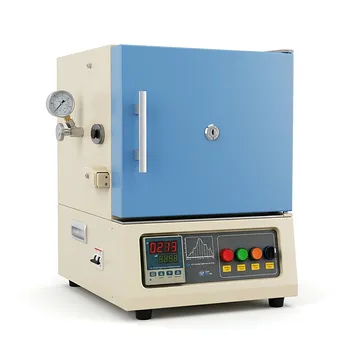
1200C Hybrid Muffle and Tube Furnace for Material Research with Dual Atmosphere Control Quartz Tubes
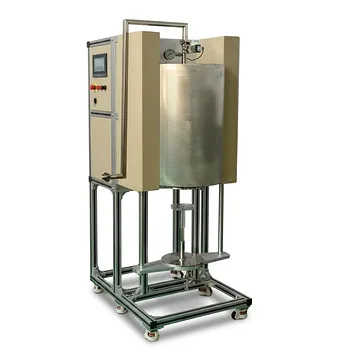
1200°C Atmosphere Controlled Automatic Bottom Loading Furnace with 6 Inch Quartz Tube

Compact Vertical Split Quartz Tube Furnace with Stainless Steel Vacuum Flanges for Rapid Thermal Quenching and Controlled Atmosphere Material Processing
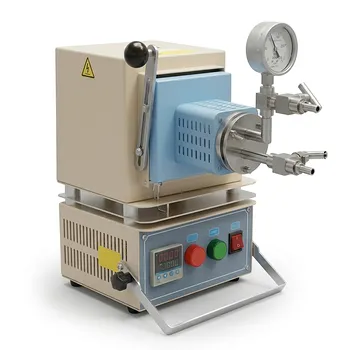
Compact Hybrid Muffle and Tube Furnace for 1000C Controlled Atmosphere Laboratory Material Sintering

Three Zone Tube Furnace with 11 Inch or 15 Inch Quartz Tube and Hinged Flanges for Vacuum Atmosphere Heat Treatment
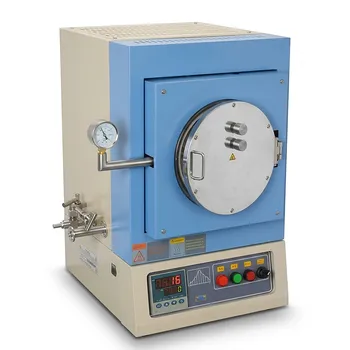
1100°C High Temperature Quartz Chamber Furnace 8 Inch OD with 7.6 Liter Capacity and Vacuum Atmosphere Capability
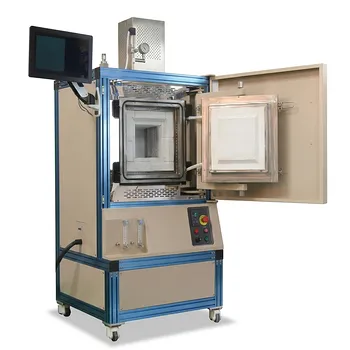
High Temperature Hydrogen Atmosphere Box Furnace 1650C Max Reducing Environment Material Synthesis System 8x8x8 Chamber

High Temperature 1700C Vertical Tube Furnace for Powder Spherification and Material Sintering

Compact High Temperature 1600C Tube Furnace with 50mm Alumina Tube and Vacuum Flanges for Material Sintering

High Temperature 1700C Six Zone Split Tube Furnace with Alumina Tube and Water Cooled Flanges

High Temperature 1700C Tube Furnace with High Vacuum Turbomolecular Pump System and Multi Channel Mass Flow Controller Gas Mixer

1800C High Temperature Compact Vacuum Tube Furnace with 60mm OD Alumina Tube and Kanthal MoSi2 Heating Elements

1100C Tube Furnace with Vacuum Flange and Programmable Temperature Controller for Material Science and Industrial Heat Treatment
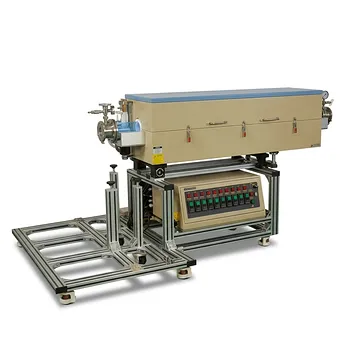
Ten Zone Multi Orientation Laboratory Tube Furnace for 1200C High Temperature Gradient Thermal Processing

High Temperature 1700C Benchtop Tube Furnace with 5 Inch Heating Zone High Purity Alumina Tube and Vacuum Sealing Flanges

1200C High Throughput Multi Channel Tube Furnace with 50mm Quartz Tubes for Annealing and Material Phase Diagram Research

High Temperature Automated 5 Inch Tube Furnace for Autonomous Material Research and Advanced Laboratory R&D

1700C Hydrogen Gas Tube Furnace with 60mm Alumina Process Tube and Integrated Hydrogen Safety Detector