What is the purpose of nitrogen in LiFePO4 tube furnace coating? Optimize material purity and conductivity.
Updated 3 months ago
The primary purpose of introducing nitrogen is to create a strictly inert environment that prevents the chemical oxidation of divalent iron ($Fe^{2+}$) and the premature combustion of the carbon source. During high-temperature sintering, nitrogen displaces oxygen to ensure the iron core maintains its desired valence state while allowing organic precursors to undergo controlled pyrolysis. This process is fundamental to forming a uniform, conductive carbon layer that is essential for the electrochemical performance of Lithium Iron Phosphate (LiFePO4).
Core Takeaway: Nitrogen acts as a dual-purpose protective agent: it preserves the chemical integrity of the $Fe^{2+}$ crystal structure and facilitates the transformation of organic materials into a functional, conductive carbon coating.
Protecting the Chemical Integrity of LiFePO4
Preventing Iron Oxidation
The most critical role of nitrogen is keeping iron in its divalent state ($Fe^{2+}$). In the presence of even trace amounts of oxygen at high temperatures, $Fe^{2+}$ will oxidize into $Fe^{3+}$ (trivalent iron).
This oxidation destroys the intended crystal structure of the material. A high-purity nitrogen environment (typically 99.99% or higher) ensures the Lithium Iron Phosphate maintains the correct lattice for efficient lithium-ion transport.
Maintaining Electronic Conductivity
If iron is allowed to oxidize, the resulting material loses its high electrical conductivity. By excluding oxygen, nitrogen ensures the final product retains the electrochemical properties required for high-performance battery applications.
Facilitating the Carbon Coating Process
Enabling Controlled Pyrolysis
Carbon coating requires organic sources, such as sucrose or glucose, to break down into pure carbon. In an oxygen-rich environment, these sources would simply burn away (combust) into carbon dioxide and water vapor.
In a nitrogen-protected atmosphere, these materials undergo pyrolysis. This is a thermal decomposition process that allows the carbon to deposit uniformly onto the particle surfaces, forming a stable conductive carbon layer.
Improving Particle Surface Modification
The nitrogen atmosphere allows the carbon layer to form a uniform, thin film around the LiFePO4 particles. This coating is vital for reducing polarization during the lithium extraction process, which directly improves the battery's charge and discharge efficiency.
The Role of Nitrogen as a Displacement Agent
Purging Atmospheric Contaminants
Before the heating cycle begins, nitrogen is used to purge the furnace chamber. This initial flow displaces ambient air and moisture, ensuring the heat treatment starts in a baseline inert state.
Removal of Pyrolysis By-products
As the carbon source decomposes, it releases gaseous by-products. Continuous nitrogen flow acts as a carrier gas, sweeping these by-products out of the furnace to prevent them from interfering with the material's structural transformation.
Understanding the Trade-offs
Nitrogen Purity vs. Cost
While nitrogen is an abundant gas, the grade required for battery material synthesis must be high-purity (at least 99.99%). Using lower-grade nitrogen introduces the risk of "oxidative burnout," where residual oxygen consumes the carbon matrix or oxidizes the iron.
Flow Rate Management
Maintaining the correct flow rate is a balancing act. If the flow is too low, oxygen may leak back into the system or by-products may accumulate; if it is too high, it can lead to unnecessary cooling of the furnace zones and increased operational costs.
Inertia vs. Reduction
While nitrogen is inert, it does not actively "fix" oxidation that has already occurred. In some specialized cases, a blend of nitrogen and hydrogen (forming a reducing atmosphere) may be used if the goal is to actively reduce any existing trivalent iron back to the divalent state.
How to Apply This to Your Process
When configuring your atmosphere tube furnace for LiFePO4 modification, your nitrogen strategy should align with your specific material goals.
- If your primary focus is Maximum Conductivity: Prioritize the highest purity nitrogen (99.999%) and a steady flow rate to ensure the carbon source graphitizes perfectly without any oxidative loss.
- If your primary focus is Crystal Structure Purity: Ensure the furnace is purged thoroughly at room temperature before heating to eliminate all internal oxygen that could trigger $Fe^{2+}$ to $Fe^{3+}$ conversion.
- If your primary focus is Scaling Production: Optimize the nitrogen flow rate to the minimum required to maintain a positive pressure, reducing gas consumption while still protecting the material from the external atmosphere.
Proper atmospheric control is the difference between a high-capacity battery material and a chemically compromised powder.
Summary Table:
| Feature | Role of Nitrogen | Impact on LiFePO4 |
|---|---|---|
| Atmosphere Control | Creates an inert environment | Prevents iron oxidation ($Fe^{2+}$ to $Fe^{3+}$) |
| Chemical Process | Facilitates controlled pyrolysis | Forms a uniform, conductive carbon coating |
| Contaminant Removal | Acts as a displacement & carrier gas | Purges oxygen and removes gaseous by-products |
| Material Integrity | Maintains desired lattice structure | Enhances electrochemical performance & conductivity |
Elevate Your Battery Material Research with THERMUNITS
As a leading manufacturer of high-temperature laboratory equipment for material science, THERMUNITS provides the precision thermal solutions required for advanced R&D. Our specialized Atmosphere Tube Furnaces and CVD/PECVD systems are engineered to deliver the strict inert environments necessary for successful LiFePO4 carbon coating and high-purity sintering.
We offer a comprehensive range of thermal processing equipment, including:
- Muffle, Vacuum, and Atmosphere Furnaces
- Tube, Rotary, and Hot Press Furnaces
- Vacuum Induction Melting (VIM) & Electric Rotary Kilns
- Dental Furnaces and High-Quality Thermal Elements
Ensure the integrity of your heat treatment process. Contact our technical team today to discuss how THERMUNITS can optimize your laboratory’s efficiency and material performance.
References
- Xiaoyu Zhao, Yanfei Wang. Enhanced Lithium Extraction from Brines: Prelithiation Effect of FePO<sub>4</sub> with Size and Morphology Control. DOI: 10.1002/advs.202405176
Mentioned Products
- Vertical 1700C Vacuum and Atmosphere Tube Furnace with 80mm Alumina Tube
- 1200C Hybrid Muffle and Tube Furnace for Material Research with Dual Atmosphere Control Quartz Tubes
- 1200°C Atmosphere Controlled Automatic Bottom Loading Furnace with 6 Inch Quartz Tube
- Compact Hybrid Muffle and Tube Furnace for 1000C Controlled Atmosphere Laboratory Material Sintering
- Compact Vertical Split Quartz Tube Furnace with Stainless Steel Vacuum Flanges for Rapid Thermal Quenching and Controlled Atmosphere Material Processing
People Also Ask
- How is an industrial-grade vertical tube furnace utilized in smelting leaching residues? Enhance Metal Recovery Efficiency
- What is the function of a laboratory-grade vertical tube furnace in fast pyrolysis? Optimize Composite Research.
- How does a vertical tube furnace facilitate thermoelectric alloy melting? Precision synthesis for material homogeneity.
- Why is a thermocouple sensor indispensable for monitoring the vertical tube furnace during gallium oxide nanowire production? Optimize VLS Growth
- What are the advantages of using a vertical tube furnace for crucible experiments simulating steel-slag interactions?

Tech Team · ThermUnits
Last updated on Jun 03, 2026
Related Products

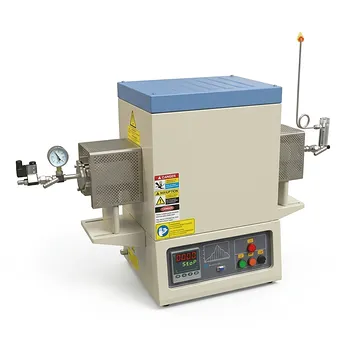
Vertical 1700C Vacuum and Atmosphere Tube Furnace with 80mm Alumina Tube
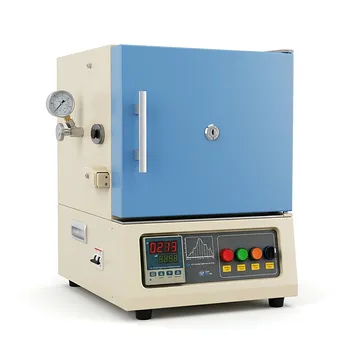
1200C Hybrid Muffle and Tube Furnace for Material Research with Dual Atmosphere Control Quartz Tubes
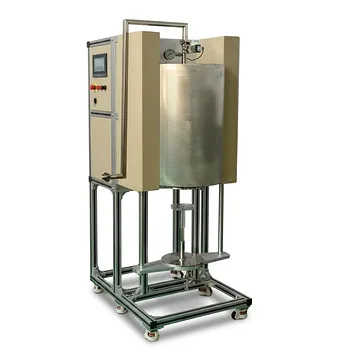
1200°C Atmosphere Controlled Automatic Bottom Loading Furnace with 6 Inch Quartz Tube
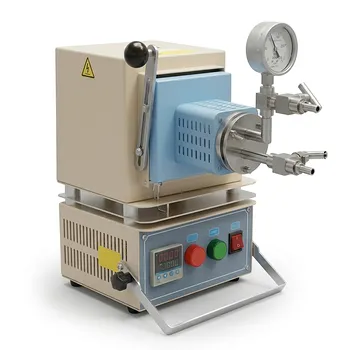
Compact Hybrid Muffle and Tube Furnace for 1000C Controlled Atmosphere Laboratory Material Sintering

Compact Vertical Split Quartz Tube Furnace with Stainless Steel Vacuum Flanges for Rapid Thermal Quenching and Controlled Atmosphere Material Processing
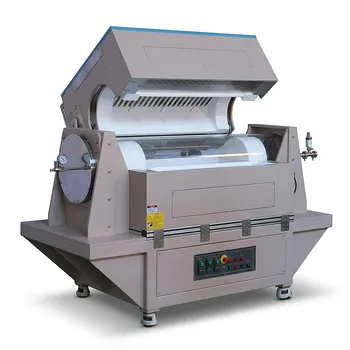
Three Zone Tube Furnace with 11 Inch or 15 Inch Quartz Tube and Hinged Flanges for Vacuum Atmosphere Heat Treatment
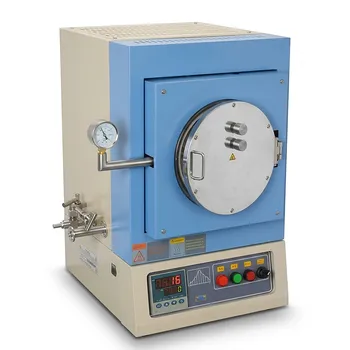
1100°C High Temperature Quartz Chamber Furnace 8 Inch OD with 7.6 Liter Capacity and Vacuum Atmosphere Capability
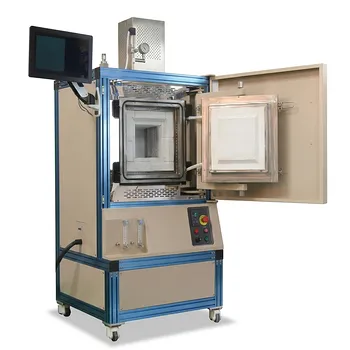
High Temperature Hydrogen Atmosphere Box Furnace 1650C Max Reducing Environment Material Synthesis System 8x8x8 Chamber

High Temperature 1700C Vertical Tube Furnace for Powder Spherification and Material Sintering

Compact High Temperature 1600C Tube Furnace with 50mm Alumina Tube and Vacuum Flanges for Material Sintering

High Temperature 1700C Six Zone Split Tube Furnace with Alumina Tube and Water Cooled Flanges

High Temperature 1700C Tube Furnace with High Vacuum Turbomolecular Pump System and Multi Channel Mass Flow Controller Gas Mixer

1800C High Temperature Compact Vacuum Tube Furnace with 60mm OD Alumina Tube and Kanthal MoSi2 Heating Elements

1100C Tube Furnace with Vacuum Flange and Programmable Temperature Controller for Material Science and Industrial Heat Treatment

High Temperature 1700C Benchtop Tube Furnace with 5 Inch Heating Zone High Purity Alumina Tube and Vacuum Sealing Flanges
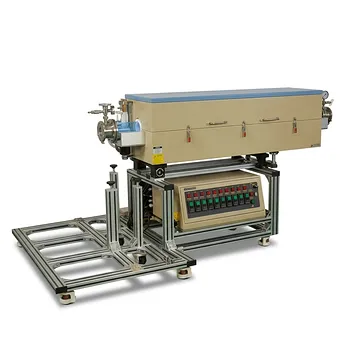
Ten Zone Multi Orientation Laboratory Tube Furnace for 1200C High Temperature Gradient Thermal Processing

1200C High Throughput Multi Channel Tube Furnace with 50mm Quartz Tubes for Annealing and Material Phase Diagram Research

High Temperature Automated 5 Inch Tube Furnace for Autonomous Material Research and Advanced Laboratory R&D
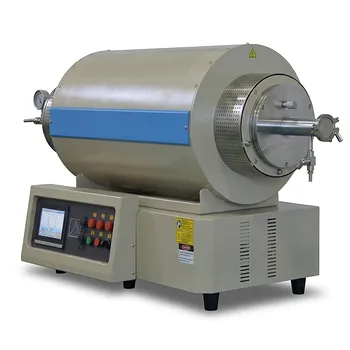
1200C Max Three Zone Tube Furnace 6 Inch OD Max with Tube and Flange