Why is environment control within a high-temperature tube furnace critical? Prevent Burnout & Ensure Material Purity.
Updated 3 months ago
The precise synthesis of nanoporous carbon depends entirely on the exclusion of oxygen during high-temperature processing. A high-temperature tube furnace provides the strictly controlled inert atmosphere—typically nitrogen or argon—and precise thermal ramping required to facilitate the carbonization process. This environment allows sacrificial templates to degrade into pores and polymer resins to undergo pyrolysis into an amorphous carbon skeleton without the material simply burning away.
Core Takeaway: Environment control transforms a potentially destructive heating process into a constructive chemical conversion. By eliminating oxygen and maintaining a stable thermal field, the furnace ensures the polymer precursor undergoes anaerobic pyrolysis rather than oxidative burnout, preserving the intricate pore structures necessary for high-performance carbon materials.
The Critical Role of Atmosphere Displacement
Preventing Oxidative Burnout
At temperatures ranging from 500°C to over 1000°C, carbon materials are highly reactive to oxygen. The primary function of the tube furnace's environment control is to purge oxygen using high-purity nitrogen or argon, preventing the carbon matrix from undergoing oxidative loss or complete "burnout."
Maintaining Chemical Purity
A stable inert flow protects the surface chemical properties of the resulting amorphous carbon. By maintaining an oxygen-free calcination environment, the furnace prevents unwanted oxidation of functional elements, such as boron atoms or nitrogen-doped ligands, ensuring the final product retains its intended chemical functionality.
Protecting System Hardware
The environment control system does more than protect the sample; it also protects the furnace itself. An inert atmosphere prevents the oxidation of heating elements at extreme temperatures, which is essential for maintaining the longevity and accuracy of the equipment during industrial-grade applications.
Facilitating Complex Molecular Transformations
Deep Dehydrogenation and Aromatization
Successful conversion of biomass or polymer precursors requires specific chemical reactions including dehydrogenation, deoxygenation, and aromatization. The tube furnace's ability to maintain high temperatures (typically 750°C to 900°C) under nitrogen protection provides the energy needed to drive these reactions while preventing the organic framework from collapsing.
Template Degradation and Pore Formation
Nanoporous carbon is often created by incorporating sacrificial templates into the polymer precursor. Under a precise temperature profile—such as heating at 10 degrees Celsius per minute—the furnace facilitates the thermal degradation of these templates, leaving behind a network of nanopores within the solidifying amorphous carbon skeleton.
In-Situ Reduction and Doping
In advanced composite materials, environment control allows for the in-situ reduction of metal ions (like bismuth) or the embedding of heteroatoms into the carbon lattice. This simultaneous carbonization and functionalization are only possible when the atmosphere is strictly regulated to prevent competing oxidative reactions.
Understanding the Trade-offs and Technical Pitfalls
Gas Flow Dynamics and Thermal Uniformity
While a high gas flow rate ensures an oxygen-free environment, it can introduce thermal gradients across the tube. If the inert gas is not pre-heated or if the flow is too aggressive, it can cause uneven carbonization, leading to a product with inconsistent pore size distributions and varying degrees of graphitization.
The Choice Between Nitrogen and Argon
Nitrogen is often the standard choice for carbonization due to its cost-effectiveness; however, at temperatures exceeding 1700°C, nitrogen can become reactive. In these ultra-high-temperature ranges, switching to high-purity argon is necessary to prevent the formation of unwanted nitrides and to ensure the structural integrity of carbon nanospheres.
Seal Integrity and Back-Streaming
Even a minor leak in the furnace tube seals can lead to oxygen back-streaming, which ruins the nanoporous structure. Continuous monitoring of the inert protective atmosphere is required to ensure that the vacuum or positive pressure remains stable throughout the multi-stage temperature programming.
Selecting the Right Parameters for Your Goal
To achieve the best results with your high-temperature tube furnace, tailor your environment control to your specific material requirements:
- If your primary focus is maximizing specific surface area: Maintain a strictly controlled nitrogen flow and a slow temperature ramp to allow sacrificial templates to gasify without collapsing the forming carbon walls.
- If your primary focus is heteroatom (N, B) doping: Use a stable inert atmosphere at temperatures between 800°C and 1000°C to ensure that the doping atoms are incorporated into the lattice rather than being lost to oxidation.
- If your primary focus is high electrical conductivity: Utilize higher carbonization temperatures (above 1000°C) in a high-purity argon environment to facilitate deeper aromatization and structural stability of the carbon nanofiber network.
Mastering the balance between thermal energy and atmospheric purity is the only way to transform a simple polymer into a high-value nanoporous carbon material.
Summary Table:
| Key Factor | Function in Carbonization | Benefit to Final Material |
|---|---|---|
| Inert Atmosphere | Excludes Oxygen (N2/Ar) | Prevents oxidative loss & preserves carbon skeleton |
| Thermal Ramping | Controlled Pyrolysis | Facilitates template degradation & pore formation |
| Gas Flow Control | Displaces Reactive Gases | Maintains chemical purity and enables nitrogen/boron doping |
| Seal Integrity | Blocks Air Back-streaming | Protects sample structure and extends heating element life |
Elevate Your Material Research with THERMUNITS
Precision environment control is the difference between successful carbonization and material failure. THERMUNITS is a leading manufacturer of high-temperature laboratory equipment for material science and industrial R&D. We empower researchers with advanced thermal processing solutions designed for absolute atmospheric integrity.
Our comprehensive product range includes:
- Tube, Vacuum, and Atmosphere Furnaces (Ideal for nanoporous carbon synthesis)
- Muffle, Rotary, and Hot Press Furnaces
- CVD/PECVD Systems for advanced chemical vapor deposition
- Vacuum Induction Melting (VIM) & Dental Furnaces
- Thermal Elements and customized laboratory heat treatment equipment
Whether you are refining biomass precursors or engineering high-performance nanofibers, our equipment ensures the thermal stability and gas purity your project demands.
Contact THERMUNITS today to find the perfect furnace for your lab
References
- Zhongyuan Li, Seok‐Woo Lee. Nanoporous amorphous carbon nanopillars with lightweight, ultrahigh strength, large fracture strain, and high damping capability. DOI: 10.1038/s41467-024-52359-6
Mentioned Products
- High Temperature Tube Furnace 1500C with Sliding Flanges and 50mm OD for Rapid Thermal Processing Fast Heating and Cooling
- Vertical 1700C Vacuum and Atmosphere Tube Furnace with 80mm Alumina Tube
- 1100C Tube Furnace with Vacuum Flange and Programmable Temperature Controller for Material Science and Industrial Heat Treatment
- Compact High Temperature 1600C Tube Furnace with 50mm Alumina Tube and Vacuum Flanges for Material Sintering
- 900°C Max Rotary Tube Furnace with 8 Inch 310S Alloy Tube and Optional Multi Zone Heating for Industrial Material Calcination
People Also Ask
- How are high-temperature tube furnaces utilized to repair etching damage? Precision Lattice Restoration Solutions
- What role does a high-temperature tube furnace play in the sulfidation heat treatment of CoS@C/MXene nanocomposites? Guide
- What core conditions does a high-temperature tube furnace provide for rGO aerogels? Mastering Precision Synthesis.
- How does precision tube furnace control influence CoFe nanoparticle formation? Master Your Bimetallic Synthesis.
- What role does a high-temperature tube furnace play in CVD synthesis of silicon nanowires? Master VLS Growth Precision.

Tech Team · ThermUnits
Last updated on Jun 03, 2026
Related Products

High Temperature Tube Furnace 1500C with Sliding Flanges and 50mm OD for Rapid Thermal Processing Fast Heating and Cooling

Vertical 1700C Vacuum and Atmosphere Tube Furnace with 80mm Alumina Tube

1100C Tube Furnace with Vacuum Flange and Programmable Temperature Controller for Material Science and Industrial Heat Treatment

Compact High Temperature 1600C Tube Furnace with 50mm Alumina Tube and Vacuum Flanges for Material Sintering
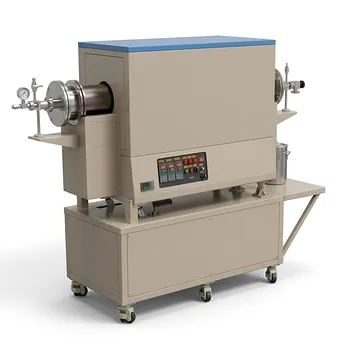
900°C Max Rotary Tube Furnace with 8 Inch 310S Alloy Tube and Optional Multi Zone Heating for Industrial Material Calcination

1700C Hydrogen Gas Tube Furnace with 60mm Alumina Process Tube and Integrated Hydrogen Safety Detector

High Temperature 1700C Tube Furnace with High Vacuum Turbomolecular Pump System and Multi Channel Mass Flow Controller Gas Mixer

5 Inch Three Zone Rotary Tube Furnace with Integrated Gas Delivery System and 1200C Capability for Advanced Material CVD Processing

Three Zone Tube Furnace with 11 Inch or 15 Inch Quartz Tube and Hinged Flanges for Vacuum Atmosphere Heat Treatment
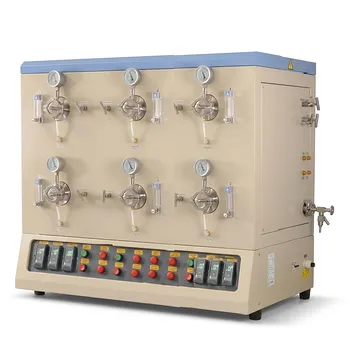
1200C High Throughput Multi Channel Tube Furnace with 50mm Quartz Tubes for Annealing and Material Phase Diagram Research

1200°C 5 Inch Vertical Quartz Tube Furnace with Stainless Steel Vacuum Flanges
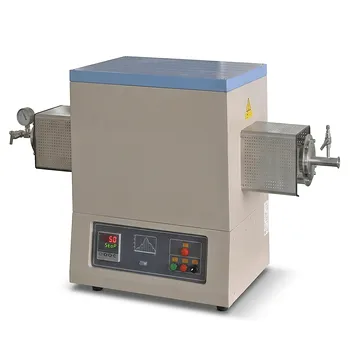
High Temperature 1700C Tube Furnace with 4 Inch OD Alumina Tube and Vacuum Sealing Flanges

High Temperature 1700C Benchtop Tube Furnace with 5 Inch Heating Zone High Purity Alumina Tube and Vacuum Sealing Flanges

High Temperature 1700C Six Zone Split Tube Furnace with Alumina Tube and Water Cooled Flanges

Compact Vertical Split Quartz Tube Furnace with Stainless Steel Vacuum Flanges for Rapid Thermal Quenching and Controlled Atmosphere Material Processing

1800C High Temperature Compact Vacuum Tube Furnace with 60mm OD Alumina Tube and Kanthal MoSi2 Heating Elements
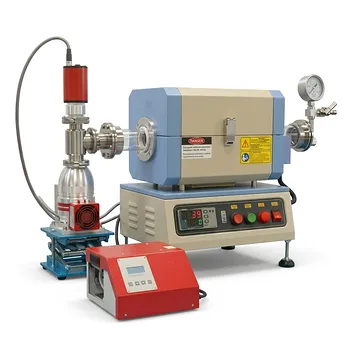
High Vacuum Compact Tube Furnace 1200C with Integrated Turbo Pump System and 8 Inch Heating Zone
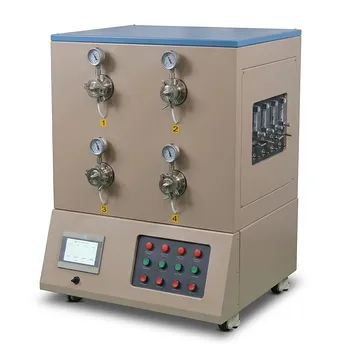
High Throughput 1200C Four Channel Tube Furnace with 3 Inch Quartz Tubes for Multi Zone Annealing and Material Research

High Temperature Automated 5 Inch Tube Furnace for Autonomous Material Research and Advanced Laboratory R&D
