How do high-precision Mass Flow Controllers (MFC) contribute to atmospheric control during the roasting process in a tube furnace?
Updated 3 months ago
High-precision Mass Flow Controllers (MFCs) are the definitive tools for regulating gas input in tube furnaces, ensuring that roasting atmospheres are both stable and reproducible. By delivering gases like oxygen, argon, or carbon dioxide with milliliter-level precision—often within a margin of plus or minus 2 cc/min—MFCs allow researchers to manipulate oxygen partial pressures and chemical potentials with extreme accuracy. This precision is what enables the validation of complex thermodynamic models and the simulation of specific industrial or environmental chemical pathways.
Core Takeaway: High-precision MFCs transition a tube furnace from a basic heating element into a controlled chemical reactor. By precisely managing gas ratios, they establish the exact thermodynamic conditions required to study phase transitions, reaction kinetics, and material degradation.
Establishing Thermodynamic Equilibrium and Potentials
Precise Control of Partial Pressures
The primary role of an MFC is to dictate the oxygen partial pressure within the furnace. By adjusting the ratio of gases such as CO and CO2, the MFC establishes a specific chemical environment that determines the oxidation or reduction state of the sample.
Validating Thermodynamic Models
High-precision control is critical for verifying theoretical desulfurization pathways and phase transition points. When the gas flow is accurate to within 2 cc/min, researchers can confidently correlate experimental results with thermodynamic predictions, ensuring that observed chemical changes are due to intentional atmospheric shifts rather than flow fluctuations.
Creating Specific Chemical Potentials
Beyond simple oxidation, MFCs are used to establish sulfur potentials or carbon activities. This is achieved by mixing complex gas streams (e.g., SO2, Ar, and CO), which is vital for investigating metal distribution in various matte grades or the electrical response of minerals under reducing conditions.
Simulating Complex Industrial Environments
High-Fidelity Combustion Replication
MFCs allow for the strict simulation of flue gas components generated during biomass or coal combustion. By regulating the molar volume ratios of nitrogen, carbon dioxide, and sulfur dioxide, the system can replicate the aggressive superheater corrosion environments found in power plants.
Managing Reversible Solid-Gas Reactions
For reactions like carbonate decomposition, which are highly dependent on the surrounding atmosphere, MFCs provide the stability needed to study kinetics. By accurately proportioning synthetic air and nitrogen, the MFC regulates the CO2 partial pressure, allowing for a precise determination of decomposition onset temperatures.
Maintaining Stable Residence Times
In drop tube furnaces, the MFC regulates the airflow entering the combustion zone, which directly dictates the residence time of powdered fuels. Consistent flow rates ensure that the concentration distribution of the atmosphere remains steady, which is a decisive factor in evaluating the sintering degree (TSF value) of ash particles.
Understanding the Trade-offs and Limitations
Gas Compatibility and Corrosion
While MFCs are highly accurate, they are sensitive to the chemical nature of the gases being used. Corrosive gases like hydrogen chloride (HCl) or sulfur dioxide (SO2) require specialized MFC materials and frequent maintenance to prevent internal degradation and subsequent calibration drift.
Calibration and Pressure Sensitivity
An MFC calibrated for one gas (e.g., Nitrogen) will not provide accurate readings for another (e.g., Argon) without using specific conversion factors. Additionally, while MFCs are designed to be independent of pressure fluctuations, extreme changes in line pressure can still impact the response time and stability of the gas delivery.
Minimum Flow Thresholds
High-precision MFCs are most effective within their optimal operating range, typically between 10% and 100% of their full-scale capacity. Attempting to operate at the extreme low end of a controller’s range can introduce higher percentage errors, potentially compromising the "milliliter-level" accuracy required for sensitive roasting experiments.
How to Apply Atmospheric Control to Your Goals
To achieve the best results in your tube furnace roasting process, select your MFC configuration based on your specific experimental requirements:
- If your primary focus is Thermodynamic Validation: Prioritize MFCs with the highest precision (±2 cc/min or better) and focus on maintaining stable ratios of CO/CO2 or O2/Ar to precisely control oxygen partial pressure.
- If your primary focus is Industrial Simulation: Utilize a multi-channel MFC system to mix diverse gases like SO2, HCl, and CO2, ensuring the materials used in the controllers are rated for corrosive environments.
- If your primary focus is Kinetic Analysis: Focus on the stability of the flow rate over time rather than just the absolute volume, as consistent residence time is the most critical variable for determining reaction rates and particle behavior.
Precision in atmospheric control is the bridge between theoretical chemistry and repeatable experimental reality.
Summary Table:
| Core Function | Impact on Research | Key Accuracy Metric |
|---|---|---|
| Partial Pressure Control | Validates thermodynamic models & phase transitions | ±2 cc/min |
| Industrial Simulation | Replicates flue gas & corrosion environments | Multi-channel mixing |
| Kinetic Stability | Ensures consistent residence times for reactions | 10% - 100% full scale |
Elevate Your Research with Precision Thermal Control
Ready to achieve milliliter-level accuracy in your material science experiments? THERMUNITS is a leading manufacturer of high-temperature laboratory equipment, providing state-of-the-art thermal processing solutions. From specialized Tube and Vacuum furnaces to CVD/PECVD systems and Rotary kilns, our equipment is designed for rigorous industrial R&D and academic excellence.
Whether you are validating complex thermodynamic pathways or simulating aggressive industrial environments, our experts are here to help you select the perfect atmospheric control configuration. Contact THERMUNITS today to discuss your project requirements!
References
- Erdenebold Urtnasan, Jei‐Pil Wang. Correlation between Thermodynamic Studies and Experimental Process for Roasting Cobalt-Bearing Pyrite. DOI: 10.3390/met14070777
Mentioned Products
- High Temperature Tube Furnace 1500C with Sliding Flanges and 50mm OD for Rapid Thermal Processing Fast Heating and Cooling
- Vertical 1700C Vacuum and Atmosphere Tube Furnace with 80mm Alumina Tube
- 1100C Tube Furnace with Vacuum Flange and Programmable Temperature Controller for Material Science and Industrial Heat Treatment
- Compact High Temperature 1600C Tube Furnace with 50mm Alumina Tube and Vacuum Flanges for Material Sintering
- 900°C Max Rotary Tube Furnace with 8 Inch 310S Alloy Tube and Optional Multi Zone Heating for Industrial Material Calcination
People Also Ask
- How are high-temperature tube furnaces utilized to repair etching damage? Precision Lattice Restoration Solutions
- What core conditions does a high-temperature tube furnace provide for rGO aerogels? Mastering Precision Synthesis.
- What role does a high-temperature tube furnace play in CVD synthesis of silicon nanowires? Master VLS Growth Precision.
- How does precision tube furnace control influence CoFe nanoparticle formation? Master Your Bimetallic Synthesis.
- What role does a high-temperature tube furnace play in the sulfidation heat treatment of CoS@C/MXene nanocomposites? Guide

Tech Team · ThermUnits
Last updated on Jun 02, 2026
Related Products

High Temperature Tube Furnace 1500C with Sliding Flanges and 50mm OD for Rapid Thermal Processing Fast Heating and Cooling

Vertical 1700C Vacuum and Atmosphere Tube Furnace with 80mm Alumina Tube

1100C Tube Furnace with Vacuum Flange and Programmable Temperature Controller for Material Science and Industrial Heat Treatment

Compact High Temperature 1600C Tube Furnace with 50mm Alumina Tube and Vacuum Flanges for Material Sintering
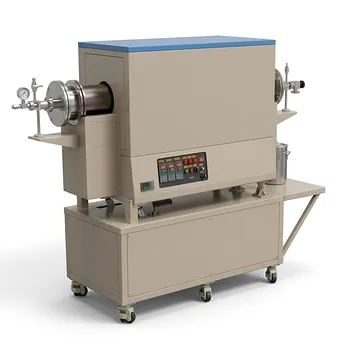
900°C Max Rotary Tube Furnace with 8 Inch 310S Alloy Tube and Optional Multi Zone Heating for Industrial Material Calcination
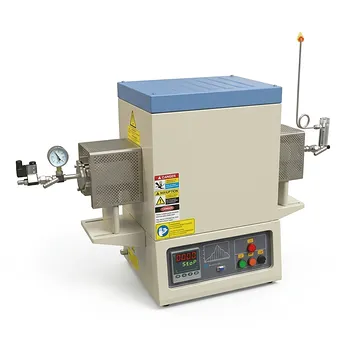
1700C Hydrogen Gas Tube Furnace with 60mm Alumina Process Tube and Integrated Hydrogen Safety Detector

High Temperature 1700C Tube Furnace with High Vacuum Turbomolecular Pump System and Multi Channel Mass Flow Controller Gas Mixer
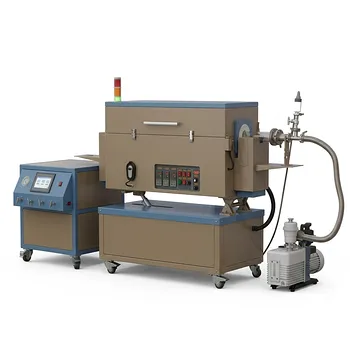
5 Inch Three Zone Rotary Tube Furnace with Integrated Gas Delivery System and 1200C Capability for Advanced Material CVD Processing
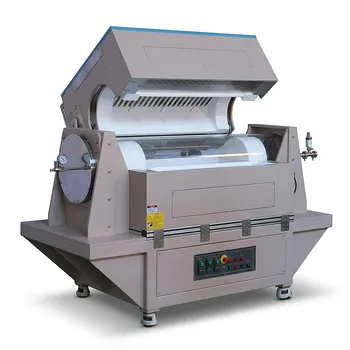
Three Zone Tube Furnace with 11 Inch or 15 Inch Quartz Tube and Hinged Flanges for Vacuum Atmosphere Heat Treatment
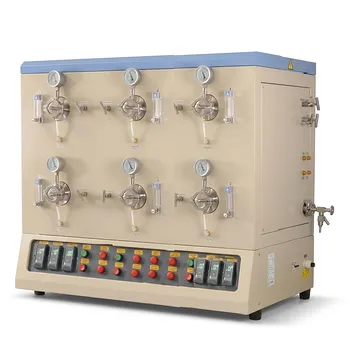
1200C High Throughput Multi Channel Tube Furnace with 50mm Quartz Tubes for Annealing and Material Phase Diagram Research

1200°C 5 Inch Vertical Quartz Tube Furnace with Stainless Steel Vacuum Flanges
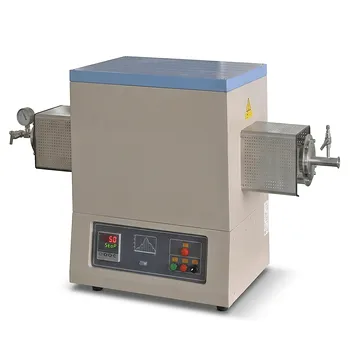
High Temperature 1700C Tube Furnace with 4 Inch OD Alumina Tube and Vacuum Sealing Flanges

Compact Vertical Split Quartz Tube Furnace with Stainless Steel Vacuum Flanges for Rapid Thermal Quenching and Controlled Atmosphere Material Processing

High Temperature 1700C Benchtop Tube Furnace with 5 Inch Heating Zone High Purity Alumina Tube and Vacuum Sealing Flanges

High Temperature 1700C Six Zone Split Tube Furnace with Alumina Tube and Water Cooled Flanges

1800C High Temperature Compact Vacuum Tube Furnace with 60mm OD Alumina Tube and Kanthal MoSi2 Heating Elements
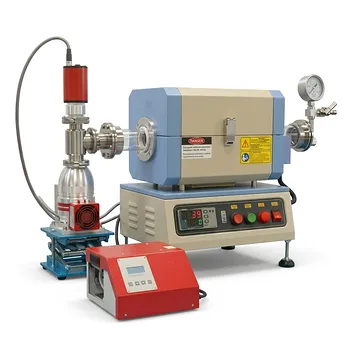
High Vacuum Compact Tube Furnace 1200C with Integrated Turbo Pump System and 8 Inch Heating Zone
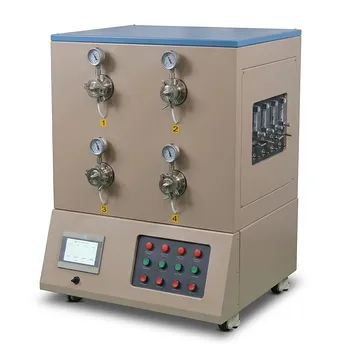
High Throughput 1200C Four Channel Tube Furnace with 3 Inch Quartz Tubes for Multi Zone Annealing and Material Research

High Temperature Automated 5 Inch Tube Furnace for Autonomous Material Research and Advanced Laboratory R&D
