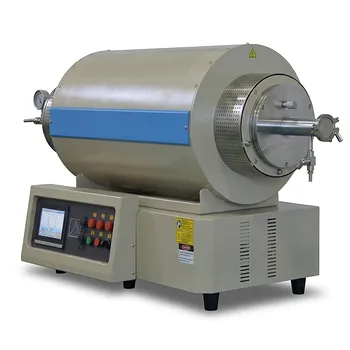
What is the primary role of a tube furnace during the carbonization stage of preparing lignin-based porous carbon (Clig)?
Updated 3 months ago
The primary role of a tube furnace during the carbonization stage is to provide a precisely controlled, high-temperature environment under an inert atmosphere to facilitate pyrolysis. This process effectively converts lignin precursors into a stable carbon skeleton by driving off volatiles and inducing chemical transformations. Specifically, at temperatures such as 550°C, the furnace enables the thermochemical reactions required to develop the high specific surface area and rich pore structure characteristic of porous carbon (Clig).
Core Takeaway: The tube furnace acts as a specialized thermal reactor that transforms raw lignin into functional carbon through simultaneous heating and atmospheric protection. It is the essential tool for managing the transition from an organic polymer to a structured, porous, and conductive material.
The Engine of Controlled Pyrolysis
High-Temperature Thermal Conversion
The tube furnace provides the thermal energy necessary for pyrolysis, the chemical decomposition of organic materials through heat. In the case of lignin-based carbon, this typically involves heating the material to temperatures ranging from 550°C to 1000°C.
This heat facilitates deoxygenation and aromatization, where oxygen-containing functional groups are removed, leaving behind a conductive carbon framework. Without this concentrated heat, the lignin would remain a non-conductive organic polymer rather than becoming an active carbon support.
Inert Atmosphere Protection
A critical function of the tube furnace is maintaining a continuous flow of protective gases, such as Nitrogen (N2) or Argon. This oxygen-free environment prevents the lignin from simply combusting or burning away at high temperatures.
By isolating the material from oxygen, the furnace ensures carbon isolation. This allows the biomass to undergo "carbonization" (retaining the carbon) rather than "incineration" (turning to ash).
Facilitating Structural and Chemical Development
Thermochemical Activation and Porosity
When lignin is mixed with an activator like Potassium Hydroxide (KOH), the tube furnace facilitates the specific chemical reactions needed to etch the carbon. The high-temperature environment allows the activator to react with the carbon skeleton, creating a high specific surface area.
This process is what transforms a solid carbon mass into a porous carbon support. The furnace ensures that these reactions occur uniformly throughout the material, resulting in an interconnected network of micro- and mesopores.
Molecular Recombination and Doping
The furnace also serves as the physical foundation for complex depolymerization and fragmentation. If dopants like urea are present, the controlled heat allows nitrogen atoms to integrate into the carbon lattice.
This nitrogen-doping process enhances the chemical properties of the resulting carbon. The precise control of the heating rate (e.g., 6 °C/min) ensures that these reactions occur in a predictable sequence to maximize yield.
Ensuring Morphological Stability
Managing the Glass Transition
Lignin has a relatively low glass transition temperature (110–235 °C), meaning it can melt and lose its shape if heated too aggressively. A tube furnace allows for a pre-carbonization or oxidative stabilization stage at lower temperatures (around 250 °C).
This preliminary step increases the thermal stability of the material. By using the furnace to carefully "set" the structure, researchers ensure the final carbon particles retain their intended spherical or porous morphology during the final high-heat phase.
Uniformity Through Motion
In advanced setups, such as rotary tube furnaces, the movement of the tube ensures that lignin particles are heated uniformly. This dynamic heating prevents localized overheating, which can lead to inconsistent carbonization and collapsed pore structures.
Understanding the Trade-offs
- Temperature vs. Surface Area: While higher temperatures (1000°C+) increase conductivity and deoxygenation, they can sometimes cause pore shrinkage or structural collapse, reducing the available surface area.
- Heating Rate Sensitivity: Heating the material too quickly can trap gases inside the particles, leading to internal pressure that ruptures the desired pore structure.
- Atmospheric Purity: Any leak or oxygen contamination within the tube furnace can result in the partial gasification of the sample, significantly lowering the final carbon yield.
How to Apply This to Your Project
- If your primary focus is high surface area: Use the furnace in combination with a chemical activator like KOH at moderate temperatures (550°C–700°C) to maximize pore etching.
- If your primary focus is electrical conductivity: Target higher carbonization temperatures (above 800°C) to ensure more complete graphitization and removal of non-conductive oxygen groups.
- If your primary focus is morphological precision: Implement a slow pre-carbonization ramp near 250°C to stabilize the lignin structure before proceeding to full pyrolysis.
By masterfully controlling the thermal and atmospheric variables within a tube furnace, you can precisely engineer the physical and chemical properties of lignin-based porous carbon.
Summary Table:
| Stage/Function | Impact on Lignin-Based Carbon | Key Control Parameter |
|---|---|---|
| Controlled Pyrolysis | Converts organic polymers into stable carbon skeletons | Temperature (550°C - 1000°C) |
| Inert Atmosphere | Prevents combustion and ensures carbon isolation | Gas flow (Nitrogen/Argon) |
| Chemical Activation | Etches pores to create high specific surface area | Activator reaction (e.g., KOH) |
| Morphology Control | Maintains structural stability and prevents melting | Heating rate (e.g., 6°C/min) |
| Doping/Recombination | Integrates nitrogen for enhanced chemical properties | Precursor ratio & dwell time |
Elevate Your Material Research with THERMUNITS
Precise carbonization requires more than just heat; it requires absolute control. THERMUNITS is a leading manufacturer of high-temperature laboratory equipment, providing the advanced thermal solutions necessary for cutting-edge material science and industrial R&D.
Our specialized Tube and Rotary furnaces are engineered to deliver the uniform heating and strict atmospheric protection essential for producing high-quality porous carbon. Beyond carbonization, we offer a comprehensive range of equipment including Muffle, Vacuum, and Atmosphere furnaces, CVD/PECVD systems, and Vacuum Induction Melting (VIM) furnaces to support every stage of your heat treatment workflow.
Ready to achieve superior heat treatment results? Contact THERMUNITS today to find your solution!
References
- Fangli Du, Yanming Li. Catalytic Degradation of Lignin over Sulfonyl-Chloride-Modified Lignin-Based Porous Carbon-Supported Metal Phthalocyanine: Effect of Catalyst Concentrations. DOI: 10.3390/molecules29020347
Mentioned Products
- High Temperature 1700C Vertical Tube Furnace for Powder Spherification and Material Sintering
- Compact High Temperature 1600C Tube Furnace with 50mm Alumina Tube and Vacuum Flanges for Material Sintering
- Compact Hybrid Muffle and Tube Furnace for 1000C Controlled Atmosphere Laboratory Material Sintering
- 1200C Sliding Tube Furnace for Rapid Thermal Processing and CVD Graphene Growth with 100mm OD Capacity
- 900°C Max Rotary Tube Furnace with 8 Inch 310S Alloy Tube and Optional Multi Zone Heating for Industrial Material Calcination
People Also Ask
- What role does a high-temperature vertical tube furnace play in simulating high-carbon ferromanganese slag formation?
- What functions does a vertical high-temperature tube furnace perform? Master Industrial Sintering & R&D Simulation
- What is the primary function of a high-temperature tube furnace in Cu1-N-C synthesis? Precision Thermal Control.
- High-Temp Tube Furnace Role in Converting Microbial Proteins to Iron Single-Atom Sites: Expert Synthesis Guide
- What impact does the heating rate of a tube furnace have on biochar microstructure? Optimize Your Material R&D.

Tech Team · ThermUnits
Last updated on Jun 02, 2026
Related Products

High Temperature 1700C Vertical Tube Furnace for Powder Spherification and Material Sintering

Compact High Temperature 1600C Tube Furnace with 50mm Alumina Tube and Vacuum Flanges for Material Sintering
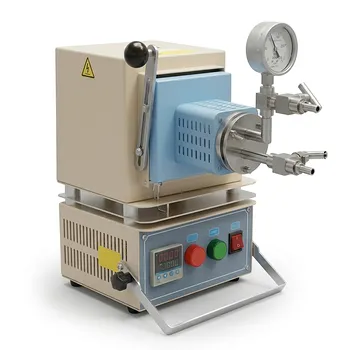
Compact Hybrid Muffle and Tube Furnace for 1000C Controlled Atmosphere Laboratory Material Sintering
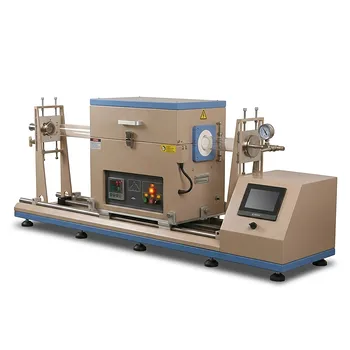
1200C Sliding Tube Furnace for Rapid Thermal Processing and CVD Graphene Growth with 100mm OD Capacity
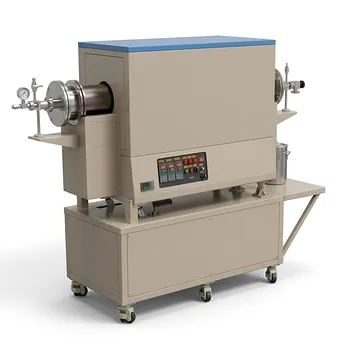
900°C Max Rotary Tube Furnace with 8 Inch 310S Alloy Tube and Optional Multi Zone Heating for Industrial Material Calcination
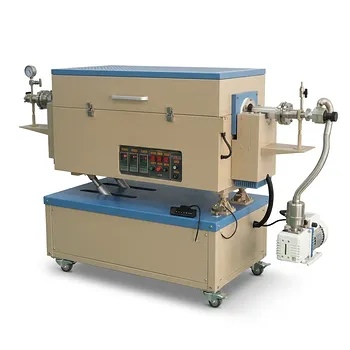
Three Zone Rotary Tube Furnace for High Temperature Powder Processing and Material Research

Compact Vertical Split Quartz Tube Furnace with Stainless Steel Vacuum Flanges for Rapid Thermal Quenching and Controlled Atmosphere Material Processing
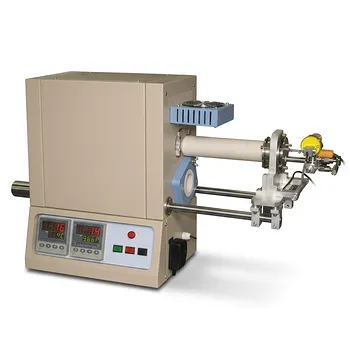
High Temperature Tube Furnace 1500C with Sliding Flanges and 50mm OD for Rapid Thermal Processing Fast Heating and Cooling
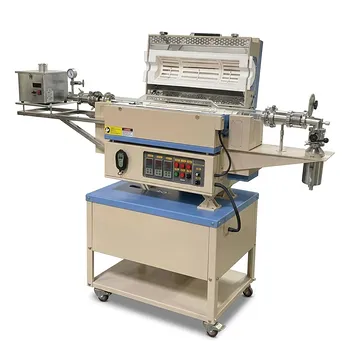
5 Inch Rotary Tube Furnace with Automatic Feeding and Receiving System 1200C Three Zone CVD Powder Processing
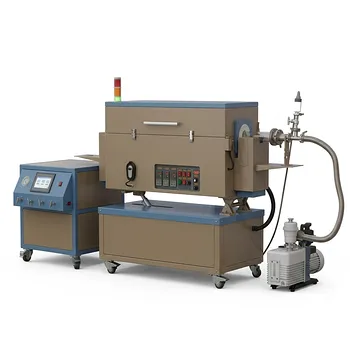
5 Inch Three Zone Rotary Tube Furnace with Integrated Gas Delivery System and 1200C Capability for Advanced Material CVD Processing

Vertical 1700C Vacuum and Atmosphere Tube Furnace with 80mm Alumina Tube

High Temperature Automated 5 Inch Tube Furnace for Autonomous Material Research and Advanced Laboratory R&D
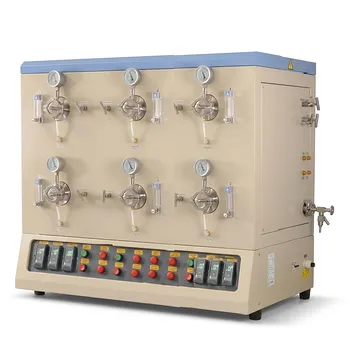
1200C High Throughput Multi Channel Tube Furnace with 50mm Quartz Tubes for Annealing and Material Phase Diagram Research

1800C High Temperature Compact Vacuum Tube Furnace with 60mm OD Alumina Tube and Kanthal MoSi2 Heating Elements
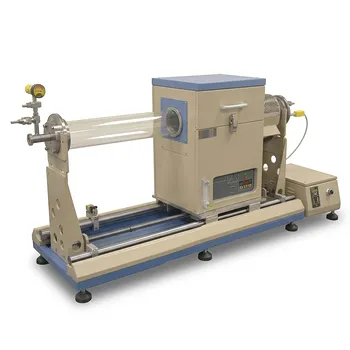
Rapid Thermal Processing Sliding Tube Furnace with 4 Inch OD Quartz Tube and 900C IR Heating
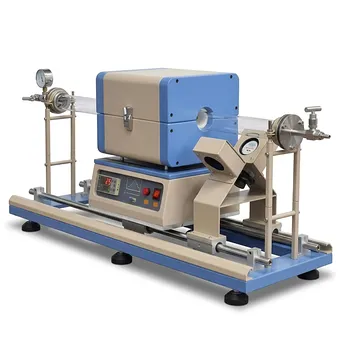
Automated Sliding Tube Furnace for Fast Heating and Cooling 2 Inch OD 1100C Max
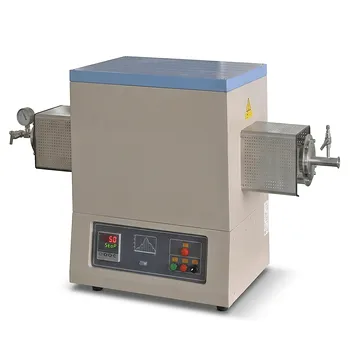
High Temperature 1700C Tube Furnace with 4 Inch OD Alumina Tube and Vacuum Sealing Flanges
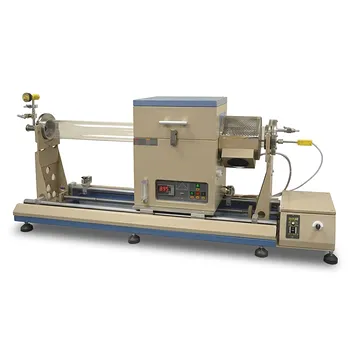
900 ºC Max Sliding RTP Tube Furnace with Rapid IR Heating and 4 Inch OD Quartz Tube
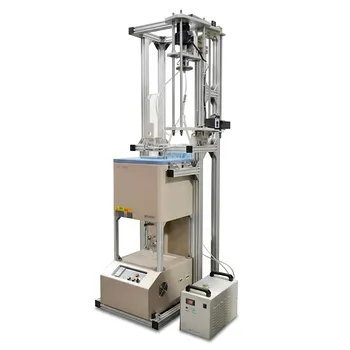
500C Vacuum Vertical Tube Furnace 84mm OD Sample Rotation Lifting System