What is the purpose of a titanium sponge in steel corrosion tests? Ensure Pure Atmospheres for Precise Results.
Updated 3 months ago
The titanium sponge serves as a sacrificial oxygen scavenger. Its primary role is to act as a high-temperature deoxidizer that reacts with and captures trace amounts of residual oxygen remaining within the sealed chamber. By purifying the argon protective atmosphere, it ensures that the resulting corrosion on the steel is caused strictly by the liquid alloy rather than unwanted oxidation.
To achieve chemically accurate results in high-temperature metallurgy, the titanium sponge functions as an internal purification system. It isolates the specific reaction between the steel and the melt by chemically removing atmospheric contaminants that would otherwise skew the experimental data.
The Mechanics of Oxygen Scavenging
Chemically Preferential Reactivity
Titanium has an extremely high affinity for oxygen, especially at elevated temperatures. In a sealed environment, the titanium sponge will react with residual oxygen molecules more readily than the steel sample will.
Atmospheric Purification
Even high-purity argon gas often contains trace amounts of oxygen that can influence sensitive experiments. As the chamber heats up, the sponge "gets" or traps these stray molecules, creating an ultra-pure inert environment necessary for precise observation.
Protection of the Steel Surface
Without the sponge, trace oxygen would form an oxide layer (scale) on the steel surface. This layer would act as a barrier, artificially slowing down or even preventing the liquid alloy from interacting with the base metal.
Ensuring Experimental Integrity
Isolating the Corrosion Source
The deep goal of using a titanium sponge is to isolate a single variable: the liquid metal embrittlement or dissolution. By removing oxygen, researchers guarantee that any weight loss or structural degradation observed is a direct result of the steel-to-liquid-alloy contact.
Consistency in High-Temperature Scaling
At high temperatures, corrosion rates accelerate significantly. The presence of even minute oxygen levels can lead to parabolic growth of oxides, which masks the linear or complex dissolution rates that researchers are actually trying to measure.
Enhancing Data Reproducibility
Using an internal getter provides a "fail-safe" for the experiment's atmosphere. It compensates for minor leaks or impurities in the gas supply, ensuring that experimental conditions remain consistent across multiple test runs.
Understanding the Trade-offs
Saturation and Capacity
A titanium sponge has a finite capacity for oxygen absorption. Once the surface of the sponge is fully oxidized, its effectiveness as a getter drops sharply, potentially allowing oxygen to reach the steel if the experiment duration is too long.
Temperature Requirements
The sponge is only effective once it reaches a specific thermal threshold. If the steel sample reaches a reactive temperature before the titanium sponge is hot enough to capture oxygen, a pre-test oxidation phase may still occur.
Positioning and Gas Flow
The physical placement of the sponge is critical; it must be situated where it can interact with the atmosphere before the gas reaches the steel. Poor placement can result in stagnant pockets of oxygen that remain near the sample despite the presence of the getter.
How to Apply This to Your Project
Optimizing Your Experimental Setup
When designing your high-temperature corrosion test, consider how the atmosphere dictates your results. Using a chemical getter is a standard best practice for high-fidelity metallurgical research.
- If your primary focus is fundamental dissolution rates: Use a fresh, high-surface-area titanium sponge to ensure zero interference from passive oxide layers.
- If your primary focus is long-term material stability: Monitor the sponge's oxidation state post-experiment to ensure it did not reach its saturation point before the test concluded.
- If your primary focus is cost-efficiency: Ensure your chamber seal is hermetic first, using the sponge only as a final purification step rather than a primary method for removing large volumes of air.
By effectively utilizing a titanium sponge, you transform a standard furnace into a precision environment capable of revealing the true path of liquid metal corrosion.
Summary Table:
| Function | Benefit | Impact on Research |
|---|---|---|
| Oxygen Scavenging | Removes trace residual $O_2$ | Prevents unwanted oxide layer formation on samples |
| Atmospheric Purification | Enhances inert gas (Argon) purity | Ensures corrosion is caused strictly by the liquid alloy |
| Surface Protection | Acts as a sacrificial deoxidizer | Isolates the specific reaction variables for analysis |
| Data Integrity | Eliminates atmospheric interference | Increases experimental reproducibility and precision |
Optimize Your High-Temperature Research with THERMUNITS
Achieving precise, oxide-free environments is critical for high-fidelity material science and industrial R&D. THERMUNITS is a leading manufacturer specializing in high-performance thermal processing solutions designed to meet the rigorous demands of modern metallurgy.
Our Comprehensive Range Includes:
- Muffle, Vacuum, Atmosphere, Tube, and Rotary Furnaces
- Hot Press Furnaces & CVD/PECVD Systems
- Vacuum Induction Melting (VIM), Dental Furnaces, and Electric Rotary Kilns
- High-Quality Thermal Elements and Lab Heat Treatment Accessories
Ready to elevate your laboratory's experimental integrity and efficiency? Contact THERMUNITS today to consult with our experts and find the perfect thermal solution for your specific application!
References
- А. В. Абрамов, Ilya B. Polovov. Corrosion of Steels in Liquid Bismuth–Lithium Alloy. DOI: 10.3390/met14111215
Mentioned Products
- 1100C High Pressure Rocking Tube Furnace with 2 Inch Super Alloy Processing Tube for Material Synthesis
- High Temperature 1700C Vertical Tube Furnace for Powder Spherification and Material Sintering
- High Temperature Rotary Tilt Tubular Furnaces for Advanced Powder Sintering and Material Processing
- Compact Hybrid Muffle and Tube Furnace for 1000C Controlled Atmosphere Laboratory Material Sintering
- 24 Inch Three Zone Split Tube Furnace with Optional Quartz Tube and Vacuum Flange System for High Temperature Material Synthesis
People Also Ask
- Why is a high-pressure tube furnace required for the nitriding process of Fe-Cr-N alloys? Enhance Phase Stability
- What is the function of a high-temperature tube furnace in the synthesis of graphene oxide? Mastering LPCVD Processes
- Pt2CoM synthesis: High-temp tube furnace conditions (1000°C & 5% H2/Ar) for L10 intermetallic catalysts.
- What core conditions does a high-temperature tube furnace provide for rGO aerogels? Mastering Precision Synthesis.
- Why is it necessary to introduce steam into a high-temperature tube furnace during ACNN activation? Enhance Porosity.

Tech Team · ThermUnits
Last updated on Jun 03, 2026
Related Products
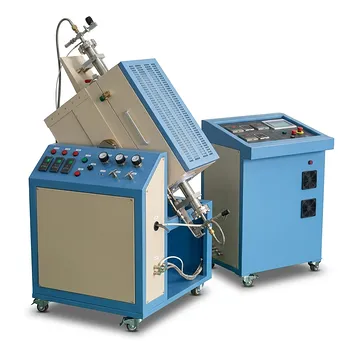
1100C High Pressure Rocking Tube Furnace with 2 Inch Super Alloy Processing Tube for Material Synthesis

High Temperature 1700C Vertical Tube Furnace for Powder Spherification and Material Sintering
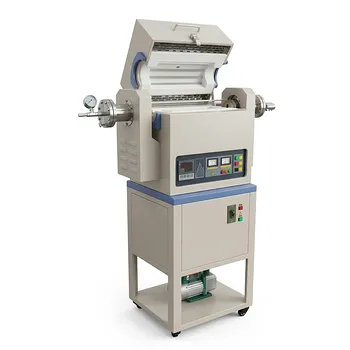
High Temperature Rotary Tilt Tubular Furnaces for Advanced Powder Sintering and Material Processing
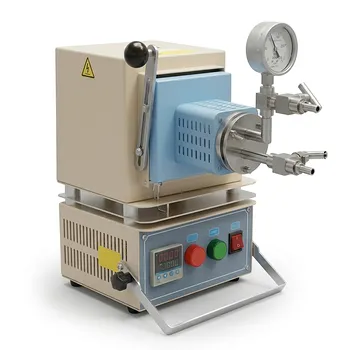
Compact Hybrid Muffle and Tube Furnace for 1000C Controlled Atmosphere Laboratory Material Sintering
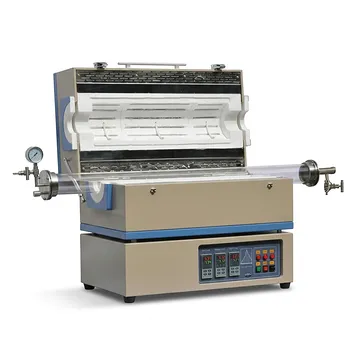
24 Inch Three Zone Split Tube Furnace with Optional Quartz Tube and Vacuum Flange System for High Temperature Material Synthesis
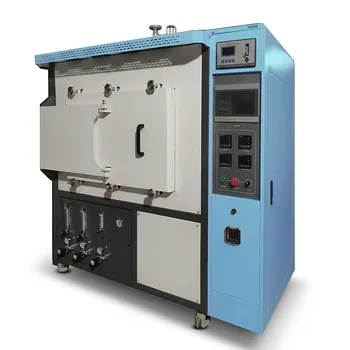
Roller Table Atmosphere Furnace 1500C High Temperature Battery Material Sintering System 112L Capacity
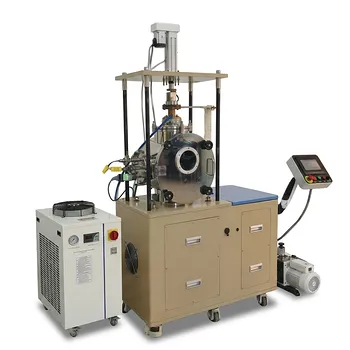
Compact Spark Plasma Sintering SPS Furnace 1200 C Max 100 MPa Pressure High Speed Sintering System for Material Research
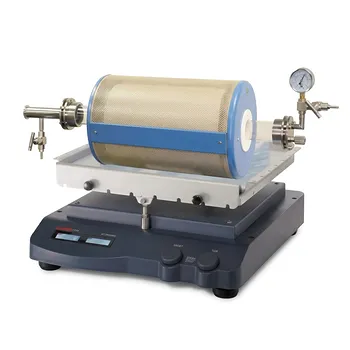
High Temperature Rocking Tube Furnace with Quartz Tube and Vacuum Flange for Materials Synthesis
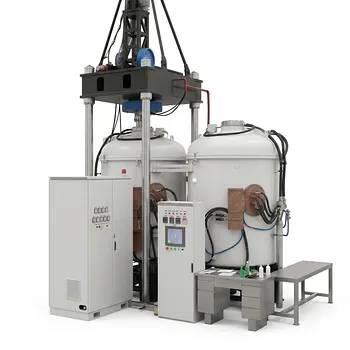
High Pressure 600T Vacuum Induction Hot Press Furnace for Advanced Material Heat Treatment and Sintering
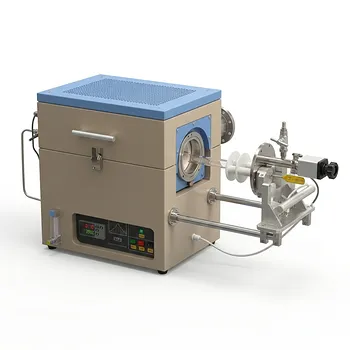
Compact Atmosphere Controlled Rapid Thermal Processing RTP Furnace with 4 Inch ID Quartz Tube 1100C
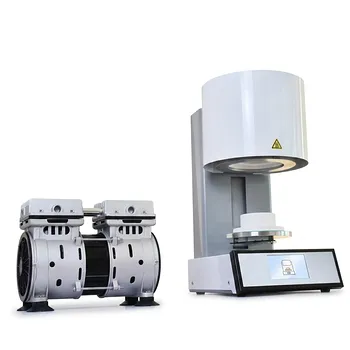
Vacuum Dental Porcelain Sintering Furnace for High Precision Ceramic Restorations
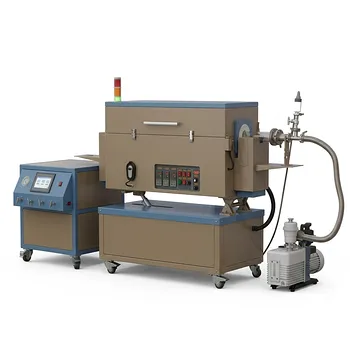
5 Inch Three Zone Rotary Tube Furnace with Integrated Gas Delivery System and 1200C Capability for Advanced Material CVD Processing
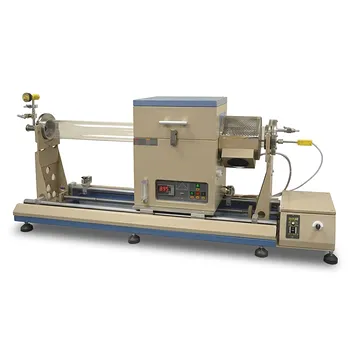
900 ºC Max Sliding RTP Tube Furnace with Rapid IR Heating and 4 Inch OD Quartz Tube
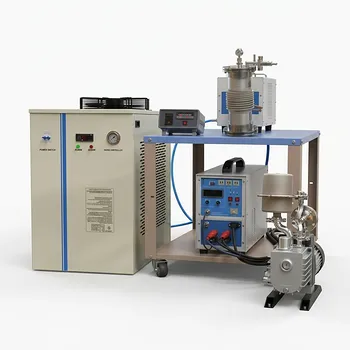
Induction Heating System with Temperature Control for High Temperature Vacuum Sintering and Melting
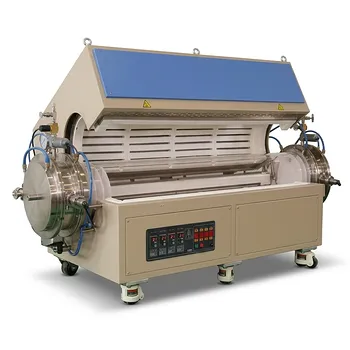
1200C Max Four Zone Split Tube Furnace with Optional Large Diameter Quartz Tubes

High Temperature 1700C Benchtop Tube Furnace with 5 Inch Heating Zone High Purity Alumina Tube and Vacuum Sealing Flanges
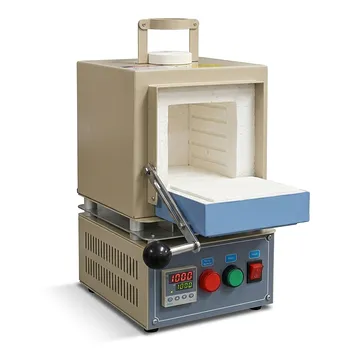
Compact 1000C Muffle Furnace with Programmable Controller and 2 Inch Top Port for Vacuum and Atmosphere Material Research

Compact Vertical Split Quartz Tube Furnace with Stainless Steel Vacuum Flanges for Rapid Thermal Quenching and Controlled Atmosphere Material Processing

Compact High Temperature 1600C Tube Furnace with 50mm Alumina Tube and Vacuum Flanges for Material Sintering
