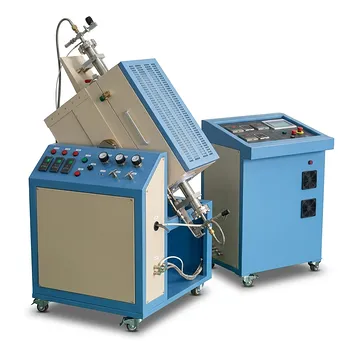
What is the function of a high-temperature tube furnace in NC support preparation? Achieve Precise Pyrolysis & Doping
Updated 3 months ago
The high-temperature tube furnace serves as the primary reactor for the controlled pyrolysis and carbonization of organic precursors. It provides the precise thermal field and inert atmosphere necessary to convert metal-organic frameworks (MOFs) or polymers into stable, conductive, nitrogen-doped carbon structures. By maintaining temperatures typically between 700°C and 1100°C, the furnace ensures effective nitrogen incorporation into the carbon lattice while preventing the oxidative combustion of the material.
The high-temperature tube furnace is the indispensable tool for driving the thermal decomposition and chemical restructuring of precursors into functional nitrogen-doped nano-carbons. Its ability to maintain a strict oxygen-free environment and specific heating profiles directly dictates the final material's graphitization, porosity, and catalytic activity.
Engineering the Thermal Environment for Pyrolysis
Maintaining a Strict Protective Atmosphere
The furnace creates a controlled environment by continuously introducing inert gases like argon or nitrogen. This prevents the precursor from reacting with oxygen, which would otherwise lead to total combustion rather than the desired carbonization.
Precise Thermal Field Control
Preparation requires a stable high-temperature environment, often reaching up to 1100 °C. The furnace allows for specific heating rates (e.g., 3 °C/min) and long-term temperature maintenance, which are critical for the uniform transformation of the molecular structure.
Facilitating Structural and Chemical Transformation
Achieving Graphitization and Conductivity
High temperatures facilitate the transformation of organic skeletons into graphitized structures. This high degree of graphitization is essential for providing the excellent electrical conductivity required for NC supports in electrochemical applications.
Enabling Uniform Nitrogen Doping
The thermal energy within the furnace drives the nitrogen atoms from the precursor into the carbon framework. This process creates stable nitrogen-doped sites that enhance the chemical stability and modify the electronic properties of the carbon support.
Developing Porous Architectures and Metal Anchoring
The furnace environment supports the creation of hierarchical pore structures and high specific surface areas. This allows for the effective anchoring of active components, such as metal nanoclusters or single atoms, ensuring they are uniformly embedded within the nitrogen-doped skeleton.
Understanding the Trade-offs and Pitfalls
The Impact of Temperature Overload
While higher temperatures (e.g., 1100 °C) improve graphitization and conductivity, they can also lead to a reduction in nitrogen content. Over-heating may cause the nitrogen species to become unstable and leave the framework, potentially reducing the number of active catalytic sites.
Atmosphere Purity and Contamination
Even trace amounts of oxygen due to a leaky seal or low-purity gas can result in the partial oxidation of the carbon. This significantly alters the pore structure and can cause the loss of delicate nitrogen functional groups, compromising the material's performance.
Applying Furnace Settings to Your Research Goals
Choosing the right furnace parameters depends entirely on the intended application of the nitrogen-doped carbon.
- If your primary focus is Maximum Conductivity: Utilize higher temperatures (1000 °C - 1100 °C) to maximize the graphitization of the carbon framework.
- If your primary focus is High Nitrogen Retention: Opt for moderate carbonization temperatures (700 °C - 900 °C) to prevent the excessive loss of nitrogen atoms from the matrix.
- If your primary focus is Metal Atom Dispersion: Use precise, slower heating rates and stable dwell times to ensure active metal components are uniformly anchored without sintering.
By mastering the thermal and atmospheric variables of the tube furnace, researchers can precisely tune the physicochemical properties of nano-carbon supports for advanced applications.
Summary Table:
| Function | Role in NC Preparation | Key Control Parameters |
|---|---|---|
| Atmosphere Control | Prevents oxidative combustion via inert gas (Ar/N2) | Gas flow rate and seal integrity |
| Pyrolysis/Carbonization | Converts organic precursors into stable carbon structures | Temperature range (700°C - 1100°C) |
| Graphitization | Facilitates high electrical conductivity | High dwell temperatures and stable thermal field |
| Chemical Doping | Drives nitrogen atoms into the carbon lattice | Specific heating rates (e.g., 3°C/min) |
Optimize Your Nano-Carbon Synthesis with THERMUNITS
As a leading manufacturer of high-temperature laboratory equipment, THERMUNITS provides the precision and reliability required for cutting-edge material science and industrial R&D. Our specialized Tube Furnaces are engineered to provide the strict atmosphere control and uniform thermal fields necessary for high-performance nitrogen-doped nano-carbons.
From pilot-scale research to industrial heat treatment, we offer a comprehensive range of thermal solutions, including:
- Tube and Rotary Furnaces for continuous or batch carbonization.
- CVD/PECVD Systems for advanced thin-film and nano-structure growth.
- Vacuum, Atmosphere, and Hot Press Furnaces for specialized material processing.
- Vacuum Induction Melting (VIM) and high-quality Thermal Elements.
Empower your laboratory with industry-leading thermal technology. Contact our experts today to discuss your specific heat treatment requirements and discover how our solutions can enhance your material performance.
References
- Wenyuan Zhao, Bang‐An Lu. Phosphorus-Doping Enables the Superior Durability of a Palladium Electrocatalyst towards Alkaline Oxygen Reduction Reactions. DOI: 10.3390/ma17122879
Mentioned Products
- High Temperature Tube Furnace 1500C with Sliding Flanges and 50mm OD for Rapid Thermal Processing Fast Heating and Cooling
- High Temperature 1700C Tube Furnace with High Vacuum Turbomolecular Pump System and Multi Channel Mass Flow Controller Gas Mixer
- 1750°C High Temperature Benchtop Vacuum Atmosphere Tube Furnace with Kanthal Super 1800 Heating Elements and 60mm Alumina Processing Tube
- High Temperature 1700C Benchtop Tube Furnace with 5 Inch Heating Zone High Purity Alumina Tube and Vacuum Sealing Flanges
- High Temperature Split Tube Furnace 1500C for Material Research Vacuum and Atmosphere Thermal Processing
People Also Ask
- How are high-temperature tube furnaces utilized to repair etching damage? Precision Lattice Restoration Solutions
- What role does a high-temperature tube furnace play in CVD synthesis of silicon nanowires? Master VLS Growth Precision.
- What core conditions does a high-temperature tube furnace provide for rGO aerogels? Mastering Precision Synthesis.
- What role does a high-temperature tube furnace play in the sulfidation heat treatment of CoS@C/MXene nanocomposites? Guide
- How does precision tube furnace control influence CoFe nanoparticle formation? Master Your Bimetallic Synthesis.

Tech Team · ThermUnits
Last updated on Jun 03, 2026
Related Products
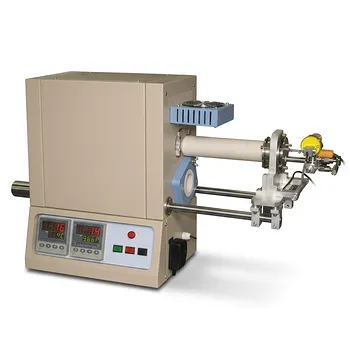
High Temperature Tube Furnace 1500C with Sliding Flanges and 50mm OD for Rapid Thermal Processing Fast Heating and Cooling

High Temperature 1700C Tube Furnace with High Vacuum Turbomolecular Pump System and Multi Channel Mass Flow Controller Gas Mixer
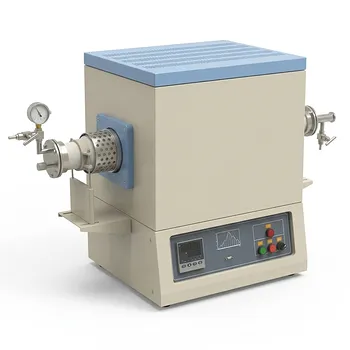
1750°C High Temperature Benchtop Vacuum Atmosphere Tube Furnace with Kanthal Super 1800 Heating Elements and 60mm Alumina Processing Tube

High Temperature 1700C Benchtop Tube Furnace with 5 Inch Heating Zone High Purity Alumina Tube and Vacuum Sealing Flanges
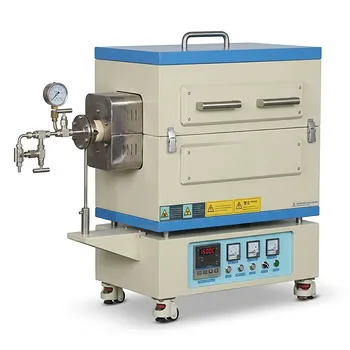
High Temperature Split Tube Furnace 1500C for Material Research Vacuum and Atmosphere Thermal Processing
1700C High Temperature Alumina Tube Furnace with 18 Inch Heated Zone and Vacuum Sealing Flanges

1800C High Temperature Compact Vacuum Tube Furnace with 60mm OD Alumina Tube and Kanthal MoSi2 Heating Elements

Compact High Temperature 1600C Tube Furnace with 50mm Alumina Tube and Vacuum Flanges for Material Sintering
High Temperature Three Zone Tube Furnace 1700C with Alumina Tube and Water Cooled Flanges
High Temperature Rocking Tube Furnace 1700°C Alumina Processing Tube with Precision Oscillation for Material Synthesis
High Temperature 1700C Tube Furnace with 4 Inch OD Alumina Tube and Vacuum Sealing Flanges

High Temperature 1700C Vertical Tube Furnace for Powder Spherification and Material Sintering
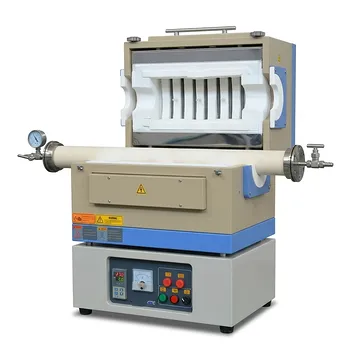
High Temperature 1600C Split Tube Furnace Vacuum Flanges Valves Optional 60mm 80mm Alumina Tube

High Temperature Automated 5 Inch Tube Furnace for Autonomous Material Research and Advanced Laboratory R&D

High Temperature 1700C Six Zone Split Tube Furnace with Alumina Tube and Water Cooled Flanges
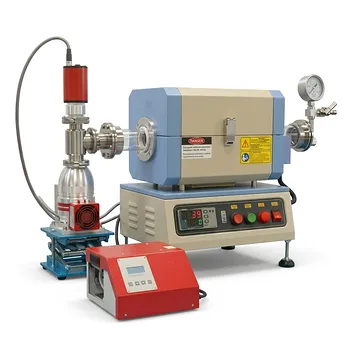
High Vacuum Compact Tube Furnace 1200C with Integrated Turbo Pump System and 8 Inch Heating Zone
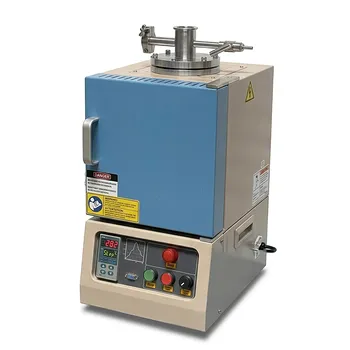
High Temperature Hybrid Muffle and Tube Furnace with Vacuum Capability and PID Control
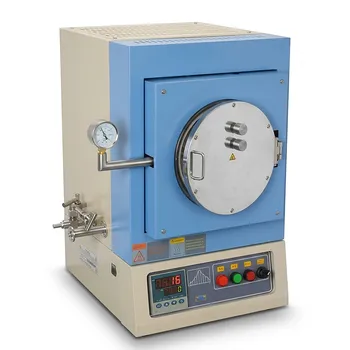
1100°C High Temperature Quartz Chamber Furnace 8 Inch OD with 7.6 Liter Capacity and Vacuum Atmosphere Capability

1100C Tube Furnace with Vacuum Flange and Programmable Temperature Controller for Material Science and Industrial Heat Treatment