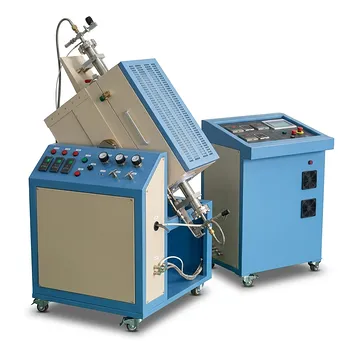
What is the role of a high-temperature tube furnace in the preparation of S-C3N4? Master Precision Material Synthesis
Updated 3 months ago
The role of a high-temperature tube furnace is to provide the precise thermal environment required for the thermal polymerization of precursors into a stable, sulfur-doped graphitic carbon nitride ($S-C_3N_4$) substrate. It achieves this by maintaining a constant high temperature, typically around 600 °C, and a controlled heating rate to ensure the complete chemical transformation of raw materials like trithiocyanuric acid into a layered photocatalytic structure.
Core Takeaway: A high-temperature tube furnace acts as a controlled reactor that facilitates the polycondensation of precursors. By managing thermal uniformity and precise ramp rates, it ensures the formation of a high-crystallinity, layered $S-C_3N_4$ material with stable energy band structures.
Facilitating Thermal Polymerization and Polycondensation
Transformation of Precursors
The primary function of the furnace is to drive the pyrolysis and thermal polycondensation of sulfur-containing precursors. In the case of $S-C_3N_4$ synthesis, the furnace provides the energy necessary to break molecular bonds in raw materials like trithiocyanuric acid and reorganize them into a stable carbon nitride skeleton.
Formation of the Tri-s-triazine Structure
During the heating process, the furnace enables deamination and condensation reactions. These reactions are critical for forming the characteristic tri-s-triazine units that make up the two-dimensional layered nanomaterial, ensuring the sulfur atoms are successfully integrated into the graphitic lattice.
The Importance of Precise Thermal Control
Managing the Heating Rate
The tube furnace allows for a strictly controlled heating rate, often set at 5 °C/min. This slow, steady increase in temperature is vital to prevent rapid outgassing or structural defects, ensuring that the precursor fully reacts and transforms into a high-purity semiconductor powder rather than an amorphous byproduct.
Maintaining Temperature Stability
Consistency is key to material quality, and the furnace maintains a stable environment at approximately 600 °C. This specific temperature is high enough to ensure complete polymerization while remaining within the range where the layered $S-C_3N_4$ structure remains stable and does not decompose.
Ensuring Structural Integrity and Uniformity
Uniform Thermal Fields
Unlike standard heating elements, a laboratory tube furnace offers superior thermal uniformity. This ensures that the precursor mixture is heated evenly from all sides, which is essential for producing a material with consistent crystallinity and predictable photocatalytic performance across the entire batch.
Atmospheric Control
The tube furnace provides a contained environment where the atmosphere—whether air or an inert gas—can be managed. For $S-C_3N_4$, maintaining a controlled air atmosphere during the calcination process helps in the stabilization of the layered substrate and the successful incorporation of sulfur dopants.
Understanding the Trade-offs and Pitfalls
Temperature Sensitivity
If the furnace temperature exceeds the optimal range (e.g., going significantly above 600 °C), the graphitic carbon nitride may begin to sublime or decompose, leading to low product yield. Conversely, temperatures that are too low will result in incomplete polymerization and poor semiconductor properties.
Precursor Handling and Residue
The choice of precursor, such as trithiocyanuric acid versus a mixture of urea and ammonium sulfate, dictates the specific furnace settings required. Using a furnace with poor ventilation or improper sealing can lead to the accumulation of corrosive byproducts (like ammonia or sulfur-containing gases) that can damage the furnace heating elements over time.
How to Apply This to Your Synthesis Goal
The effectiveness of your tube furnace depends on aligning its parameters with your specific material objectives.
- If your primary focus is High Crystallinity: Use a slower heating rate (2-3 °C/min) and an extended dwell time at 550–600 °C to allow the lattice to order itself perfectly.
- If your primary focus is Specific Morphology (e.g., flower-like): Ensure the furnace is capable of maintaining a stable gas-phase template environment during the one-step polymerization of urea and ammonium sulfate mixtures.
- If your primary focus is Sulfur Content Optimization: Closely monitor the furnace atmosphere and sealing to ensure sulfur precursors do not escape before they can be incorporated into the $C_3N_4$ framework.
Precise thermal management within a tube furnace is the defining factor in transitioning from raw chemical precursors to a high-performance $S-C_3N_4$ photocatalyst.
Summary Table:
| Key Parameter | Role in S-C3N4 Synthesis | Typical Requirement |
|---|---|---|
| Process Type | Thermal Polycondensation | Pyrolysis of sulfur precursors |
| Temperature | Ensures structural stability | ~600 °C |
| Heating Rate | Prevents structural defects | 5 °C/min |
| Environment | Controlled atmosphere/uniformity | Air or Inert Gas |
| Outcome | High crystallinity | Layered tri-s-triazine structure |
Elevate Your Material Research with THERMUNITS
Achieving high-crystallinity S-C3N4 requires the uncompromising thermal precision that only expert-grade equipment can provide. THERMUNITS is a leading manufacturer of high-temperature laboratory equipment dedicated to supporting material science and industrial R&D.
We provide a comprehensive range of thermal processing solutions tailored for advanced synthesis, including:
- Tube & Rotary Furnaces for uniform powder calcination.
- Muffle, Vacuum, and Atmosphere Furnaces for diverse heat treatments.
- CVD/PECVD Systems for thin-film and nanostructure development.
- Vacuum Induction Melting (VIM) and Hot Press Furnaces for specialized metallurgy.
Whether you are optimizing photocatalysts or developing new ceramics, our equipment ensures the stable energy band structures and high-purity yields your project demands.
Ready to enhance your lab's capabilities? Contact our technical team today to find the perfect furnace for your research goals!
References
- Yuhong Lin, Dongchu Chen. Preparation of S-C3N4/AgCdS Z-Scheme Heterojunction Photocatalyst and Its Effectively Improved Photocatalytic Performance. DOI: 10.3390/molecules29091931
Mentioned Products
- High Temperature Tube Furnace 1500C with Sliding Flanges and 50mm OD for Rapid Thermal Processing Fast Heating and Cooling
- High Temperature 1700C Tube Furnace with High Vacuum Turbomolecular Pump System and Multi Channel Mass Flow Controller Gas Mixer
- 1750°C High Temperature Benchtop Vacuum Atmosphere Tube Furnace with Kanthal Super 1800 Heating Elements and 60mm Alumina Processing Tube
- High Temperature 1700C Benchtop Tube Furnace with 5 Inch Heating Zone High Purity Alumina Tube and Vacuum Sealing Flanges
- 1700C High Temperature Alumina Tube Furnace with 18 Inch Heated Zone and Vacuum Sealing Flanges
People Also Ask
- How are high-temperature tube furnaces utilized to repair etching damage? Precision Lattice Restoration Solutions
- What role does a high-temperature tube furnace play in CVD synthesis of silicon nanowires? Master VLS Growth Precision.
- What core conditions does a high-temperature tube furnace provide for rGO aerogels? Mastering Precision Synthesis.
- What role does a high-temperature tube furnace play in the sulfidation heat treatment of CoS@C/MXene nanocomposites? Guide
- How does precision tube furnace control influence CoFe nanoparticle formation? Master Your Bimetallic Synthesis.

Tech Team · ThermUnits
Last updated on Jun 02, 2026
Related Products

High Temperature Tube Furnace 1500C with Sliding Flanges and 50mm OD for Rapid Thermal Processing Fast Heating and Cooling

High Temperature 1700C Tube Furnace with High Vacuum Turbomolecular Pump System and Multi Channel Mass Flow Controller Gas Mixer

1750°C High Temperature Benchtop Vacuum Atmosphere Tube Furnace with Kanthal Super 1800 Heating Elements and 60mm Alumina Processing Tube

High Temperature 1700C Benchtop Tube Furnace with 5 Inch Heating Zone High Purity Alumina Tube and Vacuum Sealing Flanges
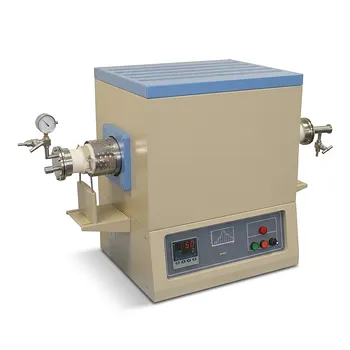
1700C High Temperature Alumina Tube Furnace with 18 Inch Heated Zone and Vacuum Sealing Flanges
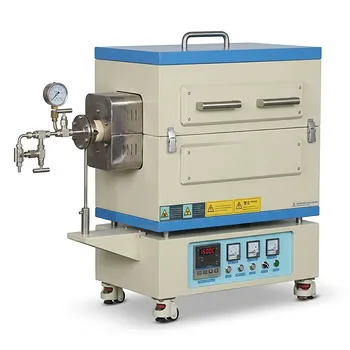
High Temperature Split Tube Furnace 1500C for Material Research Vacuum and Atmosphere Thermal Processing

1800C High Temperature Compact Vacuum Tube Furnace with 60mm OD Alumina Tube and Kanthal MoSi2 Heating Elements

Compact High Temperature 1600C Tube Furnace with 50mm Alumina Tube and Vacuum Flanges for Material Sintering
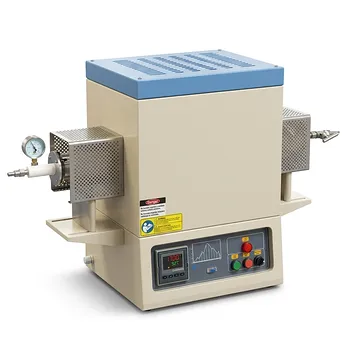
High Temperature Three Zone Tube Furnace 1700C with Alumina Tube and Water Cooled Flanges
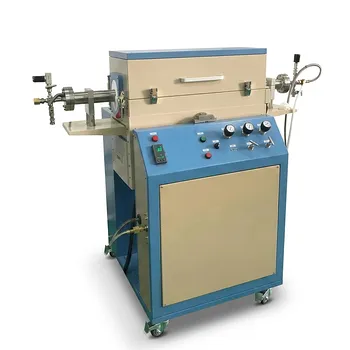
High Temperature Rocking Tube Furnace 1700°C Alumina Processing Tube with Precision Oscillation for Material Synthesis
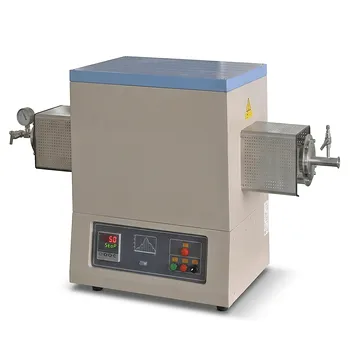
High Temperature 1700C Tube Furnace with 4 Inch OD Alumina Tube and Vacuum Sealing Flanges

High Temperature 1700C Vertical Tube Furnace for Powder Spherification and Material Sintering
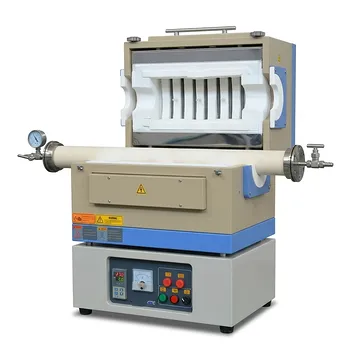
High Temperature 1600C Split Tube Furnace Vacuum Flanges Valves Optional 60mm 80mm Alumina Tube

High Temperature Automated 5 Inch Tube Furnace for Autonomous Material Research and Advanced Laboratory R&D

High Temperature 1700C Six Zone Split Tube Furnace with Alumina Tube and Water Cooled Flanges

High Vacuum Compact Tube Furnace 1200C with Integrated Turbo Pump System and 8 Inch Heating Zone
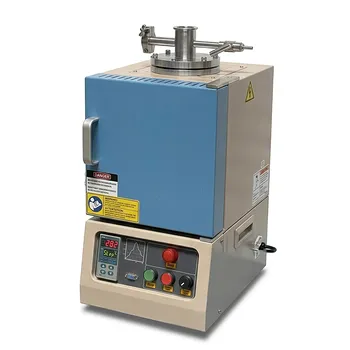
High Temperature Hybrid Muffle and Tube Furnace with Vacuum Capability and PID Control

1100°C High Temperature Quartz Chamber Furnace 8 Inch OD with 7.6 Liter Capacity and Vacuum Atmosphere Capability

1100C Tube Furnace with Vacuum Flange and Programmable Temperature Controller for Material Science and Industrial Heat Treatment