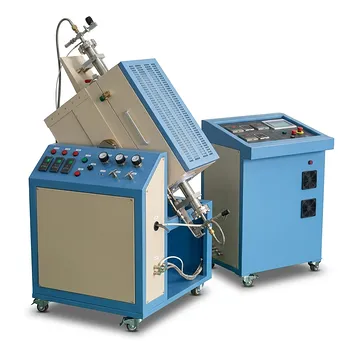
What is the function of a high-temperature tube furnace in the synthesis of graphene oxide? Mastering LPCVD Processes
Updated 3 months ago
The high-temperature tube furnace is the critical reactor core that provides the precise thermal and atmospheric conditions required to decompose carbon precursors and deposit them onto a substrate. In the synthesis of graphene oxide precursors via Low-Pressure Chemical Vapor Deposition (LPCVD), it maintains extreme temperatures—often around 1050°C—and a controlled vacuum near 40 mtorr to ensure the uniform growth of high-quality carbon structures.
Core Takeaway: The high-temperature tube furnace acts as a precision-controlled environment that facilitates the thermal decomposition (pyrolysis) of gases like methane and regulates vapor deposition on metallic catalysts. Its ability to maintain a stable, high-vacuum atmosphere is what determines the final material's purity, layer uniformity, and crystal structure.
Providing the Thermal Energy for Catalytic Cracking
Facilitating Precursor Pyrolysis
The primary role of the furnace is to provide the extreme heat required for thermal decomposition, also known as pyrolysis. At temperatures typically ranging from 1000°C to 1050°C, gaseous carbon sources like methane (CH4) gain sufficient energy to break their chemical bonds. This process releases carbon atoms that are then free to reorganize upon the surface of a catalyst.
Supporting Catalytic Reactions on Metal Substrates
The furnace creates the necessary environment for the carbon atoms to interact with transition metal catalysts, such as copper foil. Under these high-temperature conditions, the copper substrate acts as a site for catalytic cracking, allowing carbon atoms to nucleate and grow into uniform films. The furnace ensures that this reaction occurs consistently across the entire surface of the substrate.
Maintaining Temperature Uniformity
Consistency in the heating zone is vital for preventing structural defects in the synthesized material. A stable thermal field ensures that the carbon atoms deposit at a uniform rate, which directly influences the crystal domain size and film continuity. Without this precise regulation, the resulting graphene oxide precursors would vary in thickness and quality.
Atmospheric and Pressure Regulation (LPCVD)
Precision Vacuum Control
In the LPCVD method, the tube furnace must maintain a strictly controlled vacuum environment, often as low as 40 mtorr. This low pressure increases the mean free path of the gas molecules, which promotes a more uniform distribution of the carbon source across the substrate. This environment is essential for producing high-quality single-layer or double-layer structures.
Gas Flow and Composition Management
The furnace system includes precision flow controllers to regulate the delivery of hydrogen (H2) and methane (CH4). By adjusting the ratios of these gases within the furnace's atmosphere, researchers can control the chemical environment during deposition. This allows for the synthesis of precursors with controllable structures and specific chemical properties.
Prevention of Oxidation and Contamination
The high-temperature tube furnace is designed to be an air-tight system that excludes oxygen. By using inert carrier gases like argon or nitrogen, the furnace prevents the oxidation of the carbon film and the metallic catalyst during the growth process. This creates a "clean" reaction chamber that is fundamental for achieving high material purity.
Understanding the Trade-offs
Equipment Maintenance and Sealing Issues
Operating at temperatures above 1000°C under vacuum places significant stress on the furnace's quartz or ceramic tubes and vacuum seals. Over time, repeated thermal cycling can lead to seal degradation, which introduces oxygen leaks and ruins the synthesis environment.
Energy Consumption and Throughput
High-temperature tube furnaces are energy-intensive and typically better suited for batch processing rather than continuous production. Achieving the necessary temperature and vacuum levels requires a significant "warm-up" and "cool-down" period, which limits the speed at which samples can be produced.
Complexity of Parameter Tuning
While the furnace offers high precision, the interplay between temperature, pressure, and flow rates is highly complex. Small fluctuations in any of these variables can lead to unintended results, such as multi-layer growth when a single layer is desired, or the formation of amorphous carbon instead of organized crystal lattices.
How to Apply Knowledge of Furnace Functions
When configuring a tube furnace for graphene oxide precursor synthesis, your technical approach should shift based on your specific material goals.
- If your primary focus is single-layer uniformity: Prioritize a furnace with a long constant temperature zone and precise low-pressure (mtorr) vacuum stability.
- If your primary focus is heteroatom doping (e.g., N or P): Ensure your furnace is equipped with a stable nitrogen (N2) protective atmosphere and accurate gas mixing systems for the dopant precursors.
- If your primary focus is rapid thermal reduction: Utilize a furnace capable of achieving rapid thermal shock to quickly decompose oxygen-containing functional groups and expand interlayer spacing.
- If your primary focus is multilayer growth: Adjust the furnace thermal field to a lower range, typically between 700°C and 800°C, to facilitate different deposition kinetics.
The high-temperature tube furnace is the definitive tool for transforming gaseous precursors into sophisticated carbon architectures through the masterly control of heat and pressure.
Summary Table:
| Feature | Primary Role in Graphene Oxide Synthesis | Key Operating Parameters |
|---|---|---|
| Thermal Energy | Facilitates precursor pyrolysis (cracking methane) | Typically 1000°C – 1050°C |
| Vacuum Control | Ensures uniform deposition and high-quality layers | Low pressure (~40 mtorr) |
| Gas Management | Regulates H2/CH4 ratios for controllable structures | Precisely metered flow rates |
| Heating Zone | Maintains temperature uniformity for crystal growth | Stable thermal field |
| Sealed Chamber | Prevents oxidation and atmospheric contamination | Air-tight quartz/ceramic tubes |
Elevate Your Material Research with THERMUNITS
Are you looking to achieve high-purity graphene oxide or advanced 2D materials? THERMUNITS is a leading manufacturer of high-temperature laboratory equipment for material science and industrial R&D. We provide the precision tools necessary to maintain the strict thermal and vacuum conditions your synthesis requires.
Our comprehensive range of thermal processing solutions includes:
- Advanced CVD/PECVD Systems specifically designed for thin-film and graphene growth.
- High-precision Tube and Rotary Furnaces for uniform thermal treatment.
- Muffle, Vacuum, and Atmosphere Furnaces for diverse laboratory needs.
- Specialized equipment like Vacuum Induction Melting (VIM), Hot Press Furnaces, and Dental Furnaces.
Whether you are focusing on single-layer uniformity or complex heteroatom doping, our engineering expertise ensures your lab has its most reliable reactor core.
Ready to optimize your heat treatment process?
Contact our technical experts today to find the perfect furnace solution for your application.
References
- Kui Lu, Guosheng Shi. Graphene Oxide Treated by Temperature with Enhancement of Adsorption for Organic Pollutants and Catalytic Degradation with Hydrogen Peroxide. DOI: 10.1007/s10562-023-04575-w
Mentioned Products
- High Temperature Tube Furnace 1500C with Sliding Flanges and 50mm OD for Rapid Thermal Processing Fast Heating and Cooling
- High Temperature 1700C Tube Furnace with High Vacuum Turbomolecular Pump System and Multi Channel Mass Flow Controller Gas Mixer
- 1750°C High Temperature Benchtop Vacuum Atmosphere Tube Furnace with Kanthal Super 1800 Heating Elements and 60mm Alumina Processing Tube
- High Temperature 1700C Benchtop Tube Furnace with 5 Inch Heating Zone High Purity Alumina Tube and Vacuum Sealing Flanges
- 1700C High Temperature Alumina Tube Furnace with 18 Inch Heated Zone and Vacuum Sealing Flanges
People Also Ask
- How are high-temperature tube furnaces utilized to repair etching damage? Precision Lattice Restoration Solutions
- What core conditions does a high-temperature tube furnace provide for rGO aerogels? Mastering Precision Synthesis.
- What role does a high-temperature tube furnace play in CVD synthesis of silicon nanowires? Master VLS Growth Precision.
- How does precision tube furnace control influence CoFe nanoparticle formation? Master Your Bimetallic Synthesis.
- What role does a high-temperature tube furnace play in the sulfidation heat treatment of CoS@C/MXene nanocomposites? Guide

Tech Team · ThermUnits
Last updated on Jun 02, 2026
Related Products

High Temperature Tube Furnace 1500C with Sliding Flanges and 50mm OD for Rapid Thermal Processing Fast Heating and Cooling

High Temperature 1700C Tube Furnace with High Vacuum Turbomolecular Pump System and Multi Channel Mass Flow Controller Gas Mixer

1750°C High Temperature Benchtop Vacuum Atmosphere Tube Furnace with Kanthal Super 1800 Heating Elements and 60mm Alumina Processing Tube

High Temperature 1700C Benchtop Tube Furnace with 5 Inch Heating Zone High Purity Alumina Tube and Vacuum Sealing Flanges

1700C High Temperature Alumina Tube Furnace with 18 Inch Heated Zone and Vacuum Sealing Flanges
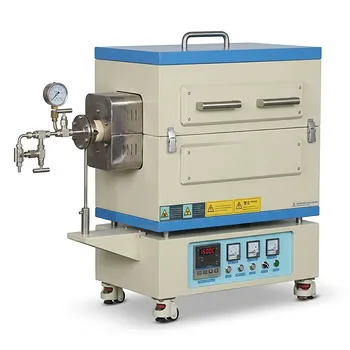
High Temperature Split Tube Furnace 1500C for Material Research Vacuum and Atmosphere Thermal Processing

1800C High Temperature Compact Vacuum Tube Furnace with 60mm OD Alumina Tube and Kanthal MoSi2 Heating Elements

Compact High Temperature 1600C Tube Furnace with 50mm Alumina Tube and Vacuum Flanges for Material Sintering
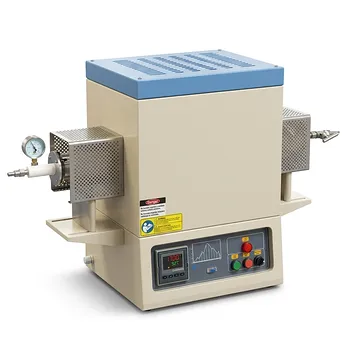
High Temperature Three Zone Tube Furnace 1700C with Alumina Tube and Water Cooled Flanges
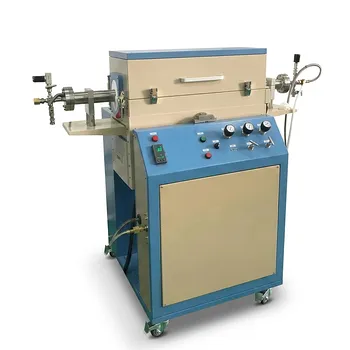
High Temperature Rocking Tube Furnace 1700°C Alumina Processing Tube with Precision Oscillation for Material Synthesis

High Temperature 1700C Tube Furnace with 4 Inch OD Alumina Tube and Vacuum Sealing Flanges

High Temperature 1700C Vertical Tube Furnace for Powder Spherification and Material Sintering
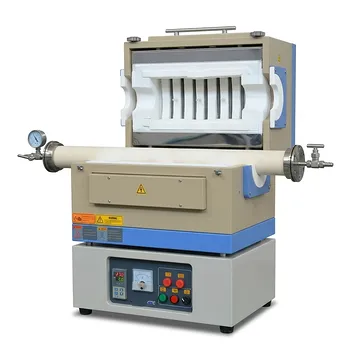
High Temperature 1600C Split Tube Furnace Vacuum Flanges Valves Optional 60mm 80mm Alumina Tube

High Temperature Automated 5 Inch Tube Furnace for Autonomous Material Research and Advanced Laboratory R&D

High Temperature 1700C Six Zone Split Tube Furnace with Alumina Tube and Water Cooled Flanges
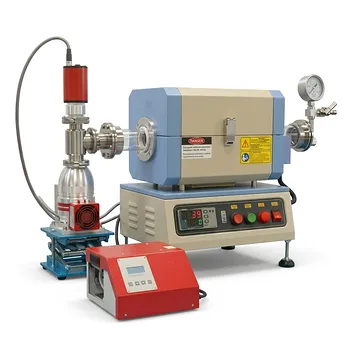
High Vacuum Compact Tube Furnace 1200C with Integrated Turbo Pump System and 8 Inch Heating Zone
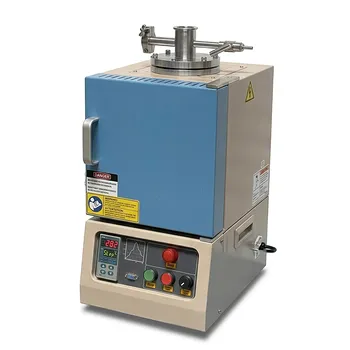
High Temperature Hybrid Muffle and Tube Furnace with Vacuum Capability and PID Control

1100°C High Temperature Quartz Chamber Furnace 8 Inch OD with 7.6 Liter Capacity and Vacuum Atmosphere Capability

1100C Tube Furnace with Vacuum Flange and Programmable Temperature Controller for Material Science and Industrial Heat Treatment