What is the purpose of using high-purity Argon (Ar) during diamond thin film heat treatment? Preserve Material Integrity
Updated 3 months ago
The primary purpose of using high-purity Argon (Ar) during the heat treatment of diamond thin films is to establish a strictly inert atmosphere that isolates the material from oxygen and moisture. This prevents the oxidation or contamination of the films, ensuring that any observed changes in lattice structure or electrical performance are caused solely by thermal energy rather than external chemical interference.
High-purity Argon acts as a "chemical shield" that preserves the integrity of the diamond lattice at extreme temperatures. By eliminating atmospheric reactants, it allows for the precise study of heat-induced structural evolution without the confounding variables of oxidation or graphitization.
Eliminating Atmospheric Interference
Prevention of Oxidation and Erosion
At high temperatures, diamond thin films and carbon-based carriers are highly susceptible to reacting with oxygen in the air. High-purity Argon displaces oxygen and moisture, preventing the diamond surface from "burning" or eroding during the annealing process.
Suppression of Surface Graphitization
High-temperature environments (often exceeding 1000°C) can catalyze the conversion of diamond’s sp3 carbon bonds into graphite. The introduction of an inert Argon atmosphere suppresses this phase change, preserving the diamond's unique physical and chemical properties.
Maintaining Chemical Purity
Diamond thin films are often used in high-performance electronics where even trace impurities can cause degradation. An Argon environment ensures that contamination from impurities in the air does not penetrate the film, keeping the material's purity level consistent with its post-growth state.
Ensuring Experimental and Structural Integrity
Validating Heat-Induced Evolution
To accurately study phenomena like lattice distortion or phase separation, researchers must eliminate external chemical reactions. Argon ensures that any measured degradation in electrical performance is a direct result of internal structural shifts caused by heat.
Consistency Between Surface and Bulk
In thermal processing, it is critical that the surface of the specimen remains representative of its interior. Argon prevents the formation of oxide films or decarburization layers, ensuring that surface microstructure analysis remains valid for the entire thin film.
Protection of Ancillary Reaction Sources
In processes involving brazing or multi-metal systems, Argon also protects filler metals and reaction sources from oxidation. This maintains the wettability and fluidity of fillers, allowing for the formation of stable transition layers between the diamond and its substrate.
Controlling the Thermal Process
Atmospheric Stability and Pressure
A continuous, stable flow of Argon helps maintain a consistent internal furnace pressure. This stability is essential for process repeatability and ensures that the flow field distribution remains uniform across the thin film surface.
Facilitating Selective Reactions
By providing a pure reducing or neutral atmosphere, Argon allows specific chemical equilibria to be met. This is vital when the goal is to achieve selective agglomeration of atoms or specific diffusion reactions without interference from secondary oxidation.
Understanding the Trade-offs
The Necessity of "High-Purity" Grades
Using lower grades of Argon can be a significant pitfall, as trace amounts of oxygen or water vapor can still trigger oxidation at temperatures above 1000°C. High-purity gas (99.999% or higher) is often required to ensure the "inert" environment is truly non-reactive.
Cost and Gas Consumption
Maintaining a continuous flow of high-purity Argon adds significant operational costs to heat treatment. However, the risk of losing a high-value diamond thin film to uncontrolled oxidation or surface damage usually justifies the expense.
How to Apply This to Your Project
Recommendations Based on Your Objectives
- If your primary focus is fundamental material research: Use the highest purity Argon available to ensure that observed lattice distortions are purely thermal and not artifacts of chemical contamination.
- If your primary focus is industrial diamond brazing: Prioritize a stable Argon flow rate to protect the Ni-Cr filler metals from oxidation, which is critical for maintaining bond strength.
- If your primary focus is thin film CVD growth: Use Argon as a carrier gas to exclude moisture and control the distribution of reaction gases, ensuring a high-quality, uniform film.
By meticulously controlling the inert environment with high-purity Argon, you ensure that the structural evolution of your diamond thin film is a precise reflection of your thermal parameters.
Summary Table:
| Key Role | Specific Benefit | Impact on Material |
|---|---|---|
| Inert Shielding | Displaces oxygen and moisture | Prevents surface erosion and burning |
| Phase Suppression | Inhibits sp3 to sp2 conversion | Prevents unwanted surface graphitization |
| Purity Maintenance | Eliminates atmospheric contaminants | Ensures consistent electrical performance |
| Thermal Stability | Maintains uniform furnace pressure | Facilitates repeatable structural evolution |
Optimize Your Thermal Processing with THERMUNITS
To achieve the precision required for high-purity diamond thin film research, your laboratory needs reliable and sophisticated thermal equipment. THERMUNITS is a leading manufacturer specializing in high-temperature solutions for material science and industrial R&D.
Our comprehensive product range includes:
- Atmosphere and Vacuum Furnaces for strict environmental control.
- Tube, Muffle, and Rotary Furnaces for versatile heat treatment.
- CVD/PECVD Systems designed specifically for high-quality film growth.
- Vacuum Induction Melting (VIM) and Hot Press Furnaces for advanced metallurgy.
- Dental Furnaces and Thermal Elements to support diverse laboratory needs.
Whether you are studying lattice distortion or scaling industrial brazing processes, THERMUNITS provides the stability and purity your project demands.
Ready to enhance your lab’s efficiency and research accuracy?
Contact THERMUNITS today to discuss your custom solution!
References
- Gufei Zhang, Paul May. Annealing-induced evolution of boron-doped polycrystalline diamond. DOI: 10.1103/physrevmaterials.8.044802
Mentioned Products
- High Temperature 800C Rapid Thermal Processing Furnace with Rotating Sample Holder for Close Spaced Sublimation and Thin Film Solar Cell Research
- 950C Rapid Thermal Processing Furnace for 12 Inch Wafer CSS Coating with Rotating Substrate Holder
- High Temperature 1700C Bench Top Muffle Furnace with Alumina Fiber Insulation and 3.6L Chamber Capacity for Precision Sintering and Heat Treatment
- 1650C High Temperature Atmosphere Controlled Box Furnace with 65L Chamber for Advanced Material Sintering and Industrial Heat Treatment
- 1750C Bench Top Muffle Furnace 3.6L High Grade Molybdenum Disilicide Heating Elements Laboratory Heat Treatment Equipment
People Also Ask
- What role does a SiC-coated graphite susceptor play in H2Se selenization? Boost RTP Thermal Uniformity & Film Purity.
- What is the purpose of coating ceramic sheets with platinum paste? Achieve Stable High-Temp Ohmic Contacts
- What are the functional advantages of an RTP system for surface deposition? Enhance Heterojunction Interface Integrity
- What are the advantages of RTPR for Pd1/PU catalyst synthesis? Achieve superior single-atom dispersion and stability.
- How does a high-temperature tube furnace optimize palladium thin film pre-annealing? Improve Grain Growth & Stress Relief

Tech Team · ThermUnits
Last updated on Jun 03, 2026
Related Products
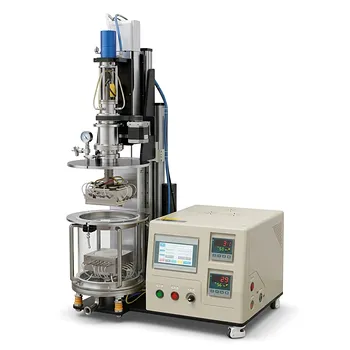
High Temperature 800C Rapid Thermal Processing Furnace with Rotating Sample Holder for Close Spaced Sublimation and Thin Film Solar Cell Research
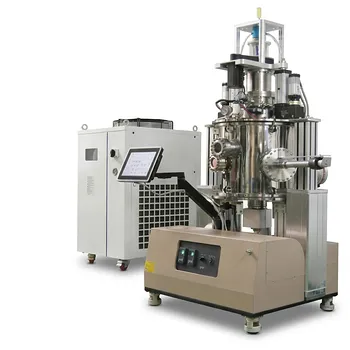
950C Rapid Thermal Processing Furnace for 12 Inch Wafer CSS Coating with Rotating Substrate Holder
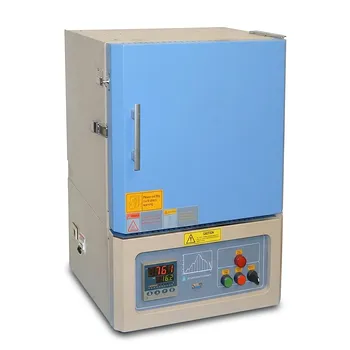
High Temperature 1700C Bench Top Muffle Furnace with Alumina Fiber Insulation and 3.6L Chamber Capacity for Precision Sintering and Heat Treatment
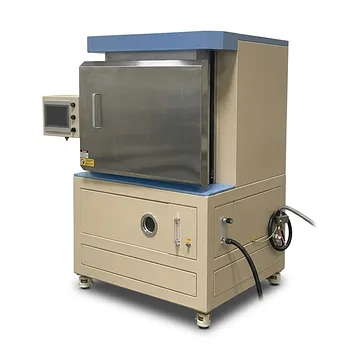
1650C High Temperature Atmosphere Controlled Box Furnace with 65L Chamber for Advanced Material Sintering and Industrial Heat Treatment
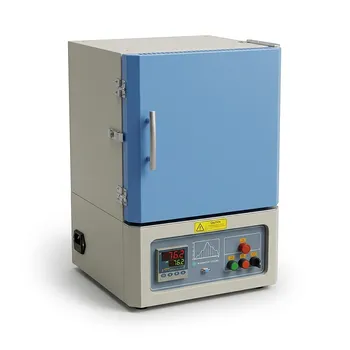
1750C Bench Top Muffle Furnace 3.6L High Grade Molybdenum Disilicide Heating Elements Laboratory Heat Treatment Equipment
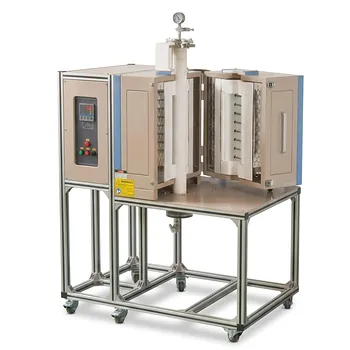
High Temperature 1700C Vertical Split Tube Furnace for Material Quenching and Single Crystal Growth

High Temperature Tube Furnace 1500C with Sliding Flanges and 50mm OD for Rapid Thermal Processing Fast Heating and Cooling
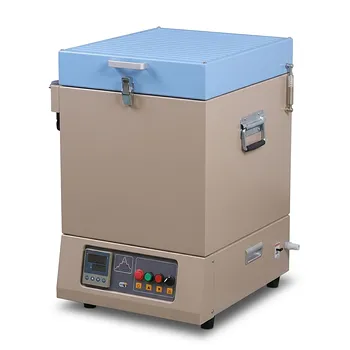
High Temperature Vertical Crucible Furnace with 22L Heating Chamber and 1200C Maximum Temperature
High Temperature Dual Zone Tube Furnace for Material Science Research and Professional Thermal Processing
High Temperature Muffle Furnace with Alloy Chamber for Debinding and Sintering Applications
High Temperature 1600°C Three Zone Heated Bottom Loading Box Furnace with Rapid Thermal Processing Chamber 72L Volume
Large Bench Top 1700C High Temperature Muffle Furnace with 19L Chamber for Advanced Material Sintering and Annealing
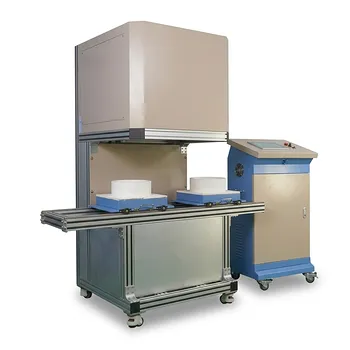
High Temperature Bottom Loading Vertical Furnace 1700C Dual Stage Sample Processing System 18L Large Capacity Thermal Treatment Equipment
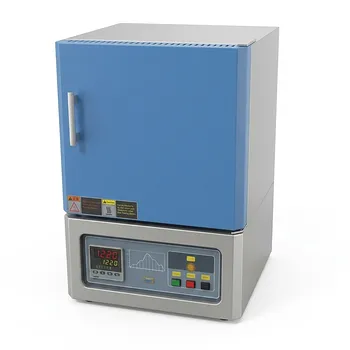
High Temperature Benchtop Muffle Furnace 1700C 10L Chamber Alumina Fiber Insulation MoSi2 Heating Elements

High Temperature 1700C Benchtop Tube Furnace with 5 Inch Heating Zone High Purity Alumina Tube and Vacuum Sealing Flanges
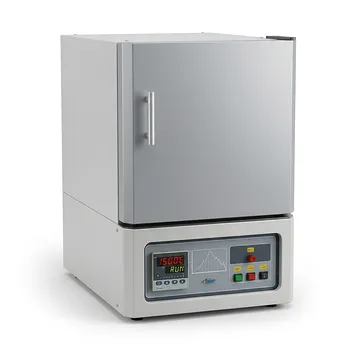
High Temperature 1500C Benchtop Muffle Furnace 3.6L Alumina Fiber Chamber Programmable Controller Sintering Annealing Carbonization Thermal Processing System
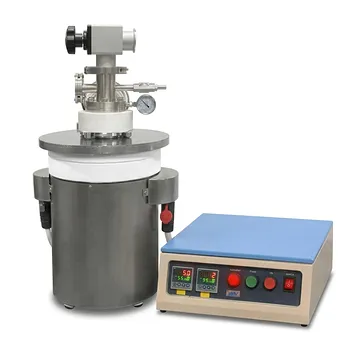
1100C High Temperature Vacuum Crucible Furnace with Quartz Chamber for Thermal Processing and Sintering
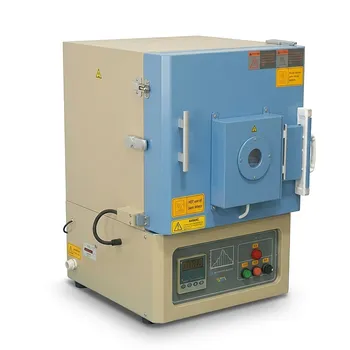
High Temperature Benchtop Muffle Furnace 1500C with 3.6L Chamber and Quartz Observation Window
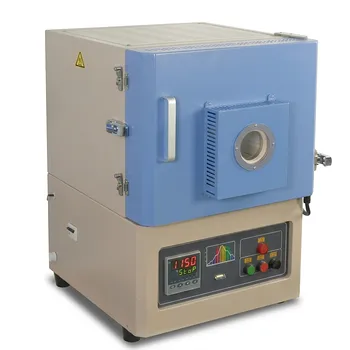
High Temperature Benchtop Muffle Furnace with Quartz Observation Window for Thermal Imaging and Material Analysis