What is the purpose of utilizing multiple types of thermocouples like Type B & C? Master High-Temp Thermal Precision
Updated 3 months ago
Maximizing thermal precision in high-temperature roasting systems requires a dual-sensor strategy to bridge the gap between furnace stability and sample accuracy. By utilizing Type B thermocouples for primary furnace control and Type C thermocouples for direct sample monitoring, operators can eliminate uncertainties in temperature field distribution. This specific configuration is a critical technical requirement for achieving extreme performance metrics, such as desulfurization rates exceeding 98 percent.
Core Takeaway: The integration of Type B and Type C thermocouples allows for simultaneous stabilization of the macro-thermal environment and high-precision tracking of micro-level reaction temperatures. This dual-monitoring approach reduces control errors to within ±0.5%, which is essential for measuring temperature-sensitive physical properties.
The Functional Roles of Type B and Type C Sensors
Type B: The Anchor of Environment Stability
The Type B thermocouple (Platinum-Rhodium 30/6) serves as the foundation for the furnace control system. It is specifically designed for long-term stability in extreme environments, often reaching operating temperatures between 1300°C and 1800°C.
Because of its excellent oxidation and corrosion resistance, the Type B sensor is typically installed within the main heating zone. It provides the steady feedback loop necessary for the temperature controller to maintain a consistent thermal background.
Type C: Precision at the Reaction Point
While Type B manages the furnace, the Type C thermocouple is utilized for real-time monitoring of the sample center or crucible. It is positioned closer to the material undergoing the roast to provide a more direct and faster response to local temperature changes.
This placement allows researchers to capture the actual temperature of the reaction, rather than just the ambient heat of the furnace. This distinction is vital when calculating sensitive parameters like slag viscosity or diffusion coefficients.
Impact on Process Outcomes and Data Integrity
Achieving High Desulfurization Rates
In industrial roasting, the chemical efficiency of the process is directly tied to thermal precision. The use of multiple thermocouple types ensures that the temperature field distribution is accurately mapped and controlled.
Precise monitoring is the primary catalyst for achieving desulfurization rates above 98%. Without this level of granularity, localized temperature fluctuations could lead to incomplete reactions or material degradation.
Measuring Temperature-Sensitive Variables
Certain physical properties, such as the TiO2 activity coefficient or slag viscosity, are highly sensitive to even minor thermal shifts. A dual-monitoring configuration ensures that temperature control error remains within a narrow margin of plus or minus 0.5%.
This reliability is essential for experimental reproducibility. By using sensors encased in recrystallized alumina protection tubes, systems can maintain high measurement precision (up to ±3 K) even in the most aggressive high-temperature thermodynamic experiments.
Understanding the Trade-offs
Material Costs and Component Fragility
High-precision thermocouples, particularly Type B, rely on precious metals like Platinum and Rhodium, making them significant capital investments. Their performance is also dependent on the integrity of alumina protection tubes, which can be susceptible to thermal shock if not handled correctly.
Strategic Placement Challenges
Installing multiple sensors at strategic nodes—such as the radiation chamber or convection zone—increases the complexity of the furnace design. Operators must balance the need for more data points against the risk of creating thermal gradients or physical obstructions within the heating chamber.
How to Apply This to Your Project
Making the Right Choice for Your Goal
- If your primary focus is long-term furnace stability: Prioritize the installation of Type B thermocouples within the primary heating zones to leverage their superior oxidation resistance at temperatures up to 1800°C.
- If your primary focus is reaction-level accuracy: Integrate Type C thermocouples as close to the sample or crucible center as possible to capture real-time fluctuations that the main furnace sensors might miss.
- If your primary focus is process optimization: Use a multi-node approach, placing sensors at the coil inlet and radiation chamber outlet to validate numerical thermal simulations and prevent coil overheating.
Implementing a diversified thermocouple array transforms temperature from a vague environmental variable into a precisely controlled tool for chemical and physical engineering.
Summary Table:
| Feature | Type B Thermocouple | Type C Thermocouple |
|---|---|---|
| Primary Role | Furnace Environment Stability | Localized Reaction Monitoring |
| Temp Range | 1300°C – 1800°C | High-temp direct sample contact |
| Key Advantage | High oxidation/corrosion resistance | Fast response to thermal shifts |
| Control Focus | Macro-thermal background | Micro-level physical properties |
| Precision Impact | Eliminates field distribution errors | Ensures ±0.5% process accuracy |
Elevate Your R&D Precision with THERMUNITS Engineering
Achieving a 98% desulfurization rate or maintaining a ±0.5% temperature tolerance requires more than standard equipment—it requires specialized thermal expertise. THERMUNITS is a leading manufacturer of high-temperature laboratory equipment, providing the advanced sensor integration needed for cutting-edge material science.
Whether you require Muffle, Vacuum, Atmosphere, or Rotary furnaces, our systems are designed to bridge the gap between furnace stability and sample accuracy. From CVD/PECVD systems and Hot Press furnaces to Vacuum Induction Melting (VIM) and Electric Rotary Kilns, we provide the tools to ensure experimental reproducibility and superior data integrity.
Ready to optimize your high-temperature heat treatment?
Contact our technical team today to discover how THERMUNITS can customize a thermal solution for your specific industrial R&D needs.
References
- Erdenebold Urtnasan, Jei‐Pil Wang. Correlation between Thermodynamic Studies and Experimental Process for Roasting Cobalt-Bearing Pyrite. DOI: 10.3390/met14070777
Mentioned Products
- High Temperature Ultrafast Heating Pressing Furnace 2900C Max 100kgf Rapid Thermal Processing System
- High Temperature 1500C Benchtop Muffle Furnace 3.6L Alumina Fiber Chamber Programmable Controller Sintering Annealing Carbonization Thermal Processing System
- Induction Heating System with Temperature Control for High Temperature Vacuum Sintering and Melting
- Roller Table Atmosphere Furnace 1500C High Temperature Battery Material Sintering System 112L Capacity
- High Temperature 800C Rapid Thermal Processing Furnace with Rotating Sample Holder for Close Spaced Sublimation and Thin Film Solar Cell Research
People Also Ask
- What are the unique advantages of using an ultrafast high-temperature furnace (UFTF) for modified graphite?
- What is the necessity of using a high-temperature hot press furnace for the preparation of dense non-oxide ceramics?
- What role does a SiC-coated graphite susceptor play in H2Se selenization? Boost RTP Thermal Uniformity & Film Purity.
- What are the core advantages of using a Hot Press furnace vs. conventional sintering? Achieve Near-Theoretical Density
- What technical advantages does a Hot Press furnace offer? Achieve full densification and superior material strength.

Tech Team · ThermUnits
Last updated on Jun 02, 2026
Related Products
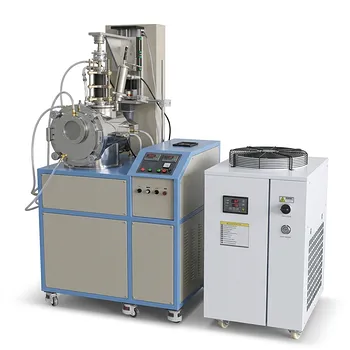
High Temperature Ultrafast Heating Pressing Furnace 2900C Max 100kgf Rapid Thermal Processing System
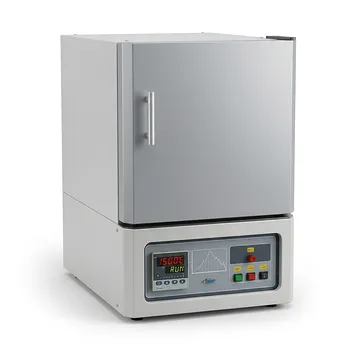
High Temperature 1500C Benchtop Muffle Furnace 3.6L Alumina Fiber Chamber Programmable Controller Sintering Annealing Carbonization Thermal Processing System
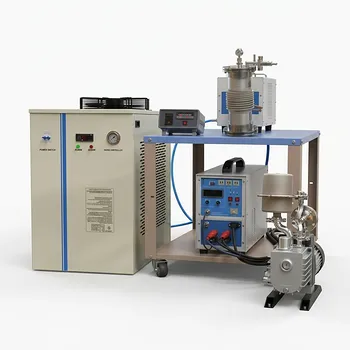
Induction Heating System with Temperature Control for High Temperature Vacuum Sintering and Melting
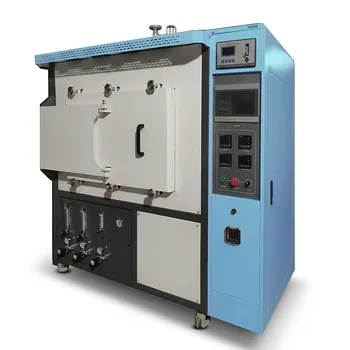
Roller Table Atmosphere Furnace 1500C High Temperature Battery Material Sintering System 112L Capacity
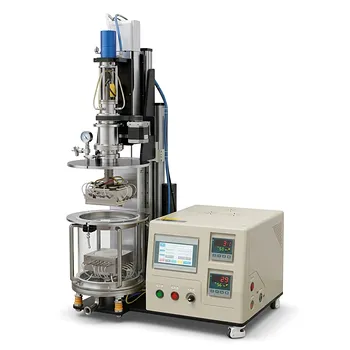
High Temperature 800C Rapid Thermal Processing Furnace with Rotating Sample Holder for Close Spaced Sublimation and Thin Film Solar Cell Research
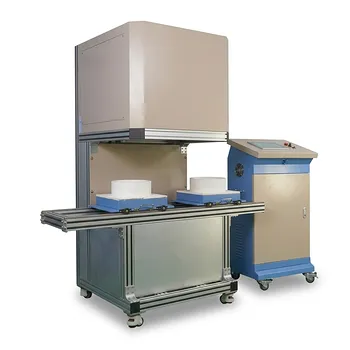
High Temperature Bottom Loading Vertical Furnace 1700C Dual Stage Sample Processing System 18L Large Capacity Thermal Treatment Equipment
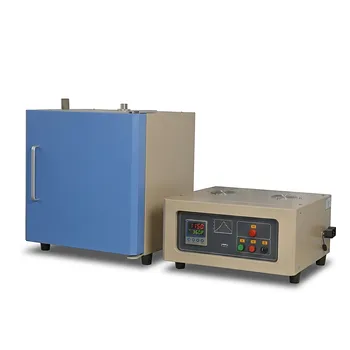
High Temperature Muffle Furnace with Alloy Chamber for Debinding and Sintering Applications
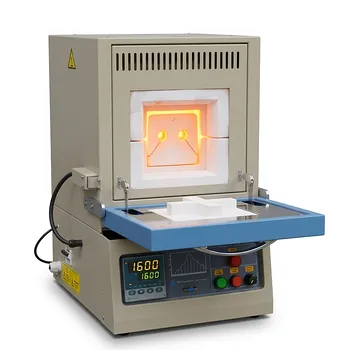
High Temperature Compact Muffle Furnace 1700 C with 30 Segment Programmable Controller and 1.7L Cubic Chamber
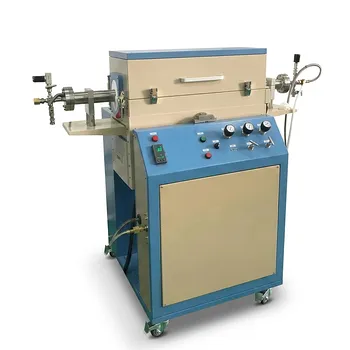
High Temperature Rocking Tube Furnace 1700°C Alumina Processing Tube with Precision Oscillation for Material Synthesis
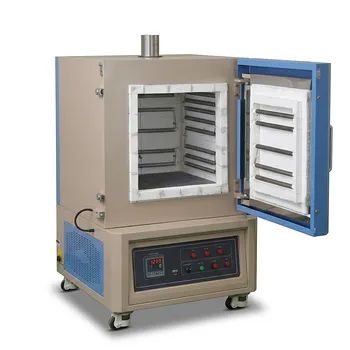
1200C High Temperature 125L Muffle Furnace 5 Side Heating for Large Batch Sintering with Optional Alloy Debinding Chamber
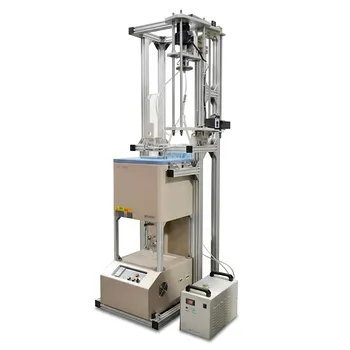
500C Vacuum Vertical Tube Furnace 84mm OD Sample Rotation Lifting System
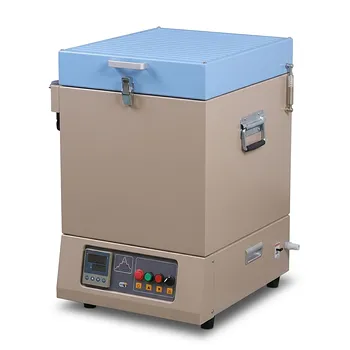
High Temperature Vertical Crucible Furnace with 22L Heating Chamber and 1200C Maximum Temperature
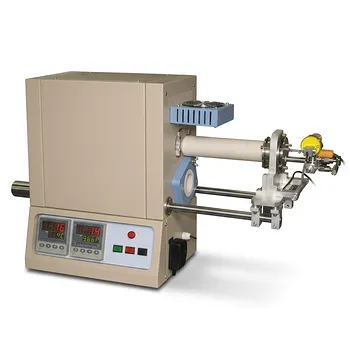
High Temperature Tube Furnace 1500C with Sliding Flanges and 50mm OD for Rapid Thermal Processing Fast Heating and Cooling
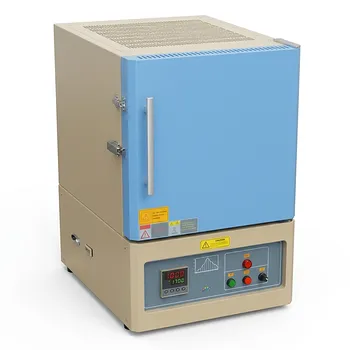
Large Bench Top 1700C High Temperature Muffle Furnace with 19L Chamber for Advanced Material Sintering and Annealing
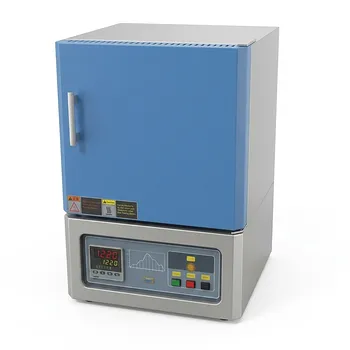
High Temperature Benchtop Muffle Furnace 1700C 10L Chamber Alumina Fiber Insulation MoSi2 Heating Elements
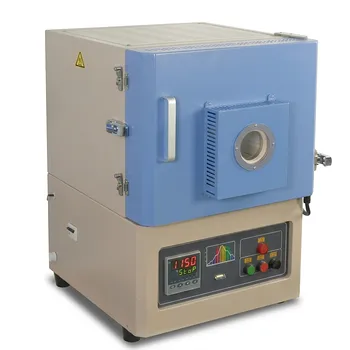
High Temperature Benchtop Muffle Furnace with Quartz Observation Window for Thermal Imaging and Material Analysis
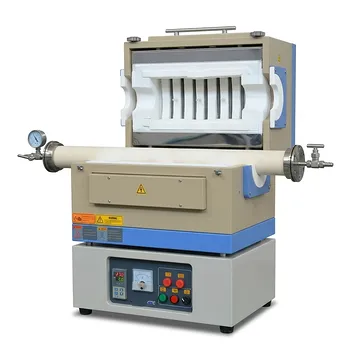
High Temperature 1600C Split Tube Furnace Vacuum Flanges Valves Optional 60mm 80mm Alumina Tube
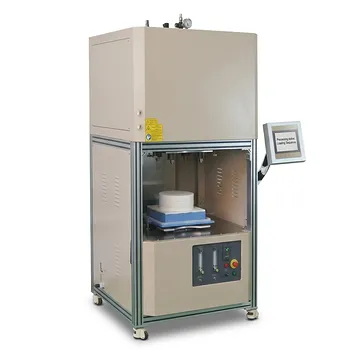
High Temperature Vertical Atmosphere Controlled Furnace with Automatic Bottom Loading and 1700°C Capacity for Advanced Material Research
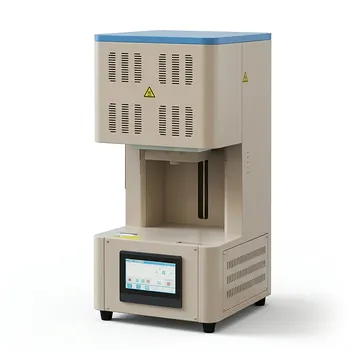
Automated 1700C High Temperature Bottom Loading Box Furnace with PC Software Control and Robotic Integration Capability