Why is a Rapid Thermal Annealing (RTA) furnace essential for 4H-SiC ohmic contacts? Enhance SiC Power Electronics.
Updated 3 months ago
The RTA furnace is the definitive tool for SiC contact formation because it provides the precise, rapid thermal energy required to trigger a solid-phase reaction between nickel and the substrate. By reaching temperatures such as 950 °C almost instantly, it facilitates the creation of a nickel silicide phase, which is critical for achieving low-resistance ohmic behavior while protecting the material from contamination.
An RTA furnace is essential because it balances high-temperature reactivity with extreme speed to catalyze a nickel silicide transformation. This process ensures superior electrical performance and low contact resistance without compromising the semiconductor's structural integrity or purity.
The Mechanism of Ohmic Contact Formation
The Solid-Phase Reaction
At the heart of this process is the chemical reaction between a deposited nickel layer and the 4H-SiC surface. The thermal energy from the RTA furnace triggers a transformation that creates nickel silicide, which serves as the functional electrical bridge between the metal and the semiconductor.
The Significance of 950 °C
The primary reference identifies 950 °C as a critical threshold for an "instantaneous" reaction. Achieving this specific temperature rapidly is vital to ensuring the correct phase of nickel silicide forms, which is the key to achieving superior ohmic characteristics.
Precision Through High Heating Rates
Unlike conventional furnaces that heat up slowly, RTA systems use extremely high heating rates. This allows the system to reach the reaction temperature without subjecting the wafer to prolonged heat, which could lead to unwanted material interactions.
Environmental Control and Material Integrity
The Role of Nitrogen Protection
The RTA process occurs within a nitrogen-protected environment to prevent oxidation. At 950 °C, oxygen exposure would lead to the formation of resistive oxides, which would ruin the contact's electrical performance.
Minimizing Impurity Diffusion
One of the deepest needs in SiC fabrication is maintaining the purity of the substrate. Because RTA uses very short dwell times, unwanted impurities have significantly less time to diffuse into the crystal lattice compared to traditional thermal processing.
Controlling the Contact Interface
The speed of the RTA process allows for a sharp, well-defined interface between the silicide and the SiC. This precision is what leads to the significantly reduced contact resistance required for high-performance power electronics.
Understanding the Trade-offs
Thermal Stress and Wafer Warpage
The primary trade-off of rapid heating is the introduction of thermal stress. If the heating or cooling cycles are too aggressive, the temperature gradient across the wafer can cause microscopic defects or physical warping of the 4H-SiC substrate.
Uniformity Across Large Areas
Achieving a perfectly uniform temperature across a large wafer is more challenging with RTA than with slow-soak furnaces. Any inconsistency in the thermal field can lead to varying contact resistance across different devices on the same wafer.
How to Apply This to Your Project
Successfully forming ohmic contacts requires a balance between thermal energy and process control to ensure device reliability.
- If your primary focus is achieving the lowest contact resistance: Prioritize the precision of the 950 °C dwell time to ensure a complete and uniform nickel silicide transition.
- If your primary focus is maintaining substrate purity: Utilize the highest possible heating rates to minimize the total thermal budget and prevent the migration of impurities.
Mastering the RTA process is the fundamental step in unlocking the full efficiency and power-handling capabilities of 4H-SiC semiconductor devices.
Summary Table:
| Key Feature of RTA | Impact on 4H-SiC Substrates | Core Benefit |
|---|---|---|
| Rapid Heating (950°C) | Triggers instant solid-phase nickel silicide reaction. | Lowers electrical contact resistance. |
| Short Dwell Time | Minimizes total thermal budget and material exposure. | Prevents unwanted impurity diffusion. |
| Nitrogen Protection | Creates an oxygen-free processing environment. | Prevents resistive oxide formation. |
| Interface Control | Ensures a sharp, well-defined contact layer. | Enhances device reliability & efficiency. |
Elevate Your SiC Fabrication with THERMUNITS
Are you looking to optimize your semiconductor fabrication and achieve superior ohmic contacts? At THERMUNITS, we understand that precision is non-negotiable for high-performance power electronics. As a leading manufacturer of high-temperature laboratory equipment, we provide advanced thermal processing solutions tailored for material science and industrial R&D.
Our comprehensive range includes:
- Muffle, Vacuum, and Atmosphere Furnaces for diverse heat treatments.
- Tube and Rotary Furnaces for continuous and controlled processing.
- Hot Press Furnaces & CVD/PECVD Systems for advanced material synthesis.
- Vacuum Induction Melting (VIM) & Dental Furnaces for specialized applications.
Whether you are focusing on minimizing contact resistance or maintaining substrate purity, our equipment offers the uniform heating and rapid control your project demands. Contact our technical experts today to discuss your specific requirements and discover how THERMUNITS can empower your research and production!
References
- Fabrizio Roccaforte, Filippo Giannazzo. Schottky contacts on sulfurized silicon carbide (4H-SiC) surface. DOI: 10.1063/5.0192691
Mentioned Products
- 900 ºC Max Sliding RTP Tube Furnace with Rapid IR Heating and 4 Inch OD Quartz Tube
- Compact Atmosphere Controlled Rapid Thermal Processing RTP Furnace with 4 Inch ID Quartz Tube 1100C
- Rapid Thermal Processing Atmosphere Controlled Bottom Loading Furnace 1100C with 50C Per Second Heating Rate for Wafer Annealing
- Rapid Thermal Processing Furnace 1100C Atmosphere Controlled Bottom Loading RTP System for Wafer Annealing and Catalysis Research
- 1200C High Temperature 5 Inch Sliding Tube Furnace for Rapid Thermal Processing RTP and Wafer Annealing
People Also Ask
- What role does a SiC-coated graphite susceptor play in H2Se selenization? Boost RTP Thermal Uniformity & Film Purity.
- What materials are used for tube furnace process tubes? Temperature Limits & Selection Guide for Research
- What are the functional advantages of an RTP system for surface deposition? Enhance Heterojunction Interface Integrity
- What technical advantages does an RTA furnace provide for nanoporous gold? Precision Control of Nanostructures.
- What are the advantages of using a Rapid Thermal Annealing (RTA) furnace for Beta-Ga2O3 devices vs. Tube Furnaces?

Tech Team · ThermUnits
Last updated on Jun 02, 2026
Related Products
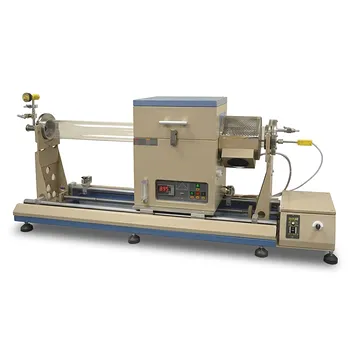
900 ºC Max Sliding RTP Tube Furnace with Rapid IR Heating and 4 Inch OD Quartz Tube
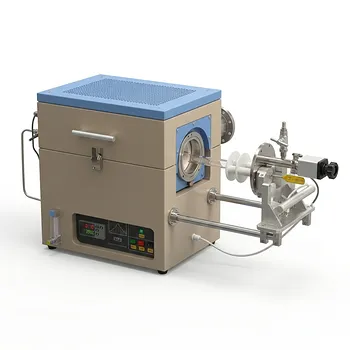
Compact Atmosphere Controlled Rapid Thermal Processing RTP Furnace with 4 Inch ID Quartz Tube 1100C
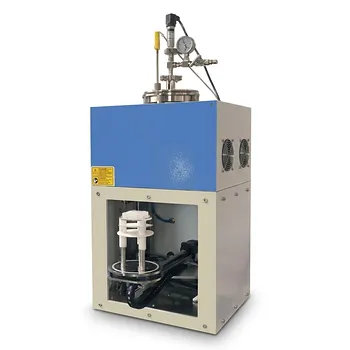
Rapid Thermal Processing Atmosphere Controlled Bottom Loading Furnace 1100C with 50C Per Second Heating Rate for Wafer Annealing
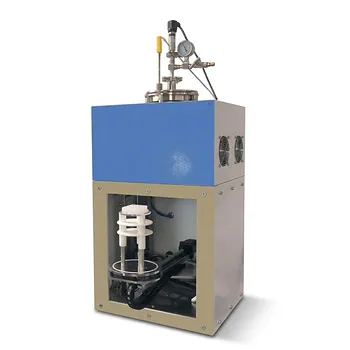
Rapid Thermal Processing Furnace 1100C Atmosphere Controlled Bottom Loading RTP System for Wafer Annealing and Catalysis Research
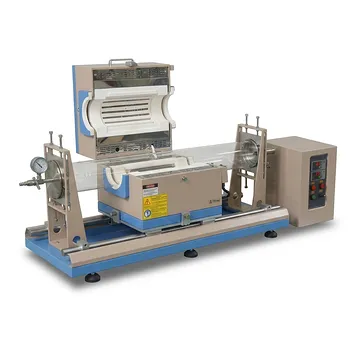
1200C High Temperature 5 Inch Sliding Tube Furnace for Rapid Thermal Processing RTP and Wafer Annealing
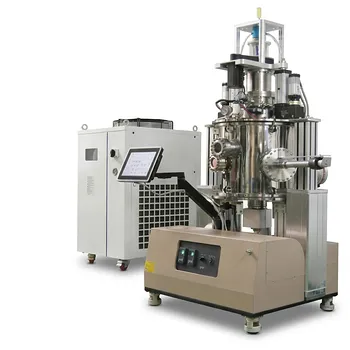
950C Rapid Thermal Processing Furnace for 12 Inch Wafer CSS Coating with Rotating Substrate Holder
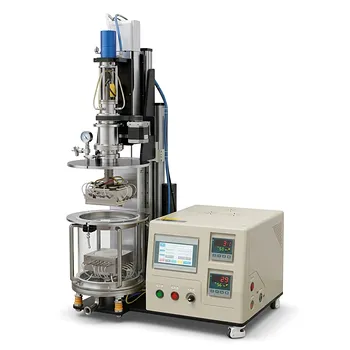
High Temperature 800C Rapid Thermal Processing Furnace with Rotating Sample Holder for Close Spaced Sublimation and Thin Film Solar Cell Research

High Temperature Tube Furnace 1500C with Sliding Flanges and 50mm OD for Rapid Thermal Processing Fast Heating and Cooling
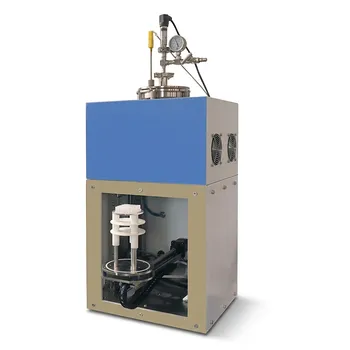
Rapid Thermal Processing RTP Atmosphere Controlled Bottom Loading Furnace 1100C High Throughput 50C per Second Heating Rate
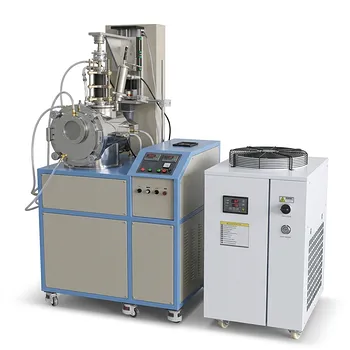
High Temperature Ultrafast Heating Pressing Furnace 2900C Max 100kgf Rapid Thermal Processing System
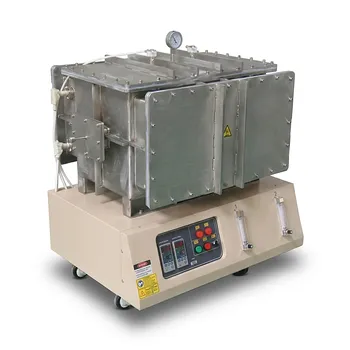
1500°C Atmosphere Controlled Rapid Heating Furnace for Material Science and Battery Powder Sintering
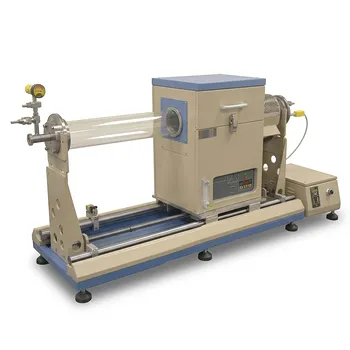
Rapid Thermal Processing Sliding Tube Furnace with 4 Inch OD Quartz Tube and 900C IR Heating
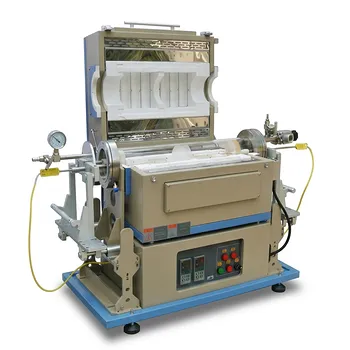
Two Zone IR Heating Rapid Thermal Processing RTP Tube Furnace with 4 Inch ID Quartz Tube and Sliding Sample Holders
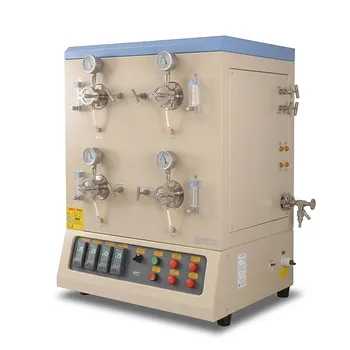
High Temperature 1500C Four Channel Tube Furnace with Alumina Tubes for High Throughput Annealing and Phase Diagram Research
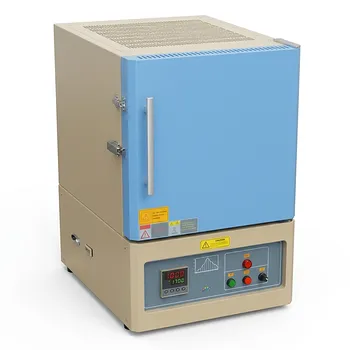
Large Bench Top 1700C High Temperature Muffle Furnace with 19L Chamber for Advanced Material Sintering and Annealing
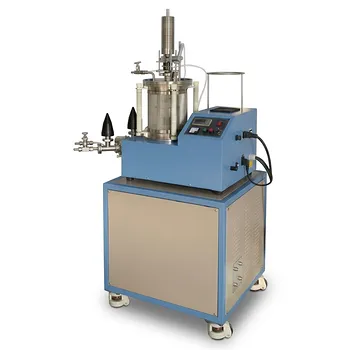
Ultrafast Thermal Pressing Furnace 2900C Max Temperature 200K per Second Heating Rate Vacuum Atmosphere Rapid Processing System
High Temperature 1000C Vacuum Furnace with 8 Inch ID Chamber for Material Sintering and Research Annealing
Two Zones CSS Furnace for Rapid Thermal Processing Thin Film Coating 3 Inch Diameter 650C
High Temperature Cold Wall Vacuum Furnace for Advanced Material Sintering and Annealing 1600C Heating Area 200x200x300mm