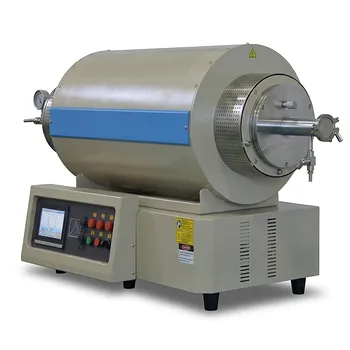
What is the role of an atmosphere tube furnace in the final formation of the CoO@N-rGONR catalyst? Precision Control
Updated 3 months ago
The atmosphere tube furnace is the critical reactor for the multi-stage annealing and in situ conversion of cobalt salt precursors into the final CoO@N-rGONR catalyst. By maintaining a nitrogen-protected environment at specific temperatures (600°C and 200°C), the furnace ensures the formation of cobalt oxide (CoO) nanocrystals while simultaneously strengthening the interfacial coupling between the active phase and the nitrogen-doped reduced graphene oxide nanoribbon (N-rGONR) support.
Core Takeaway: The atmosphere tube furnace provides the thermal precision and inert environment necessary to convert chemical precursors into a stable, high-performance catalyst. It prevents the degradation of the carbon support and ensures the cobalt active sites reach the exact oxidation state required for catalytic activity.
Transforming Precursors into Active Catalytic Phases
In Situ Conversion of Cobalt Salts
The primary role of the furnace is to provide a controlled thermal field for thermal decomposition. Under nitrogen protection, the cobalt salt precursors undergo a chemical transformation into CoO nanocrystals.
This process happens in situ, meaning the nanocrystals form directly on the surface of the support material. This localized formation is essential for creating a uniform distribution of active sites across the catalyst structure.
Enhancing Interfacial Coupling
The multi-stage annealing process—specifically at 600°C and 200°C—is not merely about heating; it is about engineering the bond between the metal oxide and the carbon support. The furnace facilitates interfacial coupling, which improves the stability and electron transfer efficiency of the CoO@N-rGONR composite.
Without this precise thermal treatment, the cobalt oxide might sit loosely on the N-rGONR surface. Strong coupling ensures that the catalyst remains durable during demanding electrochemical reactions.
The Necessity of Precise Atmosphere Control
Prevention of Excessive Oxidation or Reduction
The "atmosphere" aspect of the tube furnace is its most critical feature for this synthesis. By using nitrogen (N2) protection, the furnace excludes oxygen, which would otherwise cause the cobalt nanoparticles to over-oxidize or the carbon support to burn away.
Conversely, the controlled environment prevents excessive reduction. The goal is to reach the CoO phase; an environment that is too reducing (such as high-concentration hydrogen) might reduce the cobalt all the way to its metallic form, which lacks the specific catalytic properties needed for this application.
Stabilizing the Support Structure
High temperatures can be destructive to nitrogen-doped reduced graphene oxide nanoribbons (N-rGONR) if oxygen is present. The tube furnace maintains a stable inert environment that allows the nitrogen-doping and carbon lattice to remain intact while the metal precursors are processed.
Common Pitfalls to Avoid
Temperature Sensitivity and Aggregation
One of the greatest risks in high-temperature synthesis is atomic aggregation. If the furnace temperature is not precisely controlled or if the heating rate is too aggressive, the cobalt atoms may migrate and clump together.
Aggregation significantly reduces the surface area of the catalyst. This leads to fewer active sites and a dramatic decrease in the overall efficiency of the material.
Atmospheric Leaks and Phase Purity
Even minor leaks in the furnace's sealing system can introduce trace amounts of oxygen or moisture. This contamination can lead to the formation of unintended phases, such as Co3O4 instead of the desired CoO, which fundamentally alters the catalyst's performance.
How to Apply This to Your Project
When utilizing an atmosphere tube furnace for catalyst synthesis, your technical approach should vary based on your specific material goals.
- If your primary focus is phase purity: Ensure the furnace is rigorously sealed and purged with high-purity nitrogen or argon for at least 30 minutes prior to heating.
- If your primary focus is preventing nanoparticle clumping: Implement a precise heating rate (such as 5 °C/min) to allow for slow, controlled nucleation of the nanocrystals.
- If your primary focus is maximum support stability: Keep the maximum annealing temperature as low as possible while still achieving full precursor decomposition to protect the nitrogen-doping levels.
Ultimately, the atmosphere tube furnace serves as the definitive tool for balancing chemical transformation with structural integrity, ensuring the CoO@N-rGONR catalyst achieves its optimal catalytic potential.
Summary Table:
| Process Step | Furnace Role | Key Outcome |
|---|---|---|
| In Situ Conversion | Thermal decomposition under N2 | Uniform CoO nanocrystal formation |
| Annealing (600°C/200°C) | Multi-stage heat treatment | Strengthened interfacial coupling |
| Atmosphere Control | Inert N2 protection | Prevention of oxidation & degradation |
| Temperature Precision | Controlled heating rates | Minimized nanoparticle aggregation |
Elevate Your Material Research with THERMUNITS
Unlock the full potential of your catalyst synthesis with THERMUNITS, a leading manufacturer of high-temperature laboratory equipment. Our precision Atmosphere Tube Furnaces and CVD/PECVD systems are engineered to provide the exact thermal and atmospheric conditions required for advanced material science and industrial R&D.
From achieving phase purity in CoO catalysts to complex heat treatments in Muffle, Vacuum, Rotary, or Hot Press furnaces, we offer a comprehensive range of thermal solutions including electric rotary kilns and vacuum induction melting (VIM) systems.
Ready to optimize your heat treatment results? Contact us today to discuss your specific laboratory requirements with our experts!
References
- Wencheng Liu, Yan Lü. Nitrogen‐Doped Graphene Oxide Nanoribbon Supported Cobalt Oxide Nanoparticles as High‐Performance Bifunctional Catalysts for Zinc–Air Battery. DOI: 10.1002/aesr.202400001
Mentioned Products
- Vertical 1700C Vacuum and Atmosphere Tube Furnace with 80mm Alumina Tube
- 1200C Hybrid Muffle and Tube Furnace for Material Research with Dual Atmosphere Control Quartz Tubes
- 1200°C Atmosphere Controlled Automatic Bottom Loading Furnace with 6 Inch Quartz Tube
- Compact Hybrid Muffle and Tube Furnace for 1000C Controlled Atmosphere Laboratory Material Sintering
- Compact Vertical Split Quartz Tube Furnace with Stainless Steel Vacuum Flanges for Rapid Thermal Quenching and Controlled Atmosphere Material Processing
People Also Ask
- How does a vertical tube furnace facilitate thermoelectric alloy melting? Precision synthesis for material homogeneity.
- Why is a thermocouple sensor indispensable for monitoring the vertical tube furnace during gallium oxide nanowire production? Optimize VLS Growth
- What is the function of a laboratory-grade vertical tube furnace in fast pyrolysis? Optimize Composite Research.
- How is an industrial-grade vertical tube furnace utilized in smelting leaching residues? Enhance Metal Recovery Efficiency
- Why is a vertical tube furnace preferred for Ga2O3 CVD? Optimize Convection & Nanowire Growth

Tech Team · ThermUnits
Last updated on Jun 03, 2026
Related Products

Vertical 1700C Vacuum and Atmosphere Tube Furnace with 80mm Alumina Tube
1200C Hybrid Muffle and Tube Furnace for Material Research with Dual Atmosphere Control Quartz Tubes
1200°C Atmosphere Controlled Automatic Bottom Loading Furnace with 6 Inch Quartz Tube
Compact Hybrid Muffle and Tube Furnace for 1000C Controlled Atmosphere Laboratory Material Sintering

Compact Vertical Split Quartz Tube Furnace with Stainless Steel Vacuum Flanges for Rapid Thermal Quenching and Controlled Atmosphere Material Processing
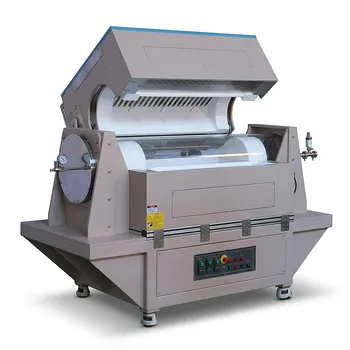
Three Zone Tube Furnace with 11 Inch or 15 Inch Quartz Tube and Hinged Flanges for Vacuum Atmosphere Heat Treatment
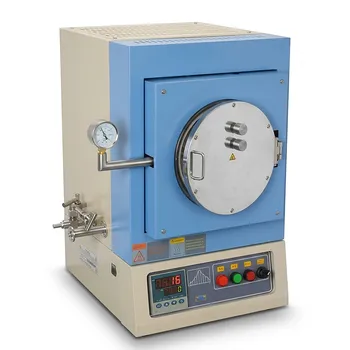
1100°C High Temperature Quartz Chamber Furnace 8 Inch OD with 7.6 Liter Capacity and Vacuum Atmosphere Capability
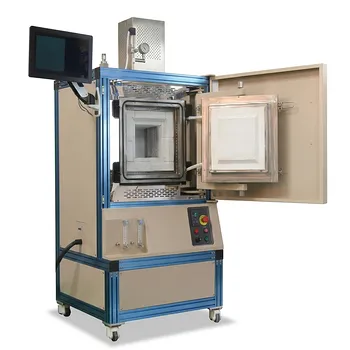
High Temperature Hydrogen Atmosphere Box Furnace 1650C Max Reducing Environment Material Synthesis System 8x8x8 Chamber

High Temperature 1700C Vertical Tube Furnace for Powder Spherification and Material Sintering

Compact High Temperature 1600C Tube Furnace with 50mm Alumina Tube and Vacuum Flanges for Material Sintering

High Temperature 1700C Tube Furnace with High Vacuum Turbomolecular Pump System and Multi Channel Mass Flow Controller Gas Mixer

High Temperature 1700C Six Zone Split Tube Furnace with Alumina Tube and Water Cooled Flanges

1800C High Temperature Compact Vacuum Tube Furnace with 60mm OD Alumina Tube and Kanthal MoSi2 Heating Elements
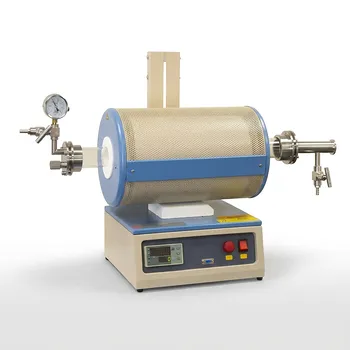
1100C Tube Furnace with Vacuum Flange and Programmable Temperature Controller for Material Science and Industrial Heat Treatment
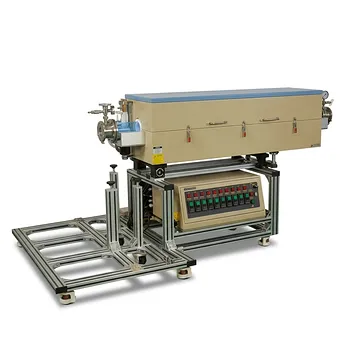
Ten Zone Multi Orientation Laboratory Tube Furnace for 1200C High Temperature Gradient Thermal Processing

High Temperature 1700C Benchtop Tube Furnace with 5 Inch Heating Zone High Purity Alumina Tube and Vacuum Sealing Flanges
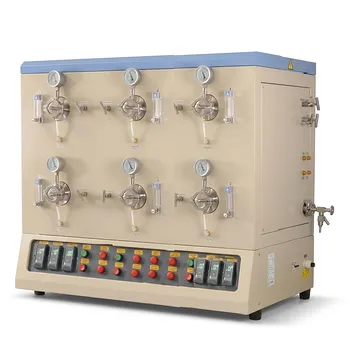
1200C High Throughput Multi Channel Tube Furnace with 50mm Quartz Tubes for Annealing and Material Phase Diagram Research

High Temperature Automated 5 Inch Tube Furnace for Autonomous Material Research and Advanced Laboratory R&D
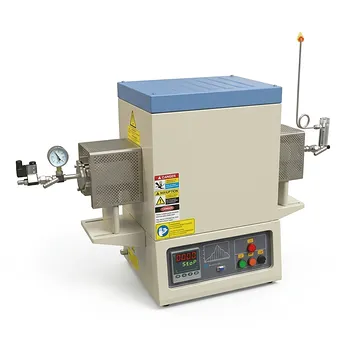
1700C Hydrogen Gas Tube Furnace with 60mm Alumina Process Tube and Integrated Hydrogen Safety Detector