What is the role of an industrial high-temperature furnace in H13 steel pre-treatment? Achieve Superior Weld Integrity
Updated 3 months ago
The industrial high-temperature furnace acts as the foundational architect for H13 tool steel substrates. It prepares the material for welding by executing precise quenching and tempering cycles, typically involving austenitizing at 1020°C followed by dual tempering phases. This process stabilizes the microstructure, achieves a specific target hardness (such as 499 HV), and eliminates internal stresses to ensure a high-strength metallurgical bond during subsequent processes like Plasma Transferred Arc (PTA) cladding.
Core Takeaway: The furnace transforms the H13 substrate into a stabilized, stress-free foundation with a uniform microstructure. This pre-treatment is critical to ensure the substrate can provide the necessary load-bearing strength and metallurgical compatibility for the overlaying weld or cladding layer.
Structural Homogenization and Stress Relief
Eliminating Residual Stresses
The primary role of the furnace is to remove residual stresses caused by previous manufacturing stages, such as casting, rolling, or additive manufacturing. By holding the steel at high temperatures, the furnace allows for the relaxation of the internal lattice, preventing warping or cracking when the intense heat of welding is applied.
Achieving Microstructural Uniformity
High-temperature treatment facilitates atomic diffusion, which helps eliminate chemical segregation and structural inhomogeneities. This homogenization creates a consistent microstructural foundation, often transforming hard, brittle structures into a more stable mixture of ferrite and carbides or a fully austenitic matrix depending on the specific heat path.
Closing Internal Voids
In specialized cases, such as additive manufactured H13, the furnace environment promotes the closure of internal pores. This increases the overall density of the substrate, ensuring that the material is physically robust enough to support the high-pressure environments common in hot-work tool applications.
Precise Hardness and Strength Tuning
Quenching and Phase Transformation
The furnace provides the controlled environment required for austenitization, usually at temperatures around 1020°C. Following this, precise cooling methods—such as circulating air quenching—are used to transform the internal structure into a state that balances hardness with workability.
Secondary Hardening via Tempering
Dual tempering cycles in the furnace allow for the recovery of quenching-induced martensite. This stage is vital for promoting the precipitation of alloy carbides, specifically those enriched with Vanadium and Molybdenum (V-Mo), which enhance the steel's toughness and high-temperature wear resistance.
Customizing Load-Bearing Capacity
Through precise temperature control, the furnace can "tune" the H13 steel to specific hardness levels, ranging from 499 HV to 572 HV. This ensures the substrate is neither too soft to deform under load nor too brittle to withstand the thermal shock of the welding process.
Understanding the Trade-offs and Risks
The Threat of Surface Decarburization
A significant risk when using standard electric muffle furnaces is decarburization. Without active atmosphere control, carbon on the steel surface reacts with oxygen and diffuses outward, leading to a "soft skin" where the surface hardness is significantly lower than the core.
Managing Thermal Gradients
Rapid heating or cooling within the furnace can introduce new stresses if not managed correctly. While high temperatures are necessary for homogenization, the cooling rate must be carefully programmed to avoid cracking the dense H13 tool steel.
Atmospheric Limitations
Standard air-filled furnaces are often insufficient for high-precision tools. To prevent surface degradation (carburization or decarburization), high-vacuum furnaces are preferred, as they evacuate reactive gases to ensure a highly uniform hardness distribution from the core to the extreme edge of the substrate.
How to Apply This to Your Project
Before proceeding with H13 welding or PTA cladding, evaluate your furnace protocol based on your specific performance requirements:
- If your primary focus is maximizing surface bond integrity: Use a high-vacuum or atmosphere-controlled furnace to prevent decarburization, ensuring the surface hardness remains consistent with the core.
- If your primary focus is preventing weld-zone cracking: Prioritize a full homogenization cycle at 1020°C–1050°C followed by a slow, controlled stress-relief cool to eliminate residual manufacturing stresses.
- If your primary focus is high-temperature wear resistance: Ensure the furnace schedule includes dual tempering cycles to trigger the precipitation of V-Mo carbides, which provide secondary hardening.
A properly executed furnace pre-treatment ensures that the substrate and the weld layer function as a single, cohesive metallurgical unit.
Summary Table:
| Process Stage | Primary Action | Key Benefit for Welding |
|---|---|---|
| Austenitizing | Heating to 1020°C | Homogenizes structure & closes internal pores |
| Quenching | Controlled Air Cooling | Transforms phases for target hardness (e.g., 499 HV) |
| Dual Tempering | Secondary Hardening | Triggers V-Mo carbide precipitation for toughness |
| Stress Relief | Lattice Relaxation | Prevents cracking/warping during intense weld heat |
| Atmosphere Control | Vacuum/Inert Gas | Eliminates decarburization to ensure surface strength |
Master Your Material Science with THERMUNITS Precision
Ensure the structural integrity of your H13 hot-work tool steel with professional heat treatment solutions. THERMUNITS is a leading manufacturer of high-temperature laboratory equipment, providing the advanced thermal control needed for industrial R&D and material science excellence.
Our Comprehensive Solutions Include:
- Vacuum & Atmosphere Furnaces: Prevent decarburization and ensure uniform surface hardness.
- Muffle & Tube Furnaces: Reliable heating for standard quenching and tempering cycles.
- Advanced Systems: CVD/PECVD, Hot Press, and Vacuum Induction Melting (VIM) furnaces.
- Specialized Equipment: Rotary kilns, Dental furnaces, and high-quality Thermal Elements.
Ready to optimize your thermal processing and achieve superior metallurgical bonds? Contact our expert team today to find the perfect furnace for your laboratory or industrial application!
References
- Felipe de Jesús García Vázquez, Gerardo Daniel Olvera Romero. Effect of WC nanoparticles on the cobalt based overlay deposited on H13 steel by a plasma transferred arc (PTA). DOI: 10.22533/at.ed.317492414032
Mentioned Products
- High Temperature 1700C Three Zone Tube Furnace with Alumina Tube 50mm 60mm 80mm OD for Material Research and Industrial Heat Treatment
- 1650C High Temperature Atmosphere Controlled Box Furnace with 65L Chamber for Advanced Material Sintering and Industrial Heat Treatment
- 1200C Five Side Heating Muffle Furnace with Sliding Door 125L Volume High Temperature Heat Treatment System for Large Scale Sintering and Annealing
- Vertical Hybrid High Temperature Furnace 1500C Alumina Tube SOFC Fuel Cell Testing Laboratory Heat Treatment Research Equipment
- High Temperature 1700C Bench Top Muffle Furnace with Alumina Fiber Insulation and 3.6L Chamber Capacity for Precision Sintering and Heat Treatment
People Also Ask
- What functions does a 3-zone tube furnace provide for graphene-coated alumina fibers? Expert CVD Heat Treatment Guide
- What is the primary function of a three-zone tube furnace in the synthesis process of corn-derived carbon nanotubes?
- Why Use a Three-Zone vs. Single-Zone Furnace for Fe-Ni-Cu Diffusion? Key Benefits for Lab Accuracy
- What advantages does a three-zone tube furnace offer for nanoparticle synthesis? Unlock Superior Thermal Precision.
- What role does an industrial-grade three-zone tube furnace play in VOx@VACNT synthesis? Precision Phase-State Control

Tech Team · ThermUnits
Last updated on Jun 03, 2026
Related Products
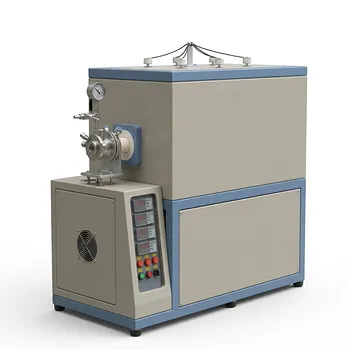
High Temperature 1700C Three Zone Tube Furnace with Alumina Tube 50mm 60mm 80mm OD for Material Research and Industrial Heat Treatment
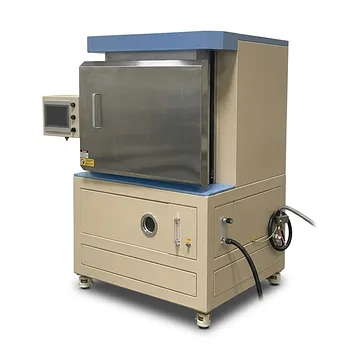
1650C High Temperature Atmosphere Controlled Box Furnace with 65L Chamber for Advanced Material Sintering and Industrial Heat Treatment
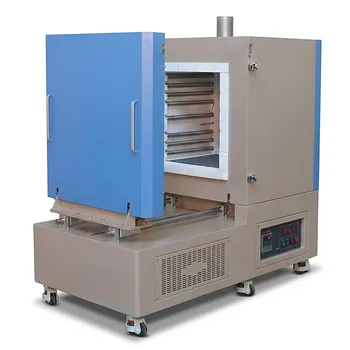
1200C Five Side Heating Muffle Furnace with Sliding Door 125L Volume High Temperature Heat Treatment System for Large Scale Sintering and Annealing
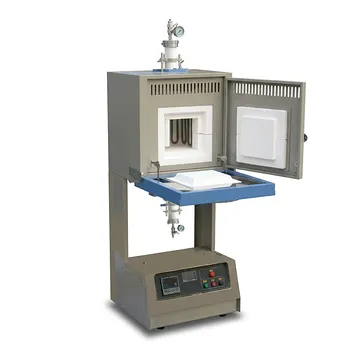
Vertical Hybrid High Temperature Furnace 1500C Alumina Tube SOFC Fuel Cell Testing Laboratory Heat Treatment Research Equipment
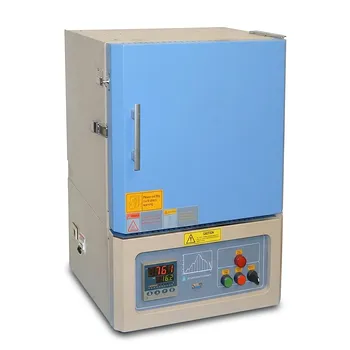
High Temperature 1700C Bench Top Muffle Furnace with Alumina Fiber Insulation and 3.6L Chamber Capacity for Precision Sintering and Heat Treatment
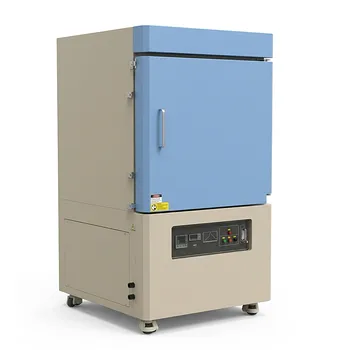
Industrial Large Box Furnace 1700C 216L High Temp Muffle Sintering System

High Temperature Tube Furnace 1500C with Sliding Flanges and 50mm OD for Rapid Thermal Processing Fast Heating and Cooling
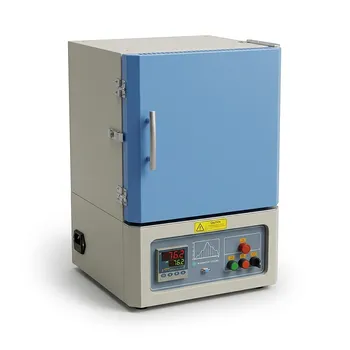
1750C Bench Top Muffle Furnace 3.6L High Grade Molybdenum Disilicide Heating Elements Laboratory Heat Treatment Equipment
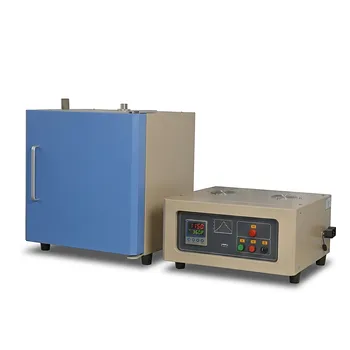
High Temperature Muffle Furnace with Alloy Chamber for Debinding and Sintering Applications
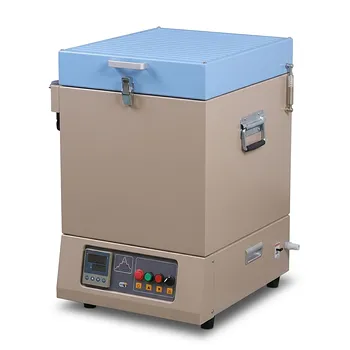
High Temperature Vertical Crucible Furnace with 22L Heating Chamber and 1200C Maximum Temperature
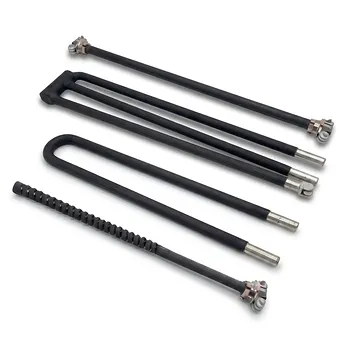
Silicon Carbide SiC Thermal Heating Elements for Industrial Electric Furnaces
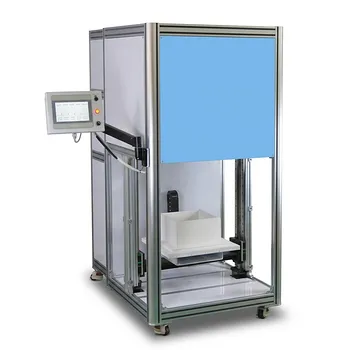
High Temperature 1600°C Three Zone Heated Bottom Loading Box Furnace with Rapid Thermal Processing Chamber 72L Volume

High Temperature 1700C Benchtop Tube Furnace with 5 Inch Heating Zone High Purity Alumina Tube and Vacuum Sealing Flanges
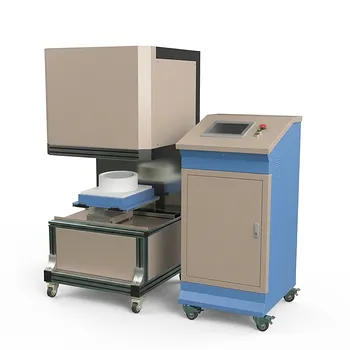
High Temperature Bottom Loading Box Furnace for Rapid Thermal Processing 1700C 40L Capacity
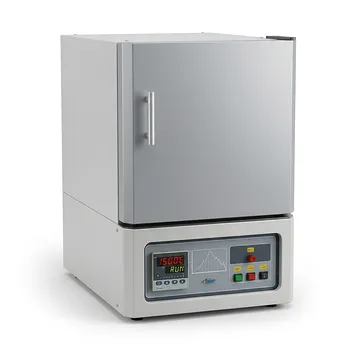
High Temperature 1500C Benchtop Muffle Furnace 3.6L Alumina Fiber Chamber Programmable Controller Sintering Annealing Carbonization Thermal Processing System
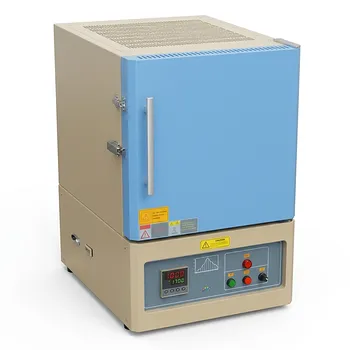
Large Bench Top 1700C High Temperature Muffle Furnace with 19L Chamber for Advanced Material Sintering and Annealing
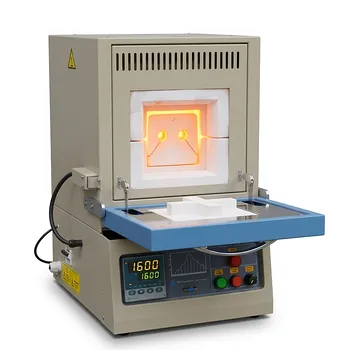
High Temperature Compact Muffle Furnace 1700 C with 30 Segment Programmable Controller and 1.7L Cubic Chamber
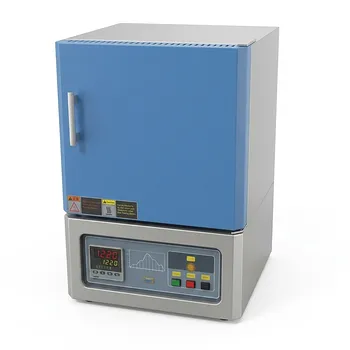
High Temperature Benchtop Muffle Furnace 1700C 10L Chamber Alumina Fiber Insulation MoSi2 Heating Elements
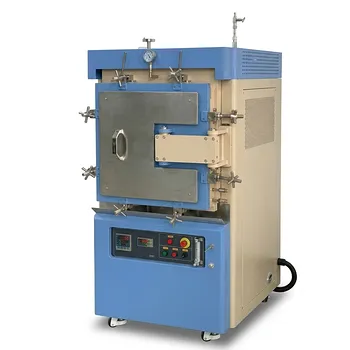
High Temperature Economic Hydrogen Gas Box Furnace 1600C Atmosphere Controlled Thermal Processing System 65L Capacity
