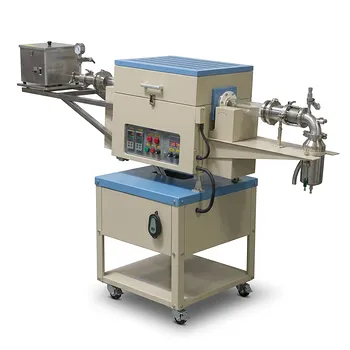
What is the role of Chemical Vapor Infiltration (CVI) in the production of aerospace ceramic matrix composites? | Guide
Updated 5 months ago
Chemical Vapor Infiltration (CVI) is the foundational process used to transform porous fiber architectures into high-performance Ceramic Matrix Composites (CMCs) for aerospace applications. By using low-pressure precursor gases to penetrate deep into fiber preforms, CVI deposits a solid matrix—such as silicon carbide or pyrolytic carbon—within the material's internal voids, creating components that are significantly lighter and more heat-resistant than traditional metal superalloys.
Core Takeaway: CVI is the critical "densification" step that allows engineers to build a durable ceramic matrix from the inside out, enabling the production of lightweight aerospace parts capable of operating in environments exceeding 1500°C.
The Mechanics of Internal Matrix Deposition
Deep Penetration of Porous Preforms
Unlike surface-level coatings, CVI is designed to navigate the complex geometry of a fiber preform. Precursor gases are introduced into a high-temperature vacuum environment at low pressures, allowing them to diffuse into the microscopic gaps between fibers before they react.
In-Situ Pyrolysis and Solidification
Once inside the pores, these gases undergo pyrolysis—a chemical decomposition caused by high heat. This reaction deposits a solid material, such as silicon carbide (SiC) or boron nitride (BN), directly onto the fiber surfaces, gradually filling the internal voids and binding the fibers together.
Precise Pore Regulation
The CVI process allows for meticulous control over the material's internal structure. By regulating gas flow and temperature, manufacturers can precisely tune the pore structure, which is essential for achieving the specific mechanical strength and thermal conductivity required for flight hardware.
Critical Advantages for Aerospace Engineering
Drastic Weight Reduction
One of the primary drivers for CVI in aerospace is the quest for efficiency. CMCs produced via CVI can be up to 50% lighter than the nickel-based superalloys traditionally used in engines, directly contributing to lower fuel consumption and increased payload capacity.
Extreme Thermal Resilience
CVI-produced composites are stable at temperatures above 1500°C. This thermal ceiling allows turbine engines to run hotter and more efficiently without the risk of component melting or catastrophic deformation seen in conventional metals.
Oxidation and Environmental Resistance
The matrices formed during CVI, particularly silicon carbide, provide a natural defense against harsh operating conditions. These layers act as an oxidation-resistant barrier, protecting the structural fibers from the corrosive effects of high-velocity, high-temperature combustion gases.
Understanding the Trade-offs and Challenges
The Constraint of Processing Time
The most significant drawback of CVI is its speed. Because the gas must diffuse slowly to ensure even deposition without "sealing off" the outer pores prematurely, the process can take hundreds of hours to complete a single batch of parts.
Complexity and Capital Intensity
Maintaining the precise vacuum and temperature gradients required for a successful CVI run is technologically demanding. The equipment is expensive to operate, and the precursor gases can be hazardous, leading to higher overall production costs compared to traditional manufacturing.
Gradient Management Issues
A common pitfall is the formation of a "crust" on the exterior of the part. If the reaction happens too quickly, the outer pores clog, preventing the gas from reaching the center and leaving the component with a dense shell but a weak, porous core.
How to Apply CVI Technology to Your Project
When determining if CVI is the appropriate manufacturing route for an aerospace component, consider the specific performance requirements of the end-use environment.
- If your primary focus is thermal efficiency: Utilize CVI to produce SiC/SiC composites, as they allow for higher engine operating temperatures and reduced cooling requirements.
- If your primary focus is structural weight reduction: Leverage CVI to replace heavy metallic turbine blades and nozzles with CMC alternatives to maximize fuel savings.
- If your primary focus is extreme mechanical strength: Focus the CVI process on the deposition of pyrolytic carbon to enhance the skeleton of Carbon-Carbon (C-C) composites for high-friction environments like braking systems.
CVI remains the gold standard for creating the next generation of aerospace materials that demand the impossible balance of low weight and extreme heat resistance.
Summary Table:
| Feature | Impact on Aerospace Performance |
|---|---|
| Core Process | Densification of porous fiber preforms into solid matrix CMCs |
| Matrix Materials | Silicon Carbide (SiC), Pyrolytic Carbon, Boron Nitride |
| Thermal Ceiling | Stable operation in environments exceeding 1500°C |
| Weight Efficiency | 50% lighter than traditional nickel-based superalloys |
| Key Protection | Formation of oxidation-resistant barriers for combustion zones |
Optimize Your Advanced Material R&D with THERMUNITS
Elevate your aerospace material research with THERMUNITS, a leading manufacturer of high-temperature laboratory equipment. We provide the precision tools necessary for advanced densification and CMC development, offering a comprehensive range of thermal solutions including CVD/PECVD systems, Vacuum and Atmosphere furnaces, Tube furnaces, and Hot Press furnaces.
Whether you are refining CVI processes or exploring new ceramic architectures, our equipment—including Muffle, Rotary, and Dental furnaces, electric rotary kilns, and Vacuum Induction Melting (VIM) systems—is designed to meet the rigorous demands of industrial R&D and material science.
Ready to enhance your thermal processing capabilities? Contact us today to discuss your specific laboratory needs!
Mentioned Products
- Chemical Vapor Deposition CVD System Slide PECVD Tube Furnace with Liquid Gasifier PECVD Machine
- Versatile Chemical Vapor Deposition Tube Furnace System for Advanced Material Research and Industrial Coating Processes
- Radio Frequency Plasma Enhanced Chemical Vapor Deposition RF PECVD System for Laboratory and Industrial Thin Film Growth
- HFCVD Machine System for Nano Diamond Coating on Drawing Dies and Industrial Tools
- Inclined Rotary Plasma Enhanced Chemical Vapor Deposition PECVD System for Thin Film Deposition and Nanomaterial Synthesis
People Also Ask
- What are the advantages of PECVD systems for nano flame retardant films? Protect Heat-Sensitive Polymers with Precision
- How does a sliding rail design benefit the CVD process within a furnace ventilation hood? Enhance Control & Quenching
- What is the role of CVD/PECVD systems in the research of optoelectronic materials and functional coatings? Expert Guide
- How does PECVD differ from conventional thermal CVD? Key Advantages of Low-Temperature Deposition for R&D
- What role do by-product desorption and evacuation play in CVD film quality? Key Factors for High-Purity Films

Tech Team · ThermUnits
Last updated on Apr 14, 2026
Related Products
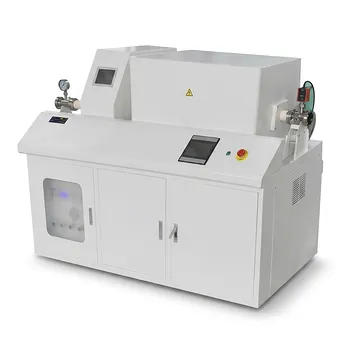
Chemical Vapor Deposition CVD System Slide PECVD Tube Furnace with Liquid Gasifier PECVD Machine
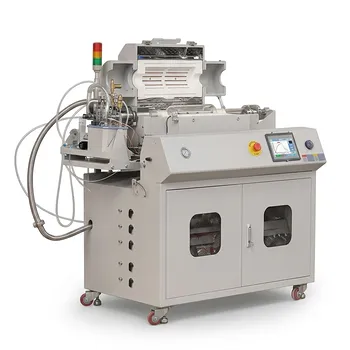
Versatile Chemical Vapor Deposition Tube Furnace System for Advanced Material Research and Industrial Coating Processes
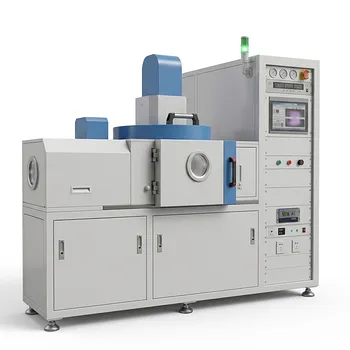
Radio Frequency Plasma Enhanced Chemical Vapor Deposition RF PECVD System for Laboratory and Industrial Thin Film Growth
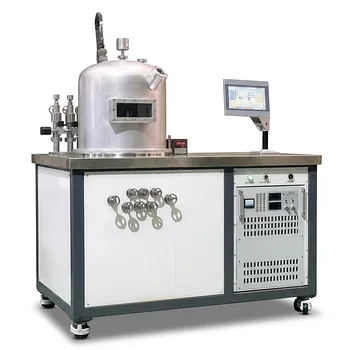
HFCVD Machine System for Nano Diamond Coating on Drawing Dies and Industrial Tools
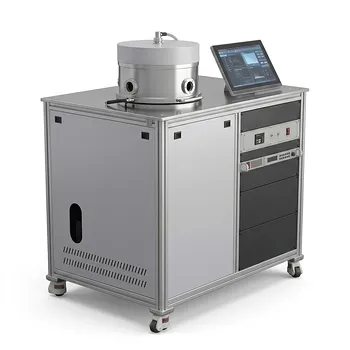
Inclined Rotary Plasma Enhanced Chemical Vapor Deposition PECVD System for Thin Film Deposition and Nanomaterial Synthesis
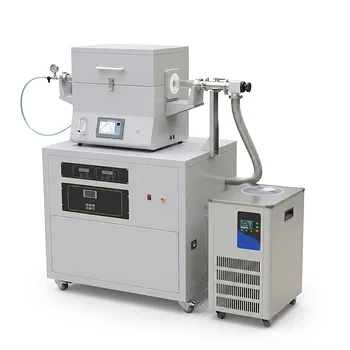
Split Chamber CVD Tube Furnace with Vacuum Station Chemical Vapor Deposition System Machine
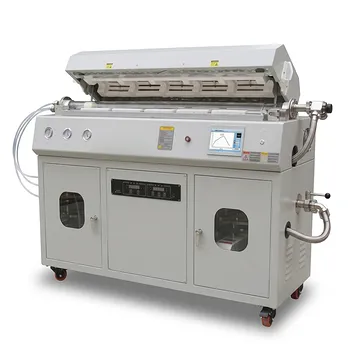
Multi Heating Zones CVD Tube Furnace System for Precision Chemical Vapor Deposition and Advanced Material Synthesis