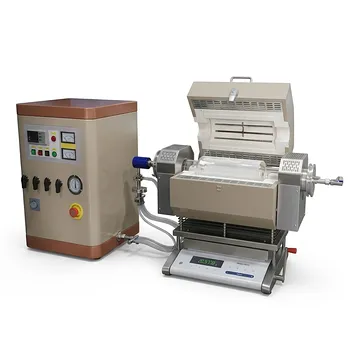
What process conditions must a tube furnace provide for the pyrolysis synthesis of edge-enriched MoS2? Key parameters.
Updated 3 months ago
To synthesize edge-enriched $\text{MoS}_2$ through pyrolysis, a tube furnace must provide a strictly controlled thermal environment at approximately 450°C under an inert argon atmosphere. This specific temperature facilitates the in-situ reaction between molybdenum sources and sulfur powder on salt templates, ensuring the formation of nanosheets with high-density unsaturated edge sites rather than large-area basal planes.
Core Takeaway: The tube furnace acts as a precision reactor that balances thermal energy and gas-phase kinetics to prevent excessive crystal growth. By maintaining moderate temperatures and stable inert flows, it forces the formation of "defective" or edge-rich structures essential for catalytic activity.
Thermal Management and Temperature Programming
Precise Low-to-Moderate Temperature Control
While standard $\text{MoS}_2$ growth often requires temperatures between 700°C and 900°C, edge-enriched synthesis typically targets 450°C. This lower thermal energy prevents the complete merging of grains, preserving the high-energy unsaturated edge sites necessary for applications like hydrogen evolution.
Programmed Heating Rates
The furnace must support precise temperature programming to manage the rate of precursor decomposition. Rapid or highly specific heating rates (e.g., 275 K/min in some specialized setups) ensure that the pyrolysis of organic ligands or precursors occurs simultaneously with the sulfurization process.
Multi-Zone Temperature Gradients
In vapor transport or CVD-like configurations, a multi-zone furnace is essential to create independent thermal fields. This allows the sulfur powder to sublimate at a lower temperature upstream while the substrate remains in a stable, higher-temperature zone to facilitate the non-uniform conversion of the molybdenum source.
Atmospheric and Environmental Conditions
Inert Protective Atmosphere
A stable flow of Argon (Ar) or Nitrogen ($\text{N}_2$) is mandatory to purge oxygen and moisture from the system. This inert environment prevents the molybdenum source from oxidizing into $\text{MoO}_3$ and ensures the final product remains pure $\text{MoS}_2$.
Carrier Gas Flow Stability
The furnace's gas delivery system must maintain a constant flow rate to transport sulfur vapor to the reaction site effectively. Stability in this flow field is a decisive factor in determining the grain size and the distribution of the nanosheets across the salt template or substrate.
Pressure and Sealing Performance
High-quality sealing is required to maintain either atmospheric or controlled low-pressure conditions. Precise pressure management influences the mean free path of the vaporized precursors, which dictates whether the $\text{MoS}_2$ grows as a flat monolayer or as edge-enriched nanostructures.
Understanding the Trade-offs and Pitfalls
Crystallinity vs. Edge Density
There is a direct trade-off between crystalline quality and catalytic activity. Higher temperatures (750°C+) promote large-area, high-quality crystals with fewer defects, but this significantly reduces the number of active edge sites required for chemical reactions.
Precursor Sublimation Balance
If the furnace temperature is too low, the sulfur powder may not sublimate sufficiently, leading to incomplete sulfurization. Conversely, excessive heat can lead to the rapid evaporation of precursors before they can react on the template, resulting in low material yield.
Template Interference
When using salt templates to promote edge growth, the furnace must maintain a temperature below the melting point of the template. Exceeding this thermal limit can cause the template to collapse, destroying the scaffold intended to create the high-density edge structures.
Implementing Furnace Conditions for Specific Goals
How to Apply This to Your Project
To achieve the best results, tailor your tube furnace parameters based on your specific material requirements:
- If your primary focus is Maximum Catalytic Activity: Set the furnace to approximately 450°C using a salt template to prioritize the generation of high-density unsaturated edge sites.
- If your primary focus is High Electrical Conductivity: Increase the temperature to 800°C–900°C under Argon to facilitate the carbonization of organic frameworks and improve crystalline order.
- If your primary focus is Large-Area Monolayers: Utilize a multi-zone configuration at 750°C with precise carrier gas control to ensure uniform vapor phase deposition across the substrate.
By treating the tube furnace as a dynamic chemical reactor rather than a simple heater, you can precisely tune the morphology of $\text{MoS}_2$ for your specific application.
Summary Table:
| Parameter | Target Condition | Role in MoS2 Synthesis |
|---|---|---|
| Temperature | ~450°C (Moderate) | Limits grain growth to preserve unsaturated edge sites |
| Atmosphere | High-purity Argon/N2 | Prevents molybdenum oxidation and ensures product purity |
| Heating Rate | Programmed/Precise | Synchronizes precursor decomposition with sulfurization |
| Gas Flow | Stable Carrier Flow | Manages vapor transport kinetics and grain distribution |
| Zone Control | Multi-zone Gradient | Allows independent sublimation and reaction temperatures |
Optimize Your Material Synthesis with THERMUNITS
Achieving the precise thermal environment required for edge-enriched MoS2 and other advanced materials demands equipment that offers absolute control. THERMUNITS is a leading manufacturer of high-temperature laboratory equipment, providing the stability and precision necessary for world-class material science and industrial R&D.
From Multi-Zone Tube Furnaces designed for complex vapor transport to high-performance CVD/PECVD systems, Muffle, Vacuum, and Atmosphere Furnaces, our solutions are engineered to enhance your lab's efficiency and experimental repeatability. We also provide specialized equipment like Rotary Kilns, Hot Press Furnaces, and Vacuum Induction Melting (VIM) systems tailored to your specific research goals.
Ready to elevate your research capabilities? Contact THERMUNITS Today to consult with our experts and find the perfect thermal processing solution for your laboratory.
References
- Cai Chen, Yuen Wu. Supported Au single atoms and nanoparticles on MoS2 for highly selective CO2-to-CH3COOH photoreduction. DOI: 10.1038/s41467-024-52291-9
Mentioned Products
- 1800C High Temperature Compact Vacuum Tube Furnace with 60mm OD Alumina Tube and Kanthal MoSi2 Heating Elements
- 1500C Three Zone Vertical Pyrolysis Furnace for Nanoparticle Synthesis and Advanced Oxide Coating
- 1100C High Pressure Rocking Tube Furnace with 2 Inch Super Alloy Processing Tube for Material Synthesis
- 1500C Max Dual Zone Rotary Tube Furnace with 60 mm OD Alumina Tube for High Temperature Material Synthesis
- High Temperature Rocking Tube Furnace with Quartz Tube and Vacuum Flange for Materials Synthesis
People Also Ask
- What core functions does a high-temperature vacuum tube furnace provide? Optimize np-CuSn Sintering & Joint Integrity
- What is the primary function of a high-temperature tube furnace in Cu1-N-C synthesis? Precision Thermal Control.
- What impact does the heating rate of a tube furnace have on biochar microstructure? Optimize Your Material R&D.
- Role of Tube Furnace in KNNLST Ceramic Synthesis: Achieve High Phase Purity and Thermal Uniformity
- What is the role of a high-temperature tube furnace in the preparation of S-C3N4? Master Precision Material Synthesis

Tech Team · ThermUnits
Last updated on Jun 03, 2026
Related Products

1800C High Temperature Compact Vacuum Tube Furnace with 60mm OD Alumina Tube and Kanthal MoSi2 Heating Elements
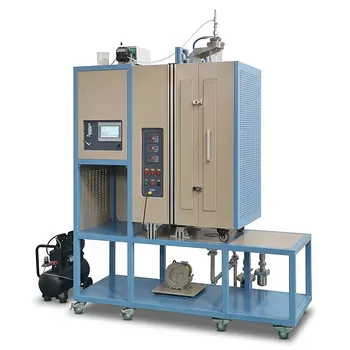
1500C Three Zone Vertical Pyrolysis Furnace for Nanoparticle Synthesis and Advanced Oxide Coating
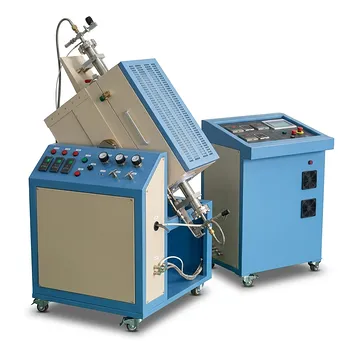
1100C High Pressure Rocking Tube Furnace with 2 Inch Super Alloy Processing Tube for Material Synthesis
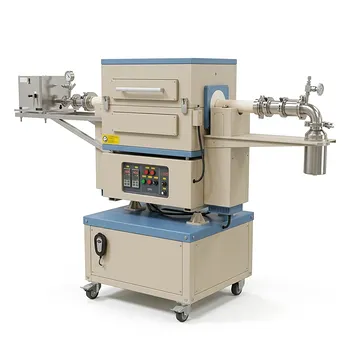
1500C Max Dual Zone Rotary Tube Furnace with 60 mm OD Alumina Tube for High Temperature Material Synthesis
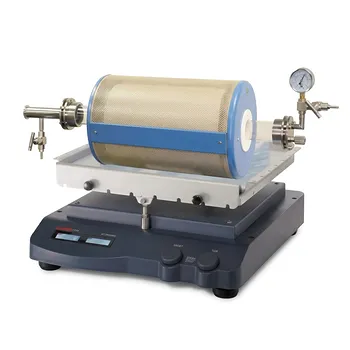
High Temperature Rocking Tube Furnace with Quartz Tube and Vacuum Flange for Materials Synthesis
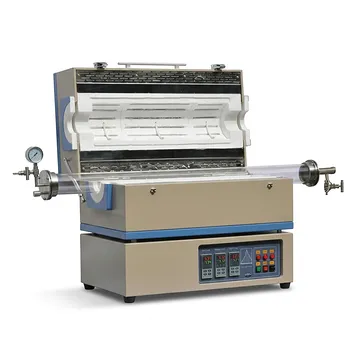
24 Inch Three Zone Split Tube Furnace with Optional Quartz Tube and Vacuum Flange System for High Temperature Material Synthesis
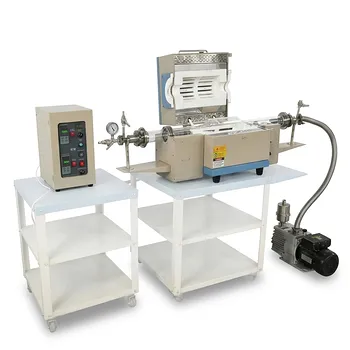
Two Zone Rotary Tube Furnace for Powder CVD Coating and Core Shell Material Synthesis 1100C

High Temperature 1700C Vertical Tube Furnace for Powder Spherification and Material Sintering
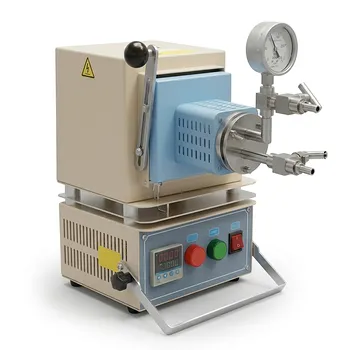
Compact Hybrid Muffle and Tube Furnace for 1000C Controlled Atmosphere Laboratory Material Sintering
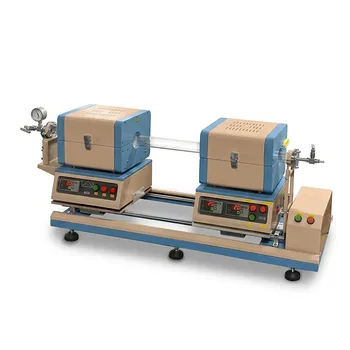
High Temperature 1200C Automatic Sliding Dual Zone Tube Furnace for 2D Transition Metal Dichalcogenides Growth and Material Sublimation Research
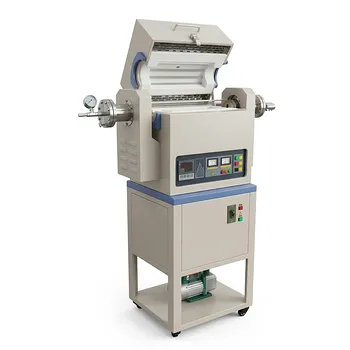
High Temperature Rotary Tilt Tubular Furnaces for Advanced Powder Sintering and Material Processing
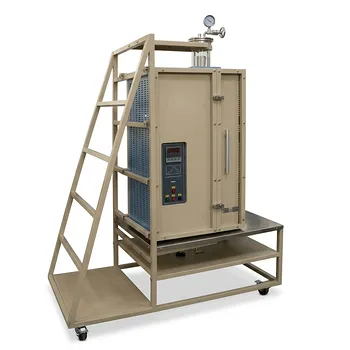
Split Vertical Tube Furnace with 1200C Quartz Tube and Stainless Steel Vacuum Flanges for Rapid Thermal Processing
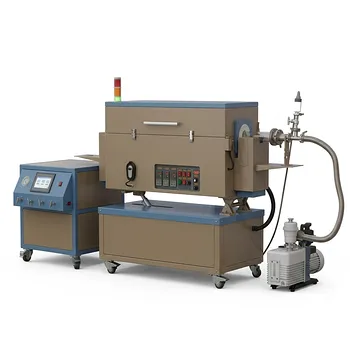
5 Inch Three Zone Rotary Tube Furnace with Integrated Gas Delivery System and 1200C Capability for Advanced Material CVD Processing
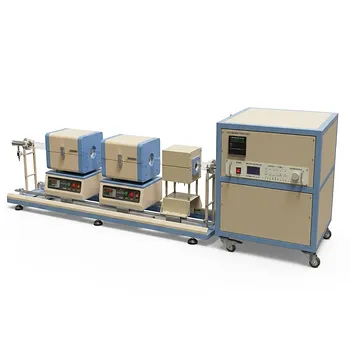
1200C Dual Sliding Tube Furnace with Dual Tubes and Flanges for PECVD Processes
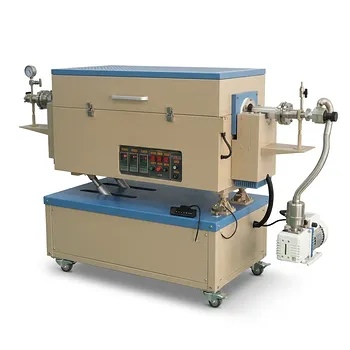
Three Zone Rotary Tube Furnace for High Temperature Powder Processing and Material Research

High Temperature Automated 5 Inch Tube Furnace for Autonomous Material Research and Advanced Laboratory R&D

Vertical 1700C Vacuum and Atmosphere Tube Furnace with 80mm Alumina Tube
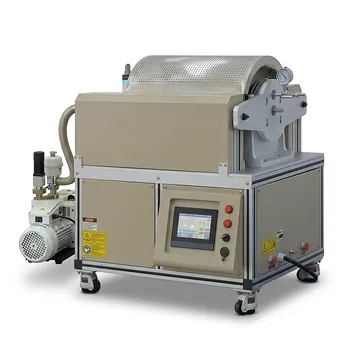
Automated 1200 C Tube Furnace for AI Material Research with 6 Inch OD and Sliding Flange
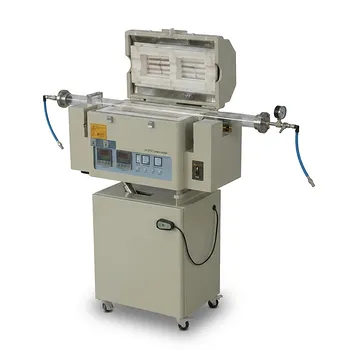
Double Temperature Revolving Tube Furnace with Precision Rotation and Adjustable Inclination for Advanced Material Research