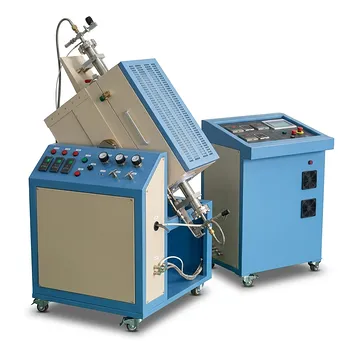
Why is it necessary to introduce steam into a high-temperature tube furnace during ACNN activation? Enhance Porosity.
Updated 3 months ago
Steam acts as a critical gaseous etchant during the physical activation of activated carbon nanofibers (ACNN) to transform a solid carbon precursor into a highly porous material. By introducing steam into a high-temperature tube furnace (typically around 750°C), a controlled chemical reaction occurs that removes specific carbon atoms, creating the vast internal surface area necessary for high-performance adsorption and chemical reactivity.
Core Takeaway: Introducing steam facilitates a partial oxidation reaction known as gasification, which selectively "carves out" a network of micropores and mesopores within the carbon fibers, significantly increasing their surface area and active site density.
The Chemical Mechanism of Activation
The Process of Controlled Gasification
In the high-heat environment of a tube furnace, steam functions as an activating agent rather than a simple vapor. It initiates a mild oxidation reaction, often called gasification, where water molecules react with the solid carbon atoms in the nanofibers to produce carbon monoxide and hydrogen gas.
Selective Carbon Etching
This reaction does not consume the fiber entirely; instead, it selectively etches carbon atoms from the internal and external structure of the fiber. This precision removal of carbon creates a complex, "honeycomb-like" architecture within the nanofiber that was previously a dense, solid mass.
The Necessity of High Temperature
The furnace must maintain a stable environment, usually near 750°C, to provide the activation energy required for the steam-carbon reaction. At lower temperatures, the steam remains relatively inert, while excessively high temperatures can lead to over-reaction and the complete structural collapse of the nanofibers.
Structural Evolution and Surface Properties
Developing Porous Networks
The primary goal of steam introduction is the development of a hierarchical porous structure. The gasification process specifically targets the carbon matrix to form micropores (less than 2nm) and mesopores (2-50nm), which are essential for trapping pollutants or storing ions.
Increasing Specific Surface Area
As steam etches the carbon, the BET specific surface area of the material increases exponentially. This increased surface area provides a massive number of active sites, which are the specific locations where lead ions (Pb(II)) or other contaminants bind to the carbon during filtration or adsorption processes.
Regulating Pore Distribution
A tube furnace allows for the precise regulation of the steam flow rate and exposure time. This control is vital for "tuning" the pore size distribution, ensuring the nanofibers are optimized for their specific end-use, such as energy storage or heavy metal removal.
Understanding the Trade-offs
Structural Integrity vs. Porosity
There is a fundamental tension between the porosity of the fiber and its mechanical strength. While more steam activation creates more pores (increasing surface area), it also thins the carbon walls of the nanofiber, which can make the material brittle and prone to fragmentation.
Yield and Carbon Loss
Physical activation is a "subtractive" process, meaning you lose a portion of your initial material to create the pores. If the steam flow is too aggressive or the temperature is too high, the carbon yield drops significantly as too much of the precursor is converted into gas rather than activated fiber.
Environmental Control Risks
The process requires a strictly oxygen-free environment, often supplemented by inert gases like nitrogen or argon. If oxygen leaks into the tube furnace during the steam activation, the carbon will undergo combustion (burning) instead of controlled gasification, effectively destroying the sample.
How to Optimize Activation for Your Goals
Recommendations for Implementation
- If your primary focus is maximum adsorption capacity: Increase the steam residence time or temperature slightly to maximize the volume of micropores, acknowledging that this will decrease the total material yield.
- If your primary focus is mechanical durability: Utilize a lower activation temperature (near 700°C) and a shorter steam exposure to maintain the structural skeleton of the nanofibers while still developing sufficient surface area.
- If your primary focus is chemical synthesis (e.g., carbon quantum dots): Ensure the steam activation is followed by precise temperature quenching to preserve the specific surface functional groups created during the etching process.
The strategic introduction of steam transforms raw carbon nanofibers into high-utility materials by meticulously "mining" the carbon structure at the molecular level to create functional space.
Summary Table:
| Key Factor | Role in Activation | Impact on Activated Carbon Nanofibers (ACNN) |
|---|---|---|
| Steam (Etchant) | Initiates controlled gasification | Creates hierarchical networks of micropores and mesopores. |
| Temp (~750°C) | Provides required activation energy | Enables selective carbon etching without structural collapse. |
| Gasification | Chemical reaction (C + H₂O → CO + H₂) | Selectively removes carbon atoms to increase BET surface area. |
| Flow Rate Control | Regulates exposure time | Allows precision "tuning" of pore size distribution and yield. |
| Inert Atmosphere | Prevents sample combustion | Ensures an oxygen-free environment to avoid material loss. |
Optimize Your Advanced Material Research with THERMUNITS
Achieving precise porosity and high surface area in carbon nanofibers requires absolute control over temperature and atmosphere. THERMUNITS is a leading manufacturer of high-temperature laboratory equipment, providing the precision tools necessary for cutting-edge material science and industrial R&D.
Whether you are performing steam activation, chemical vapor deposition, or complex heat treatments, our comprehensive range of thermal solutions is built to deliver consistent results:
- Precision Furnaces: Tube, Atmosphere, Vacuum, Muffle, and Rotary Furnaces.
- Advanced Systems: CVD/PECVD systems, Hot Press Furnaces, and Vacuum Induction Melting (VIM) furnaces.
- Specialized Equipment: Dental Furnaces, Electric Rotary Kilns, and high-quality Thermal Elements.
Enhance your lab's efficiency and material performance today.
Contact THERMUNITS to get a customized quote and discover how our expertise in thermal processing can drive your research forward.
References
- Basma I. Waisi, Mohammed A. Manal. Adsorption Isotherms and Kinetics Studies of Lead on Polyacrylonitrile-Based Activated Carbon Nonwoven Nanofibres. DOI: 10.12912/27197050/186546
Mentioned Products
- High Temperature Tube Furnace 1500C with Sliding Flanges and 50mm OD for Rapid Thermal Processing Fast Heating and Cooling
- High Temperature 1700C Tube Furnace with High Vacuum Turbomolecular Pump System and Multi Channel Mass Flow Controller Gas Mixer
- 1750°C High Temperature Benchtop Vacuum Atmosphere Tube Furnace with Kanthal Super 1800 Heating Elements and 60mm Alumina Processing Tube
- High Temperature 1700C Benchtop Tube Furnace with 5 Inch Heating Zone High Purity Alumina Tube and Vacuum Sealing Flanges
- High Temperature Split Tube Furnace 1500C for Material Research Vacuum and Atmosphere Thermal Processing
People Also Ask
- How are high-temperature tube furnaces utilized to repair etching damage? Precision Lattice Restoration Solutions
- What core conditions does a high-temperature tube furnace provide for rGO aerogels? Mastering Precision Synthesis.
- What role does a high-temperature tube furnace play in CVD synthesis of silicon nanowires? Master VLS Growth Precision.
- How does precision tube furnace control influence CoFe nanoparticle formation? Master Your Bimetallic Synthesis.
- What role does a high-temperature tube furnace play in the sulfidation heat treatment of CoS@C/MXene nanocomposites? Guide

Tech Team · ThermUnits
Last updated on Jun 02, 2026
Related Products

High Temperature Tube Furnace 1500C with Sliding Flanges and 50mm OD for Rapid Thermal Processing Fast Heating and Cooling

High Temperature 1700C Tube Furnace with High Vacuum Turbomolecular Pump System and Multi Channel Mass Flow Controller Gas Mixer

1750°C High Temperature Benchtop Vacuum Atmosphere Tube Furnace with Kanthal Super 1800 Heating Elements and 60mm Alumina Processing Tube

High Temperature 1700C Benchtop Tube Furnace with 5 Inch Heating Zone High Purity Alumina Tube and Vacuum Sealing Flanges
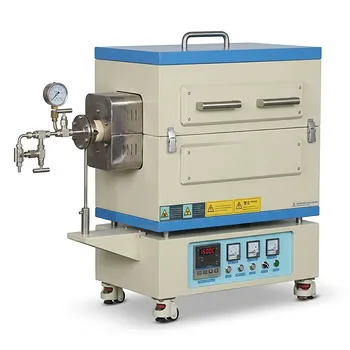
High Temperature Split Tube Furnace 1500C for Material Research Vacuum and Atmosphere Thermal Processing
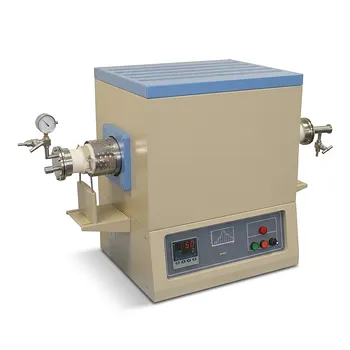
1700C High Temperature Alumina Tube Furnace with 18 Inch Heated Zone and Vacuum Sealing Flanges

1800C High Temperature Compact Vacuum Tube Furnace with 60mm OD Alumina Tube and Kanthal MoSi2 Heating Elements

Compact High Temperature 1600C Tube Furnace with 50mm Alumina Tube and Vacuum Flanges for Material Sintering
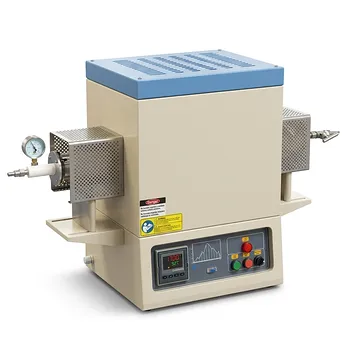
High Temperature Three Zone Tube Furnace 1700C with Alumina Tube and Water Cooled Flanges
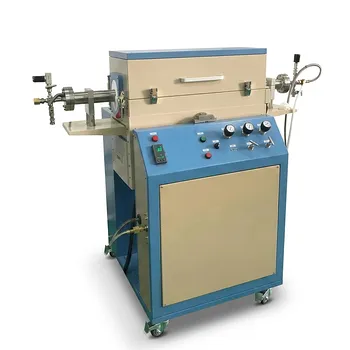
High Temperature Rocking Tube Furnace 1700°C Alumina Processing Tube with Precision Oscillation for Material Synthesis
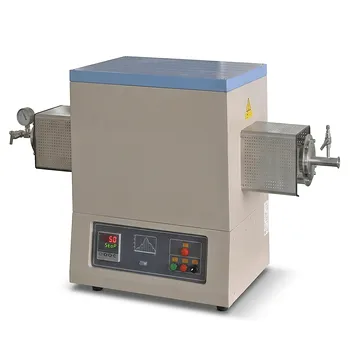
High Temperature 1700C Tube Furnace with 4 Inch OD Alumina Tube and Vacuum Sealing Flanges

High Temperature 1700C Vertical Tube Furnace for Powder Spherification and Material Sintering
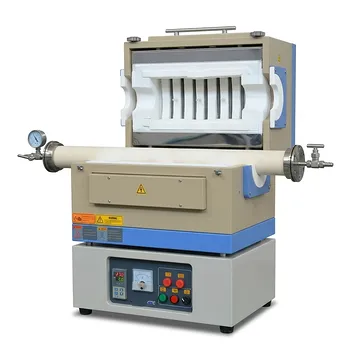
High Temperature 1600C Split Tube Furnace Vacuum Flanges Valves Optional 60mm 80mm Alumina Tube

High Temperature Automated 5 Inch Tube Furnace for Autonomous Material Research and Advanced Laboratory R&D

High Temperature 1700C Six Zone Split Tube Furnace with Alumina Tube and Water Cooled Flanges
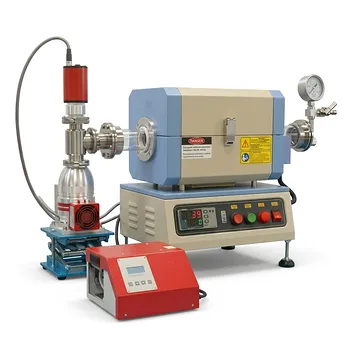
High Vacuum Compact Tube Furnace 1200C with Integrated Turbo Pump System and 8 Inch Heating Zone
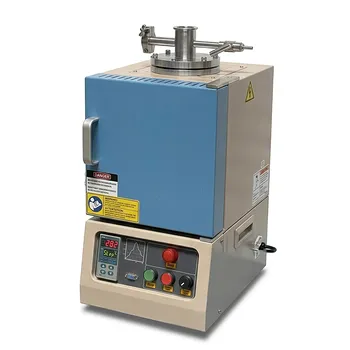
High Temperature Hybrid Muffle and Tube Furnace with Vacuum Capability and PID Control
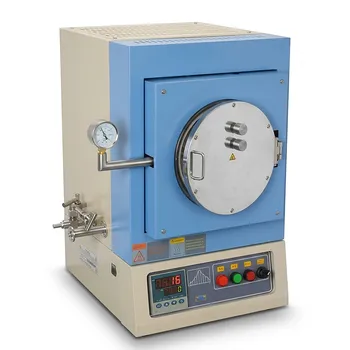
1100°C High Temperature Quartz Chamber Furnace 8 Inch OD with 7.6 Liter Capacity and Vacuum Atmosphere Capability

1100C Tube Furnace with Vacuum Flange and Programmable Temperature Controller for Material Science and Industrial Heat Treatment