What role do high-purity corundum crucibles play in oxidation experiments? Ensure Data Integrity and Purity
Updated 3 months ago
High-purity corundum crucibles serve as chemically inert containment vessels that ensure the integrity of high-temperature oxidation data.
In experimental environments ranging from 650°C to over 1600°C, these crucibles provide a stable platform for samples—such as heat-resistant steels and alloys—without reacting with the material or its oxide scale. Their primary role is to isolate the chemical reaction to the sample-atmosphere interface, ensuring that oxidation products remain pure and that all spalled scales are captured for accurate mass-gain analysis.
The central role of high-purity corundum crucibles is to provide an unreactive, thermally stable environment that prevents container-driven contamination. This ensures that experimental results, from weight change data to phase analysis, are a true reflection of the sample’s behavior rather than an artifact of the crucible material.
Ensuring Chemical Purity and Sample Integrity
Elimination of Chemical Cross-Reactions
High-purity corundum (aluminum oxide) is prized for its exceptional chemical inertness. At elevated temperatures, it does not react with the sample or the resulting oxide scales, which is critical when studying heat-resistant steels or titanium alloys.
Prevention of Sample Contamination
Because the crucible does not leach materials into the melt or the solid sample, the purity of the oxidation products is maintained. This is particularly important in phase analysis, where even trace contamination from a container could lead to incorrect identification of corrosion products.
Protection Against Corrosive Melts
In extreme cases involving slag or molten minerals, high-purity alumina resists chemical erosion. It prevents the crucible components from interfering with the volatilization kinetics or the chemical composition of the final product.
Maintaining Data Accuracy in Oxidation Studies
Capturing Spalled Oxide Scales
During high-temperature steam or atmospheric oxidation, oxide scales may flake off (spall) from the sample surface. High-purity crucibles act as a collection vessel, ensuring these flakes are not lost, which allows for a total mass balance calculation.
Reliability of Weight Gain Measurements
Accurate oxidation studies rely on measuring minute changes in mass. High-purity alumina exhibits negligible mass fluctuations in air at high temperatures, meaning the crucible itself does not contribute to the "weight gain" recorded by sensitive instruments.
Support for Rapid Quenching Processes
Certain corundum materials can withstand rapid quenching, moving directly from high-heat zones to room temperature. This allows researchers to "freeze" the phase composition of the oxidation products instantly for more accurate post-experimental analysis.
Understanding the Trade-offs and Limitations
Thermal Shock Sensitivity
While corundum is highly refractory, it can be sensitive to extreme thermal gradients. Unless specifically designed for rapid quenching, heating or cooling these crucibles too quickly can lead to structural cracking or failure.
Cost vs. Performance
High-purity alumina (typically >99%) is significantly more expensive than lower-grade refractories. However, using lower-purity materials often introduces impurities like silica, which can react with samples and invalidate the entire experimental dataset.
Temperature Ceilings
While corundum can withstand temperatures up to 1650°C, its structural integrity begins to diminish as it approaches its melting point. For experiments exceeding these limits, even high-purity alumina may require replacement with specialized materials like zirconia or platinum.
How to Apply This to Your Research Project
To achieve the highest degree of accuracy in your oxidation experiments, select your crucible based on the specific demands of your thermal cycle and atmosphere.
- If your primary focus is precise mass-gain data: Use high-purity alumina to ensure the container adds zero weight and captures 100% of spalled oxide scale.
- If your primary focus is phase analysis of products: Prioritize >99% purity levels to prevent silica or other impurities from leaching into the oxide scale and altering the XRD results.
- If your primary focus is high-speed quenching: Ensure the specific grade of corundum is rated for thermal shock to prevent crucible shattering during the transition from the hot zone.
By choosing high-purity corundum as your primary containment material, you eliminate the container as a variable and ensure your findings are a definitive account of material performance.
Summary Table:
| Feature | Benefit | Impact on Research |
|---|---|---|
| Chemical Inertness | Prevents cross-reactions with samples | Ensures purity of oxide products and phase analysis |
| Mass Stability | Negligible weight change at high temps | Guarantees reliability of minute mass-gain measurements |
| Collection Vessel | Captures 100% of spalled oxide scales | Allows for accurate total mass balance calculations |
| Refractory Strength | Stable operation up to 1650°C | Supports extreme heat-resistant alloy & steel testing |
Elevate Your Material Research with THERMUNITS
Precision in high-temperature oxidation studies requires not just high-purity crucibles, but also the most stable thermal environments. THERMUNITS is a leading manufacturer of high-temperature laboratory equipment, providing advanced thermal processing solutions including Muffle, Vacuum, Atmosphere, Tube, and Rotary furnaces, as well as CVD/PECVD systems and Electric Rotary Kilns.
Whether you are conducting phase analysis on alloys or measuring mass-gain kinetics, our equipment ensures the thermal stability and control your experiments demand.
Ready to optimize your lab’s efficiency? Contact our engineering team today to find the perfect heat treatment solution tailored to your R&D needs.
References
- Liling Xu, Zhenlun Song. High-Temperature Steam and Atmospheric Oxidation Characteristic of a Heat-Resistant SP2215 Steel. DOI: 10.3390/coatings14020194
Mentioned Products
- 600°C Vertical Crucible Furnace with SS316 Alloy Reactor and 6 Port Vacuum Flange
- Vertical Crucible Furnace 1000C High Temperature Laboratory Equipment 4.7 Inch Diameter Chamber SS316 Anti Corrosive Enclosure
- 1100C High Temperature Vacuum Crucible Furnace with Quartz Chamber for Thermal Processing and Sintering
- High Temperature Vertical Crucible Furnace with 22L Heating Chamber and 1200C Maximum Temperature
- 1100C Crucible Melting Furnace with Stirring Function for Glovebox and Air Sensitive Alloy Research
People Also Ask
- How does a high vacuum sintering furnace at 600 Celsius affect the microstructure of Al-TiC composites? Expert Analysis
- How should the choice between a Quartz crucible and an Alumina crucible be made for La2O2S? Optimize Material Purity
- Why use ceramic crucibles for coal nano-hybrid heat treatment? Ensure Purity and Thermal Stability.
- What role does a vacuum tube furnace play in palladium membrane treatment? Achieve 600°C Stability & Prevent Brittle Phases
- Why is a high-temperature furnace with precise temperature control necessary for Ag8SiS6 alloy synthesis? Ensure Safety.

Tech Team · ThermUnits
Last updated on Jun 02, 2026
Related Products
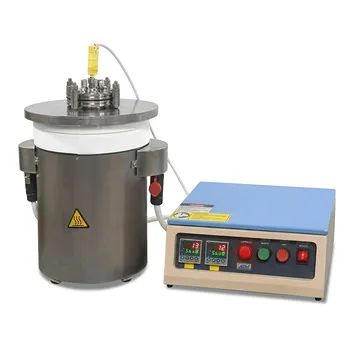
600°C Vertical Crucible Furnace with SS316 Alloy Reactor and 6 Port Vacuum Flange
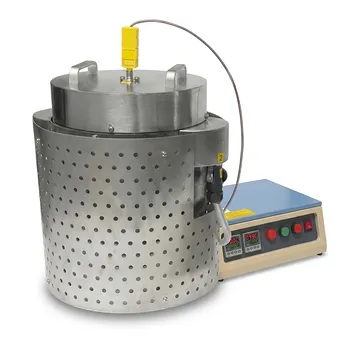
Vertical Crucible Furnace 1000C High Temperature Laboratory Equipment 4.7 Inch Diameter Chamber SS316 Anti Corrosive Enclosure
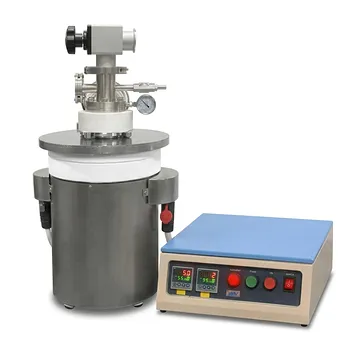
1100C High Temperature Vacuum Crucible Furnace with Quartz Chamber for Thermal Processing and Sintering
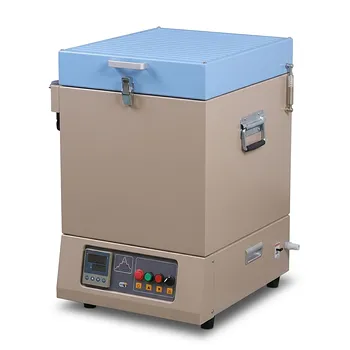
High Temperature Vertical Crucible Furnace with 22L Heating Chamber and 1200C Maximum Temperature
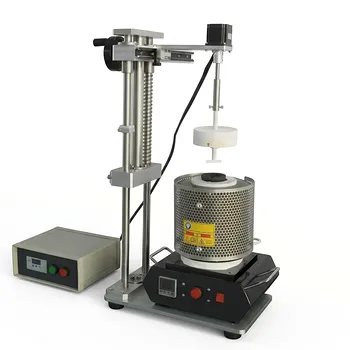
1100C Crucible Melting Furnace with Stirring Function for Glovebox and Air Sensitive Alloy Research
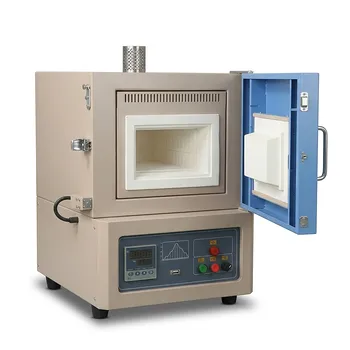
Anti Corrosive Muffle Furnace with Sintered Corundum Chamber and 1050C Operating Range for Corrosive Material Calcination
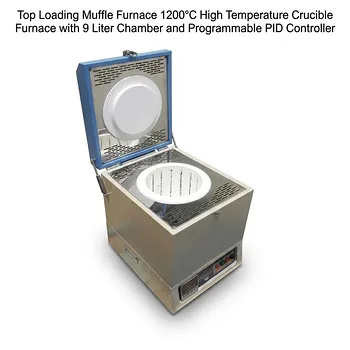
Top Loading Muffle Furnace 1200°C High Temperature Crucible Furnace with 9 Liter Chamber and Programmable PID Controller
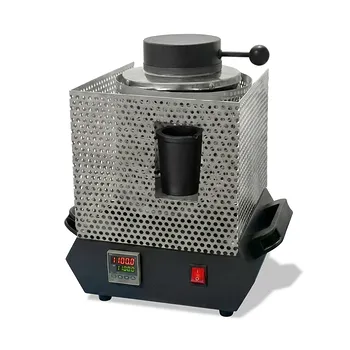
Compact Crucible Melting Furnace 1100C Programmable Temperature Controller Metal Sintering Equipment
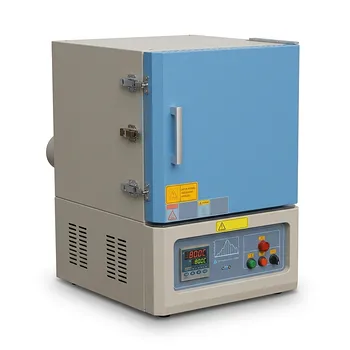
1800C Bench Top Muffle Furnace 18 Liters with Kanthal Super 1900 Heating Elements for High Purity Ceramic Sintering and Material Research
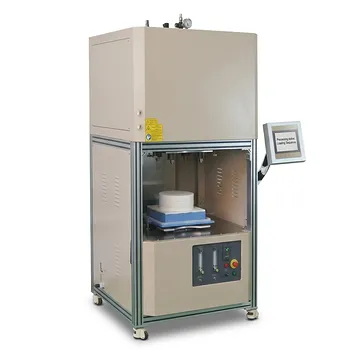
High Temperature Vertical Atmosphere Controlled Furnace with Automatic Bottom Loading and 1700°C Capacity for Advanced Material Research
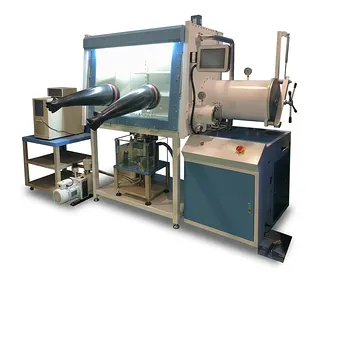
High Temperature Induction Melting System with Integrated Ultra High Purity Glove Box for Metallic Alloy Processing