What role do high-temperature heating units play in ultra-microporous carbon testing? Optimize Material Regeneration
Updated 3 months ago
High-temperature heating units serve as the thermal engine for desorption testing, providing the calibrated energy necessary to release trapped gas molecules from the intricate architecture of ultra-microporous carbon. By reaching temperatures up to 423 K, these units enable researchers to overcome strong molecular interaction forces, allowing for the precise measurement of desorption kinetics and the evaluation of a material's potential for industrial reuse.
High-temperature heating units are critical for overcoming the high adsorption energy inherent in ultra-microporous materials, enabling the complete recovery of adsorbates and the verification of structural durability across multiple regeneration cycles.
Overcoming the Energy Barrier of Ultra-Micropores
Breaking Strong Molecular Interaction Forces
Ultra-microporous carbon possesses extremely narrow pores that create intense interaction forces between the carbon walls and adsorbate molecules, such as propylene. High-temperature units provide the specific thermal energy required to break these physical bonds, allowing the gas to detach from the surface.
Ensuring Rapid and Uniform Thermal Delivery
To ensure scientific accuracy, these units must deliver heat that is both rapid and uniform across the material sample. This consistency prevents localized "cold spots" that could prematurely stall the desorption process and lead to inaccurate data.
Navigating the 423 K Thermal Threshold
In the context of ultra-microporous carbon study, heating units are typically rated to reach at least 423 K. This specific temperature range is often the "sweet spot" for facilitating complete desorption without requiring the excessive energy costs associated with higher-grade industrial furnaces.
Enabling Kinetic and Stability Analysis
Plotting Precise Desorption Kinetic Curves
By maintaining a controlled thermal environment, these units allow scientists to measure the exact rate at which molecules exit the pores over time. These desorption kinetic curves are essential for understanding the time-efficiency of the material in a real-world separation process.
Verifying Thermal Regeneration Feasibility
The primary goal of using these units is to determine if a material can be thermally regenerated—meaning it can be cleaned and reused. If the heating unit can successfully clear the pores, it proves the material is viable for long-term industrial applications.
Assessing Structural Stability for Cyclic Use
Repeatedly heating and cooling the material helps researchers observe its structural stability. This testing confirms whether the carbon architecture can withstand the rigors of industrial "cycling" without collapsing or losing its specific surface area.
Understanding the Trade-offs
The Risk of Thermal Degradation
While heat is necessary for regeneration, exceeding the material's thermal threshold can cause irreversible damage. Excessive heat may lead to pore shrinkage or the alteration of surface functional groups, which ultimately reduces the carbon's effectiveness.
Energy Consumption vs. Desorption Efficiency
There is a constant trade-off between the speed of desorption and energy efficiency. Higher temperatures facilitate faster regeneration but increase the operational costs, requiring a delicate balance to achieve industrial viability.
How to Apply This to Your Research
When integrating high-temperature heating units into your carbon material studies, your approach should vary based on your specific testing objectives.
- If your primary focus is industrial throughput: Prioritize heating units that offer the fastest ramp-up times to simulate rapid-cycle regeneration environments.
- If your primary focus is material longevity: Focus on precision temperature control and gradual cooling phases to monitor how the carbon structure holds up over hundreds of thermal cycles.
- If your primary focus is kinetic accuracy: Ensure the heating unit is paired with high-sensitivity sensors to capture the exact moment desorption begins at the 423 K threshold.
Selecting the right thermal parameters is the defining factor in transforming a laboratory-scale carbon material into a robust industrial adsorbent.
Summary Table:
| Key Function | Role in Research & Testing | Technical Significance |
|---|---|---|
| Energy Delivery | Overcomes strong molecular interaction forces | Breaks bonds between carbon and adsorbates |
| Kinetic Analysis | Enables plotting of precise desorption curves | Measures time-efficiency for industrial use |
| Regeneration Study | Verifies thermal cleaning and reuse feasibility | Confirms industrial viability and cost-efficiency |
| Stability Assessment | Monitors structural integrity through cycles | Prevents pore shrinkage and thermal degradation |
Elevate Your Material Research with THERMUNITS
Precise thermal control is the backbone of accurate desorption and regeneration studies. THERMUNITS is a leading manufacturer of high-performance high-temperature laboratory equipment specifically designed for material science and industrial R&D.
Whether you are analyzing ultra-microporous carbon or developing next-generation adsorbents, our comprehensive range of thermal solutions—including Muffle, Vacuum, Atmosphere, Tube, and Rotary furnaces, as well as CVD/PECVD systems and Hot Press furnaces—provides the uniform heating and rapid response times your research demands.
Ready to optimize your heat treatment processes? Contact our technical experts today to find the perfect thermal engine for your laboratory’s unique requirements.
References
- Abdul Waqas Anjum, Jing Xiao. Relative Aromaticity/Aliphaticity Steered Pore Structure in Polyamide-Derived Ultramicroporous Carbons for Efficient C<sub>3</sub>H<sub>6</sub>/C<sub>3</sub>H<sub>8</sub> Separation. DOI: 10.1021/cbe.4c00095
Mentioned Products
- High Temperature Vertical Hybrid Furnace with Alumina Tube and SiC Heating for SOFC Coin Cell Testing and Atmosphere Processing
- Silicon Carbide SiC Thermal Heating Elements for Industrial Electric Furnaces
- High Temperature Ultrafast Heating Pressing Furnace 2900C Max 100kgf Rapid Thermal Processing System
- Vertical Hybrid High Temperature Furnace 1500C Alumina Tube SOFC Fuel Cell Testing Laboratory Heat Treatment Research Equipment
- Induction Heating System with Temperature Control for High Temperature Vacuum Sintering and Melting
People Also Ask
- Purpose of Nitrogen Flow in Carbon Activation? Optimize Yield with High-Purity Tube Furnace Environments
- Technical Value of Tube Furnaces for Pomegranate Peel Hard Carbon: Precision Carbonization & Battery Material Synthesis
- What technical conditions does a horizontal alumina tube furnace provide? Optimize Liquid Copper Infiltration
- What role do alumina preheating tubes and heating elements play in flash smelting simulation? Optimize Thermal Precision
- What critical process conditions does a high-temperature tube furnace provide? Mastering Catalyst Activation Success

Tech Team · ThermUnits
Last updated on Jun 03, 2026
Related Products
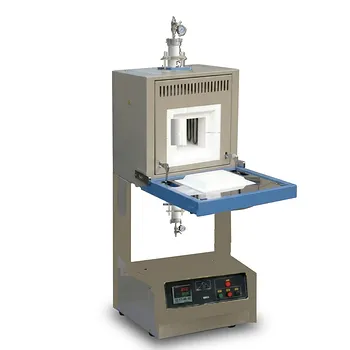
High Temperature Vertical Hybrid Furnace with Alumina Tube and SiC Heating for SOFC Coin Cell Testing and Atmosphere Processing
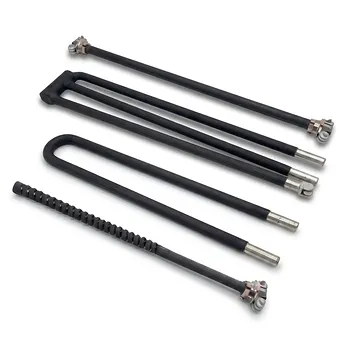
Silicon Carbide SiC Thermal Heating Elements for Industrial Electric Furnaces
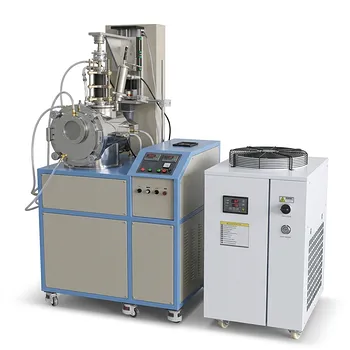
High Temperature Ultrafast Heating Pressing Furnace 2900C Max 100kgf Rapid Thermal Processing System
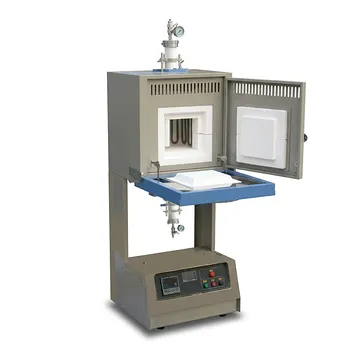
Vertical Hybrid High Temperature Furnace 1500C Alumina Tube SOFC Fuel Cell Testing Laboratory Heat Treatment Research Equipment
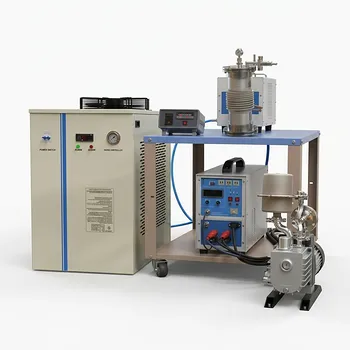
Induction Heating System with Temperature Control for High Temperature Vacuum Sintering and Melting
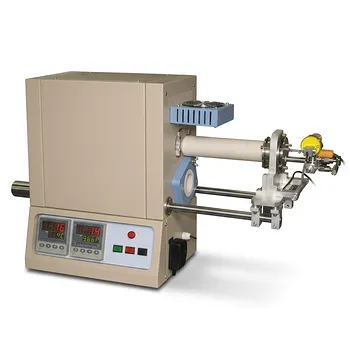
High Temperature Tube Furnace 1500C with Sliding Flanges and 50mm OD for Rapid Thermal Processing Fast Heating and Cooling
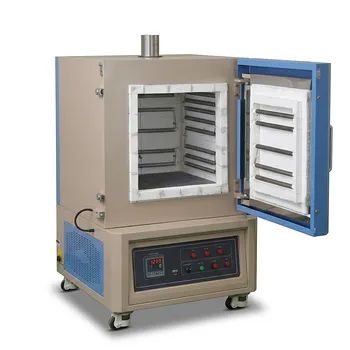
1200C High Temperature 125L Muffle Furnace 5 Side Heating for Large Batch Sintering with Optional Alloy Debinding Chamber
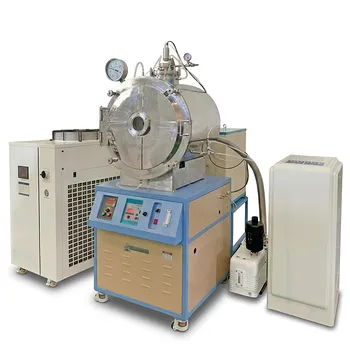
Ultra High Temperature Induction Heated Vacuum Furnace with Molten Salt Electrolysis Capability and 3000 Degree Precision Control
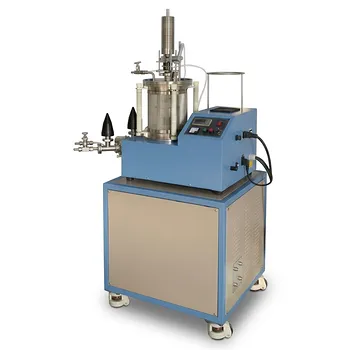
Ultrafast Thermal Pressing Furnace 2900C Max Temperature 200K per Second Heating Rate Vacuum Atmosphere Rapid Processing System
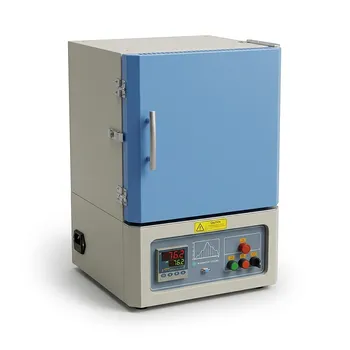
1750C Bench Top Muffle Furnace 3.6L High Grade Molybdenum Disilicide Heating Elements Laboratory Heat Treatment Equipment
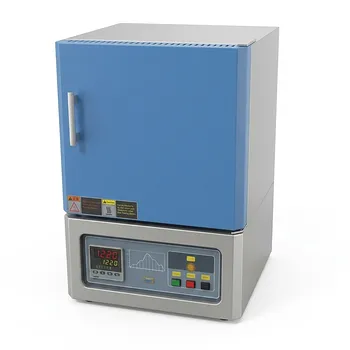
High Temperature Benchtop Muffle Furnace 1700C 10L Chamber Alumina Fiber Insulation MoSi2 Heating Elements
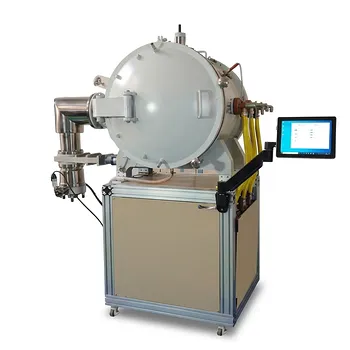
High Temperature Cold Wall Vacuum Furnace for Advanced Material Sintering and Annealing 1600C Heating Area 200x200x300mm
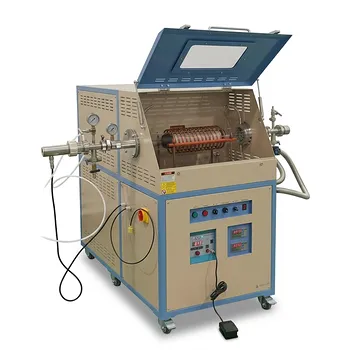
Ultra High Temperature 2300C Induction Heated Graphite Tube Furnace with Infrared Control

High Temperature 1700C Benchtop Tube Furnace with 5 Inch Heating Zone High Purity Alumina Tube and Vacuum Sealing Flanges
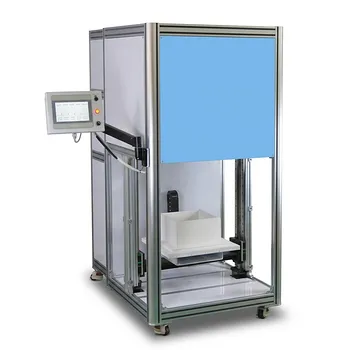
High Temperature 1600°C Three Zone Heated Bottom Loading Box Furnace with Rapid Thermal Processing Chamber 72L Volume
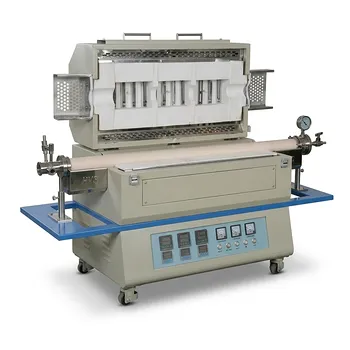
Three Temperature Zone Fast Heating Furnace 1500C Laboratory High Precision Thermal Processing System
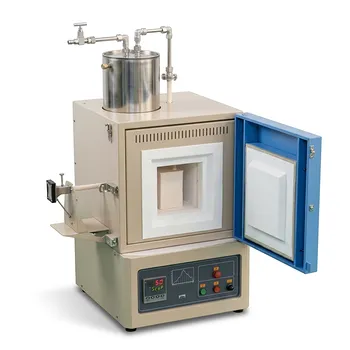
High Temperature Bench Top Muffle Furnace 1700C with Integrated Evaporating Particle Collection and 8x8x8 Alumina Fiber Chamber
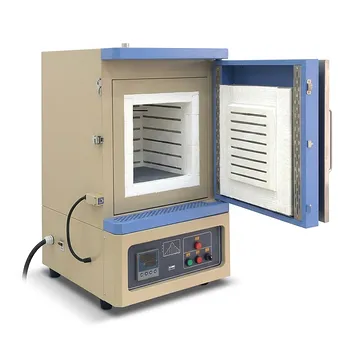
Five Side Heating Muffle Furnace High Purity Alumina Fiber 27L Chamber 1200C High Temperature Thermal Processing System for Sintering Annealing and Materials Research
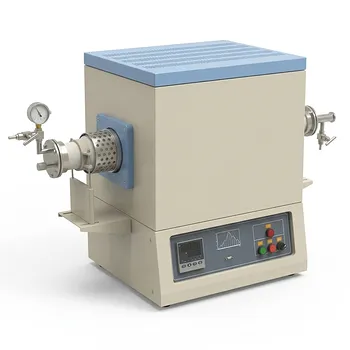
1750°C High Temperature Benchtop Vacuum Atmosphere Tube Furnace with Kanthal Super 1800 Heating Elements and 60mm Alumina Processing Tube