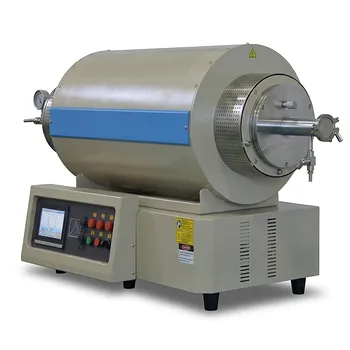
Role of Atmosphere Tube Furnace in N-CP Carbonization: Ensuring Precise Nitrogen Doping and Structural Excellence
Updated 3 months ago
The high-precision atmosphere tube furnace is the critical reactor that enables the controlled transformation of polymer-coated precursors into functionalized electrocatalytic materials. It provides a stable 800 °C thermal environment and strict inert gas protection to facilitate the oxygen-free pyrolysis of polyaniline-coated carbon paper (PANi-CP). This precise control ensures that pyridine nitrogen is efficiently and stably doped into the carbon fiber framework, creating the necessary active sites for hydrazine oxidation.
The atmosphere tube furnace acts as a specialized chemical environment that prevents oxidative degradation while precisely steering the thermal decomposition of precursors. By maintaining an oxygen-free state and a uniform temperature field, it ensures the stable integration of nitrogen atoms into the carbon lattice, which is the foundation of the material's performance.
The Role of the Furnace in Controlled Pyrolysis
The Criticality of an Oxygen-Free Environment
The primary function of the furnace is to exclude oxygen during the heating process to prevent the combustion or oxidative loss of the carbon-based materials. By continuously introducing high-purity inert gases like nitrogen (N2) or argon, the furnace ensures that the polyaniline precursor undergoes pyrolysis rather than burning. This oxygen-free state is essential for preserving the mass and structural integrity of the carbon paper.
Maintaining Inert Gas Integrity
Superior sealing performance is a hallmark of high-precision tube furnaces, preventing atmospheric oxygen from leaking into the reaction zone. This controlled atmosphere allows the nitrogen atoms from the precursor to remain within the system long enough to bond with the carbon framework. Without this strict protection, the nitrogen source would likely volatilize or react prematurely, failing to form the desired functional groups.
Precision Engineering of the Nitrogen-Doped Framework
Shaping the Pyridine Nitrogen Architecture
The furnace's ability to maintain a constant temperature duration at 800 °C is vital for the formation of pyridine nitrogen. This specific temperature range facilitates the rearrangement of atoms, allowing nitrogen to integrate into the edges of the carbon hexagonal rings. High-precision control ensures that the resulting N-CP material possesses the specific chemical signature required for high electrocatalytic activity.
Uniformity of the Thermal Field
A high-precision furnace provides a uniform thermal field, which is necessary to ensure that the entire surface of the carbon paper reacts consistently. If the temperature fluctuates, the doping level of pyridine nitrogen may vary, leading to "hot spots" or inactive regions on the electrode. Consistent heating ensures that the final product exhibits stable and predictable performance across its entire surface area.
Managing Heating Curves and Gas Evolution
Sophisticated PID control systems allow for precise heating rates, which can be set as low as 1 °C per minute if necessary. Controlling the ramp speed manages the escape velocity of pyrolysis gases, which prevents internal pressure from building up and cracking the delicate carbon fiber framework. This level of control is essential for producing large-sized samples that maintain their mechanical strength and high aspect ratio.
Balancing Process Parameters and Material Quality
The Challenge of Thermal Overshoot
One common pitfall in carbonization is thermal overshoot, where the furnace temperature exceeds the set point and destroys sensitive functional groups. High-precision furnaces mitigate this through multi-stage heating programs that stabilize the material at lower temperatures before reaching the final carbonization stage. This prevents the loss of nitrogen elements that might occur if the temperature spikes uncontrollably.
Trade-offs in Gas Flow and Temperature
There is an inherent trade-off between gas flow rates and temperature stability within the tube. High flow rates are excellent for removing byproduct gases but can cause temperature fluctuations or cooling of the sample. Conversely, low flow rates may lead to the accumulation of unwanted secondary carbon deposits that can clog the developed pore structure.
How to Optimize Your Carbonization Process
Recommendations for Material Synthesis
To achieve the best results when preparing pyridine nitrogen-enriched carbon paper, consider the following technical priorities:
- If your primary focus is maximizing pyridine nitrogen content: Maintain a strict 800 °C environment with a stable dwell time to favor edge-site nitrogen integration over other nitrogen forms.
- If your primary focus is structural integrity and conductivity: Utilize a slow heating ramp (e.g., 1–5 °C/min) and ensure superior furnace sealing to prevent the formation of structural defects caused by rapid gas evolution or trace oxidation.
- If your primary focus is developing a complex pore structure: Optimize the inert gas flow rate to efficiently remove pyrolysis byproducts without destabilizing the uniform thermal field required for even carbonization.
The high-precision atmosphere tube furnace is not merely a heater, but a sophisticated tool for molecular-level engineering of advanced carbon catalysts.
Summary Table:
| Key Feature | Role in N-CP Synthesis | Impact on Material Quality |
|---|---|---|
| Oxygen-Free State | High-purity inert gas protection | Prevents oxidative loss and preserves carbon mass |
| Atmosphere Sealing | Prevents oxygen leakage | Ensures stable integration of nitrogen atoms |
| Uniform 800°C Field | Constant temperature duration | Facilitates formation of pyridine nitrogen architecture |
| PID Ramp Control | Managed heating curves (1°C/min) | Prevents structural cracking and thermal overshoot |
Optimize Your Material Synthesis with THERMUNITS Precision
Elevate your research into advanced carbon catalysts and nitrogen-enriched materials with THERMUNITS, a leading manufacturer of high-temperature laboratory equipment for material science and industrial R&D. Our high-precision atmosphere tube furnaces are engineered to provide the strict thermal uniformity and gas integrity required for sophisticated carbonization processes like N-CP preparation.
Why Choose THERMUNITS?
- Comprehensive Solutions: We offer a wide range of equipment including Muffle, Vacuum, Atmosphere, Tube, Rotary, and Hot Press furnaces.
- Advanced Technology: Specialized CVD/PECVD systems, Dental Furnaces, electric rotary kilns, and vacuum induction melting furnaces (VIM).
- Total Support: High-quality Thermal Elements and accessories to ensure long-term laboratory efficiency.
Ensure the integrity of your electrocatalytic materials with our industry-leading heat treatment solutions. Contact our technical team today to discuss your specific high-temperature requirements!
References
- Shanshan Ma, Bo You. A pyridinic nitrogen-rich carbon paper for hydrazine oxidation-hybrid seawater electrolysis toward efficient H2 generation. DOI: 10.1007/s40843-023-2762-9
Mentioned Products
- Vertical 1700C Vacuum and Atmosphere Tube Furnace with 80mm Alumina Tube
- 1200C Hybrid Muffle and Tube Furnace for Material Research with Dual Atmosphere Control Quartz Tubes
- 1200°C Atmosphere Controlled Automatic Bottom Loading Furnace with 6 Inch Quartz Tube
- Compact Hybrid Muffle and Tube Furnace for 1000C Controlled Atmosphere Laboratory Material Sintering
- Compact Vertical Split Quartz Tube Furnace with Stainless Steel Vacuum Flanges for Rapid Thermal Quenching and Controlled Atmosphere Material Processing
People Also Ask
- How is an industrial-grade vertical tube furnace utilized in smelting leaching residues? Enhance Metal Recovery Efficiency
- What is the function of a laboratory-grade vertical tube furnace in fast pyrolysis? Optimize Composite Research.
- How does a vertical tube furnace facilitate thermoelectric alloy melting? Precision synthesis for material homogeneity.
- Why is a thermocouple sensor indispensable for monitoring the vertical tube furnace during gallium oxide nanowire production? Optimize VLS Growth
- What are the advantages of using a vertical tube furnace for crucible experiments simulating steel-slag interactions?

Tech Team · ThermUnits
Last updated on Jun 03, 2026
Related Products

Vertical 1700C Vacuum and Atmosphere Tube Furnace with 80mm Alumina Tube
1200C Hybrid Muffle and Tube Furnace for Material Research with Dual Atmosphere Control Quartz Tubes
1200°C Atmosphere Controlled Automatic Bottom Loading Furnace with 6 Inch Quartz Tube
Compact Hybrid Muffle and Tube Furnace for 1000C Controlled Atmosphere Laboratory Material Sintering

Compact Vertical Split Quartz Tube Furnace with Stainless Steel Vacuum Flanges for Rapid Thermal Quenching and Controlled Atmosphere Material Processing
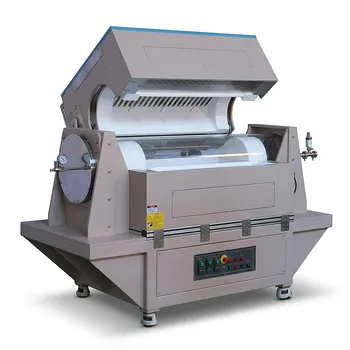
Three Zone Tube Furnace with 11 Inch or 15 Inch Quartz Tube and Hinged Flanges for Vacuum Atmosphere Heat Treatment
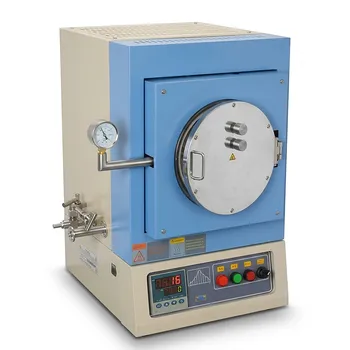
1100°C High Temperature Quartz Chamber Furnace 8 Inch OD with 7.6 Liter Capacity and Vacuum Atmosphere Capability
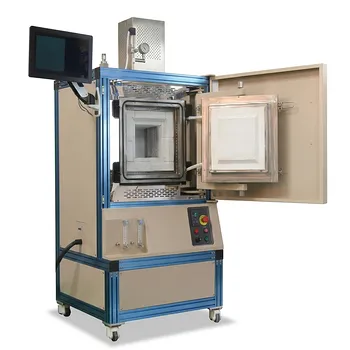
High Temperature Hydrogen Atmosphere Box Furnace 1650C Max Reducing Environment Material Synthesis System 8x8x8 Chamber

High Temperature 1700C Vertical Tube Furnace for Powder Spherification and Material Sintering

Compact High Temperature 1600C Tube Furnace with 50mm Alumina Tube and Vacuum Flanges for Material Sintering

High Temperature 1700C Tube Furnace with High Vacuum Turbomolecular Pump System and Multi Channel Mass Flow Controller Gas Mixer

High Temperature 1700C Six Zone Split Tube Furnace with Alumina Tube and Water Cooled Flanges

1800C High Temperature Compact Vacuum Tube Furnace with 60mm OD Alumina Tube and Kanthal MoSi2 Heating Elements

1100C Tube Furnace with Vacuum Flange and Programmable Temperature Controller for Material Science and Industrial Heat Treatment
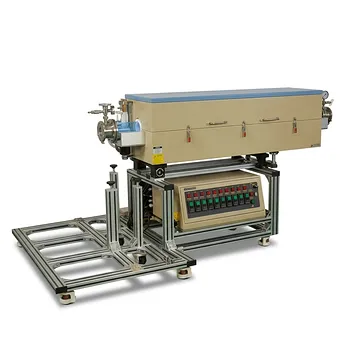
Ten Zone Multi Orientation Laboratory Tube Furnace for 1200C High Temperature Gradient Thermal Processing

High Temperature 1700C Benchtop Tube Furnace with 5 Inch Heating Zone High Purity Alumina Tube and Vacuum Sealing Flanges
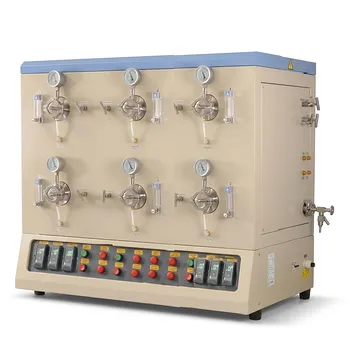
1200C High Throughput Multi Channel Tube Furnace with 50mm Quartz Tubes for Annealing and Material Phase Diagram Research

High Temperature Automated 5 Inch Tube Furnace for Autonomous Material Research and Advanced Laboratory R&D
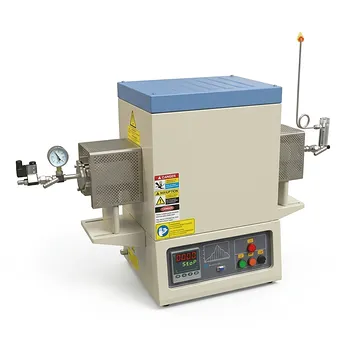
1700C Hydrogen Gas Tube Furnace with 60mm Alumina Process Tube and Integrated Hydrogen Safety Detector