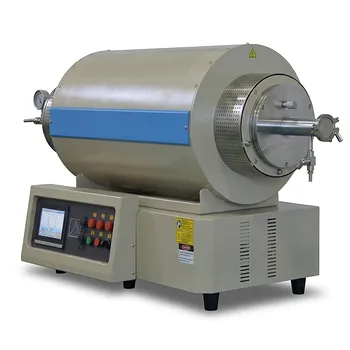
What role does a high-vacuum or atmosphere tube furnace play in the final synthesis of MnFe2O4 spinel coatings?
Updated 3 months ago
The high-vacuum or atmosphere tube furnace serves as the critical reaction chamber for the high-temperature calcination and in-situ conversion of $MnFe_2O_4$ spinel coatings. Specifically, it provides a controlled argon environment and a precise 650 °C thermal field to drive the redox reactions and solid-phase diffusion necessary to transform precursors into a corrosion-resistant crystal structure while shielding the underlying steel substrate.
The tube furnace acts as a precision "thermal reactor" that balances chemical transformation with structural protection. By isolating the material from oxygen and maintaining a stable 650 °C environment, it ensures the formation of a high-purity spinel phase without degrading the base metal.
Driving the Chemical Transformation
Facilitating Solid-Phase Diffusion
The furnace provides the continuous thermal energy required for manganese ions and iron oxides to migrate and interact.
This solid-phase diffusion is the fundamental mechanism that allows individual components to reorganize into a complex spinel lattice.
Without the precise thermal field of the tube furnace, these atoms would lack the kinetic energy to achieve a stable crystalline state.
Managing Redox Reactions
At 650 °C, the furnace environment actively promotes the redox reactions necessary for synthesis.
It ensures that the manganese and iron ions reach the correct valence states to form the $MnFe_2O_4$ stoichiometry.
The furnace’s ability to maintain a consistent temperature is vital for preventing the formation of unwanted secondary oxide phases.
Environmental Control and Substrate Protection
The Role of Argon Shielding
Using an inert argon atmosphere is essential for preventing the over-oxidation of the steel substrate during processing.
High temperatures in an ambient environment would cause the metal base to scale and degrade before the coating could fully form.
The tube furnace isolates the reaction, ensuring that oxidation only occurs where intended—within the spinel coating itself.
Atmosphere Regulation and Byproduct Removal
The furnace manages the oxygen partial pressure, which is a critical variable for the stability of transition metals like manganese.
It also facilitates the removal of any residual reaction byproducts, such as water vapor or carbon dioxide, that could contaminate the coating.
This regulation ensures the final $MnFe_2O_4$ layer is pure, dense, and tightly bonded to the surface.
Understanding the Trade-offs and Pitfalls
Temperature Precision vs. Phase Purity
If the furnace temperature deviates even slightly from the 650 °C target, the crystallinity of the spinel may suffer.
Lower temperatures lead to incomplete diffusion and poor corrosion resistance, while excessive heat can cause grain growth and substrate weakening.
Atmosphere Integrity Risks
Any leak in the vacuum seal or a drop in argon purity can lead to unintended oxidation of the transition metals.
If oxygen enters the system, the manganese ions may change valence states prematurely, resulting in a non-stoichiometric coating that lacks protective properties.
How to Apply This to Your Synthesis Process
Achieving a high-performance $MnFe_2O_4$ coating requires balancing thermal input with strict environmental isolation.
- If your primary focus is maximum corrosion resistance: Ensure the furnace maintains a stable 650 °C and an isothermal period to maximize the density and crystallinity of the spinel phase.
- If your primary focus is substrate integrity: Prioritize the integrity of the argon gas flow and the vacuum seal to prevent high-temperature oxidation of the steel base.
- If your primary focus is chemical purity: Utilize the furnace's atmosphere control to effectively purge reaction byproducts and maintain the specific stoichiometry of the ternary oxide.
Mastering the controlled environment of the tube furnace is the definitive step in transforming raw precursors into a robust, functional spinel coating.
Summary Table:
| Key Furnace Function | Process Mechanism | Impact on Coating Quality |
|---|---|---|
| Thermal Field (650 °C) | Drives solid-phase diffusion | Ensures high phase purity and crystallinity |
| Argon Shielding | Redox reaction management | Prevents substrate oxidation and metal scaling |
| Atmosphere Regulation | Oxygen partial pressure control | Maintains stoichiometry and removes byproducts |
| Vacuum Integrity | Contamination isolation | Produces dense, high-purity protective layers |
Elevate Your Advanced Material Synthesis with THERMUNITS
Precise thermal control and atmosphere integrity are non-negotiable for high-performance coatings like $MnFe_2O_4$. THERMUNITS is a leading manufacturer of high-temperature laboratory equipment for material science and industrial R&D. We empower researchers with professional-grade solutions, including:
- Controlled Environment Furnaces: Tube, Vacuum, Atmosphere, and Muffle furnaces for precise calcination.
- Advanced Systems: CVD/PECVD systems, Hot Press furnaces, and Vacuum Induction Melting (VIM) units.
- Specialized Equipment: Rotary kilns, Dental furnaces, and high-quality Thermal Elements.
Whether you are scaling up industrial R&D or refining delicate laboratory heat treatments, our equipment ensures the chemical purity and structural integrity your projects demand.
Ready to optimize your thermal processing?
Contact THERMUNITS Today to discuss your specific furnace requirements and discover how our technology can enhance your synthesis outcomes.
References
- Bai‐Ao Feng, Ting‐an Zhang. Synthesis of MnFe2O4 Spinel on Rusted Q235 Steel Surface and Its Corrosion Resistance Properties. DOI: 10.3390/ma17164163
Mentioned Products
- Vertical 1700C Vacuum and Atmosphere Tube Furnace with 80mm Alumina Tube
- 1200C Hybrid Muffle and Tube Furnace for Material Research with Dual Atmosphere Control Quartz Tubes
- 1200°C Atmosphere Controlled Automatic Bottom Loading Furnace with 6 Inch Quartz Tube
- Compact Hybrid Muffle and Tube Furnace for 1000C Controlled Atmosphere Laboratory Material Sintering
- Compact Vertical Split Quartz Tube Furnace with Stainless Steel Vacuum Flanges for Rapid Thermal Quenching and Controlled Atmosphere Material Processing
People Also Ask
- How is an industrial-grade vertical tube furnace utilized in smelting leaching residues? Enhance Metal Recovery Efficiency
- What is the function of a laboratory-grade vertical tube furnace in fast pyrolysis? Optimize Composite Research.
- How does a vertical tube furnace facilitate thermoelectric alloy melting? Precision synthesis for material homogeneity.
- Why is a thermocouple sensor indispensable for monitoring the vertical tube furnace during gallium oxide nanowire production? Optimize VLS Growth
- What are the advantages of using a vertical tube furnace for crucible experiments simulating steel-slag interactions?

Tech Team · ThermUnits
Last updated on Jun 02, 2026
Related Products

Vertical 1700C Vacuum and Atmosphere Tube Furnace with 80mm Alumina Tube
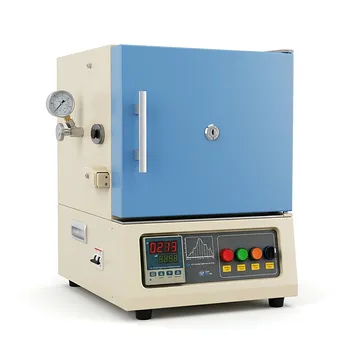
1200C Hybrid Muffle and Tube Furnace for Material Research with Dual Atmosphere Control Quartz Tubes
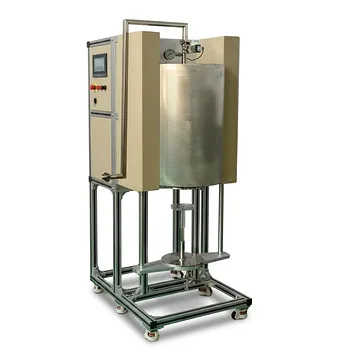
1200°C Atmosphere Controlled Automatic Bottom Loading Furnace with 6 Inch Quartz Tube
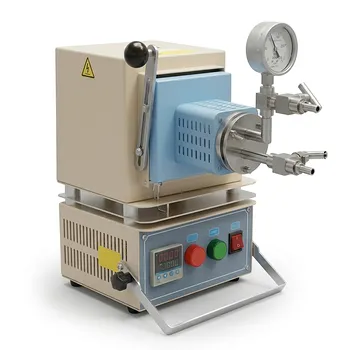
Compact Hybrid Muffle and Tube Furnace for 1000C Controlled Atmosphere Laboratory Material Sintering

Compact Vertical Split Quartz Tube Furnace with Stainless Steel Vacuum Flanges for Rapid Thermal Quenching and Controlled Atmosphere Material Processing
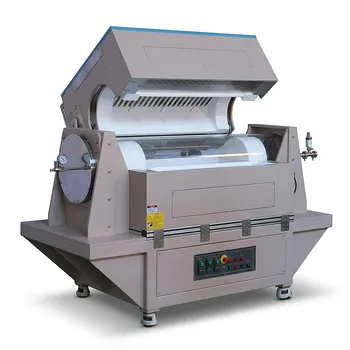
Three Zone Tube Furnace with 11 Inch or 15 Inch Quartz Tube and Hinged Flanges for Vacuum Atmosphere Heat Treatment

1100°C High Temperature Quartz Chamber Furnace 8 Inch OD with 7.6 Liter Capacity and Vacuum Atmosphere Capability
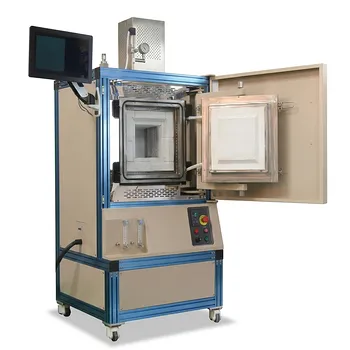
High Temperature Hydrogen Atmosphere Box Furnace 1650C Max Reducing Environment Material Synthesis System 8x8x8 Chamber

High Temperature 1700C Vertical Tube Furnace for Powder Spherification and Material Sintering

Compact High Temperature 1600C Tube Furnace with 50mm Alumina Tube and Vacuum Flanges for Material Sintering

High Temperature 1700C Tube Furnace with High Vacuum Turbomolecular Pump System and Multi Channel Mass Flow Controller Gas Mixer

High Temperature 1700C Six Zone Split Tube Furnace with Alumina Tube and Water Cooled Flanges

1800C High Temperature Compact Vacuum Tube Furnace with 60mm OD Alumina Tube and Kanthal MoSi2 Heating Elements

1100C Tube Furnace with Vacuum Flange and Programmable Temperature Controller for Material Science and Industrial Heat Treatment
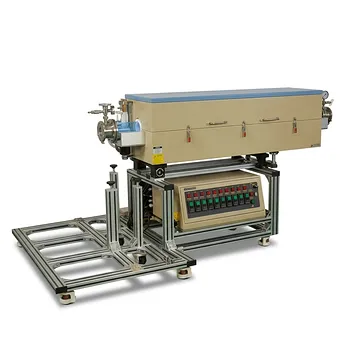
Ten Zone Multi Orientation Laboratory Tube Furnace for 1200C High Temperature Gradient Thermal Processing

High Temperature 1700C Benchtop Tube Furnace with 5 Inch Heating Zone High Purity Alumina Tube and Vacuum Sealing Flanges
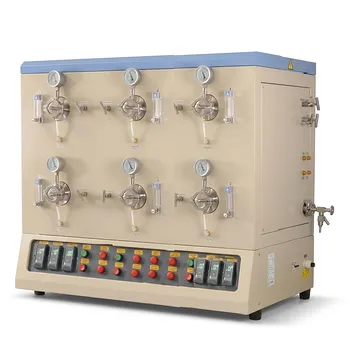
1200C High Throughput Multi Channel Tube Furnace with 50mm Quartz Tubes for Annealing and Material Phase Diagram Research

High Temperature Automated 5 Inch Tube Furnace for Autonomous Material Research and Advanced Laboratory R&D
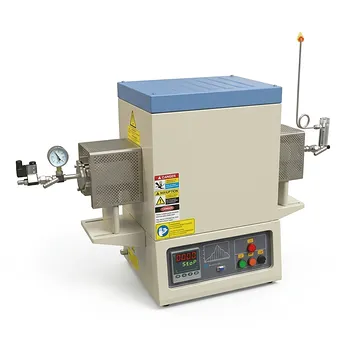
1700C Hydrogen Gas Tube Furnace with 60mm Alumina Process Tube and Integrated Hydrogen Safety Detector