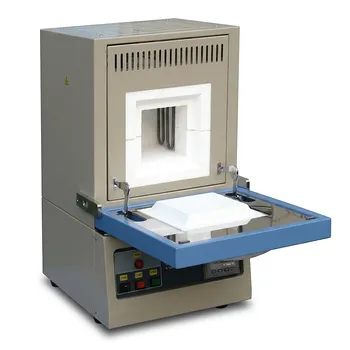
What role does an alumina crucible play in growing Ge2Bi2Te5? Achieve high-purity single crystal growth results.
Updated 3 months ago
The alumina crucible acts as the critical containment system in the self-flux growth of $\text{Ge}_2\text{Bi}_2\text{Te}_5$. Its primary role is to provide a chemically non-reactive and thermally stable environment that prevents the melt from interacting with external contaminants at temperatures exceeding 1000°C. By remaining inert in the presence of tellurium flux and metal precursors, it ensures the resulting single crystals maintain their high purity and intended structural properties.
Core Takeaway: Alumina crucibles are indispensable for growing high-quality $\text{Ge}_2\text{Bi}_2\text{Te}_5$ because they provide a stable, non-reactive vessel that withstands extreme heat. This isolation prevents container-derived impurities from entering the crystal lattice, ensuring the material's phase purity and structural integrity.
Chemical Inertness in Corrosive Environments
Resisting Tellurium Flux Erosion
The self-flux method for $\text{Ge}_2\text{Bi}_2\text{Te}_5$ utilizes molten tellurium as the growth medium. Tellurium melts can be highly reactive at high temperatures, but alumina ($\text{Al}_2\text{O}_3$) effectively resists corrosion from these metallic fluxes. This resistance ensures the vessel does not degrade or leach material into the melt during the long growth cycles.
Preventing Lattice Contamination
If the reaction vessel were to react with the precursors, impurity ions would be introduced into the growth environment. The chemical inertness of alumina prevents these impurities from infiltrating the crystal lattice. This is vital for maintaining the precise stoichiometry and electronic properties required for high-performance single crystals.
Thermal Stability and Process Control
Operating at Extreme Temperatures
The synthesis of $\text{Ge}_2\text{Bi}_2\text{Te}_5$ requires the crucible to withstand temperatures exceeding 1000°C. Alumina maintains its structural integrity and mechanical strength in these conditions without softening or melting. This high-temperature stability allows the reaction to proceed safely and consistently over the necessary timeframes.
Promoting Temperature Uniformity
The use of compact alumina crucibles, often around 2 mL in volume, helps maintain a uniform temperature distribution within the melt. Thermal uniformity is essential for creating a stable environment for crystal nucleation and growth. Without a consistent thermal gradient, the crystal may develop defects or fail to grow as a single grain.
Understanding the Trade-offs
Sensitivity to Thermal Shock
While alumina is exceptionally stable at high temperatures, it is susceptible to thermal shock. If the crucible is heated or cooled too rapidly, the resulting internal stress can cause the vessel to crack or shatter. Researchers must use controlled ramp rates to ensure the integrity of the crucible throughout the heating and cooling cycles.
Material Purity and Porosity
The quality of the alumina itself is a critical factor; lower-grade alumina may contain trace impurities or high porosity. High-purity, dense alumina is required to prevent the metallic melt from seeping into the crucible walls. Any penetration of the melt into the vessel material can lead to sample loss or difficulty in harvesting the crystals.
How to Apply This to Your Project
When selecting a vessel for self-flux crystal growth, consider the following recommendations based on your specific requirements:
- If your primary focus is Maximum Crystal Purity: Use high-purity (99.9%+) alumina crucibles to eliminate the risk of the container acting as an unintentional dopant.
- If your primary focus is High-Temperature Stability: Ensure the crucible is rated for temperatures at least 100°C above your target growth temperature to provide a safety margin for the structural integrity of the vessel.
- If your primary focus is Nucleation Control: Opt for smaller, tubular alumina crucibles to minimize thermal gradients and maintain a more homogeneous melt environment.
Selecting the appropriate alumina crucible is a foundational step in ensuring that your crystal growth process yields high-purity, structurally sound materials.
Summary Table:
| Key Feature | Function in Crystal Growth | Benefit to Ge2Bi2Te5 Single Crystals |
|---|---|---|
| Chemical Inertness | Resists corrosive Tellurium flux | Prevents impurity infiltration into the crystal lattice |
| Thermal Stability | Withstands temperatures >1000°C | Maintains structural integrity during long growth cycles |
| Thermal Uniformity | Distributes heat evenly in the melt | Promotes stable nucleation and reduces crystal defects |
| Material Density | Provides a non-porous barrier | Prevents melt seepage and ensures sample recovery |
Elevate Your Crystal Growth Research with THERMUNITS
Precision in material science requires more than just the right crucible—it requires a perfectly controlled thermal environment. THERMUNITS is a leading manufacturer of high-performance laboratory equipment, providing the precision and reliability necessary for advanced synthesis like $Ge_2Bi_2Te_5$ growth.
From Tube Furnaces for precise temperature gradients to Vacuum and Atmosphere Furnaces for sensitive materials, we offer a comprehensive range of solutions for industrial R&D. Our product lineup includes:
- Muffle, Rotary, and Hot Press Furnaces
- CVD/PECVD Systems for thin-film deposition
- Vacuum Induction Melting (VIM) and Dental Furnaces
- High-quality Thermal Elements and heat treatment accessories
Don't let equipment limitations compromise your research purity. Contact the THERMUNITS experts today to find the ideal thermal solution for your laboratory and accelerate your material science breakthroughs!
References
- Tiema Qian, Ni Ni. Single crystal growth, chemical defects, magnetic and transport properties of antiferromagnetic topological insulators <mml:math xmlns:mml="http://www.w3.org/1998/Math/MathML"><mml:mrow><mml:msub><mml:mrow><mml:mo>(</mml:mo><mml:msub><mml:mi>Ge</mml:mi><mml:mrow><mml:mn>1</mml:mn><mml:mo>−</mml:mo><mml:mi>δ</mml:mi><mml:mo>−</mml:mo><mml:mi>x</mml:mi></mml:mrow></mml:msub><mml:msub><mml:mi>Mn</mml:mi><mml:mi>x</mml:mi></mml:msub><mml:mo>)</mml:mo></mml:mrow><mml:mn>2</mml:mn></mml:msub><mml:msub><mml:mi>Bi</mml:mi><mml:mn>2</mml:mn></mml:msub><mml:msub><mml:mi>Te</mml:mi><mml:mn>5</mml:mn></mml:msub></mml:mrow></mml:math> <mml:math xmlns:mml="http://www.w3.org/1998/Math/MathML"><mml:mrow><mml:mo>(</mml:mo><mml:mi>x</mml:mi><mml:mo>≤</mml:mo><mml:mn>0.47</mml:mn></mml:mrow><mml:mo>,</mml:mo><mml:mo> </mml:mo><mml:mrow><mml:mn>0.11</mml:mn><mml:mo>≤</mml:mo><mml:mi>δ</mml:mi><mml:mo>≤</mml:mo><mml:mn>0.20</mml:mn><mml:mo>)</mml:mo></mml:mrow></mml:math>. DOI: 10.1103/physrevmaterials.8.084203
Mentioned Products
- 600°C Vertical Crucible Furnace with SS316 Alloy Reactor and 6 Port Vacuum Flange
- Compact Crucible Melting Furnace 1100C Programmable Temperature Controller Metal Sintering Equipment
- Vertical Crucible Furnace 1000C High Temperature Laboratory Equipment 4.7 Inch Diameter Chamber SS316 Anti Corrosive Enclosure
- 1100C Crucible Melting Furnace with Stirring Function for Glovebox and Air Sensitive Alloy Research
- High Temperature Vertical Crucible Furnace with 22L Heating Chamber and 1200C Maximum Temperature
People Also Ask
- How does a high vacuum sintering furnace at 600 Celsius affect the microstructure of Al-TiC composites? Expert Analysis
- How should the choice between a Quartz crucible and an Alumina crucible be made for La2O2S? Optimize Material Purity
- Why use ceramic crucibles for coal nano-hybrid heat treatment? Ensure Purity and Thermal Stability.
- What role does a vacuum tube furnace play in palladium membrane treatment? Achieve 600°C Stability & Prevent Brittle Phases
- Why is a high-temperature furnace with precise temperature control necessary for Ag8SiS6 alloy synthesis? Ensure Safety.

Tech Team · ThermUnits
Last updated on Jun 03, 2026
Related Products
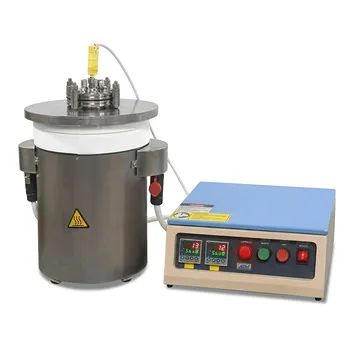
600°C Vertical Crucible Furnace with SS316 Alloy Reactor and 6 Port Vacuum Flange
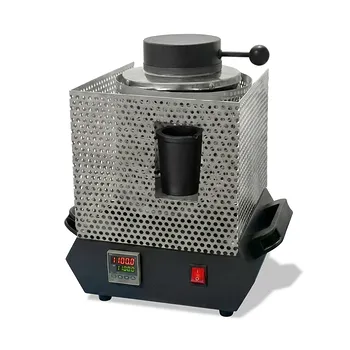
Compact Crucible Melting Furnace 1100C Programmable Temperature Controller Metal Sintering Equipment
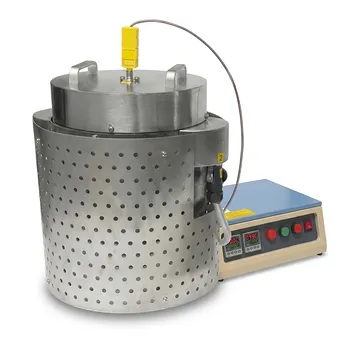
Vertical Crucible Furnace 1000C High Temperature Laboratory Equipment 4.7 Inch Diameter Chamber SS316 Anti Corrosive Enclosure
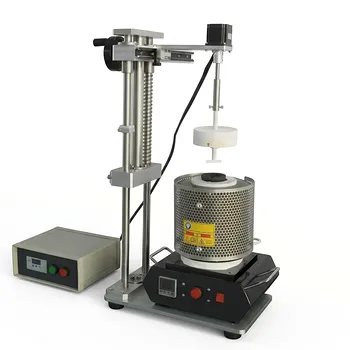
1100C Crucible Melting Furnace with Stirring Function for Glovebox and Air Sensitive Alloy Research
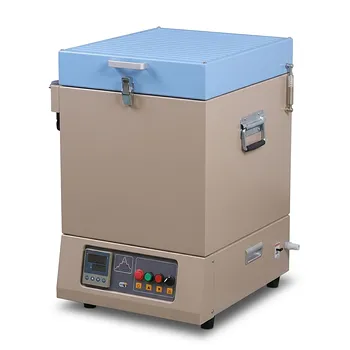
High Temperature Vertical Crucible Furnace with 22L Heating Chamber and 1200C Maximum Temperature
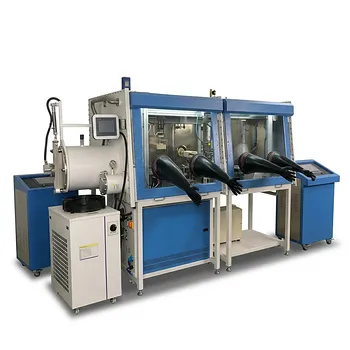
Automatic 10 Crucible Induction Melting and Casting System with Stirring Function and Glovebox Integration 2000C
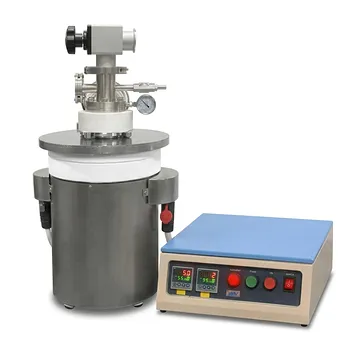
1100C High Temperature Vacuum Crucible Furnace with Quartz Chamber for Thermal Processing and Sintering
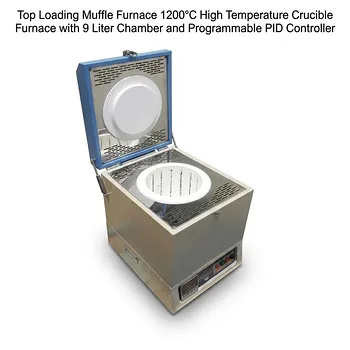
Top Loading Muffle Furnace 1200°C High Temperature Crucible Furnace with 9 Liter Chamber and Programmable PID Controller
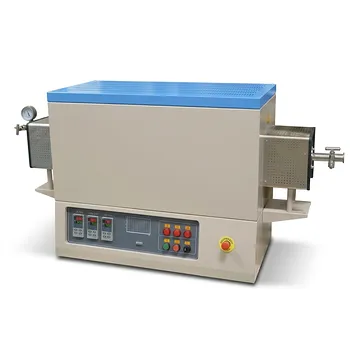
Three Zone Alumina Tube Furnace with Vacuum Flanges High Temperature 1700C Thermal Gradient CVD System
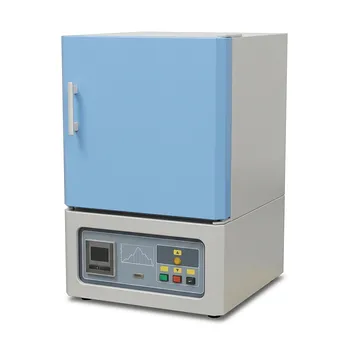
1800C Bench Top Muffle Furnace with Kanthal Super 1900 Heating Elements and 3.6L Alumina Fiber Chamber
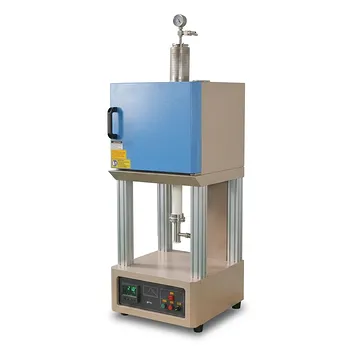
Hybrid High Temperature Tube and Box Furnace 1700C with 2 Inch Alumina Tube for Material Research
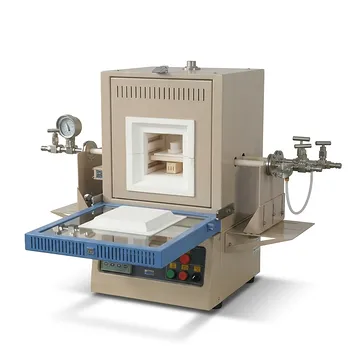
1700C Compact Hybrid Furnace with Dual Layer Box Sintering and Controlled Atmosphere Alumina Tubes
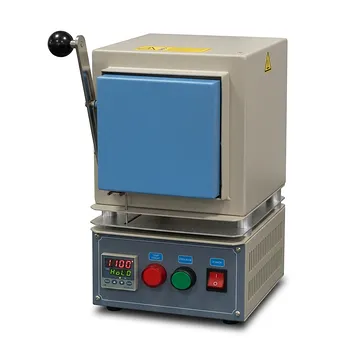
Compact 1100C Muffle Furnace with Programmable Temperature Control and High Purity Alumina Insulation for Material Research

1800C High Temperature Compact Vacuum Tube Furnace with 60mm OD Alumina Tube and Kanthal MoSi2 Heating Elements
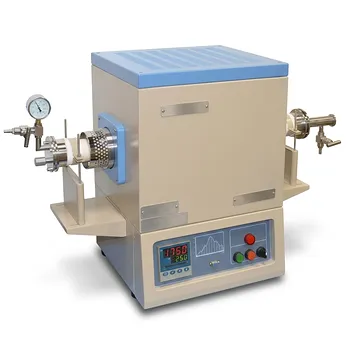
High Temperature Compact Vacuum Tube Furnace 1750C Max 60mm OD Alumina Tube
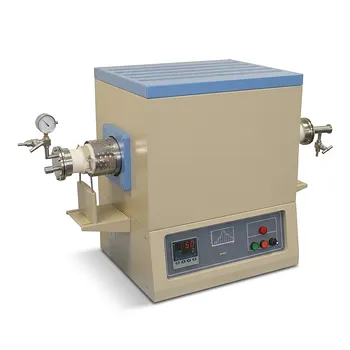
1700C High Temperature Alumina Tube Furnace with 18 Inch Heated Zone and Vacuum Sealing Flanges

Compact High Temperature 1600C Tube Furnace with 50mm Alumina Tube and Vacuum Flanges for Material Sintering
High Temperature 1700C 4 Channel Tube Furnace 1 Inch Alumina Tube for Hi-Throughput Annealing