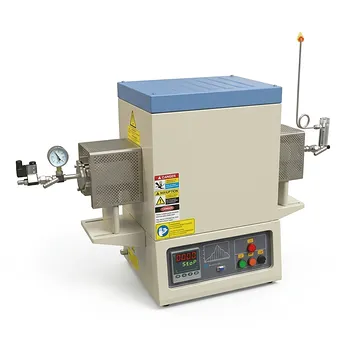
What role does an atmosphere tube furnace play in SnS/SnS2/SnO2/CF synthesis? Mastering Interface Engineering.
Updated 3 months ago
The atmosphere tube furnace serves as the primary chemical reactor for the precise synthesis of SnS/SnS2/SnO2/CF composites. By introducing a hydrogen/argon (H2/Ar) gas mixture and maintaining a temperature between 410°C and 500°C, the furnace creates the specific reducing environment required to convert SnO2 and SnS2 into a multi-component structure. This controlled process is essential for engineering the material’s heterogeneous interfaces and sulfur vacancies, which are the primary drivers of its electromagnetic loss performance.
The core role of the atmosphere tube furnace is to facilitate "interface engineering" through the simultaneous reduction and sulfurization of tin compounds. It provides the thermal and atmospheric precision necessary to transform a simple precursor into a complex, multi-phase composite with optimized electronic properties.
Precise Control of the Chemical Environment
Establishing a Reducing Atmosphere
The furnace introduces a specific H2/Ar mixed gas to replace ambient air, creating a stable reducing environment. This gas mixture prevents the unwanted oxidation of the carbon fiber (CF) skeleton while providing the active hydrogen needed for chemical transitions.
Facilitating Dynamic Phase Transitions
At the critical temperature range of 410°C to 500°C, the furnace allows for the partial reduction of SnS2 into SnS. Simultaneously, it provides the conditions for the sulfurization of SnO2, enabling researchers to tune the ratio of tin compounds within the composite.
Ensuring Chemical Stoichiometry
By regulating the gas flow and pressure, the furnace ensures that reactions occur at specific stoichiometric ratios. This level of control is vital for producing complex functional nanomaterials where the balance between sulfide and oxide phases must be strictly maintained.
Engineering Material Interfaces and Defects
Creating Heterogeneous Interfaces
The furnace's ability to drive partial chemical conversions leads to the formation of rich heterogeneous interfaces between SnS, SnS2, and SnO2. these boundaries are critical for creating interfacial polarization, which significantly enhances the material's ability to dissipate electromagnetic energy.
Inducing Sulfur Vacancies
Under the reducing conditions provided by the H2/Ar flow, the furnace facilitates the removal of specific sulfur atoms, creating sulfur vacancies within the crystal lattice. These defects act as polarization centers, further improving the electromagnetic loss capabilities of the composite.
Supporting Structural Stability
While the furnace drives aggressive chemical changes, its temperature field uniformity ensures that the carbon fiber (CF) skeleton remains intact. This provides a stable conductive network that supports the active tin compounds, ensuring the resulting material is both durable and functional.
Understanding the Trade-offs
Temperature Sensitivity
The reaction is highly sensitive to thermal fluctuations; temperatures below 410°C may lead to incomplete sulfurization, while exceeding 500°C can cause excessive reduction or structural degradation. Achieving the "sweet spot" requires high-precision, multi-stage programmable temperature control.
Gas Flow Dynamics
The rate at which the H2/Ar mixture flows through the tube can influence the phase purity and the size of the resulting nanocrystals. Poor airflow dynamics can lead to uneven reduction, resulting in a composite with inconsistent electromagnetic properties across the batch.
Atmospheric Purity vs. Cost
Maintaining a strictly controlled atmosphere requires high-purity gases and a vacuum-tight system to prevent the oxidative loss of the carbon matrix. While essential for high-performance materials, these requirements increase the complexity and operational cost of the synthesis process.
How to Apply This to Your Project
Recommendations for Material Synthesis
- If your primary focus is maximizing electromagnetic loss: Prioritize the 410°C–500°C range and H2/Ar flow to maximize the density of sulfur vacancies and heterogeneous interfaces.
- If your primary focus is phase purity and repeatability: Utilize a furnace with multi-stage programmable controllers to ensure identical thermal cycling and gas exposure across different batches.
- If your primary focus is enhancing electrical conductivity: Use the furnace to perform hydrogen reduction at specific intervals to convert precursors (like GO to rGO) without damaging the supporting tin structures.
By mastering the atmospheric and thermal variables within the tube furnace, you can precisely tune the microscopic architecture of composite materials to meet demanding performance specifications.
Summary Table:
| Key Role | Specific Function | Material Impact |
|---|---|---|
| Reducing Environment | Controlled H2/Ar gas flow | Prevents CF oxidation; enables partial reduction of SnS2 |
| Thermal Precision | 410°C to 500°C range | Drives dynamic phase transitions and sulfurization of SnO2 |
| Interface Engineering | Creating heterogeneous boundaries | Enhances interfacial polarization and electromagnetic loss |
| Defect Control | Inducing sulfur vacancies | Creates polarization centers within the crystal lattice |
| Structural Support | Temperature field uniformity | Preserves the integrity of the carbon fiber conductive skeleton |
Elevate Your Material Research with THERMUNITS
Ready to achieve precision in your next synthesis? THERMUNITS is a leading manufacturer of high-temperature laboratory equipment specifically designed for material science and industrial R&D.
We provide a comprehensive range of thermal processing solutions, including Atmosphere Tube Furnaces, Vacuum Furnaces, CVD/PECVD systems, and Vacuum Induction Melting furnaces (VIM). Our equipment ensures the rigorous temperature control and atmospheric purity required to engineer advanced composites like SnS/SnS2/SnO2/CF.
Why choose THERMUNITS?
- Precision Control: Multi-stage programmable controllers for repeatable results.
- Versatility: Solutions ranging from Muffle and Rotary furnaces to Dental and Hot Press systems.
- Expert Support: Tailored thermal solutions for complex heat treatment requirements.
Contact us today to discover how our specialized laboratory furnaces can enhance your R&D efficiency and material performance!
References
- Zhiqiang Guo, Pengfei Yin. Multiple Tin Compounds Modified Carbon Fibers to Construct Heterogeneous Interfaces for Corrosion Prevention and Electromagnetic Wave Absorption. DOI: 10.1007/s40820-024-01527-w
Mentioned Products
- Vertical 1700C Vacuum and Atmosphere Tube Furnace with 80mm Alumina Tube
- 1200C Hybrid Muffle and Tube Furnace for Material Research with Dual Atmosphere Control Quartz Tubes
- 1200°C Atmosphere Controlled Automatic Bottom Loading Furnace with 6 Inch Quartz Tube
- Compact Hybrid Muffle and Tube Furnace for 1000C Controlled Atmosphere Laboratory Material Sintering
- Compact Vertical Split Quartz Tube Furnace with Stainless Steel Vacuum Flanges for Rapid Thermal Quenching and Controlled Atmosphere Material Processing
People Also Ask
- How is an industrial-grade vertical tube furnace utilized in smelting leaching residues? Enhance Metal Recovery Efficiency
- What is the function of a laboratory-grade vertical tube furnace in fast pyrolysis? Optimize Composite Research.
- How does a vertical tube furnace facilitate thermoelectric alloy melting? Precision synthesis for material homogeneity.
- Why is a thermocouple sensor indispensable for monitoring the vertical tube furnace during gallium oxide nanowire production? Optimize VLS Growth
- What are the advantages of using a vertical tube furnace for crucible experiments simulating steel-slag interactions?

Tech Team · ThermUnits
Last updated on Jun 02, 2026
Related Products

Vertical 1700C Vacuum and Atmosphere Tube Furnace with 80mm Alumina Tube
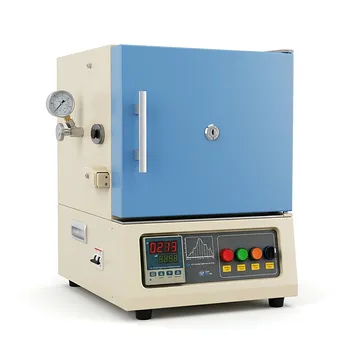
1200C Hybrid Muffle and Tube Furnace for Material Research with Dual Atmosphere Control Quartz Tubes
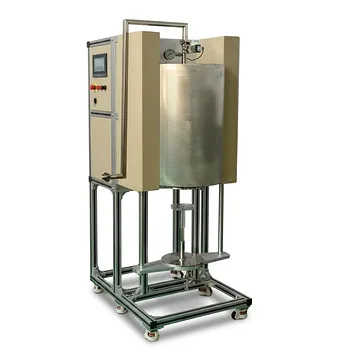
1200°C Atmosphere Controlled Automatic Bottom Loading Furnace with 6 Inch Quartz Tube
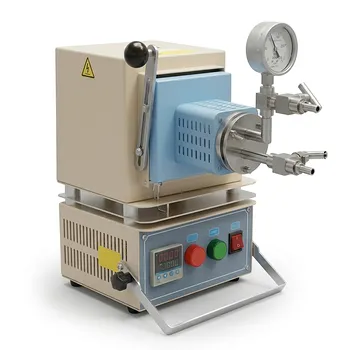
Compact Hybrid Muffle and Tube Furnace for 1000C Controlled Atmosphere Laboratory Material Sintering

Compact Vertical Split Quartz Tube Furnace with Stainless Steel Vacuum Flanges for Rapid Thermal Quenching and Controlled Atmosphere Material Processing
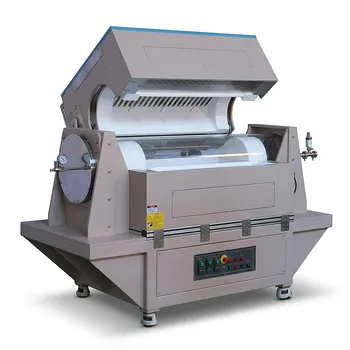
Three Zone Tube Furnace with 11 Inch or 15 Inch Quartz Tube and Hinged Flanges for Vacuum Atmosphere Heat Treatment
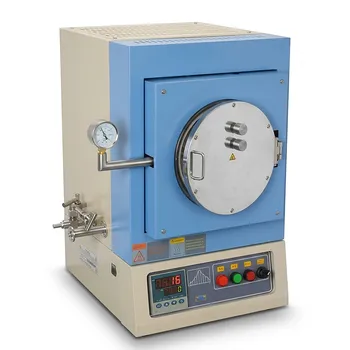
1100°C High Temperature Quartz Chamber Furnace 8 Inch OD with 7.6 Liter Capacity and Vacuum Atmosphere Capability
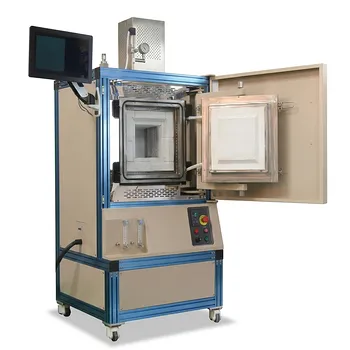
High Temperature Hydrogen Atmosphere Box Furnace 1650C Max Reducing Environment Material Synthesis System 8x8x8 Chamber

High Temperature 1700C Vertical Tube Furnace for Powder Spherification and Material Sintering

Compact High Temperature 1600C Tube Furnace with 50mm Alumina Tube and Vacuum Flanges for Material Sintering

High Temperature 1700C Tube Furnace with High Vacuum Turbomolecular Pump System and Multi Channel Mass Flow Controller Gas Mixer

High Temperature 1700C Six Zone Split Tube Furnace with Alumina Tube and Water Cooled Flanges

1800C High Temperature Compact Vacuum Tube Furnace with 60mm OD Alumina Tube and Kanthal MoSi2 Heating Elements

1100C Tube Furnace with Vacuum Flange and Programmable Temperature Controller for Material Science and Industrial Heat Treatment

High Temperature 1700C Benchtop Tube Furnace with 5 Inch Heating Zone High Purity Alumina Tube and Vacuum Sealing Flanges
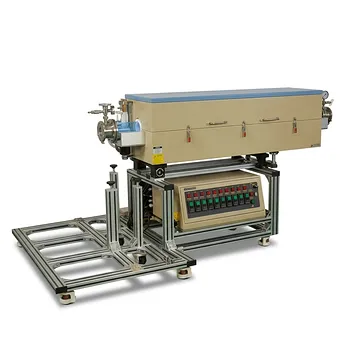
Ten Zone Multi Orientation Laboratory Tube Furnace for 1200C High Temperature Gradient Thermal Processing

1200C High Throughput Multi Channel Tube Furnace with 50mm Quartz Tubes for Annealing and Material Phase Diagram Research

High Temperature Automated 5 Inch Tube Furnace for Autonomous Material Research and Advanced Laboratory R&D
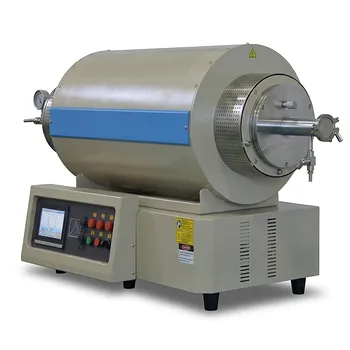
1200C Max Three Zone Tube Furnace 6 Inch OD Max with Tube and Flange