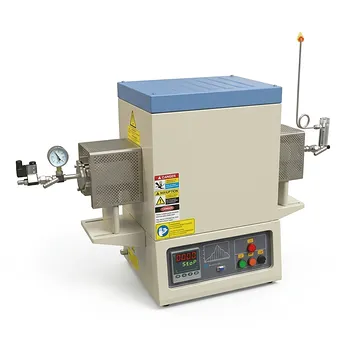
What role does an atmosphere tube furnace play in the synthesis of boron-doped expanded graphite? Precise Carbon Doping
Updated 3 months ago
The atmosphere tube furnace serves as the primary chemical reactor for the synthesis of boron-doped expanded graphite. It provides the high-temperature environment (800°C) and the specific reducing atmosphere (H2/Ar) necessary to drive the substitution of carbon atoms with boron. This process simultaneously introduces functional properties into the graphite lattice and expands its interlayer spacing.
An atmosphere tube furnace enables precise control over the thermal and chemical conditions required to incorporate boron into the graphite structure. By isolating the reaction from oxygen, it facilitates a stable reduction-doping process that modifies the material's molecular architecture while preventing thermal degradation.
Facilitating the Reduction and Doping Reaction
Activating the Chemical Transition
The furnace provides the thermal energy required to trigger the reaction between boric acid and the carbon atoms within the graphite. At a set temperature of 800°C, the thermal energy is sufficient to break existing bonds and allow for the chemical reduction of boron precursors.
Achieving Lattice Modification
As the reaction proceeds, the furnace facilitates the insertion of boron atoms into the graphite lattice. This atomic-level replacement is what creates "doped" graphite, a process that inherently expands the interlayer spacing of the material, changing its physical and electronic properties.
Controlled Atmosphere for Atomic Substitution
The use of a hydrogen and argon (H2/Ar) reducing atmosphere is critical for this specific synthesis. This gas mixture prevents the carbon from reacting with oxygen and ensures that the chemical environment favors the reduction of the boron source, allowing for successful lattice integration.
Maintaining Environmental Integrity and Purity
Prevention of Thermal Oxidation
Because carbon materials are highly susceptible to combustion at high temperatures, the furnace's sealing performance is paramount. By maintaining a strictly oxygen-free environment, the furnace prevents the oxidative loss of the graphite structure, ensuring the final product remains chemically stable.
Ensuring Uniformity and Repeatability
High-quality synthesis requires temperature field uniformity and multi-stage programmable control. The atmosphere tube furnace ensures that every part of the sample experiences the same thermal history, which is essential for achieving a homogeneous distribution of boron throughout the graphite.
Removal of Reaction Byproducts
A continuous and stable flow of gas through the tube furnace helps to promptly remove gas-phase byproducts from the reaction zone. This removal prevents impurity contamination and follows Le Chatelier's principle, driving the doping reaction toward completion by clearing away unwanted volatile substances.
Understanding the Trade-offs
Temperature Precision vs. Doping Efficiency
While higher temperatures generally increase the rate of boron doping, exceeding the optimal range can lead to unwanted structural defects or excessive energy consumption. Finding the "sweet spot"—typically around 800°C for this process—is vital for balancing doping density with structural integrity.
Gas Flow Dynamics
Low gas flow rates may fail to effectively exclude oxygen or remove byproducts, leading to impurities. Conversely, excessively high flow rates can cause temperature fluctuations within the tube or result in the loss of fine precursor powders, complicating the synthesis of nanostructured materials.
Sealing Vulnerabilities
The integrity of the furnace tube and its vacuum seals is a common point of failure. Any minor leak introduces oxygen, which can lead to the complete combustion of the graphite at 800°C, effectively destroying the sample instead of doping it.
How to Apply This to Your Project
When utilizing an atmosphere tube furnace for graphite modification, your technical approach should align with your specific material requirements:
- If your primary focus is Maximum Doping Density: Prioritize the use of a high-purity reducing atmosphere (H2/Ar) and ensure the furnace maintains a strictly controlled 800°C dwell time to allow for complete lattice substitution.
- If your primary focus is Structural Purity: Focus on the furnace's sealing performance and use inert gas purging (such as Argon or Nitrogen) before heating to ensure every trace of oxygen is removed.
- If your primary focus is Large-Scale Consistency: Utilize a furnace with multi-zone temperature control to ensure a uniform thermal gradient across the entire length of the graphite precursor.
The atmosphere tube furnace is not merely a heater, but a sophisticated environmental chamber that dictates the success of the atomic-level engineering required for boron-doped expanded graphite.
Summary Table:
| Key Feature | Role in Synthesis of Boron-Doped Graphite |
|---|---|
| 800°C Temperature | Provides thermal energy to break bonds and activate chemical reduction. |
| H2/Ar Atmosphere | Creates a reducing environment to facilitate boron lattice substitution. |
| Vacuum Sealing | Prevents oxygen ingress, protecting carbon from oxidative loss/combustion. |
| Stable Gas Flow | Removes volatile byproducts to ensure high purity and reaction completion. |
| Uniform Thermal Field | Ensures homogeneous boron distribution across the graphite structure. |
Elevate Your Material Research with THERMUNITS Precision
Achieving the perfect atomic substitution in boron-doped graphite requires absolute control over thermal and atmospheric variables. As a leading manufacturer of high-temperature laboratory equipment, THERMUNITS specializes in delivering the stability and precision your R&D demands.
From high-performance Atmosphere Tube Furnaces and CVD/PECVD systems to Vacuum, Muffle, and Rotary furnaces, our comprehensive thermal processing solutions are engineered for material science excellence. Whether you are working on lattice modification, dental ceramics, or vacuum induction melting (VIM), we provide the tools to ensure repeatable, high-purity results.
Ready to optimize your heat treatment process? Contact our technical experts today to find the ideal furnace solution for your laboratory or industrial R&D needs!
References
- Ying Yang, Yong P. Chen. Expanded graphite with boron-doping for cathode materials of high-capacity and stable aluminum ion batteries. DOI: 10.1039/d4ra03161j
Mentioned Products
- Vertical 1700C Vacuum and Atmosphere Tube Furnace with 80mm Alumina Tube
- 1200C Hybrid Muffle and Tube Furnace for Material Research with Dual Atmosphere Control Quartz Tubes
- 1200°C Atmosphere Controlled Automatic Bottom Loading Furnace with 6 Inch Quartz Tube
- Compact Hybrid Muffle and Tube Furnace for 1000C Controlled Atmosphere Laboratory Material Sintering
- Compact Vertical Split Quartz Tube Furnace with Stainless Steel Vacuum Flanges for Rapid Thermal Quenching and Controlled Atmosphere Material Processing
People Also Ask
- How is an industrial-grade vertical tube furnace utilized in smelting leaching residues? Enhance Metal Recovery Efficiency
- What is the function of a laboratory-grade vertical tube furnace in fast pyrolysis? Optimize Composite Research.
- How does a vertical tube furnace facilitate thermoelectric alloy melting? Precision synthesis for material homogeneity.
- Why is a thermocouple sensor indispensable for monitoring the vertical tube furnace during gallium oxide nanowire production? Optimize VLS Growth
- What are the advantages of using a vertical tube furnace for crucible experiments simulating steel-slag interactions?

Tech Team · ThermUnits
Last updated on Jun 03, 2026
Related Products

Vertical 1700C Vacuum and Atmosphere Tube Furnace with 80mm Alumina Tube
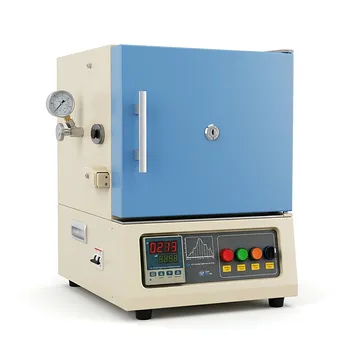
1200C Hybrid Muffle and Tube Furnace for Material Research with Dual Atmosphere Control Quartz Tubes
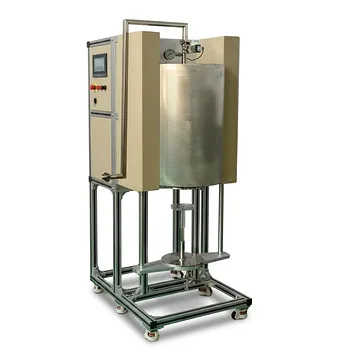
1200°C Atmosphere Controlled Automatic Bottom Loading Furnace with 6 Inch Quartz Tube
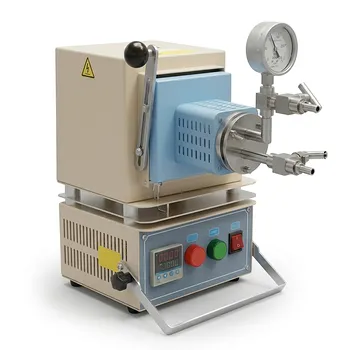
Compact Hybrid Muffle and Tube Furnace for 1000C Controlled Atmosphere Laboratory Material Sintering
Compact Vertical Split Quartz Tube Furnace with Stainless Steel Vacuum Flanges for Rapid Thermal Quenching and Controlled Atmosphere Material Processing
Three Zone Tube Furnace with 11 Inch or 15 Inch Quartz Tube and Hinged Flanges for Vacuum Atmosphere Heat Treatment

1100°C High Temperature Quartz Chamber Furnace 8 Inch OD with 7.6 Liter Capacity and Vacuum Atmosphere Capability
High Temperature Hydrogen Atmosphere Box Furnace 1650C Max Reducing Environment Material Synthesis System 8x8x8 Chamber

High Temperature 1700C Vertical Tube Furnace for Powder Spherification and Material Sintering

Compact High Temperature 1600C Tube Furnace with 50mm Alumina Tube and Vacuum Flanges for Material Sintering

High Temperature 1700C Tube Furnace with High Vacuum Turbomolecular Pump System and Multi Channel Mass Flow Controller Gas Mixer

High Temperature 1700C Six Zone Split Tube Furnace with Alumina Tube and Water Cooled Flanges

1800C High Temperature Compact Vacuum Tube Furnace with 60mm OD Alumina Tube and Kanthal MoSi2 Heating Elements

1100C Tube Furnace with Vacuum Flange and Programmable Temperature Controller for Material Science and Industrial Heat Treatment

High Temperature 1700C Benchtop Tube Furnace with 5 Inch Heating Zone High Purity Alumina Tube and Vacuum Sealing Flanges
Ten Zone Multi Orientation Laboratory Tube Furnace for 1200C High Temperature Gradient Thermal Processing
1200C High Throughput Multi Channel Tube Furnace with 50mm Quartz Tubes for Annealing and Material Phase Diagram Research

High Temperature Automated 5 Inch Tube Furnace for Autonomous Material Research and Advanced Laboratory R&D
1200C Max Three Zone Tube Furnace 6 Inch OD Max with Tube and Flange