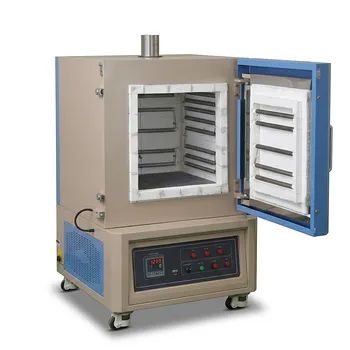
What role does an industrial high-temperature oven play in the synthesis of Zinc Gallate? Optimize ZnGa2O4:Cr3+ Results
Updated 3 months ago
In the synthesis of Zinc Gallate ($ZnGa_2O_4:Cr^{3+}$), an industrial high-temperature oven acts as the critical reactor for solid-phase synthesis and dopant activation. It provides a stable 1000°C environment in an oxidizing atmosphere, which is essential for transforming raw precursors into a structured spinel matrix where chromium ions can function as long-afterglow luminescent centers.
The industrial high-temperature oven is the foundational tool that enables the solid-phase reaction and structural arrangement of Zinc Gallate. By maintaining precise thermal energy and an oxidizing environment, it ensures the chemical purity and crystalline integrity required for high-performance luminescence.
Facilitating the Solid-Phase Synthesis
Providing Necessary Thermal Energy
The oven maintains a consistent temperature of approximately 1000 degrees Celsius. This high thermal energy is required to initiate and sustain the solid-phase reactions between the precursors.
Transforming the Crystalline Structure
Under these intense temperatures, the raw material powders undergo a structural evolution. This process results in the formation of a stable spinel structure matrix, which serves as the host for the luminescent dopants.
Atmospheric Control and Dopant Integration
The Importance of an Oxidizing Atmosphere
The oven operates in an air atmosphere, providing the necessary oxygen levels for the reaction. This oxidizing environment ensures that the chemical precursors react correctly and maintain the desired oxidation states.
Creating Long-Afterglow Centers
The thermal environment allows chromium ions ($Cr^{3+}$) to migrate and effectively occupy octahedral sites within the crystal lattice. This precise positioning of chromium is what creates the long-afterglow luminescent centers required for the material’s functional performance.
Pre-treatment and Material Purification
Removing Volatile Impurities
Before the final synthesis, the high-temperature oven is used for the pre-treatment of raw materials like Zinc Oxide ($ZnO$). It utilizes physical desorption and thermal decomposition to eliminate residual organic impurities and adsorbed water.
Ensuring Chemical Purity
This purification step is vital for establishing a pollution-free foundation. By ensuring the chemical purity of the precursors, the oven facilitates the production of a high-performance ceramic substrate during the subsequent sintering stages.
Understanding the Trade-offs
Temperature Precision vs. Structural Integrity
Maintaining exactly 1000 degrees Celsius is a delicate balance. If the temperature is too low, the solid-phase reaction may be incomplete; if it is too high, it can lead to excessive grain growth or structural defects in the spinel lattice.
Atmospheric Consistency and Luminescence
Fluctuations in the air atmosphere can negatively impact the chromium ion integration. Any deviation from an oxidizing environment might prevent the chromium ions from occupying the correct octahedral sites, significantly reducing the material's afterglow duration.
How to Apply This to Your Project
Optimizing Synthesis for Specific Results
- If your primary focus is maximum luminescence duration: Ensure the oven maintains a strict oxidizing air atmosphere to guarantee $Cr^{3+}$ occupies the octahedral sites correctly.
- If your primary focus is material purity and consistency: Prioritize a pre-treatment phase in the oven to thoroughly remove moisture and organic contaminants before the final synthesis.
- If your primary focus is crystalline stability: Carefully calibrate the oven to 1000°C to ensure the formation of a uniform spinel structure without inducing thermal stress or defects.
By masterfully controlling the thermal and atmospheric conditions of the industrial high-temperature oven, you secure the structural and chemical environment necessary for high-performance Zinc Gallate synthesis.
Summary Table:
| Synthesis Phase | Key Function of the Oven | Impact on Material |
|---|---|---|
| Pre-treatment | Physical desorption & thermal decomposition | Removes impurities and ensures chemical purity. |
| Solid-Phase Reaction | Maintains stable 1000°C thermal energy | Facilitates transformation into a spinel structure matrix. |
| Atmospheric Control | Provides a consistent oxidizing air atmosphere | Ensures correct oxidation states of precursors. |
| Dopant Activation | Enables Cr3+ migration to octahedral sites | Creates essential long-afterglow luminescent centers. |
Elevate Your Research with Precision Thermal Solutions
Achieving the perfect spinel structure for Zinc Gallate (ZnGa2O4:Cr3+) requires absolute precision in temperature and atmosphere. THERMUNITS is a leading manufacturer of high-temperature laboratory equipment dedicated to supporting material science and industrial R&D.
We offer a comprehensive range of thermal processing solutions tailored to your specific synthesis needs, including:
- Muffle, Vacuum, and Atmosphere Furnaces for precise solid-phase reactions.
- Tube and Rotary Furnaces for uniform material processing.
- CVD/PECVD Systems and Hot Press Furnaces for advanced material engineering.
- Vacuum Induction Melting (VIM), Dental Furnaces, and Electric Rotary Kilns.
Whether you need to optimize luminescence duration or ensure crystalline integrity, THERMUNITS provides the reliability and expertise your laboratory demands.
Contact THERMUNITS Today to discuss your project requirements and find the ideal heat treatment equipment for your success!
References
- Adrian Drozdowski, Tomasz Grzyb. Unleashing the glow: upconverting nanoparticles recharge persistent luminescent materials – applications in 3D-printing and optical coding. DOI: 10.1039/d4tc01692k
Mentioned Products
- High Temperature 1000C Vacuum Furnace with 8 Inch ID Chamber for Material Sintering and Research Annealing
- Industrial Large Box Furnace 1700C 216L High Temp Muffle Sintering System
- High Temperature 1600C Split Tube Furnace Vacuum Flanges Valves Optional 60mm 80mm Alumina Tube
- 1650C High Temperature Atmosphere Controlled Box Furnace with 65L Chamber for Advanced Material Sintering and Industrial Heat Treatment
- Vertical 1700C Vacuum and Atmosphere Tube Furnace with 80mm Alumina Tube
People Also Ask
- How does the temperature control precision of a high-temperature sintering furnace affect Na1+xLa1-xZr2O6-δ ceramics?
- How does a high-temperature sintering furnace environment enhance NdFeB magnets? Achieve 98%+ density with precision.
- What role does a high-temperature annealing furnace play in forming ordered Pt3(CoNi) intermetallic catalysts?
- What is the function of high-vacuum furnaces in (Mo2/3V1/3)n+1AlCn MAX phase synthesis? Ensure Purity & Diffusion.
- How does a vacuum or atmosphere sintering furnace contribute to the congener-welding process of carbon nitride membranes?

Tech Team · ThermUnits
Last updated on Jun 03, 2026
Related Products
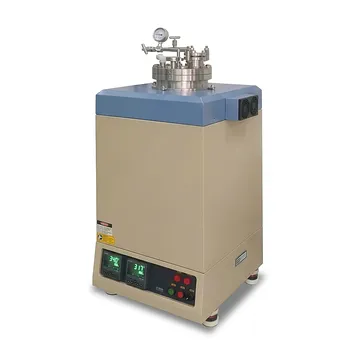
High Temperature 1000C Vacuum Furnace with 8 Inch ID Chamber for Material Sintering and Research Annealing
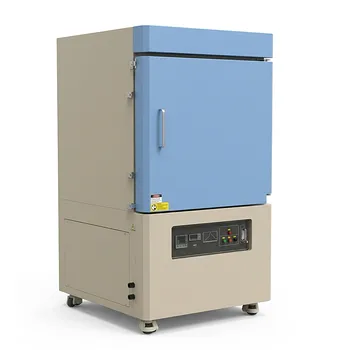
Industrial Large Box Furnace 1700C 216L High Temp Muffle Sintering System
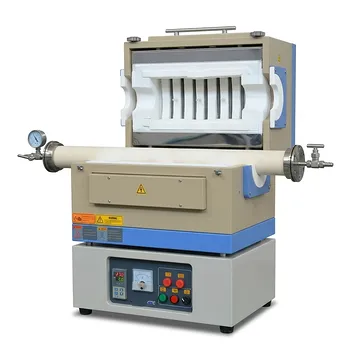
High Temperature 1600C Split Tube Furnace Vacuum Flanges Valves Optional 60mm 80mm Alumina Tube
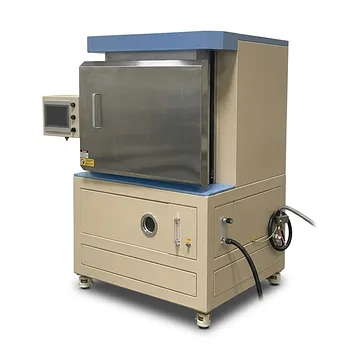
1650C High Temperature Atmosphere Controlled Box Furnace with 65L Chamber for Advanced Material Sintering and Industrial Heat Treatment

Vertical 1700C Vacuum and Atmosphere Tube Furnace with 80mm Alumina Tube

High Temperature 1700C Tube Furnace with High Vacuum Turbomolecular Pump System and Multi Channel Mass Flow Controller Gas Mixer
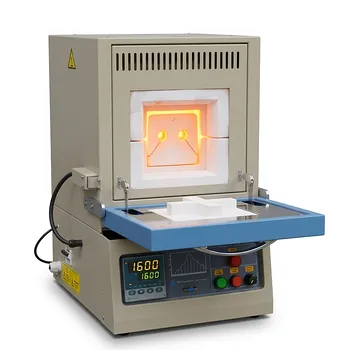
High Temperature Compact Muffle Furnace 1700 C with 30 Segment Programmable Controller and 1.7L Cubic Chamber
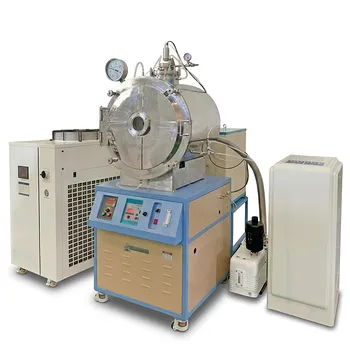
Ultra High Temperature Induction Heated Vacuum Furnace with Molten Salt Electrolysis Capability and 3000 Degree Precision Control

High Temperature Tube Furnace 1500C with Sliding Flanges and 50mm OD for Rapid Thermal Processing Fast Heating and Cooling

1750°C High Temperature Benchtop Vacuum Atmosphere Tube Furnace with Kanthal Super 1800 Heating Elements and 60mm Alumina Processing Tube
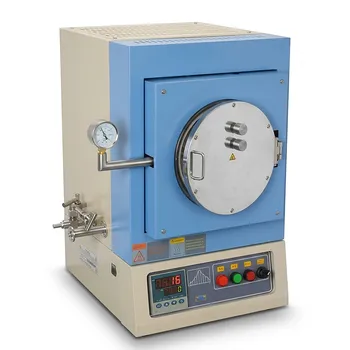
1100°C High Temperature Quartz Chamber Furnace 8 Inch OD with 7.6 Liter Capacity and Vacuum Atmosphere Capability
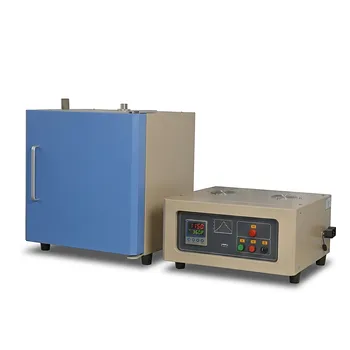
High Temperature Muffle Furnace with Alloy Chamber for Debinding and Sintering Applications
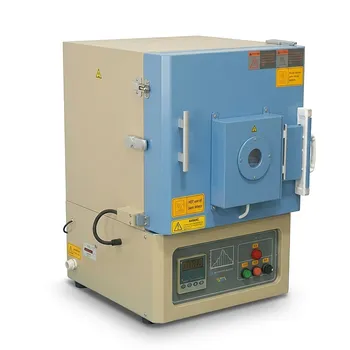
High Temperature Benchtop Muffle Furnace 1500C with 3.6L Chamber and Quartz Observation Window
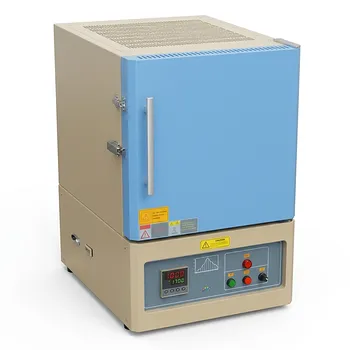
Large Bench Top 1700C High Temperature Muffle Furnace with 19L Chamber for Advanced Material Sintering and Annealing
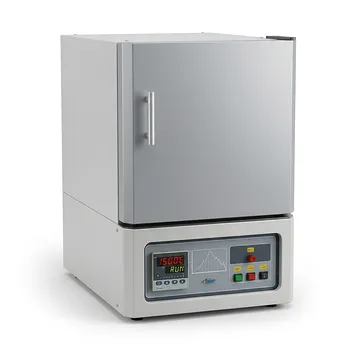
High Temperature 1500C Benchtop Muffle Furnace 3.6L Alumina Fiber Chamber Programmable Controller Sintering Annealing Carbonization Thermal Processing System
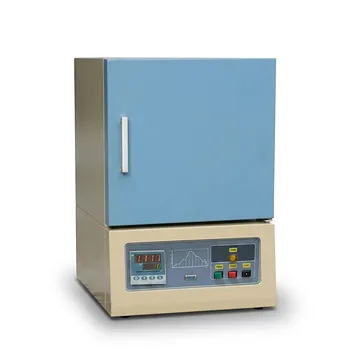
Ultra High Temperature Bench Top Muffle Furnace 1750C Sintering System with Kanthal Super Heating Elements and Precision Digital Control
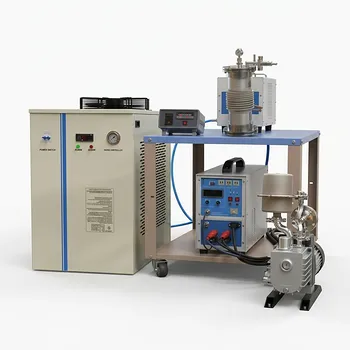
Induction Heating System with Temperature Control for High Temperature Vacuum Sintering and Melting
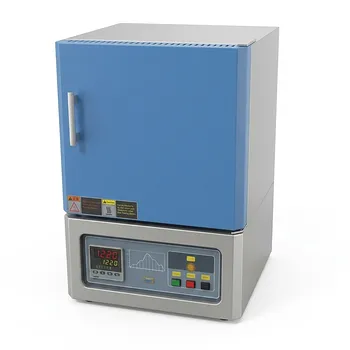
High Temperature Benchtop Muffle Furnace 1700C 10L Chamber Alumina Fiber Insulation MoSi2 Heating Elements

High Temperature 1700C Vertical Tube Furnace for Powder Spherification and Material Sintering