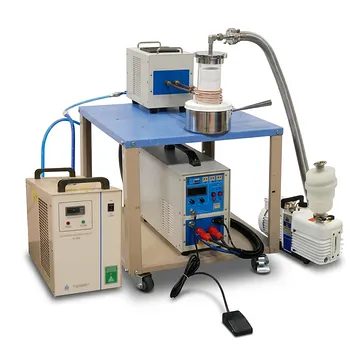
What role does the graphite cavity play during the pressureless sintering of ZrB2–SiC in an induction heating system?
Updated 3 months ago
The graphite cavity serves as both the primary heat engine and a chemical catalyst in the induction sintering process. It acts as a susceptor that converts electromagnetic energy into thermal energy, providing a stable isothermal environment at temperatures reaching 2150°C. Beyond mere heating, it creates a specialized atmosphere that removes surface impurities from the ceramic particles, which is the fundamental requirement for achieving high density without external pressure.
Core Takeaway: The graphite cavity is an active functional component that ensures thermal uniformity and chemical purification, enabling the production of large, dense, and complex ZrB2–SiC parts that would otherwise be impossible to manufacture economically.
Thermal Management and Heat Generation
The Graphite Cavity as a Susceptor
In an induction system, the ceramic sample itself is often not conductive enough to heat efficiently. The graphite cavity acts as a susceptor, intercepting induction currents to generate intense heat which is then transferred to the ZrB2–SiC sample.
Achieving Isothermal Uniformity
Maintaining a consistent temperature is critical when working with ultra-high temperature ceramics (UHTCs). The graphite container functions as an isothermal shield, ensuring a uniform thermal field distribution that minimizes internal thermal stress and prevents cracking during the sintering cycle.
Reaching Extreme Process Temperatures
The material properties of graphite allow the system to operate reliably at temperatures as high as 2150°C. This extreme heat is necessary to overcome the strong atomic bonds of ZrB2 and SiC, allowing the particles to fuse together through diffusion.
Chemical Role in Material Densification
Creating a Reducing Atmosphere
At high temperatures, the graphite environment naturally maintains a reducing atmosphere. This environment is essential because it prevents the oxidation of the ceramic and facilitates the removal of existing oxide scales on the particle surfaces.
Synergy with Sintering Additives
The graphite works in tandem with additives like silicon nitride to clean the surfaces of ZrB2 particles. By stripping away oxygen-based impurities, the graphite cavity ensures that the ceramic grains can achieve direct contact, which significantly promotes material densification.
Enabling Pressureless Sintering
Because the graphite cavity optimizes both heat and chemistry, it allows for pressureless sintering. This removes the need for heavy mechanical presses, allowing the material to densify naturally through surface energy reduction.
Understanding the Trade-offs
Induction vs. Spark Plasma Sintering (SPS)
While Spark Plasma Sintering (SPS) can often achieve higher densification speeds, it is usually limited to simple disc geometries. Induction heating via graphite cavities is superior for large-sized components and complex near-net shapes that require uniform heating across a larger volume.
Thermal Lag and Control
Using a graphite susceptor introduces a layer of thermal mass between the induction coil and the sample. While this provides stability, it can result in a thermal lag, requiring sophisticated sensor placement to accurately monitor the actual temperature of the ceramic core.
Material Consumption
The graphite cavity is a consumable part that gradually degrades over many high-temperature cycles. This introduces a recurring cost, though it is typically offset by the reduced need for expensive post-sintering mechanical processing.
How to Apply This to Your Project
Making the Right Choice for Your Goal
- If your primary focus is industrial-scale production: Use induction heating with graphite cavities to produce multiple or large-scale components simultaneously.
- If your primary focus is near-net shape complexity: Leverage the pressureless nature of this setup to sinter parts into their final geometry, minimizing the need for diamond-tool machining.
- If your primary focus is maximum material purity: Ensure your graphite cavity is of high purity to maximize the effectiveness of the reducing atmosphere during the 2150°C soak.
By mastering the thermal and chemical influence of the graphite environment, manufacturers can produce high-performance UHTCs that meet the rigorous demands of aerospace and extreme-environment applications.
Summary Table:
| Function | Description | Key Benefit |
|---|---|---|
| Heat Susceptor | Converts electromagnetic energy into thermal energy | Enables reliable processing at temperatures up to 2150°C |
| Isothermal Shield | Ensures uniform thermal field distribution | Prevents cracking and minimizes internal thermal stress |
| Chemical Catalyst | Maintains a naturally reducing atmosphere | Removes oxide impurities for superior material densification |
| Structural Enabler | Supports pressureless sintering for large volumes | Allows for complex near-net shape manufacturing |
Elevate Your Advanced Material Research with THERMUNITS
Precision thermal processing is the backbone of breakthroughs in material science. As a leading manufacturer of high-temperature laboratory equipment, THERMUNITS provides the specialized technology required for rigorous industrial R&D.
Whether you are working on UHTCs, metallurgy, or advanced ceramics, we offer a comprehensive range of solutions including:
- Furnaces: Muffle, Vacuum, Atmosphere, Tube, Rotary, and Hot Press Furnaces.
- Advanced Systems: CVD/PECVD systems, Vacuum Induction Melting (VIM) furnaces, and Electric Rotary Kilns.
- Specialized Equipment: Dental Furnaces and high-quality Thermal Elements.
Our equipment is designed to deliver the extreme temperatures and stable environments necessary for your most demanding projects. Contact us today to discuss your specific heat treatment requirements and discover how THERMUNITS can optimize your lab's efficiency and results.
References
- Mohammad Sarhangian, Mehri Mashhadi. The impact of Si3N4 incorporation on the mechanical characteristics of ZrB2–SiC nanocomposite sintered via pressureless method. DOI: 10.1016/j.heliyon.2024.e33269
Mentioned Products
- Induction Heating System with Temperature Control for High Temperature Vacuum Sintering and Melting
- High Temperature Induction Melting System with Integrated Ultra High Purity Glove Box for Metallic Alloy Processing
- High Temperature Induction Melting System with Multi Cavity Crucible and 15KW Precision Digital Temperature Control
- Automatic 10 Crucible Induction Melting and Casting System with Stirring Function and Glovebox Integration 2000C
- 1750C Compact Muffle Furnace 1.7L Ultra High Temperature Laboratory Sintering System for Advanced Ceramics and Material Science Research
People Also Ask
- What is the role of a vacuum induction melting furnace combined with a water-cooled copper mold? Mastering RHEA Purity
- Explain the physical principle behind heat generation in a Vacuum Induction Melting (VIM) furnace: A Technical Guide
- Why is a VIM furnace essential for high-purity alloys? Achieve unmatched metal purity and structural integrity.
- Why is Vacuum Induction Melting preferred for manufacturing corrosion-resistant alloys? Ensure Ultra-High Purity
- How does Vacuum Induction Melting mitigate hydrogen embrittlement? Ensure Structural Integrity for Critical Alloys

Tech Team · ThermUnits
Last updated on Jun 02, 2026
Related Products
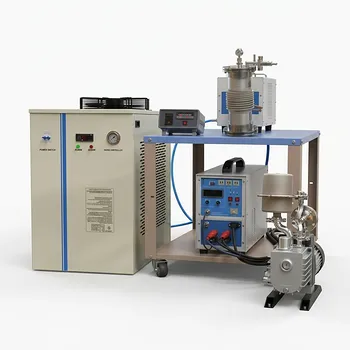
Induction Heating System with Temperature Control for High Temperature Vacuum Sintering and Melting
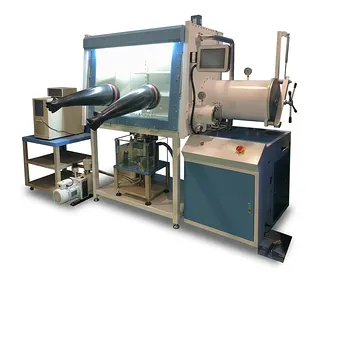
High Temperature Induction Melting System with Integrated Ultra High Purity Glove Box for Metallic Alloy Processing
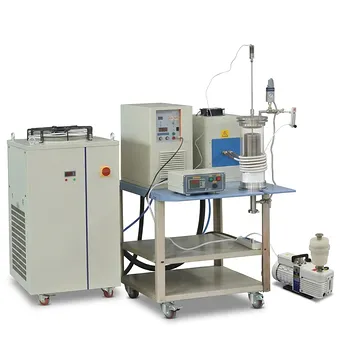
High Temperature Induction Melting System with Multi Cavity Crucible and 15KW Precision Digital Temperature Control
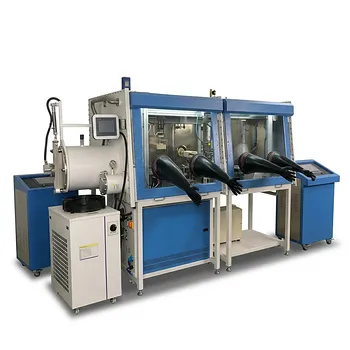
Automatic 10 Crucible Induction Melting and Casting System with Stirring Function and Glovebox Integration 2000C
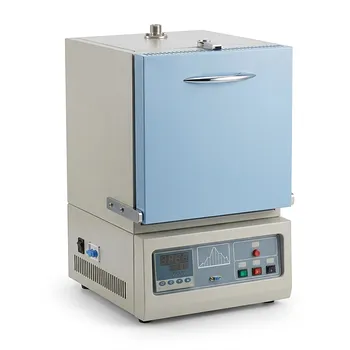
1750C Compact Muffle Furnace 1.7L Ultra High Temperature Laboratory Sintering System for Advanced Ceramics and Material Science Research
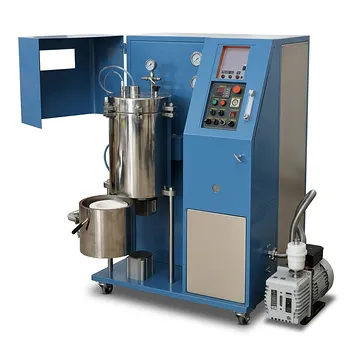
High Pressure Induction Melting Casting System 1700C Max for Alloy Granulation and Infiltration Equipment
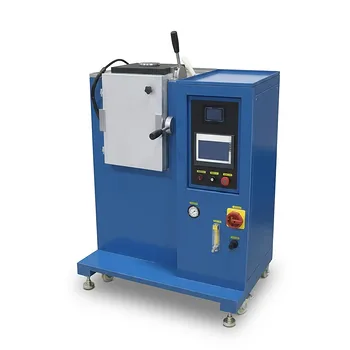
High Throughput Induction Melting and Casting Furnace for Superalloy Research 1700C Atmosphere Controlled Multi Sample System
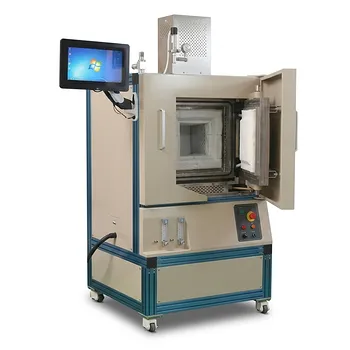
High Temperature Oxygen and Inert Atmosphere Controlled Furnace 8 Liter 1700C Sintering System for Advanced Materials RD
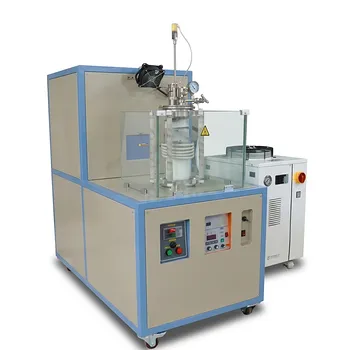
15KW Induction Melting System with Top Suction Casting for Thin Rod Production Up to 1200°C
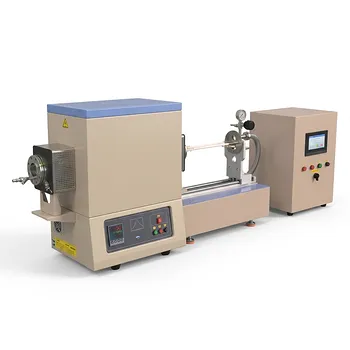
High Temperature Horizontal Electrical Assisted Sintering Furnace with 3KW Programmable Power Source for Advanced Ceramic Materials
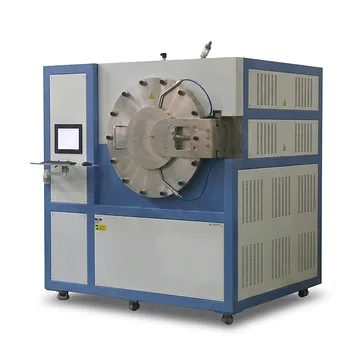
High Vacuum Pressure Chamber Furnace 800C 3.5 Bar Sintering System for Superconducting Materials