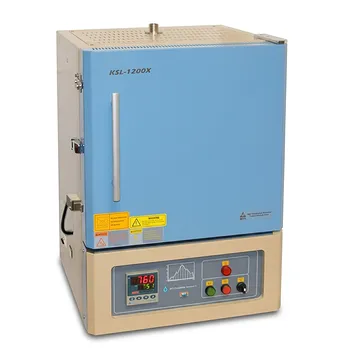
What technical advantages does an intermediate frequency induction furnace provide for melting pure iron? Improve Alloying
Updated 3 months ago
Intermediate frequency induction furnaces provide three primary technical advantages for melting pure iron: rapid internal heat generation, minimized thermal loss, and vigorous electromagnetic stirring. These systems leverage electromagnetic induction to generate heat directly within a charge (up to 15 kg), ensuring the iron reaches melting temperatures quickly and uniformly. This process creates an ideal thermal and fluid environment, which is essential for the successful dissolution and homogenization of alloying elements.
Core Takeaway: The technical superiority of intermediate frequency induction lies in its ability to combine precise temperature control with active electromagnetic stirring. This dual functionality ensures that added alloying elements are distributed uniformly throughout the pure iron melt, effectively preventing compositional segregation and oxidation.
Optimized Thermal Dynamics and Efficiency
Direct Internal Heat Generation
Unlike traditional furnaces that heat the crucible to melt the contents, induction furnaces generate heat directly within the pure iron load via eddy currents.
This internal heating mechanism allows for extremely rapid temperature increases, which is critical when working with high-melting-point materials like pure iron.
Minimization of Heat Loss
Because the heat is produced within the iron itself, there is significantly less thermal radiation and energy loss compared to external heating methods.
This efficiency ensures a stable high-temperature melt base, providing the consistent thermal environment required for sensitive spheroidization and inoculation treatments.
The Role of Electromagnetic Stirring
Chemical and Thermal Homogenization
The electromagnetic field creates a "stirring effect" that continuously circulates the molten metal during the melting process.
This action facilitates the homogenization of chemical composition, ensuring that there are no localized temperature spikes or cold spots within the 15 kg melt.
Enhanced Mass Transfer for Additives
The stirring force is vital for the rapid dissolution of pre-blocks, such as rare earth elements or high-melting-point additives like Niobium and Tantalum.
By increasing mass transfer efficiency, the furnace ensures these elements are distributed quickly and uniformly, effectively eliminating compositional segregation.
Precision in Direct Alloying Experiments
Ideal Flow Field Conditions
Direct alloying requires a specific flow field to incorporate reactive elements like Scandium, Zirconium, or Erbium without them floating or sinking.
The induction furnace provides the necessary thermal and flow field conditions to keep these solute atoms dispersed within the iron matrix rather than forming clusters.
Atmospheric Integrity and Purity
When configured as a Vacuum Induction Melting (VIM) furnace, the system can operate under high-vacuum or high-purity argon environments.
This capability is essential for removing dissolved gases like oxygen and nitrogen, which prevents the oxidation of active elements like aluminum or titanium during the alloying process.
Understanding the Trade-offs
Equipment Complexity and Cost
While highly efficient, intermediate frequency induction systems require a sophisticated power supply and cooling system, leading to higher initial capital costs.
The electromagnetic stirring, while beneficial for mixing, can also increase the erosion rate of the crucible lining, requiring more frequent maintenance and careful material selection.
Material Limitations
The efficiency of the furnace is highly dependent on the electrical conductivity and magnetic permeability of the charge; while ideal for iron, it may require different configurations for non-conductive materials.
Additionally, the vigorous stirring can sometimes trap slag or inclusions within the melt if the power levels and frequencies are not precisely tuned for the specific alloy weight.
How to Apply This to Your Project
Making the Right Choice for Your Goal
To achieve the best results in your alloying experiments, match the furnace settings to your specific metallurgical requirements.
- If your primary focus is high-purity aerospace alloys: Utilize a vacuum-integrated induction furnace (VIM) to minimize dissolved gases and prevent the oxidation of reactive alloying elements.
- If your primary focus is uniform dispersion of high-melting-point elements: Maximize the electromagnetic stirring effect to ensure elements like Niobium or Tungsten do not settle at the bottom of the melt.
- If your primary focus is rapid prototyping of small batches: Leverage the direct internal heating of a 15 kg induction unit to achieve quick melt cycles and precise temperature control.
By harnessing the inherent electromagnetic forces of an induction furnace, researchers can achieve a level of compositional precision and thermal stability that is unattainable with conventional melting techniques.
Summary Table:
| Feature | Technical Advantage | Impact on Alloying |
|---|---|---|
| Internal Heating | Rapid heat generation via eddy currents | Fast melting of high-point materials |
| Electromagnetic Stirring | Active fluid homogenization | Prevents element segregation |
| Thermal Efficiency | Minimized heat radiation loss | Consistent thermal environment |
| Atmospheric Control | High-vacuum or Argon integration | Prevents oxidation of reactive elements |
| Mass Transfer | Enhanced dissolution of additives | Uniform distribution of Niobium/Tantalum |
Elevate Your Material Research with THERMUNITS
Unlock the full potential of your metallurgy and R&D projects with THERMUNITS, a leading manufacturer of high-temperature laboratory equipment. From Vacuum Induction Melting (VIM) furnaces designed for high-purity iron alloying to a comprehensive range of Muffle, Vacuum, Atmosphere, Tube, and Rotary furnaces, we provide the precision your experiments demand.
Whether you require CVD/PECVD systems, Hot Press furnaces, or high-performance Thermal Elements, our solutions ensure superior thermal stability and chemical homogeneity. Contact our technical team today to find the perfect thermal processing solution for your laboratory and achieve unparalleled experimental accuracy.
References
- Yubao Liu, Xiao Wang. Study on Direct Alloying Behavior of Lanthanum in Pure Iron Based on the Graphite Oxide Adsorbing. DOI: 10.3724/s1004-0277.202403004
Mentioned Products
- Induction Melting Casting Furnace 1750C Vacuum High Frequency Metal Processing Unit
- High Pressure 600T Vacuum Induction Hot Press Furnace for Advanced Material Heat Treatment and Sintering
- Desktop Induction Melting Furnace with Automatic Rotary Casting Function up to 1700C for Advanced Metal Alloy Research
- High Throughput Induction Melting and Casting Furnace for Superalloy Research 1700C Atmosphere Controlled Multi Sample System
- High Temperature Mini Induction Heating Furnace 1600C Laboratory Material Melting System
People Also Ask
- What are the key structural components that make up a Vacuum Induction Melting (VIM) furnace system? Full Guide
- What is the primary role of a Vacuum Induction Melting furnace in the smelting of Fe-Cr-N alloys? Ensuring High Purity
- How does a Vacuum Induction Melting furnace heat materials while preventing atmospheric contamination? Achieve High Purity
- What technical advantages does Vacuum Induction Melting offer regarding alloy homogeneity and purity? Enhance Performance
- How does the skin effect influence VIM frequency selection? Optimize Heat Penetration & Stirring Efficiency

Tech Team · ThermUnits
Last updated on Jun 02, 2026
Related Products
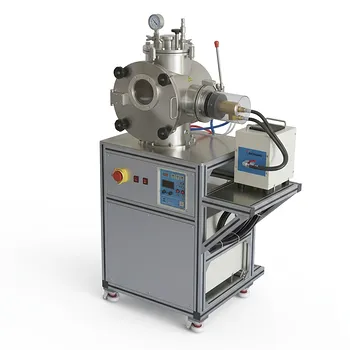
Induction Melting Casting Furnace 1750C Vacuum High Frequency Metal Processing Unit
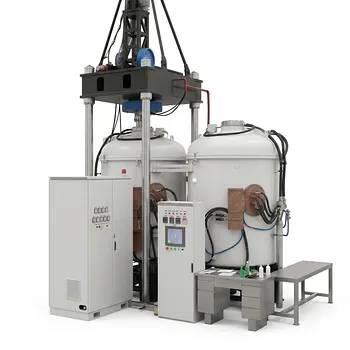
High Pressure 600T Vacuum Induction Hot Press Furnace for Advanced Material Heat Treatment and Sintering
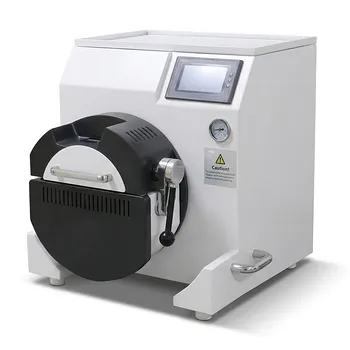
Desktop Induction Melting Furnace with Automatic Rotary Casting Function up to 1700C for Advanced Metal Alloy Research
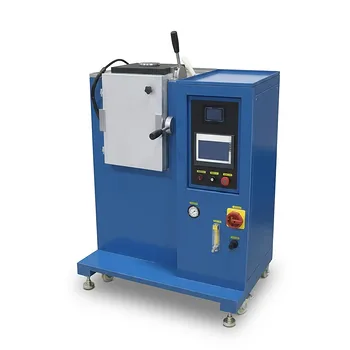
High Throughput Induction Melting and Casting Furnace for Superalloy Research 1700C Atmosphere Controlled Multi Sample System
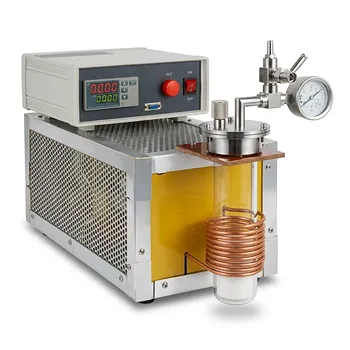
High Temperature Mini Induction Heating Furnace 1600C Laboratory Material Melting System
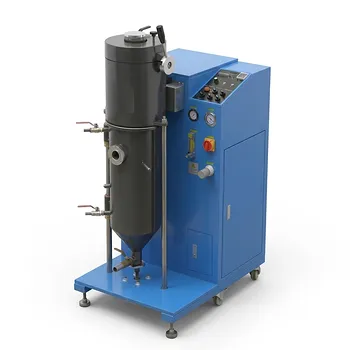
Atmosphere Controlled Induction Melting Granulating Casting Furnace 1500C 5kg Capacity
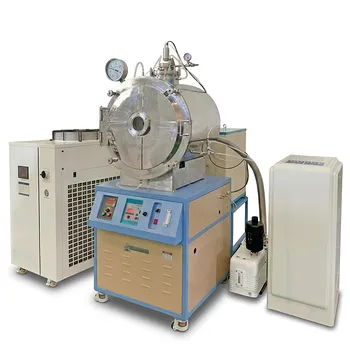
Ultra High Temperature Induction Heated Vacuum Furnace with Molten Salt Electrolysis Capability and 3000 Degree Precision Control
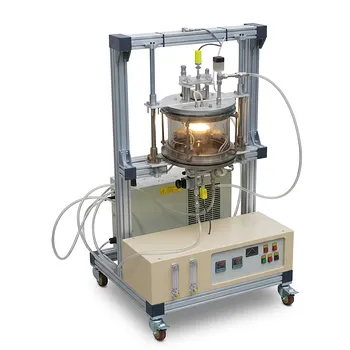
Two Zones CSS Furnace for Rapid Thermal Processing Thin Film Coating 3 Inch Diameter 650C
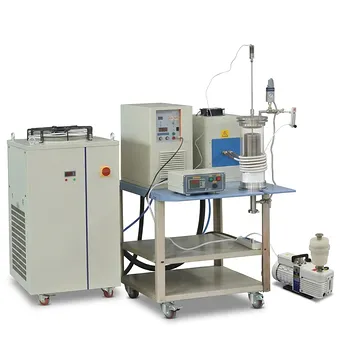
High Temperature Induction Melting System with Multi Cavity Crucible and 15KW Precision Digital Temperature Control
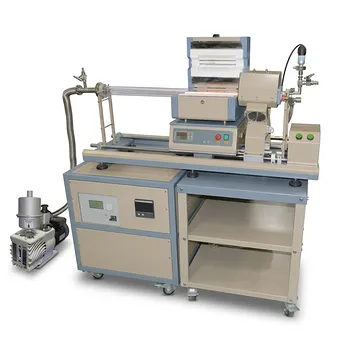
1200C Max Compact Auto-Sliding PECVD Furnace with 2 Inch Tube and Vacuum Pump
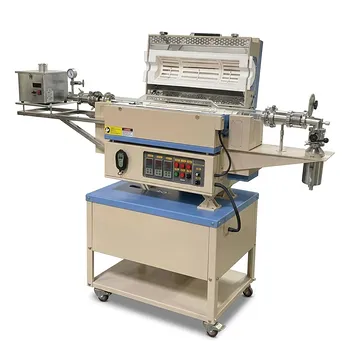
5 Inch Rotary Tube Furnace with Automatic Feeding and Receiving System 1200C Three Zone CVD Powder Processing
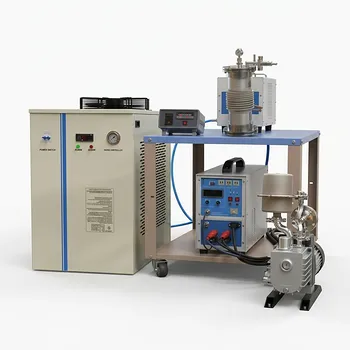
Induction Heating System with Temperature Control for High Temperature Vacuum Sintering and Melting
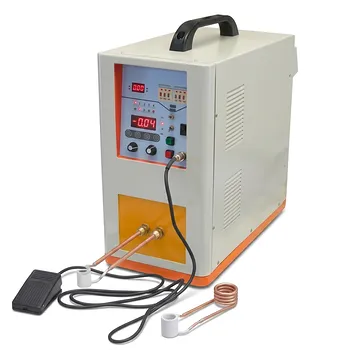
Desktop High Frequency Induction Heater for Precision Metal Melting and Laboratory Thermal Processing 0.6 to 1.1MHz
1400C Bottom Loaded Inert Gas Atmosphere Box Furnace with 125L Capacity and Precision Hydraulic Lift
Compact 1000C Muffle Furnace with Programmable Controller and 2 Inch Top Port for Vacuum and Atmosphere Material Research
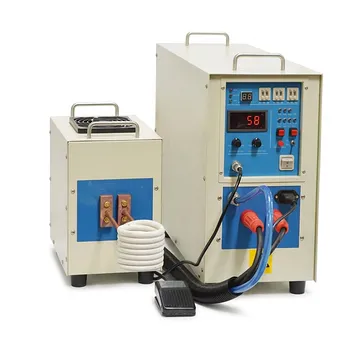
High Frequency Desktop Induction Heater 15 KVA Induction Heating System with Automatic Timer Control for Material Research and Metal Melting
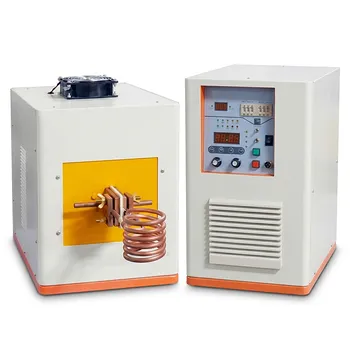
30KW High Frequency Induction Heater for Metal Melting and Industrial Heat Treatment 80-200kHz
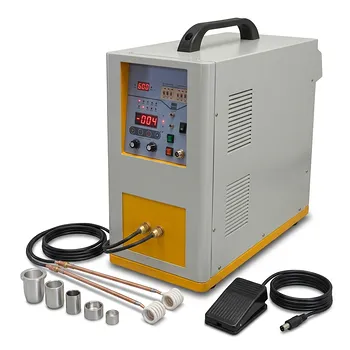
Desktop High Frequency Induction Heater 6KW 100-500kHz for Precision Metal Melting and Heat Treatment
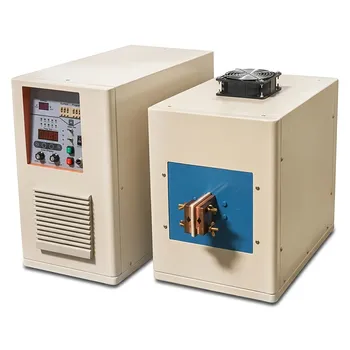
High Frequency Desktop Induction Heater 35KW 30-80 KHz with Precision Timer Control for Industrial Material Research and Metal Processing