Why are alumina crucibles selected for thermal decomposition experiments? Ensure Precision for Energetic Materials.
Updated 3 months ago
Alumina ($Al_2O_3$) crucibles are the industry standard for energetic materials because they provide a "chemically silent" environment that ensures experimental data reflects only the sample’s properties. These crucibles possess extreme chemical inertness and high thermal stability, preventing any catalytic or reactive interference with the sensitive decomposition pathways of high-energy compounds like CL-20 or FOX-7.
The selection of high-purity alumina is driven by the need to isolate the sample from its container, ensuring that heat flow and mass loss measurements remain uncontaminated by side reactions or crucible degradation. This material serves as a stable, non-reactive stage for high-temperature kinetic analysis.
The Role of Chemical Inertness in High-Energy Chemistry
Eliminating Parasitic Reactions
Energetic materials such as CL-20 and FOX-7 release highly active oxidants and reactive gaseous species during thermal decomposition. Alumina is exceptionally resistant to chemical attack, ensuring the crucible does not participate in the reaction or catalyze the decomposition prematurely.
Protecting Sample Purity
At temperatures up to and exceeding 450°C, many container materials can leach impurities or undergo surface oxidation. High-purity alumina prevents the infiltration of foreign elements, which is critical for maintaining the integrity of the diffusion interface and the accuracy of residual mass data.
Preventing Environmental Contamination
Alumina acts as a barrier between the sample and the experimental furnace environment. This prevents the introduction of atmospheric impurities or furnace-borne contaminants that could trigger unintended side reactions or alter the microscopic structure of the decomposition products.
Thermal Properties and Data Integrity
Superior Thermal Conductivity
Accurate Differential Scanning Calorimetry (DSC) relies on the rapid and uniform transfer of heat. Alumina's high thermal conductivity ensures a uniform temperature gradient across the sample, allowing for the precise detection of peak decomposition temperatures and heat flow signals.
High Refractoriness and Stability
While energetic material experiments often occur below 500°C, alumina’s ability to withstand temperatures exceeding 1000°C (and even up to 1700 K) provides a massive safety margin. The material remains physically and chemically stable, ensuring the crucible does not deform or degrade during exothermic events.
Impact on Kinetic Analysis
Reliable kinetic modeling requires that every joule of energy measured by the sensors originates from the sample itself. By remaining inert, alumina ensures that heat flow signals are pure, allowing researchers to calculate accurate activation energies and reaction mechanisms without correcting for container-induced noise.
Understanding the Trade-offs
Mechanical Fragility
Despite its thermal and chemical strengths, alumina is a ceramic and is inherently brittle. It is susceptible to cracking under extreme thermal shock if cooled or heated at non-linear, excessive rates, which can jeopardize an experiment.
Sensitivity to Specific Fluxes
While alumina is generally inert, it can be vulnerable to erosion from certain molten oxides or strong alkaline melts at extreme temperatures. While this is rarely an issue for materials like CL-20, researchers must verify compatibility when using specific additives or binders.
Cost and Reusability
High-purity alumina crucibles are more expensive than glass or metallic alternatives. While they are often reusable after proper cleaning, the cleaning process itself must be rigorous to ensure that trace residues from previous experiments do not act as catalysts for the next sample.
How to Apply This to Your Project
Making the Right Choice for Your Goal
- If your primary focus is precise kinetic modeling: Alumina is the optimal choice to ensure that heat flow signals are not skewed by crucible-sample interactions.
- If your primary focus is high-temperature safety: The high melting point and refractoriness of alumina provide a necessary safety buffer for unpredictable exothermic reactions.
- If your primary focus is cost-efficiency in low-temp trials: Consider if high-purity alumina is necessary, or if a lower-grade ceramic may suffice, provided its inertness is verified for your specific energetic compound.
By prioritizing chemical neutrality and thermal uniformity, alumina crucibles remain the definitive tool for characterizing the complex decomposition behavior of modern energetic materials.
Summary Table:
| Key Property | Advantage for Energetic Materials | Impact on Research |
|---|---|---|
| Chemical Inertness | Prevents catalytic or parasitic reactions | Ensures pure sample decomposition data |
| Thermal Conductivity | Rapid and uniform heat distribution | Provides sharp and accurate DSC/TGA signals |
| High Refractoriness | Withstands extreme exothermic heat spikes | Ensures experimental safety and crucible integrity |
| High Purity | Prevents leaching and contamination | Maintains sample integrity for kinetic modeling |
Optimize Your Thermal Analysis with THERMUNITS
At THERMUNITS, we understand that high-precision research requires uncompromised equipment. As a leading manufacturer of high-temperature laboratory equipment for material science and industrial R&D, we provide the stable thermal environments necessary for complex experiments like the decomposition of energetic materials.
Our comprehensive range of thermal processing solutions includes:
- High-Temperature Furnaces: Muffle, Vacuum, Atmosphere, Tube, Rotary, and Hot Press furnaces.
- Advanced Systems: CVD/PECVD systems, Vacuum Induction Melting (VIM) furnaces, and Electric Rotary Kilns.
- Specialized Equipment: Dental Furnaces, Thermal Elements, and custom heat treatment solutions.
Whether you are conducting kinetic analysis or industrial-scale material testing, THERMUNITS delivers the reliability and thermal stability your project demands. Contact us today to discuss your specific laboratory requirements and discover how our advanced furnace technology can enhance your R&D outcomes.
References
- Yajing Yao, Shuangqi Hu. Preparation, characterization, and thermal decomposition catalytic activity of novel combustion rate catalysts. DOI: 10.2478/msp-2024-0036
Mentioned Products
- 600°C Vertical Crucible Furnace with SS316 Alloy Reactor and 6 Port Vacuum Flange
- Compact Crucible Melting Furnace 1100C Programmable Temperature Controller Metal Sintering Equipment
- Vertical Crucible Furnace 1000C High Temperature Laboratory Equipment 4.7 Inch Diameter Chamber SS316 Anti Corrosive Enclosure
- 1100C Crucible Melting Furnace with Stirring Function for Glovebox and Air Sensitive Alloy Research
- High Temperature Vertical Crucible Furnace with 22L Heating Chamber and 1200C Maximum Temperature
People Also Ask
- How does a high vacuum sintering furnace at 600 Celsius affect the microstructure of Al-TiC composites? Expert Analysis
- How should the choice between a Quartz crucible and an Alumina crucible be made for La2O2S? Optimize Material Purity
- Why use ceramic crucibles for coal nano-hybrid heat treatment? Ensure Purity and Thermal Stability.
- What role does a vacuum tube furnace play in palladium membrane treatment? Achieve 600°C Stability & Prevent Brittle Phases
- Why is a high-temperature furnace with precise temperature control necessary for Ag8SiS6 alloy synthesis? Ensure Safety.

Tech Team · ThermUnits
Last updated on Jun 02, 2026
Related Products
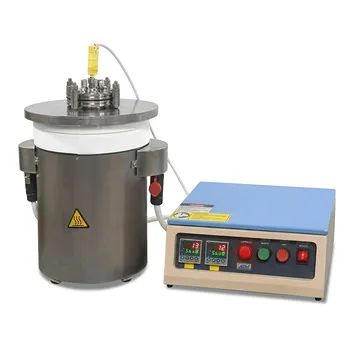
600°C Vertical Crucible Furnace with SS316 Alloy Reactor and 6 Port Vacuum Flange
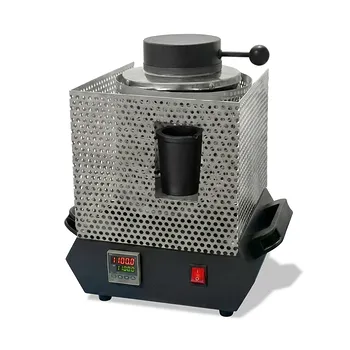
Compact Crucible Melting Furnace 1100C Programmable Temperature Controller Metal Sintering Equipment
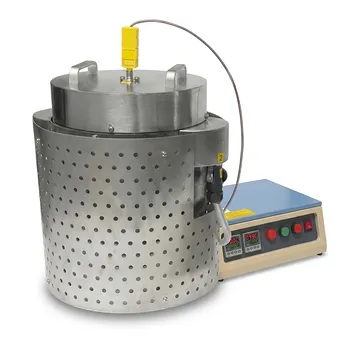
Vertical Crucible Furnace 1000C High Temperature Laboratory Equipment 4.7 Inch Diameter Chamber SS316 Anti Corrosive Enclosure
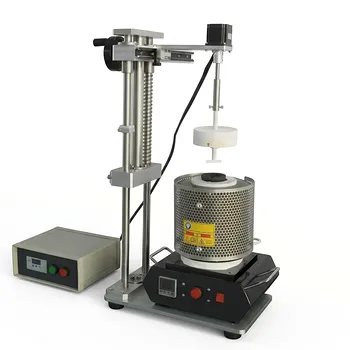
1100C Crucible Melting Furnace with Stirring Function for Glovebox and Air Sensitive Alloy Research
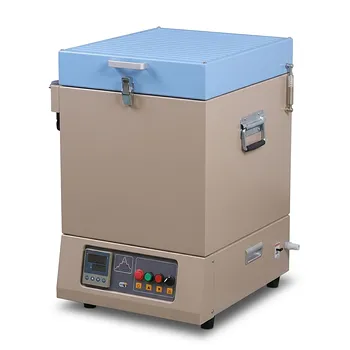
High Temperature Vertical Crucible Furnace with 22L Heating Chamber and 1200C Maximum Temperature
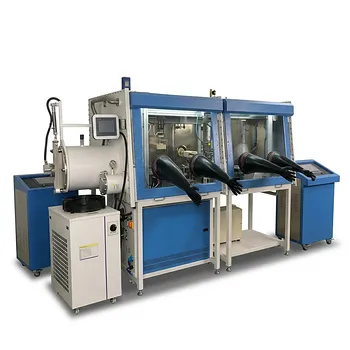
Automatic 10 Crucible Induction Melting and Casting System with Stirring Function and Glovebox Integration 2000C
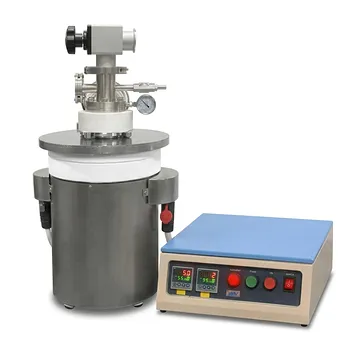
1100C High Temperature Vacuum Crucible Furnace with Quartz Chamber for Thermal Processing and Sintering
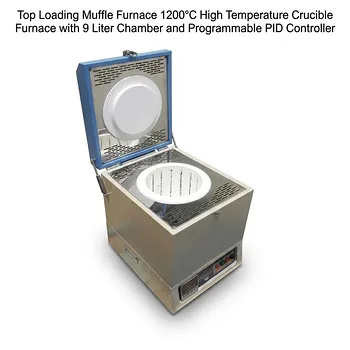
Top Loading Muffle Furnace 1200°C High Temperature Crucible Furnace with 9 Liter Chamber and Programmable PID Controller
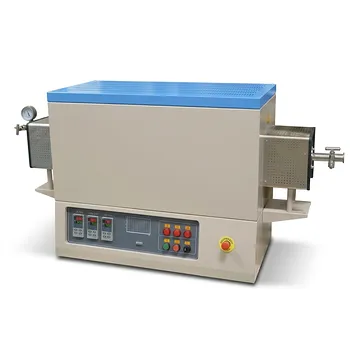
Three Zone Alumina Tube Furnace with Vacuum Flanges High Temperature 1700C Thermal Gradient CVD System
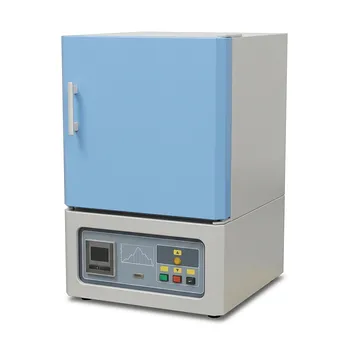
1800C Bench Top Muffle Furnace with Kanthal Super 1900 Heating Elements and 3.6L Alumina Fiber Chamber
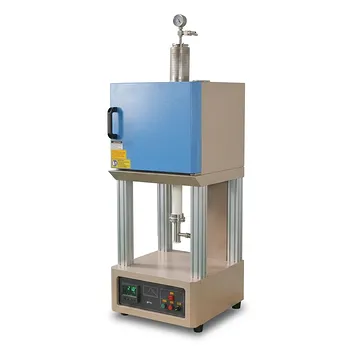
Hybrid High Temperature Tube and Box Furnace 1700C with 2 Inch Alumina Tube for Material Research
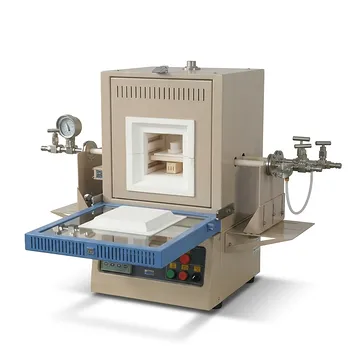
1700C Compact Hybrid Furnace with Dual Layer Box Sintering and Controlled Atmosphere Alumina Tubes
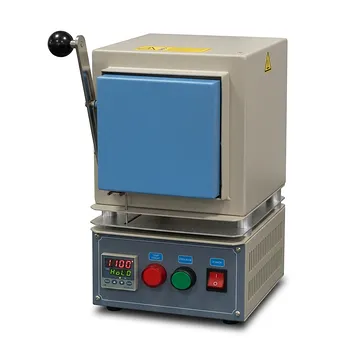
Compact 1100C Muffle Furnace with Programmable Temperature Control and High Purity Alumina Insulation for Material Research

1800C High Temperature Compact Vacuum Tube Furnace with 60mm OD Alumina Tube and Kanthal MoSi2 Heating Elements
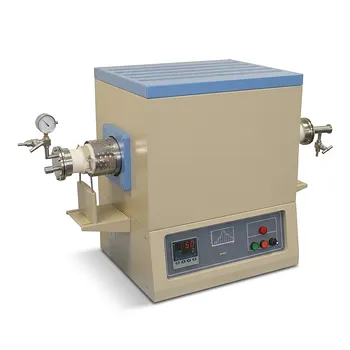
1700C High Temperature Alumina Tube Furnace with 18 Inch Heated Zone and Vacuum Sealing Flanges
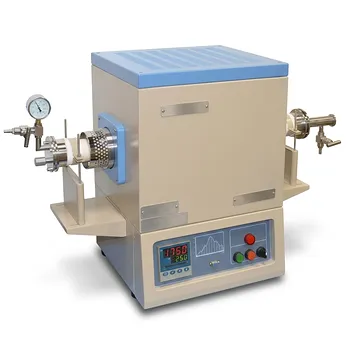
High Temperature Compact Vacuum Tube Furnace 1750C Max 60mm OD Alumina Tube

Compact High Temperature 1600C Tube Furnace with 50mm Alumina Tube and Vacuum Flanges for Material Sintering
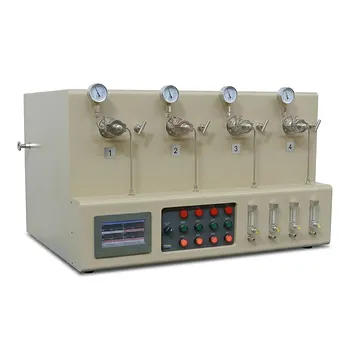
High Temperature 1700C 4 Channel Tube Furnace 1 Inch Alumina Tube for Hi-Throughput Annealing