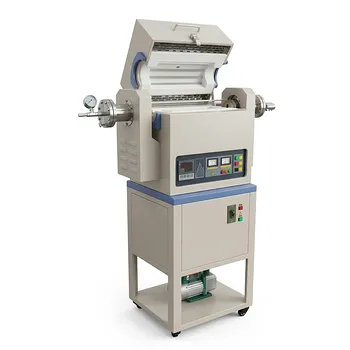
Why are high-purity alumina (Al2O3) reaction tubes preferred for roasting cobalt-bearing pyrite? Ensure Pure Results.
Updated 3 months ago
High-purity alumina (Al2O3) is the standard for roasting cobalt-bearing pyrite because of its exceptional chemical inertness and thermal stability in oxidative atmospheres. At temperatures reaching 1100°C, alumina does not react with cobalt-bearing sulfides or the corrosive sulfur dioxide (SO2) gas generated during the process. This lack of reactivity prevents secondary contamination, ensuring that the resulting sample remains pure and the experimental data is accurate.
High-purity alumina acts as a chemically neutral vessel that resists erosion from sulfides and molten oxides at extreme temperatures. By maintaining structural integrity and preventing ion leaching, it ensures that the chemical analysis of the roasted pyrite reflects the true reaction kinetics rather than container interference.
The Necessity of Chemical Inertness in Roasting
Resistance to Sulfide and Oxide Reactions
During the roasting of cobalt-bearing pyrite, the material undergoes intense oxidation that can be highly corrosive to many laboratory containers. High-purity alumina is preferred because it does not undergo solid-phase reactions with metal oxides or sulfides. This ensures that the cobalt species remain isolated from the container material, preserving the integrity of the diffusion interface.
Preventing Gaseous and Secondary Contamination
The roasting process releases sulfur dioxide (SO2), a gas that can react with lower-quality refractories to create impurities. Alumina's surface is resistant to this gas, preventing the leaching of impurity ions into the sample. This is critical for researchers who require precise measurements of the roasted product's final composition.
Facilitating Reaction Equilibrium
The physical design of alumina sample boats often features an open structure that allows for efficient gas exchange. This allows small gas molecules generated during roasting to be swept away by a carrier gas. By preventing the accumulation of byproduct gases, the alumina boat helps maintain the reaction equilibrium necessary for complete roasting.
Thermal and Structural Advantages
Integrity at Extreme Temperatures
Roasting processes often exceed 1000°C, a range where many materials begin to soften or lose structural strength. Alumina exhibits high refractoriness, maintaining its physical shape and structural safety even during long-term operation. This stability prevents the "sagging" or deformation that can occur with lesser materials under high-temperature loads.
Thermal Shock and Corrosion Resistance
High-purity alumina components are engineered for thermal shock stability, allowing them to withstand the temperature fluctuations common in laboratory furnaces. Furthermore, they are resistant to chemical erosion from various activators and molten phases. This makes them more durable than alternative materials when dealing with the complex mineral phases found in cobalt-bearing pyrite.
Understanding the Trade-offs
Fragility and Mechanical Handling
Despite its high thermal resistance, alumina is a brittle ceramic that is susceptible to cracking if dropped or handled roughly. Rapid heating or cooling cycles that exceed the material's specific thermal shock limits can cause catastrophic failure. Users must implement controlled ramp rates to ensure the longevity of the tubes and boats.
Cost and Material Selection
High-purity alumina (typically 99.7% or higher) is significantly more expensive than quartz or lower-grade ceramic alternatives. While quartz offers excellent thermal shock resistance, it has a lower maximum service temperature and can devitrify over time when exposed to certain metal ions. Choosing alumina represents a trade-off where higher upfront cost is accepted in exchange for superior chemical resistance and temperature range.
How to Apply This to Your Project
Making the Right Choice for Your Goal
To ensure the best results when roasting cobalt-bearing pyrite or similar minerals, consider your primary experimental objectives:
- If your primary focus is analytical purity: Use the highest grade (99.7%+) alumina to eliminate any risk of ion leaching or secondary solid-state reactions.
- If your primary focus is high-throughput roasting at temperatures above 1100°C: Prioritize alumina over quartz to ensure the vessel does not soften or react with the sulfurous off-gases.
- If your primary focus is cost-efficiency for low-temperature biomass tests: You may consider quartz, but only if the temperature remains below 1000°C and no aggressive alkali metals are present.
The selection of high-purity alumina is a strategic investment in the reliability and repeatability of high-temperature mineral processing data.
Summary Table:
| Key Feature | Alumina (Al2O3) Advantage | Benefit for Pyrite Roasting |
|---|---|---|
| Chemical Inertness | Resists SO2 and molten metal oxides | Prevents secondary sample contamination |
| Thermal Stability | Maintains integrity at 1100°C+ | Prevents tube sagging or deformation |
| Purity Grade | 99.7%+ Alumina content | Ensures accurate analytical data and kinetics |
| Erosion Resistance | High resistance to sulfide corrosion | Extends lifespan of reaction vessels |
Optimize Your Thermal Processing with THERMUNITS
Achieve uncompromising precision in your mineral roasting and material science research. As a premier manufacturer of high-temperature laboratory equipment, THERMUNITS provides the advanced technology needed for rigorous industrial R&D and academic study.
Whether you are roasting cobalt-bearing minerals or developing new alloys, our comprehensive range of equipment—including Tube Furnaces, Muffle Furnaces, Vacuum and Atmosphere Furnaces, and Rotary Kilns—is engineered for reliability and high-purity results. We also specialize in CVD/PECVD systems, Hot Press furnaces, and Vacuum Induction Melting (VIM) solutions to support your most complex heat treatment workflows.
Why partner with THERMUNITS?
- Expertise: Specialized solutions for corrosive and high-temperature environments.
- Versatility: A full catalog from Dental Furnaces to industrial-scale thermal elements.
- Quality: High-purity components designed to eliminate ion leaching and contamination.
Ready to enhance your lab’s efficiency and data accuracy? Contact our expert team today to find the perfect thermal solution for your application!
References
- Erdenebold Urtnasan, Jei‐Pil Wang. Correlation between Thermodynamic Studies and Experimental Process for Roasting Cobalt-Bearing Pyrite. DOI: 10.3390/met14070777
Mentioned Products
- High Temperature 1700C Benchtop Tube Furnace with 5 Inch Heating Zone High Purity Alumina Tube and Vacuum Sealing Flanges
- High Temperature Vertical Atmosphere Controlled Furnace with Automatic Bottom Loading and 1700°C Capacity for Advanced Material Research
- High Temperature Vertical Hybrid Furnace with Alumina Tube and SiC Heating for SOFC Coin Cell Testing and Atmosphere Processing
- Vertical Hybrid High Temperature Furnace 1500C Alumina Tube SOFC Fuel Cell Testing Laboratory Heat Treatment Research Equipment
- Hybrid High Temperature Tube and Box Furnace 1700C with 2 Inch Alumina Tube for Material Research
People Also Ask
- How are high-temperature tube furnaces utilized to repair etching damage? Precision Lattice Restoration Solutions
- What is the function of a high-temperature tube furnace in the synthesis of g-C3N4? Optimize Thermal Polycondensation
- What is the role of a high-temperature tube furnace in the calcination process of ZnO/In2O3 nanocomposites?
- What impact does the heating rate of a tube furnace have on biochar microstructure? Optimize Your Material R&D.
- Conditions for nZVI Synthesis in Tube Furnaces? Learn to Optimize Thermal and Atmospheric Control for High Purity.

Tech Team · ThermUnits
Last updated on Jun 02, 2026
Related Products

High Temperature 1700C Benchtop Tube Furnace with 5 Inch Heating Zone High Purity Alumina Tube and Vacuum Sealing Flanges
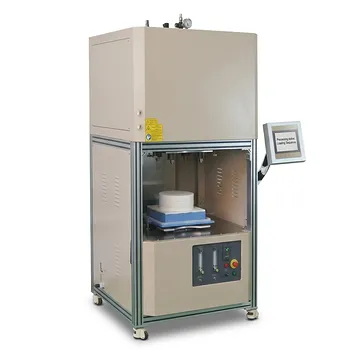
High Temperature Vertical Atmosphere Controlled Furnace with Automatic Bottom Loading and 1700°C Capacity for Advanced Material Research
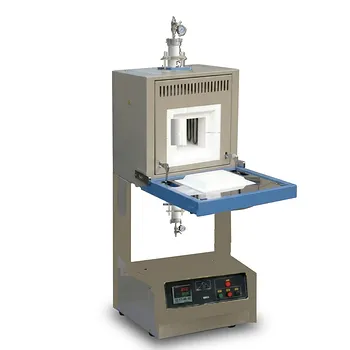
High Temperature Vertical Hybrid Furnace with Alumina Tube and SiC Heating for SOFC Coin Cell Testing and Atmosphere Processing
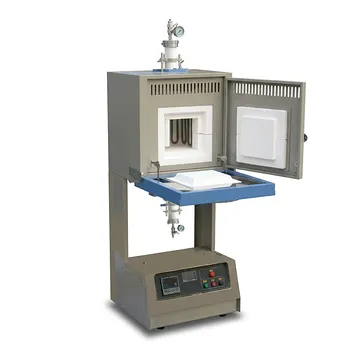
Vertical Hybrid High Temperature Furnace 1500C Alumina Tube SOFC Fuel Cell Testing Laboratory Heat Treatment Research Equipment
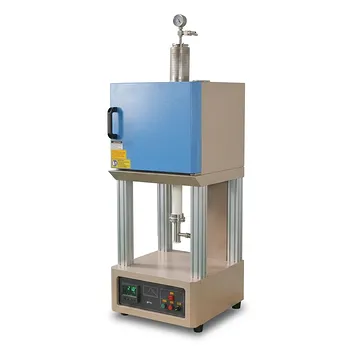
Hybrid High Temperature Tube and Box Furnace 1700C with 2 Inch Alumina Tube for Material Research
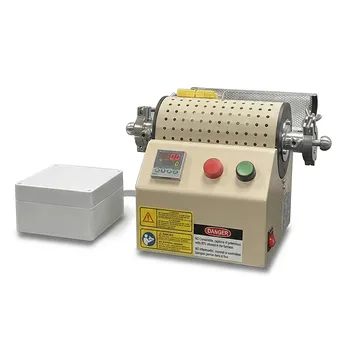
1000C Mini Tube Furnace with 20mm Quartz Tube and Vacuum Flanges for Material Science Research and Controlled Atmosphere Small Sample Processing
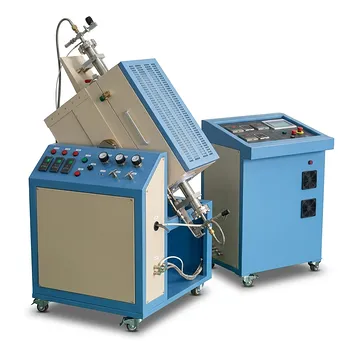
1100C High Pressure Rocking Tube Furnace with 2 Inch Super Alloy Processing Tube for Material Synthesis

High Temperature 1700C Vertical Tube Furnace for Powder Spherification and Material Sintering

1800C High Temperature Compact Vacuum Tube Furnace with 60mm OD Alumina Tube and Kanthal MoSi2 Heating Elements

Compact High Temperature 1600C Tube Furnace with 50mm Alumina Tube and Vacuum Flanges for Material Sintering