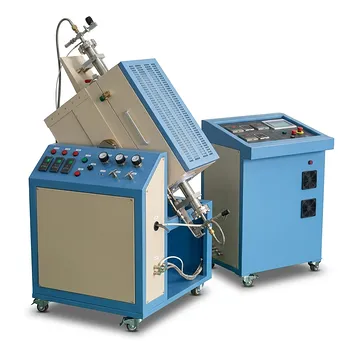
How does a high-temperature tube furnace contribute to MoS2/CNT photocathode formation? Optimizing Phase & Interface
Updated 3 months ago
The high-temperature tube furnace is the critical catalyst for transforming raw hydrothermal products into a functional MoS2/CNT photocathode. It achieves this by perfecting the crystalline structure of the Molybdenum Disulfide (MoS2) and "welding" it to the Carbon Nanotube (CNT) substrate. This process ensures the material moves from a disordered state to a stable, highly conductive, and photo-chemically active 2H phase.
Core Takeaway: A high-temperature tube furnace provides the precise thermal and atmospheric control required to convert MoS2 into its stable 2H phase and optimize the electrical interface with CNTs. Without this stage, the photocathode would suffer from high resistance, poor carrier separation, and structural instability.
Structural Transformation and Phase Stability
Achieving the Stable 2H Crystalline Phase
The primary role of the furnace is the thermal treatment of products following their initial hydrothermal synthesis. This high-heat environment facilitates the transition of MoS2 into the stable 2H phase structure, which is essential for consistent electronic performance.
Repairing Lattice Defects through Recrystallization
Beyond phase conversion, the furnace enables post-recrystallization, which significantly improves the crystalline quality of the MoS2. By operating at temperatures between 600°C and 800°C, the furnace provides the activation energy necessary to repair structural defects and enhance lattice integrity.
Strengthening Chemical Bonds
In advanced applications, temperatures reaching 1000 °C under a controlled hydrogen sulfide (H2S) atmosphere are used to strengthen Mo-S chemical bonds. This robust bonding is what allows the photocathode to survive hundreds of voltage scanning cycles without degrading.
Interface Engineering and Charge Dynamics
Strengthening the MoS2/CNT Bond
The furnace performs a "molecular welding" function by strengthening the interfacial bonding between the MoS2 nanosheets and the conductive CNT substrate. This physical and chemical connection is vital for the structural durability of the composite material.
Reducing Interfacial Resistance
A high-quality interface directly correlates to a significant reduction in interfacial resistance. By optimizing the contact between the semiconductor (MoS2) and the conductor (CNT), the furnace ensures that electrons can move freely across the boundary.
Enhancing Carrier Separation Efficiency
By minimizing resistance, the furnace treatment enhances the separation and transfer efficiency of photo-generated carriers. This means that when light hits the photocathode, the resulting energy is captured and moved more effectively, directly increasing the device's efficiency.
Precise Environmental Control for Uniformity
Atmosphere and Pressure Management
The tube furnace allows for a strictly controlled protective atmosphere, typically using Nitrogen (N2) or Argon (Ar). This prevents unwanted oxidation and facilitates the vapor-phase reaction or sulfidation required to reach the correct stoichiometric balance.
Thermal Field Uniformity
High-precision furnaces ensure thermal field uniformity across the entire length of the tube. This uniformity is critical for ensuring that the MoS2 growth is consistent across the entire CNT substrate, preventing "hot spots" or areas of poor crystallinity.
Controlling Vapor Transport
In Chemical Vapor Deposition (CVD) workflows, the furnace manages the fluid dynamic conditions to deliver reactants like sulfur powder to the substrate. This precision is what enables the formation of atomic-thin or single-layer crystals over large surface areas.
Understanding the Trade-offs
The Risk of Over-Annealing
While high temperatures improve crystallinity, excessive heat can lead to grain growth, which reduces the active surface area of the MoS2. A reduction in surface area can diminish the number of active sites available for electrochemical reactions.
Atmosphere Sensitivity
The choice of gas is a delicate balance; for instance, while Hydrogen (H2) can help reduce precursors, an incorrect concentration can lead to the over-reduction of MoS2 into metallic molybdenum. Precisely managing the gas flow rates is as important as managing the temperature itself.
Substrate Integrity
Carbon Nanotubes are resilient but can begin to oxidize or undergo structural changes if exposed to trace oxygen at high temperatures. Maintaining a vacuum level or a pure inert flow is non-negotiable to prevent the degradation of the CNT scaffold.
How to Optimize Your Furnace Process
The success of your MoS2/CNT photocathode depends on aligning your furnace parameters with your specific performance goals.
- If your primary focus is Maximum Conductivity: Prioritize higher temperatures (750°C-900°C) to maximize the 2H phase purity and minimize interfacial resistance between the MoS2 and CNTs.
- If your primary focus is High Catalytic Surface Area: Opt for lower-end temperatures (600°C-700°C) and shorter annealing times to prevent excessive crystal grain growth and preserve nanosheet morphology.
- If your primary focus is Long-Term Cycling Stability: Utilize a reactive atmosphere like H2S/Ar during a high-temperature soak (up to 1000°C) to ensure the strongest possible Mo-S chemical bonding and lattice repair.
Mastering the thermal profile within the tube furnace is the definitive step in moving from a raw chemical mixture to a high-performance electronic component.
Summary Table:
| Process Step | Core Function | Material Impact |
|---|---|---|
| Thermal Annealing | Facilitates phase transition to stable 2H structure | Ensures consistent electronic performance |
| Recrystallization | Repairs lattice defects at 600°C - 800°C | Enhances structural integrity and conductivity |
| Interfacial Engineering | Strengthens MoS2/CNT chemical bonding | Reduces resistance and improves carrier separation |
| Atmospheric Control | Manages N2/Ar/H2S gas flow and pressure | Prevents oxidation and ensures stoichiometric balance |
Elevate Your Material Research with THERMUNITS Precision
Achieving the perfect 2H phase and interfacial bonding in MoS2/CNT composites requires uncompromising thermal control. THERMUNITS is a leading manufacturer of high-temperature laboratory equipment, providing the advanced thermal processing solutions essential for material science and industrial R&D.
Our comprehensive range includes:
- Tube Furnaces & Rotary Kilns for precise vapor transport and uniform synthesis.
- CVD/PECVD Systems for atomic-thin crystal growth.
- Vacuum, Atmosphere, and Muffle Furnaces for diverse heat treatment needs.
- Specialized Solutions: Hot Press, Dental, and Vacuum Induction Melting (VIM) furnaces.
Ready to optimize your photocathode performance? Contact us today to discuss how our high-precision equipment can empower your next breakthrough.
References
- Tingsong Hu, Laifa Shen. Photo-Energized MoS2/CNT Cathode for High-Performance Li–CO2 Batteries in a Wide-Temperature Range. DOI: 10.1007/s40820-024-01506-1
Mentioned Products
- High Temperature Tube Furnace 1500C with Sliding Flanges and 50mm OD for Rapid Thermal Processing Fast Heating and Cooling
- High Temperature 1700C Tube Furnace with High Vacuum Turbomolecular Pump System and Multi Channel Mass Flow Controller Gas Mixer
- 1750°C High Temperature Benchtop Vacuum Atmosphere Tube Furnace with Kanthal Super 1800 Heating Elements and 60mm Alumina Processing Tube
- High Temperature 1700C Benchtop Tube Furnace with 5 Inch Heating Zone High Purity Alumina Tube and Vacuum Sealing Flanges
- 1700C High Temperature Alumina Tube Furnace with 18 Inch Heated Zone and Vacuum Sealing Flanges
People Also Ask
- How are high-temperature tube furnaces utilized to repair etching damage? Precision Lattice Restoration Solutions
- What core conditions does a high-temperature tube furnace provide for rGO aerogels? Mastering Precision Synthesis.
- What role does a high-temperature tube furnace play in CVD synthesis of silicon nanowires? Master VLS Growth Precision.
- How does precision tube furnace control influence CoFe nanoparticle formation? Master Your Bimetallic Synthesis.
- What role does a high-temperature tube furnace play in the sulfidation heat treatment of CoS@C/MXene nanocomposites? Guide

Tech Team · ThermUnits
Last updated on Jun 02, 2026
Related Products

High Temperature Tube Furnace 1500C with Sliding Flanges and 50mm OD for Rapid Thermal Processing Fast Heating and Cooling

High Temperature 1700C Tube Furnace with High Vacuum Turbomolecular Pump System and Multi Channel Mass Flow Controller Gas Mixer
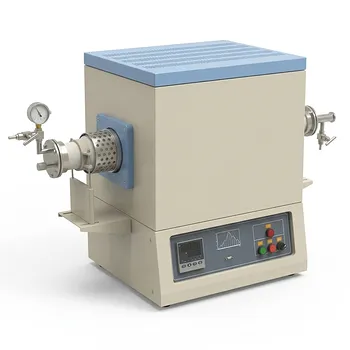
1750°C High Temperature Benchtop Vacuum Atmosphere Tube Furnace with Kanthal Super 1800 Heating Elements and 60mm Alumina Processing Tube

High Temperature 1700C Benchtop Tube Furnace with 5 Inch Heating Zone High Purity Alumina Tube and Vacuum Sealing Flanges
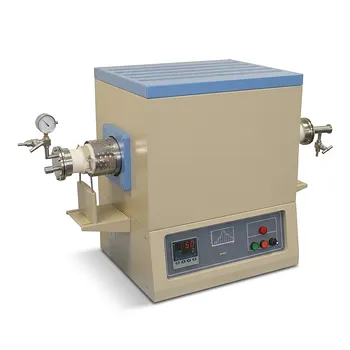
1700C High Temperature Alumina Tube Furnace with 18 Inch Heated Zone and Vacuum Sealing Flanges
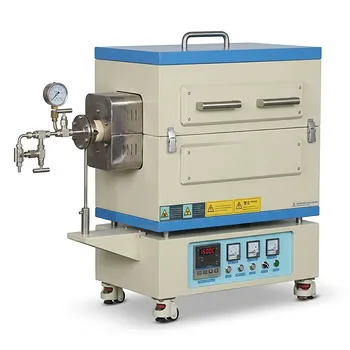
High Temperature Split Tube Furnace 1500C for Material Research Vacuum and Atmosphere Thermal Processing

Compact High Temperature 1600C Tube Furnace with 50mm Alumina Tube and Vacuum Flanges for Material Sintering

1800C High Temperature Compact Vacuum Tube Furnace with 60mm OD Alumina Tube and Kanthal MoSi2 Heating Elements
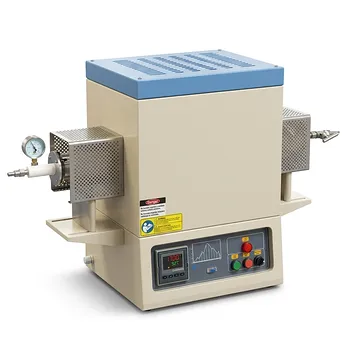
High Temperature Three Zone Tube Furnace 1700C with Alumina Tube and Water Cooled Flanges
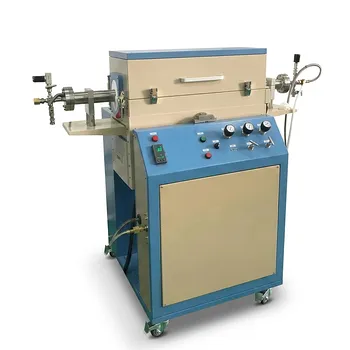
High Temperature Rocking Tube Furnace 1700°C Alumina Processing Tube with Precision Oscillation for Material Synthesis
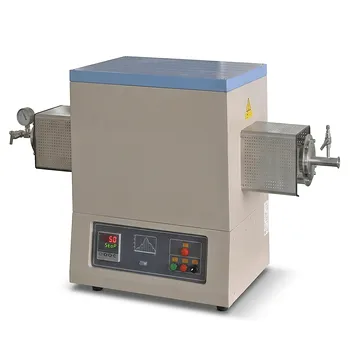
High Temperature 1700C Tube Furnace with 4 Inch OD Alumina Tube and Vacuum Sealing Flanges

High Temperature 1700C Vertical Tube Furnace for Powder Spherification and Material Sintering
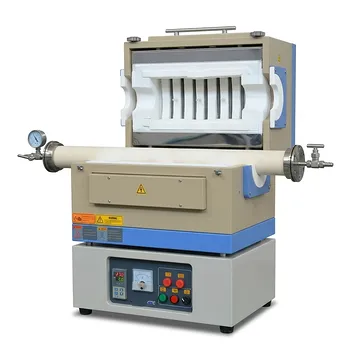
High Temperature 1600C Split Tube Furnace Vacuum Flanges Valves Optional 60mm 80mm Alumina Tube

High Temperature Automated 5 Inch Tube Furnace for Autonomous Material Research and Advanced Laboratory R&D

High Temperature 1700C Six Zone Split Tube Furnace with Alumina Tube and Water Cooled Flanges
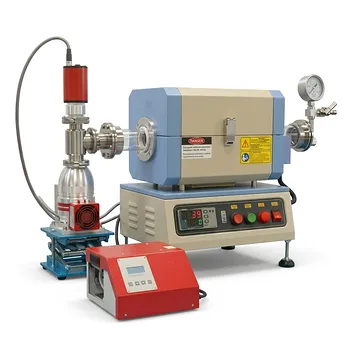
High Vacuum Compact Tube Furnace 1200C with Integrated Turbo Pump System and 8 Inch Heating Zone
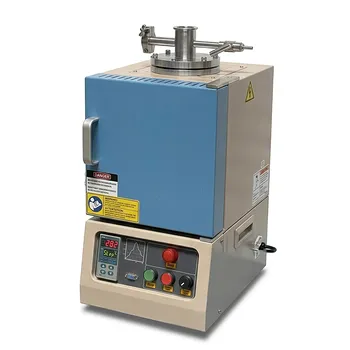
High Temperature Hybrid Muffle and Tube Furnace with Vacuum Capability and PID Control
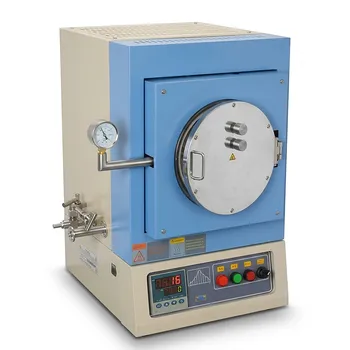
1100°C High Temperature Quartz Chamber Furnace 8 Inch OD with 7.6 Liter Capacity and Vacuum Atmosphere Capability

1100C Tube Furnace with Vacuum Flange and Programmable Temperature Controller for Material Science and Industrial Heat Treatment