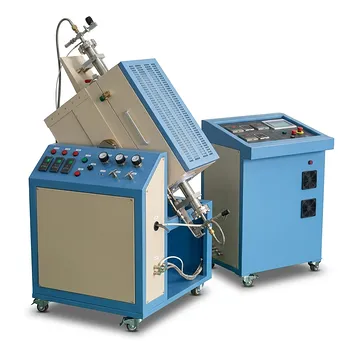
Why is a high-temperature tube furnace essential for Ba0.5Ca0.5La2(MoO4)4 phosphors? Enhance Luminous Performance
Updated 3 months ago
A high-temperature tube furnace is the fundamental tool for the synthesis of $Ba_{0.5}Ca_{0.5}La_2(MoO_4)_4$ phosphors because it provides the precise thermal energy required for solid-state diffusion. This equipment enables chemical precursors to react and reorganize into a stable, specific scheelite crystal structure at temperatures typically around 850°C. Without the furnace's ability to maintain these temperatures for extended durations, the material would fail to achieve the crystallinity and defect-free structure necessary for high-efficiency luminescence.
High-temperature tube furnaces drive the solid-state reactions and phase transformations required to form the specific lattice structure of $Ba_{0.5}Ca_{0.5}La_2(MoO_4)_4$. By facilitating atomic diffusion and eliminating structural defects through controlled heating, they directly dictate the phosphor's final luminous performance.
Facilitating Solid-State Diffusion and Phase Formation
Overcoming Kinetic Barriers
Solid-state synthesis requires significant energy to break existing chemical bonds in precursors and allow atoms to migrate. The furnace provides a stable high-temperature environment (often 850°C or higher) that acts as the catalyst for these diffusion reactions.
Establishing the Scheelite Structure
$Ba_{0.5}Ca_{0.5}La_2(MoO_4)_4$ requires a specific scheelite-type tetragonal crystal structure to function as an effective phosphor. The precisely controlled thermal field within the furnace ensures that the reactants undergo the necessary phase transformation to achieve this specific geometry.
Complete Conversion of Precursors
High-temperature calcination is essential to ensure that the initial hydrothermal products or raw powders are completely converted into the target crystal phase. This process removes residual organic components and crystal water that would otherwise interfere with the material's purity and performance.
Optimizing Luminous Performance through Crystal Integrity
Minimizing Structural Defects
The furnace allows for a 10-hour holding period (or similar long-term treatment), which is critical for "healing" the crystal lattice. This extended heat treatment facilitates the elimination of structural defects, which often act as non-radiative recombination centers that quench luminescence.
Promoting Homogeneous Crystal Growth
Steady, high-heat environments ensure that crystals grow uniformly throughout the sample. This lattice refinement results in higher crystallinity, which directly correlates to the luminous efficiency and chemical stability of the final phosphor.
Activation of Dopant Ions
For phosphors to emit light, dopant ions such as $Dy^{3+}$ or $Eu^{3+}$ must be successfully integrated into the host lattice. The furnace provides the thermal energy required for these ions to migrate into the correct atomic sites, such as the $Ca^{2+}$ or $La^{3+}$ positions, through thermal diffusion.
The Role of Atmosphere and Precision Control
Protecting Chemical Valence States
Many phosphors require a specific protective or reducing atmosphere (such as $N_2$ or $Ar$) to prevent the oxidation of dopant ions. Tube furnaces are designed with sealed tubes that allow researchers to introduce specific gases, ensuring that ions maintain the correct valence state for light emission.
Precision Temperature Gradients
Unlike standard ovens, tube furnaces offer accurate adjustment of temperature gradients. This level of control is vital for transitioning from small laboratory-scale research to industrial-scale production without losing material quality.
Understanding Technical Trade-offs
Energy Consumption and Processing Time
The requirement for long-term heat treatment (e.g., 10 hours at 850°C) results in high energy consumption and slow production cycles. While necessary for quality, these factors increase the overall cost of material synthesis.
Potential for Particle Agglomeration
High temperatures promote diffusion, but they can also cause individual nanoparticles to fuse together, a process known as agglomeration. This can be a disadvantage if the application requires a very specific, small particle size or high surface area.
Refractory Limitations
Operating at the extreme temperatures required for certain phosphors (up to 1500°C) can stress the furnace's heating elements and the ceramic work tube. Regular maintenance and calibration are essential to prevent structural failure of the equipment and ensure batch-to-batch consistency.
How to Apply This to Your Project
When selecting or operating a furnace for $Ba_{0.5}Ca_{0.5}La_2(MoO_4)_4$ synthesis, your technical choices should align with your specific research or production goals.
- If your primary focus is maximum luminous efficiency: Prioritize a furnace that can maintain a stable temperature for at least 10 hours to ensure the complete elimination of lattice defects.
- If your primary focus is phase purity: Use a furnace with a sealed tube design to strictly control the atmosphere, preventing the oxidation of dopants or the formation of secondary phases.
- If your primary focus is particle size control: Experiment with shorter "soaking" times or slightly lower temperatures (e.g., 800°C) to find the balance between crystallinity and unwanted agglomeration.
Mastering the thermal environment of the tube furnace is the single most important factor in transforming raw chemical precursors into high-performance luminescent materials.
Summary Table:
| Key Process Factor | Role of Tube Furnace | Impact on Phosphor Quality |
|---|---|---|
| Solid-State Diffusion | Provides stable energy at 850°C+ | Facilitates phase transformation to scheelite structure |
| Crystal Integrity | Sustained heating (e.g., 10 hours) | Eliminates structural defects and lattice quenching |
| Dopant Activation | High-temp thermal migration | Successfully integrates Dy³⁺/Eu³⁺ ions into the lattice |
| Atmosphere Control | Sealed tube for Ar/N₂ gas flow | Protects chemical valence states for light emission |
| Precision Control | Accurate temperature gradients | Ensures batch consistency and high luminous efficiency |
Master Your Phosphor Synthesis with THERMUNITS
Precise thermal control is the difference between a failed batch and a high-performance luminescent material. THERMUNITS is a leading manufacturer of high-temperature laboratory equipment specifically designed for material science and industrial R&D.
Whether you need advanced Tube Furnaces for atmosphere-controlled calcination, Muffle or Vacuum Furnaces for purity, or specialized CVD/PECVD and Hot Press systems, we provide the thermal processing solutions required to achieve perfect crystallinity and dopant activation.
Ready to optimize your heat treatment workflow? Contact our experts today to find the perfect furnace for your research!
References
- Esra Öztürk, Murat Ebic. Synthesisandphotoluminescent properties of Eu3+, Dy3+doped molybdate based novel Ba0.5Ca0.5La2(MoO4)4 phosphors. DOI: 10.56042/ijc.v63i8.8262
Mentioned Products
- High Temperature Tube Furnace 1500C with Sliding Flanges and 50mm OD for Rapid Thermal Processing Fast Heating and Cooling
- High Temperature 1700C Tube Furnace with High Vacuum Turbomolecular Pump System and Multi Channel Mass Flow Controller Gas Mixer
- 1750°C High Temperature Benchtop Vacuum Atmosphere Tube Furnace with Kanthal Super 1800 Heating Elements and 60mm Alumina Processing Tube
- High Temperature 1700C Benchtop Tube Furnace with 5 Inch Heating Zone High Purity Alumina Tube and Vacuum Sealing Flanges
- 1700C High Temperature Alumina Tube Furnace with 18 Inch Heated Zone and Vacuum Sealing Flanges
People Also Ask
- How are high-temperature tube furnaces utilized to repair etching damage? Precision Lattice Restoration Solutions
- What core conditions does a high-temperature tube furnace provide for rGO aerogels? Mastering Precision Synthesis.
- What role does a high-temperature tube furnace play in CVD synthesis of silicon nanowires? Master VLS Growth Precision.
- How does precision tube furnace control influence CoFe nanoparticle formation? Master Your Bimetallic Synthesis.
- What role does a high-temperature tube furnace play in the sulfidation heat treatment of CoS@C/MXene nanocomposites? Guide

Tech Team · ThermUnits
Last updated on Jun 02, 2026
Related Products

High Temperature Tube Furnace 1500C with Sliding Flanges and 50mm OD for Rapid Thermal Processing Fast Heating and Cooling

High Temperature 1700C Tube Furnace with High Vacuum Turbomolecular Pump System and Multi Channel Mass Flow Controller Gas Mixer

1750°C High Temperature Benchtop Vacuum Atmosphere Tube Furnace with Kanthal Super 1800 Heating Elements and 60mm Alumina Processing Tube

High Temperature 1700C Benchtop Tube Furnace with 5 Inch Heating Zone High Purity Alumina Tube and Vacuum Sealing Flanges
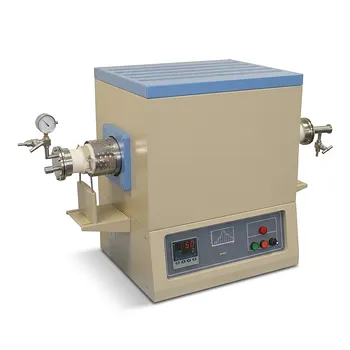
1700C High Temperature Alumina Tube Furnace with 18 Inch Heated Zone and Vacuum Sealing Flanges
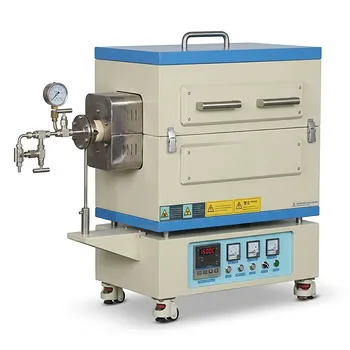
High Temperature Split Tube Furnace 1500C for Material Research Vacuum and Atmosphere Thermal Processing

1800C High Temperature Compact Vacuum Tube Furnace with 60mm OD Alumina Tube and Kanthal MoSi2 Heating Elements

Compact High Temperature 1600C Tube Furnace with 50mm Alumina Tube and Vacuum Flanges for Material Sintering
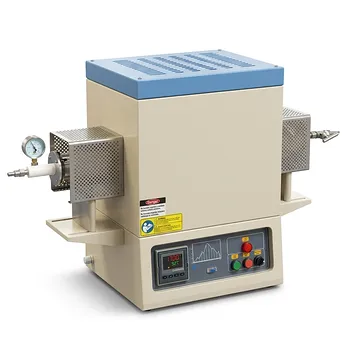
High Temperature Three Zone Tube Furnace 1700C with Alumina Tube and Water Cooled Flanges
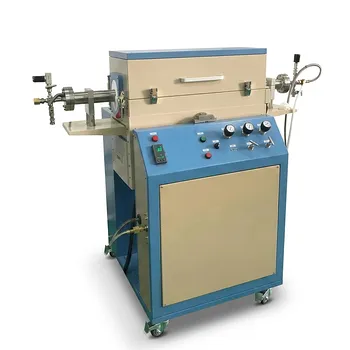
High Temperature Rocking Tube Furnace 1700°C Alumina Processing Tube with Precision Oscillation for Material Synthesis
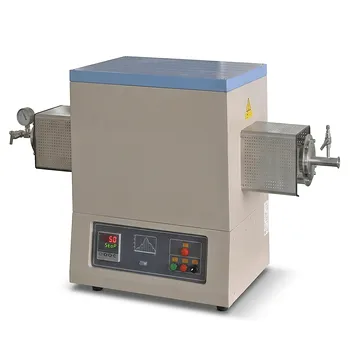
High Temperature 1700C Tube Furnace with 4 Inch OD Alumina Tube and Vacuum Sealing Flanges

High Temperature 1700C Vertical Tube Furnace for Powder Spherification and Material Sintering
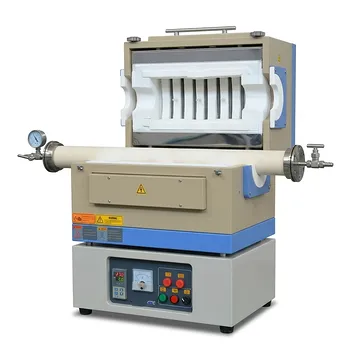
High Temperature 1600C Split Tube Furnace Vacuum Flanges Valves Optional 60mm 80mm Alumina Tube

High Temperature Automated 5 Inch Tube Furnace for Autonomous Material Research and Advanced Laboratory R&D

High Temperature 1700C Six Zone Split Tube Furnace with Alumina Tube and Water Cooled Flanges
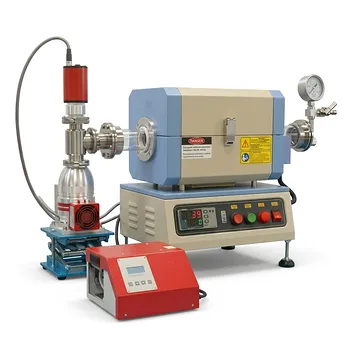
High Vacuum Compact Tube Furnace 1200C with Integrated Turbo Pump System and 8 Inch Heating Zone
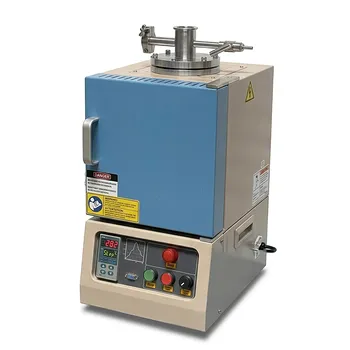
High Temperature Hybrid Muffle and Tube Furnace with Vacuum Capability and PID Control
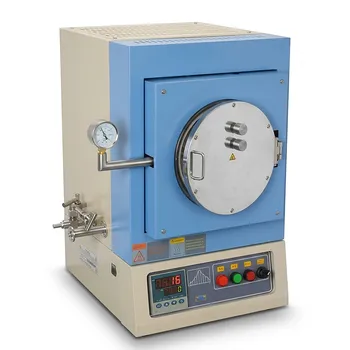
1100°C High Temperature Quartz Chamber Furnace 8 Inch OD with 7.6 Liter Capacity and Vacuum Atmosphere Capability

1100C Tube Furnace with Vacuum Flange and Programmable Temperature Controller for Material Science and Industrial Heat Treatment