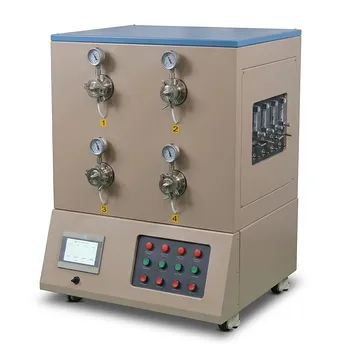
Why are high-purity quartz boats preferred for carbonization of carbon spheres? Ensure Purity and Thermal Stability.
Updated 3 months ago
High-purity quartz boats are the preferred choice for carbonization because they provide a chemically inert and thermally stable environment that prevents sample contamination. These vessels withstand temperatures exceeding 1000°C and resist rapid thermal cycling without cracking, ensuring that the physical and chemical properties of the carbon spheres remain uniform and untainted by the container material.
The selection of high-purity quartz is driven by the need to eliminate chemical interference and impurity migration during high-heat processes. By acting as a non-reactive platform, these boats ensure that the final carbon product maintains its intended surface properties and structural integrity.
Maintaining Chemical Purity and Sample Integrity
Elimination of Impurity Migration
High-purity quartz is specifically engineered to contain negligible trace elements. This ensures that during high-temperature treatments, no impurity elements migrate from the boat into the carbon spheres, which is critical for maintaining the uniformity of the carrier’s surface properties.
Exceptional Chemical Inertness
The material exhibits minimal chemical reactivity, meaning it does not react with carbon materials, catalyst powders, or process gases like acetylene. This chemical stability ensures that reactions occur only at intended sites, preventing secondary contamination even in corrosive atmospheres containing chloride vapors or alkaline activators.
Resilience Under Extreme Thermal Stress
Superior Thermal Shock Resistance
Carbonization often involves rapid temperature fluctuations that would cause lesser materials to fracture. Quartz boats possess high thermal stability, allowing them to move in and out of furnace chambers without rupturing or cracking due to sudden heating or cooling cycles.
Stability at High Temperature Ranges
While many materials degrade or soften, high-purity quartz remains structurally sound at temperatures ranging from 600°C to over 1000°C. This high-temperature resistance provides a clean and stable platform for biomass torrefaction, pyrolysis, and the synthesis of carbon nanotubes.
Precision and Uniformity in Results
Optimized Heating Profiles
The flat structural design of most quartz boats ensures that samples are spread evenly and heated uniformly within the furnace chamber. This consistency is vital for achieving a balanced carbonization reaction across the entire sample batch.
Accurate Kinetic Analysis
Because the quartz boat does not react with raw materials or generated chemical species, it protects the chemical purity of solid products like torrefied char. This lack of interference is essential for researchers performing accurate thermochemical kinetic analyses and performance evaluations of modified biochars.
Understanding the Trade-offs and Limitations
Sensitivity to Specific Reagents
While quartz is highly inert, it is not universally indestructible; for instance, strong alkaline activators like KOH can eventually etch or degrade quartz at extremely high temperatures. Users must monitor the boat's surface for devitrification or cloudiness over time, which can indicate the material is breaking down.
Fragility and Handling Requirements
Despite their thermal resilience, quartz boats are physically brittle and susceptible to mechanical impact. They require careful handling and storage to prevent chipping or breaking, and they are generally more expensive than ceramic or metal alternatives, making them a premium choice for high-precision work.
Applying This to Your Project
Recommendations Based on Your Objectives
- If your primary focus is analytical precision: Utilize high-purity quartz to ensure that your thermochemical kinetic data is not skewed by container-related impurities.
- If your primary focus is rapid thermal cycling: Lean on quartz’s superior thermal shock resistance to prevent vessel failure during experiments involving quick furnace insertions.
- If your primary focus is corrosive chemical reactions: Verify the compatibility of your specific activators with quartz, as extremely high concentrations of strong bases may necessitate more frequent boat replacement.
Choosing high-purity quartz boats ensures that your carbonization process remains a controlled, predictable, and pure chemical transformation.
Summary Table:
| Key Feature | Benefit for Carbonization | Typical Temperature Range |
|---|---|---|
| Chemical Inertness | Prevents impurity migration and secondary reactions | 600°C to 1000°C+ |
| Thermal Shock Resistance | Withstands rapid heating and cooling without cracking | High resistance |
| High Purity | Ensures sample integrity and accurate kinetic analysis | Negligible trace elements |
| Flat Structural Design | Promotes uniform heating across the entire sample batch | Stable platform |
Optimize Your Thermal Research with THERMUNITS
High-purity results begin with the right equipment. THERMUNITS is a leading manufacturer of high-temperature laboratory equipment dedicated to advancing material science and industrial R&D. We offer a comprehensive suite of thermal processing solutions designed to meet the rigorous demands of carbonization and synthesis.
Our product range includes:
- Muffle, Vacuum, and Atmosphere Furnaces
- Tube, Rotary, and Hot Press Furnaces
- CVD/PECVD Systems for advanced material synthesis
- Vacuum Induction Melting (VIM) Furnaces and Electric Rotary Kilns
- Dental Furnaces and high-quality Thermal Elements
Ensure your projects benefit from superior temperature control and structural integrity. Contact THERMUNITS today to find the ideal furnace for your laboratory needs.
References
- Lulu Zhang, Qingyi Wang. Influence of pH on the synthesis of carbon spheres and the application of carbon sphere-based solid catalysts in esterification. DOI: 10.1515/rams-2024-0060
Mentioned Products
- 1100°C High Temperature Quartz Chamber Furnace 8 Inch OD with 7.6 Liter Capacity and Vacuum Atmosphere Capability
- High Temperature Vertical Atmosphere Controlled Furnace with Automatic Bottom Loading and 1700°C Capacity for Advanced Material Research
- 1100C High Temperature Vacuum Crucible Furnace with Quartz Chamber for Thermal Processing and Sintering
- Vertical Vacuum Furnace 1100C High Temperature 8 Inch Quartz Chamber Water Cold Flange System
- 1200°C 5 Inch Vertical Quartz Tube Furnace with Stainless Steel Vacuum Flanges
People Also Ask
- Why is a quartz tube furnace necessary for phosphorus-doped MoS2/GO preparation? Ensure Purity & Precise Synthesis
- Benefits of high-vacuum quartz tube furnaces with N2 for Co3O4 nanosheets: Purity and Structural Integrity.
- What conditions does a quartz tube furnace provide for AlxCoCrFeNi steam corrosion tests? Achieve Precise R&D Control.
- Why is high-temperature annealing in a quartz tube furnace done after HfO2 deposition? Unlock peak film performance.
- Why is a high-purity quartz tube used for SP-Fe3O4-C? Ensure Chemical Purity & Catalytic Stability

Tech Team · ThermUnits
Last updated on Jun 02, 2026
Related Products
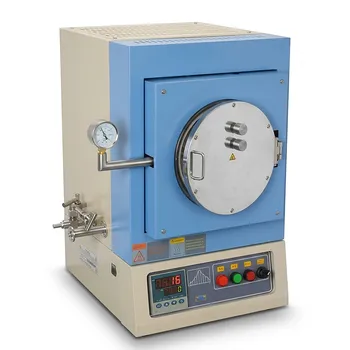
1100°C High Temperature Quartz Chamber Furnace 8 Inch OD with 7.6 Liter Capacity and Vacuum Atmosphere Capability
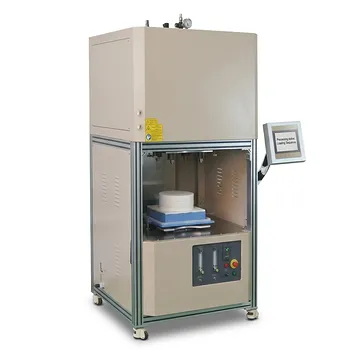
High Temperature Vertical Atmosphere Controlled Furnace with Automatic Bottom Loading and 1700°C Capacity for Advanced Material Research
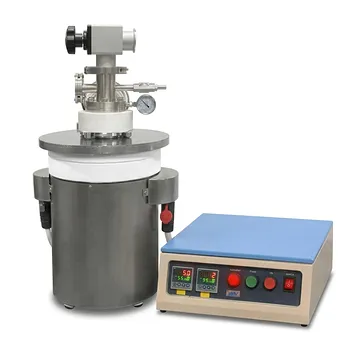
1100C High Temperature Vacuum Crucible Furnace with Quartz Chamber for Thermal Processing and Sintering
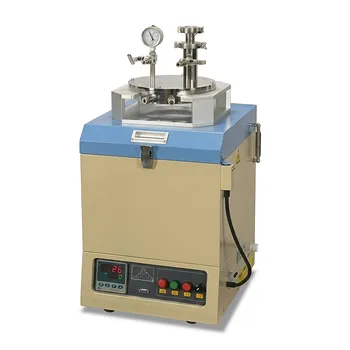
Vertical Vacuum Furnace 1100C High Temperature 8 Inch Quartz Chamber Water Cold Flange System

1200°C 5 Inch Vertical Quartz Tube Furnace with Stainless Steel Vacuum Flanges
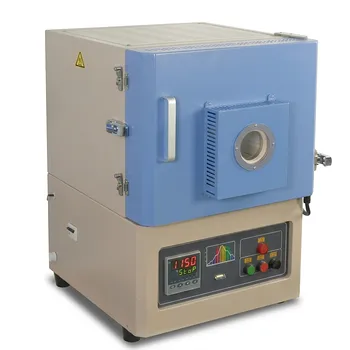
High Temperature Benchtop Muffle Furnace with Quartz Observation Window for Thermal Imaging and Material Analysis