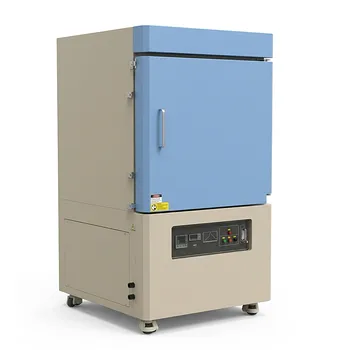
Why is a high-precision programmable furnace needed for metal oxide calcination? Achieve Superior Material Purity.
Updated 5 months ago
A high-precision programmable high-temperature furnace is required because it provides the exact control over heating rates and holding times necessary to transform precursor salts into stable, functional oxide phases. This precision ensures controlled thermal decomposition, prevents the sintering of active sites, and protects the structural integrity of the material carrier during the transition from a raw chemical to a crystalline catalyst or electronic component.
Core Takeaway: Beyond simple heating, a programmable furnace acts as a kinetic regulator that manages the delicate sequence of ligand removal, phase transition, and crystal growth required to achieve specific material properties.
Orchestrating Chemical and Phase Transformations
Controlled Thermal Decomposition
The calcination process must systematically remove crystalline water, eliminate ligands, and release gaseous molecules from the precursor salts. A programmable furnace allows for a slow, steady increase in temperature (e.g., 2 °C/min), ensuring these volatiles are released without causing internal pressure or structural fractures.
Stabilization of Specific Oxide Phases
Precise temperature control is the only way to dictate the final crystal structure, such as alpha-MoO3, NiO, or gamma-WO3. By maintaining specific isothermal holds, the furnace facilitates the transition from an amorphous state to a stable crystalline phase, which is critical for the material’s eventual performance.
Management of Oxidation States
For complex catalysts like vanadium-based systems, the thermal environment directly influences the V4+/V5+ balance. This balance is essential for achieving high sulfur resistance and efficient catalytic activity in industrial environments.
Preserving Microstructure and Surface Activity
Preventing Active Site Sintering
Rapid or uneven heating can lead to sintering, where active sites fuse together, drastically reducing the material's effectiveness. Programmable furnaces mitigate this risk by ensuring a stable thermal field that promotes uniform distribution of active components across high-surface-area carriers like activated carbon.
Preventing Grain Growth and Agglomeration
Slow heating rates and prolonged isothermal operation are vital to prevent rapid grain growth. This meticulous heat treatment preserves the high specific surface area of nanoparticle powders, which is a prerequisite for high electrocatalytic activity and CO2 adsorption.
Facilitating Multi-Stage Synthesis
Advanced materials like NASICON (NZSP) structures require complex, multi-step heating profiles (e.g., 800 °C for 4 hours followed by 1000 °C for 4 hours). High-precision programming allows for the thorough decomposition of precursors in stages, facilitating the steady transformation of intermediate phases into a high-purity target structure.
Understanding the Trade-offs
Precision vs. Throughput
While slow, programmed heating (low ramp rates) yields superior crystal structures and surface areas, it significantly increases the processing time per batch. This creates a bottleneck in high-volume production environments where speed is often prioritized over microstructural perfection.
Energy Consumption and Equipment Wear
Maintaining high temperatures for extended isothermal holds (e.g., 4–8 hours) results in higher energy costs. Furthermore, frequent cycling and prolonged high-temperature operation can accelerate the degradation of heating elements and refractory linings within the furnace.
Atmospheric Limitations
While most calcination occurs in an air atmosphere, some metal oxides are sensitive to oxygen levels during decomposition. A standard muffle furnace might not be sufficient if a specific partial pressure of oxygen or an inert environment is required to prevent unwanted oxidation states.
How to Apply This to Your Project
Making the Right Choice for Your Goal
To achieve the best results with your metal oxide precursors, align your furnace programming with your primary technical objective:
- If your primary focus is Maximum Catalytic Activity: Prioritize slow ramp rates (1–2 °C/min) and lower calcination temperatures to prevent sintering and preserve a high specific surface area.
- If your primary focus is Phase Purity and Crystallinity: Use multi-stage programming with long isothermal holds at higher temperatures to ensure complete conversion into the target crystal structure, such as the NASICON phase.
- If your primary focus is Nanoparticle Synthesis: Focus on the controlled decomposition of organic templates at moderate temperatures (400–500 °C) to prevent grain agglomeration and maintain an amorphous or microcrystalline structure.
Precise thermal management is the fundamental bridge between raw precursor chemistry and the realization of advanced material functionality.
Summary Table:
| Process Step | Benefit of Precision | Outcome |
|---|---|---|
| Thermal Decomposition | Controlled volatile release | Prevents structural fractures |
| Phase Stabilization | Isothermal hold management | High-purity crystal phases |
| Microstructure Control | Prevents active site sintering | Maintains high surface area |
| Multi-Stage Synthesis | Sequential heating profiles | High-purity complex structures |
Elevate Your Material Research with THERMUNITS
To achieve precise control over your calcination processes, partner with THERMUNITS, a leading manufacturer of high-temperature laboratory equipment for material science and industrial R&D. We provide the high-precision thermal solutions necessary to prevent sintering and ensure phase purity in advanced materials.
Our comprehensive range includes:
- Muffle, Vacuum, and Atmosphere Furnaces
- Tube and Rotary Furnaces
- CVD/PECVD Systems and Hot Press Furnaces
- Dental Furnaces, Electric Rotary Kilns, and VIM Systems
Ensure your metal oxide precursors transform into high-performance catalysts and electronic components. Contact us today to discuss your heat treatment requirements!
References
- Zinnabu Tassew Redda, Asnakech Laß‐Seyoum. Synthesis and Characterization of AlPO4-18 Supported Mesoporous and Crystalline β-Mo2C, Ni3C, and WC Nanoparticles. DOI: 10.1007/s10562-024-04791-y
Mentioned Products
- High Temperature Compact Muffle Furnace 1700 C with 30 Segment Programmable Controller and 1.7L Cubic Chamber
- High Temperature 1500C Benchtop Muffle Furnace 3.6L Alumina Fiber Chamber Programmable Controller Sintering Annealing Carbonization Thermal Processing System
- High Temperature 1200C Muffle Furnace 27L Volume 12x12x12 Chamber with Programmable PID Controller for Laboratory Material Science
- 1200°C High Temperature Muffle Furnace 19L Chamber with 50 Segment Programmable Controller
- Top Loading Muffle Furnace 1200°C High Temperature Crucible Furnace with 9 Liter Chamber and Programmable PID Controller
People Also Ask
- What role does a high-temperature muffle furnace play in the synthesis of Melem precursors? Precision Polymerization.
- Why is annealing in a high-temperature muffle furnace necessary for SiO2/Si substrate pretreatment before monolayer WS2 synthesis?
- What is the function of a high-temperature muffle furnace in phosphorus-modified zeolite catalyst preparation?
- What is the function of a muffle furnace in aluminoborosilicate glass prep? Stabilize Raw Materials for Superior Purity
- What is the purpose of using muffle or tube furnaces in glass synthesis? Achieve Precise Melt-Quenching & Homogeneity

Tech Team · ThermUnits
Last updated on Apr 14, 2026
Related Products
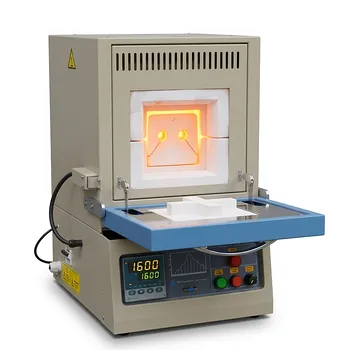
High Temperature Compact Muffle Furnace 1700 C with 30 Segment Programmable Controller and 1.7L Cubic Chamber
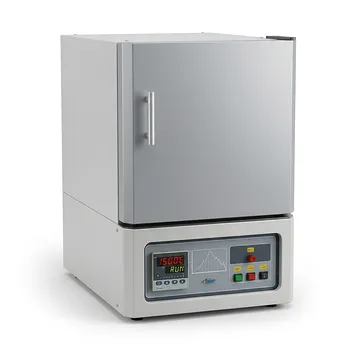
High Temperature 1500C Benchtop Muffle Furnace 3.6L Alumina Fiber Chamber Programmable Controller Sintering Annealing Carbonization Thermal Processing System
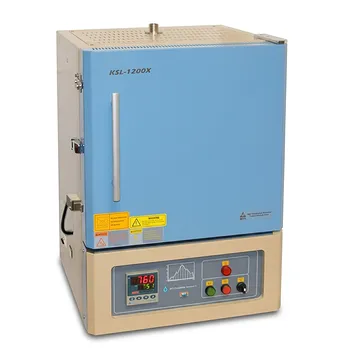
High Temperature 1200C Muffle Furnace 27L Volume 12x12x12 Chamber with Programmable PID Controller for Laboratory Material Science
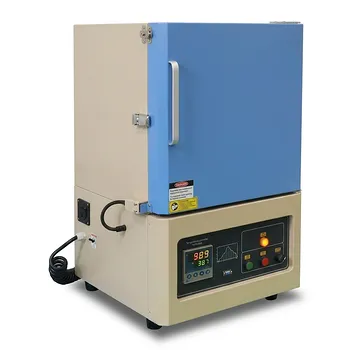
1200°C High Temperature Muffle Furnace 19L Chamber with 50 Segment Programmable Controller
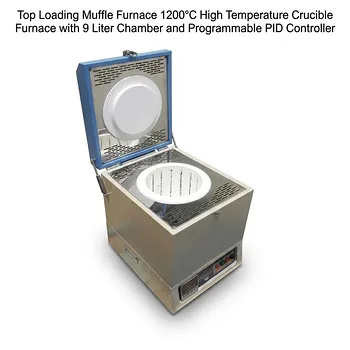
Top Loading Muffle Furnace 1200°C High Temperature Crucible Furnace with 9 Liter Chamber and Programmable PID Controller
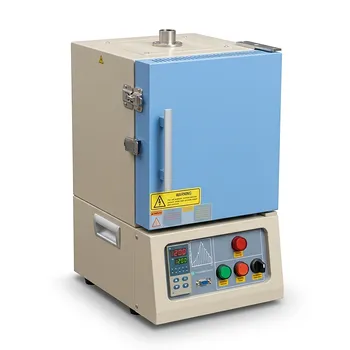
1200°C Small Box Furnace 4.2 Liter Programmable Muffle Furnace with High Purity Alumina Insulation and PID Control

1100C Tube Furnace with Vacuum Flange and Programmable Temperature Controller for Material Science and Industrial Heat Treatment
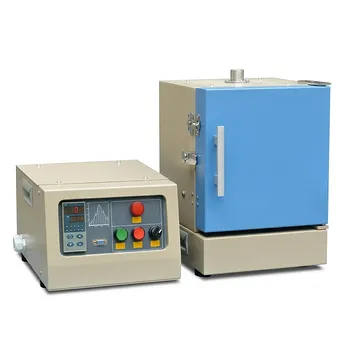
1200C Small Box Muffle Furnace with Separated Programmable Controller and 4.2L Alumina Fiber Chamber
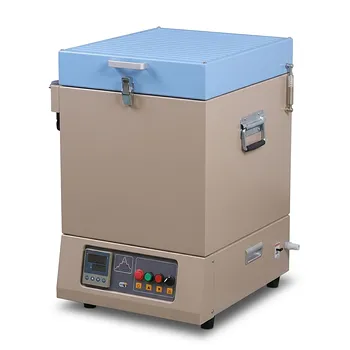
High Temperature Vertical Crucible Furnace with 22L Heating Chamber and 1200C Maximum Temperature

High Temperature Tube Furnace 1500C with Sliding Flanges and 50mm OD for Rapid Thermal Processing Fast Heating and Cooling
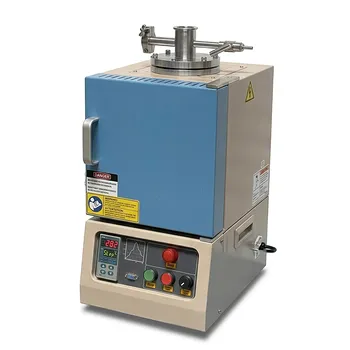
High Temperature Hybrid Muffle and Tube Furnace with Vacuum Capability and PID Control

High Temperature 1700C Vertical Tube Furnace for Powder Spherification and Material Sintering

High Temperature 1700C Tube Furnace with High Vacuum Turbomolecular Pump System and Multi Channel Mass Flow Controller Gas Mixer
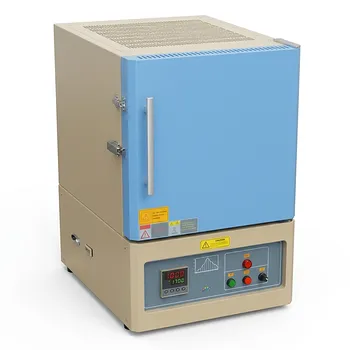
Large Bench Top 1700C High Temperature Muffle Furnace with 19L Chamber for Advanced Material Sintering and Annealing
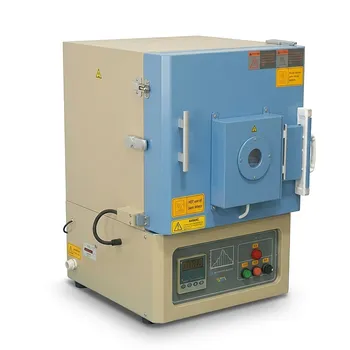
High Temperature Benchtop Muffle Furnace 1500C with 3.6L Chamber and Quartz Observation Window
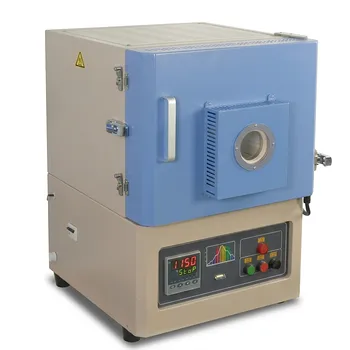
High Temperature Benchtop Muffle Furnace with Quartz Observation Window for Thermal Imaging and Material Analysis
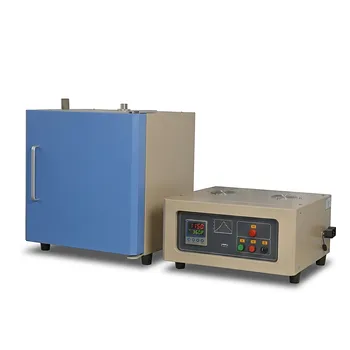
High Temperature Muffle Furnace with Alloy Chamber for Debinding and Sintering Applications

1750°C High Temperature Benchtop Vacuum Atmosphere Tube Furnace with Kanthal Super 1800 Heating Elements and 60mm Alumina Processing Tube
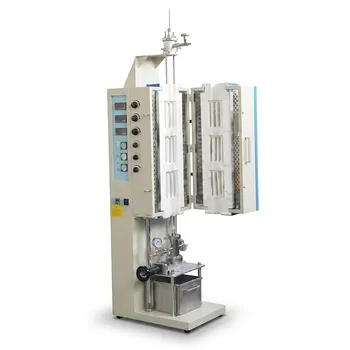
High Temperature Dual Zone Tube Furnace for Material Science Research and Professional Thermal Processing