Why is a high-precision tube furnace required for graphene-calcium single-atom synthesis? Master Atomic Precision.
Updated 5 months ago
Achieving atomic-scale precision in material synthesis requires a thermal environment where every degree of temperature fluctuation is strictly managed. For synthesizing graphene-supported calcium single-atom materials, a high-precision tube furnace is mandatory because the "window" for successful atomic anchoring is incredibly narrow. Precise control ensures that the precursor reacts at the exact activation energy required for dispersion without triggering the thermodynamic drive for metal atoms to clump into inactive clusters.
Core Takeaway: A high-precision tube furnace serves as the "thermodynamic gatekeeper," providing the exact thermal energy needed to anchor individual calcium atoms into the graphene lattice while simultaneously preventing the thermal degradation of the carbon support and the aggregation of metal particles.
Optimizing the Atomic Anchoring Environment
Precision in Elemental Reaction Activities
Different doping elements require specific, non-negotiable temperatures to bond correctly with a substrate. For instance, while some elements might require exactly 825 °C, any deviation can lead to incomplete reactions or secondary phases. High-precision furnaces ensure that calcium precursors reach their specific reaction threshold without overshooting into ranges that favor bulk metal formation.
Uniform Distribution of Doped Atoms
Single-atom catalysts (SACs) rely on the isolation of individual atoms across a surface area. A stable and uniform temperature field across the entire heating zone prevents "hot spots" that would otherwise cause atoms to migrate and aggregate. This stability is critical for ensuring that the calcium atoms are distributed evenly, maximizing the number of active catalytic sites.
Strict Adherence to Heating Rates
The transition from a precursor to a single-atom state often involves delicate intermediate phases. High-precision controllers allow for specific heating rates and holding times that manage the kinetics of the reaction. This prevents rapid off-gassing or thermal shocks that could disrupt the sensitive coordination chemistry between the calcium and the graphene.
Preserving the Integrity of the Graphene Support
Preventing Excessive Structural Damage
Graphene is sensitive to high-temperature oxidation and lattice defects. While some defects are necessary to act as "anchor points" for calcium atoms, uncontrolled high temperatures can cause excessive damage to the graphene sheets. A precision furnace maintains the structural continuity and electrical conductivity of the graphene by operating strictly within the safe thermal limits.
Facilitating Lattice Repair and Doping
At specific temperatures, usually around 800°C to 1000°C, the furnace provides the energy necessary to repair the graphene lattice while integrating dopants. This controlled environment allows for the formation of stable pyridinic or pyrrolic structures that effectively "trap" the calcium atoms. Without precision, the lattice might collapse or fail to incorporate the dopants required for stable anchoring.
Oxygen-Free Atmosphere Management
Synthesis of single-atom materials often requires an inert or reducing atmosphere, such as Argon or Hydrogen. High-precision tube furnaces are designed to maintain vacuum integrity and precise gas flow rates. This ensures an oxygen-free environment during high-temperature annealing, which is vital for preventing the calcium from forming unwanted oxides.
Understanding the Trade-offs and Pitfalls
The "Goldilocks Zone" Challenge
The primary challenge in single-atom synthesis is the "Goldilocks" nature of the temperature. If the furnace is too cool, the calcium precursor will not decompose or bond; if it is too hot, the atoms will gain enough kinetic energy to find each other and form nanoparticles. Precision equipment is the only way to stay within this narrow functional range.
Equipment Calibration Risks
Even high-precision furnaces can suffer from "thermocouple lag" or zone drift. Relying on the furnace readout without periodic calibration against an independent probe can lead to results that are not reproducible. In single-atom synthesis, a 10-degree error can be the difference between a high-performance catalyst and a failed batch of bulk metal.
Strategic Implementation for Material Synthesis
Recommendations for Your Project
- If your primary focus is Maximum Catalytic Activity: Prioritize a furnace with multi-zone PID control to ensure absolute temperature uniformity across the entire length of the sample boat.
- If your primary focus is Structural Characterization: Focus on furnaces with rapid cooling capabilities (quenching) to "freeze" the atomic distribution immediately after the holding period ends.
- If your primary focus is Scalability and Uniformity: Use integrated mass flow controllers (MFCs) alongside the furnace to ensure the chemical vapor environment remains consistent as the temperature ramps.
By mastering the thermal precision of your synthesis environment, you transform a chaotic chemical reaction into a controlled architectural process at the atomic level.
Summary Table:
| Key Requirement | Function in Single-Atom Synthesis | Risk of Thermal Deviation |
|---|---|---|
| Atomic Anchoring | Provides exact activation energy for bonding | Precursor clumping or incomplete reaction |
| Temperature Uniformity | Ensures even distribution of active catalytic sites | Hot spots leading to nanoparticle formation |
| Atmosphere Integrity | Maintains oxygen-free Ar/H2 environment | Oxidation of calcium and graphene support |
| Heating Rate Control | Manages reaction kinetics and coordination | Lattice collapse or thermal shock damage |
| Quenching Capability | "Freezes" the atomic distribution post-reaction | Kinetic migration and loss of active sites |
Elevate Your Material Research with THERMUNITS
Achieving the "Goldilocks Zone" in single-atom synthesis requires more than just heat—it requires absolute thermal mastery. THERMUNITS is a leading manufacturer of high-temperature laboratory equipment, providing the precision necessary for advanced material science and industrial R&D.
Our comprehensive range of thermal solutions is engineered to protect your delicate samples and ensure reproducible results:
- High-Precision Furnaces: Tube, Vacuum, Atmosphere, and Muffle furnaces with advanced PID control.
- Advanced Systems: CVD/PECVD systems, Rotary kilns, and Vacuum Induction Melting (VIM) furnaces.
- Specialized Equipment: Hot Press furnaces, Dental furnaces, and high-quality Thermal Elements.
Whether you are anchoring single atoms or developing next-generation composites, THERMUNITS delivers the uniformity and atmosphere control your project demands.
Ready to optimize your synthesis environment? Contact our technical team today to discuss your specific heat treatment requirements!
References
- Yong Gao, Hongge Pan. Experimentally validated design principles of heteroatom-doped-graphene-supported calcium single-atom materials for non-dissociative chemisorption solid-state hydrogen storage. DOI: 10.1038/s41467-024-45082-9
Mentioned Products
- Dual Tube 100mm 80mm CVD Sliding Furnace with 4 Channel Gas Mixing and Vacuum System
- 5 Inch Two Zone Rotary Tube Furnace 1100C for Powder CVD and Material Synthesis
- 1500C 3-Zone Rotary Tube Furnace 60mm with Automatic Powder Feeding and Receiving System for Continuous Material Synthesis
- Three Zone Quartz Tube Furnace with 3 Channel Gas Mixer Vacuum Pump and Anti Corrosive Vacuum Gauge
- 1100C High Pressure Rocking Tube Furnace with 2 Inch Super Alloy Processing Tube for Material Synthesis
People Also Ask
- How does the Sweet Spot region within a chemical vapor deposition reactor influence the morphology control of VOx particles?
- What is the purpose of placing quartz crystals at the inlet and outlet of a CVD reaction tube? Optimize MoS2 Synthesis
- Why is a double-zone tube furnace required for CVD of WS2? Master Thermal Precision for High-Quality 2D Materials
- What are the temperature control requirements for a tube furnace used in pyrolysis and CVD? Master Thermal Precision
- What is the primary function of a dual-zone tube furnace in CVD MoS2 synthesis? Achieve Precise Thermal Control

Tech Team · ThermUnits
Last updated on Apr 14, 2026
Related Products
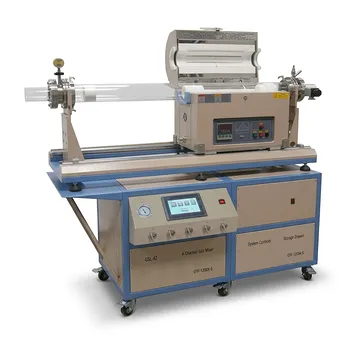
Dual Tube 100mm 80mm CVD Sliding Furnace with 4 Channel Gas Mixing and Vacuum System
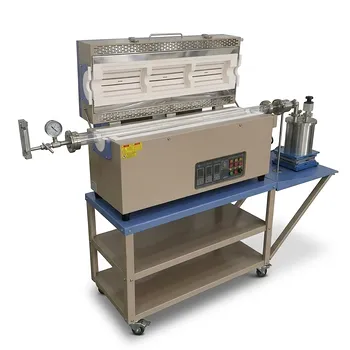
5 Inch Two Zone Rotary Tube Furnace 1100C for Powder CVD and Material Synthesis
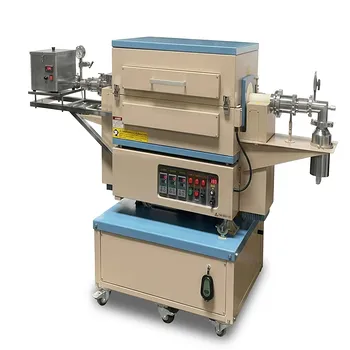
1500C 3-Zone Rotary Tube Furnace 60mm with Automatic Powder Feeding and Receiving System for Continuous Material Synthesis
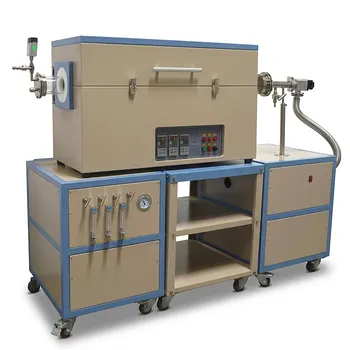
Three Zone Quartz Tube Furnace with 3 Channel Gas Mixer Vacuum Pump and Anti Corrosive Vacuum Gauge
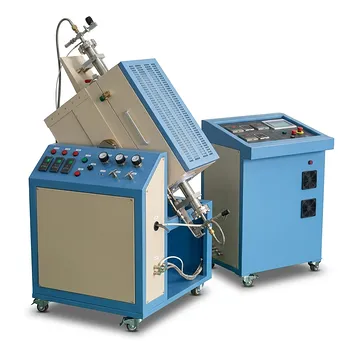
1100C High Pressure Rocking Tube Furnace with 2 Inch Super Alloy Processing Tube for Material Synthesis
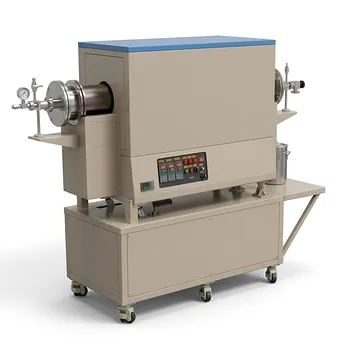
900°C Max Rotary Tube Furnace with 8 Inch 310S Alloy Tube and Optional Multi Zone Heating for Industrial Material Calcination
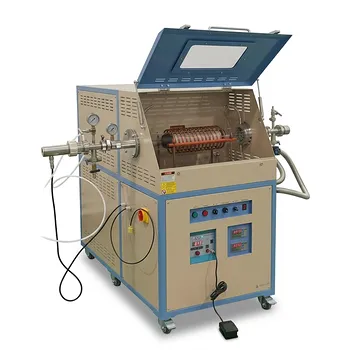
Ultra High Temperature 2300C Induction Heated Graphite Tube Furnace with Infrared Control
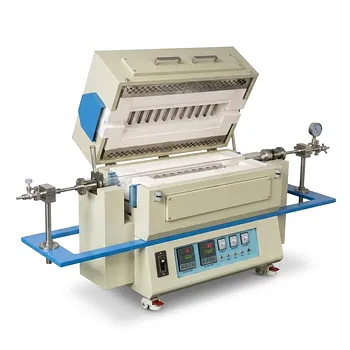
High Temperature Dual Zone Rotating Tube Furnace 1500C Silicon Carbide Heating for Advanced Material Synthesis
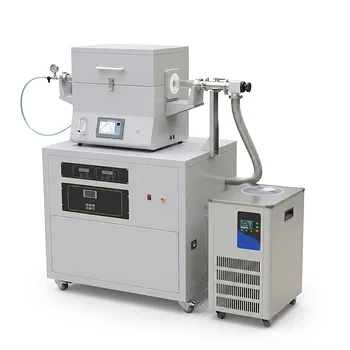
Split Chamber CVD Tube Furnace with Vacuum Station Chemical Vapor Deposition System Machine
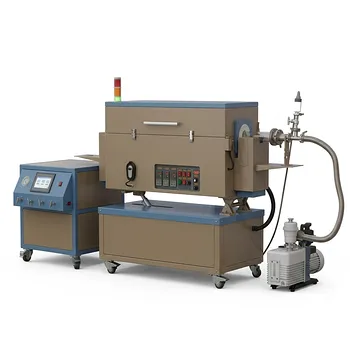
5 Inch Three Zone Rotary Tube Furnace with Integrated Gas Delivery System and 1200C Capability for Advanced Material CVD Processing
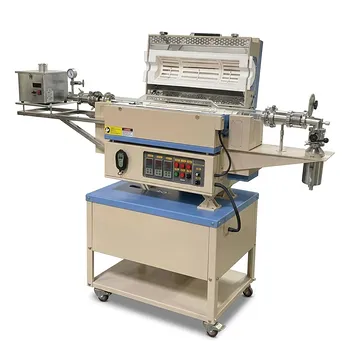
5 Inch Rotary Tube Furnace with Automatic Feeding and Receiving System 1200C Three Zone CVD Powder Processing
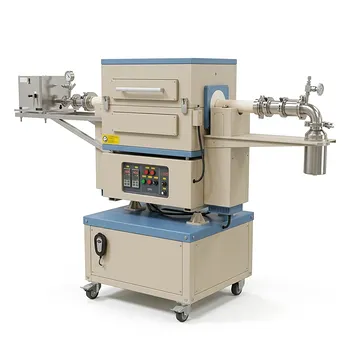
1500C Max Dual Zone Rotary Tube Furnace with 60 mm OD Alumina Tube for High Temperature Material Synthesis

High Temperature 1700C Vertical Tube Furnace for Powder Spherification and Material Sintering

Compact High Temperature 1600C Tube Furnace with 50mm Alumina Tube and Vacuum Flanges for Material Sintering
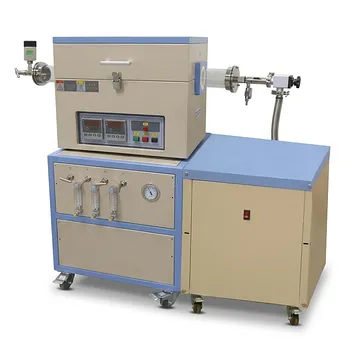
Dual Zone Quartz Tube Furnace with 80mm Diameter 1200C Max Temperature 3 Channel Gas Mixer and Vacuum Pump System
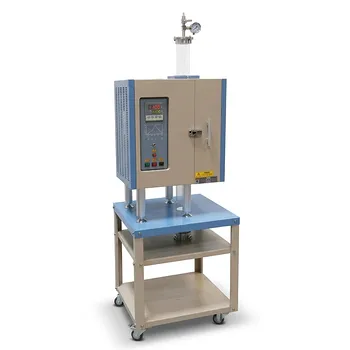
1100°C Split Vertical Tube Furnace with 80mm Quartz Tube and Stainless Steel Vacuum Flanges
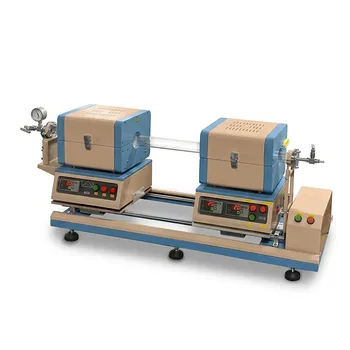
High Temperature 1200C Automatic Sliding Dual Zone Tube Furnace for 2D Transition Metal Dichalcogenides Growth and Material Sublimation Research

High Temperature Automated 5 Inch Tube Furnace for Autonomous Material Research and Advanced Laboratory R&D
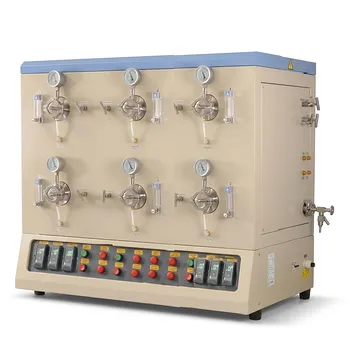
1200C High Throughput Multi Channel Tube Furnace with 50mm Quartz Tubes for Annealing and Material Phase Diagram Research
