How does the Sweet Spot region within a chemical vapor deposition reactor influence the morphology control of VOx particles?
Updated 3 months ago
Morphology control in vanadium oxide ($VO_x$) synthesis is achieved through precise spatial positioning within the "Sweet Spot" of a CVD reactor. By manipulating where the substrate sits within this specific zone, researchers can dictate the transition from spherical to needle-like structures. This phenomenon relies on the local equilibrium of precursor concentration and thermal energy, allowing for high-fidelity tuning of particle shapes for advanced nanocomposites.
The "Sweet Spot" provides a spatial gradient where the interaction between temperature and precursor density dictates the final shape of $VO_x$ particles, transitioning from spheres at the front to needles at the rear.
The Mechanics of the Sweet Spot Region
Defining the Optimal Balance
The "Sweet Spot" is not a random location but a calculated spatial region where gas-phase precursor concentration and temperature distribution achieve a perfect equilibrium. This balance is critical because it determines the energy available for particle nucleation and the rate at which material is deposited.
Spatial Dependency of Crystal Growth
Within this region, the physical properties of the environment change slightly along the axis of the reactor. This spatial dependency means that the same chemical input will yield different physical outputs depending on the geometric placement of the substrate.
Spatial Mapping of $VO_x$ Morphologies
The Formation of Spherical Particles
Substrates positioned at the front of the Sweet Spot region are exposed to conditions that favor the formation of uniform spherical particles. At this stage, the balance of concentration and temperature likely promotes isotropic growth, where the particle expands equally in all directions.
The Development of Needle-like Structures
As the substrate is moved toward the end of the region, the morphology shifts significantly toward needle-like structures. This suggests that the environment at the rear of the Sweet Spot favors anisotropic growth, where crystal development is accelerated along a specific axis.
Understanding the Trade-offs and Limitations
Precision vs. Reproducibility
While the Sweet Spot allows for refined tuning, it requires high-precision placement of the substrate. Small deviations in positioning can lead to "hybrid" morphologies that may not meet the specific requirements of a high-performance nanocomposite.
Sensitivity to Fluctuations
The stability of this region is highly dependent on constant flow rates and steady thermal gradients. Any fluctuation in reactor pressure or external temperature can shift the boundaries of the Sweet Spot, potentially moving the substrate out of the desired growth zone.
Optimizing Your $VO_x$ Synthesis Strategy
Achieving the desired material characteristics requires a strategic approach to substrate positioning within the reactor's internal environment.
- If your primary focus is uniform surface area and isotropic properties: Position your substrate at the front of the Sweet Spot to produce consistent spherical particles.
- If your primary focus is high aspect ratio or directional conductivity: Move the substrate toward the end of the Sweet Spot to favor the growth of needle-like morphologies.
Mastering the spatial dynamics of the CVD reactor transforms the Sweet Spot from a mere observation into a powerful tool for precision material engineering.
Summary Table:
| Location in Sweet Spot | Resulting Morphology | Growth Type | Primary Benefit |
|---|---|---|---|
| Front Zone | Spherical Particles | Isotropic | Uniform surface area & properties |
| Rear Zone | Needle-like Structures | Anisotropic | High aspect ratio & directional conductivity |
| Transitions | Hybrid Morphologies | Mixed | Intermediate material characteristics |
Master Precision Heat Treatment with THERMUNITS
Achieving the perfect 'Sweet Spot' in your synthesis requires equipment that offers uncompromising thermal stability. THERMUNITS is a leading manufacturer of high-temperature laboratory equipment for material science and industrial R&D. We provide the precision tools necessary for morphology control, including advanced CVD/PECVD systems, Tube furnaces, and Vacuum furnaces.
From high-performance nanocomposites to specialized industrial heat treatments, our comprehensive range of solutions—including Muffle, Atmosphere, and Rotary furnaces—ensures your research meets the highest standards of reproducibility.
Ready to elevate your material synthesis? Contact us today to find the ideal thermal solution for your laboratory!
References
- Inga Dönges, Jörg J. Schneider. Selective Synthesis of 3D Aligned VO<sub>2</sub> and V<sub>2</sub>O<sub>5</sub> Carbon Nanotube Hybrid Materials by Chemical Vapor Deposition. DOI: 10.1002/chem.202402024
Mentioned Products
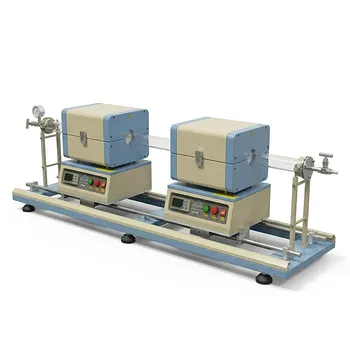
- Versatile Chemical Vapor Deposition Tube Furnace System for Advanced Material Research and Industrial Coating Processes
- Dual Tube 100mm 80mm CVD Sliding Furnace with 4 Channel Gas Mixing and Vacuum System
- Multi Heating Zones CVD Tube Furnace System for Precision Chemical Vapor Deposition and Advanced Material Synthesis
- Cylindrical Resonator MPCVD Machine System for Microwave Plasma Chemical Vapor Deposition and Lab Diamond Growth
- 4 Inch Two Zone Rotary CVD Tube Furnace for High Temperature Battery Material Synthesis and Advanced Material Calcination
People Also Ask
- How does a sliding rail design benefit the CVD process within a furnace ventilation hood? Enhance Control & Quenching
- What role do by-product desorption and evacuation play in CVD film quality? Key Factors for High-Purity Films
- How does the deposition process occur within a Chemical Vapor Deposition (CVD) reactor? Explore the 5-Stage Growth Cycle
- Why is CVD preferred over PVD for high-aspect-ratio features? Superior Conformality for Semiconductor Fabrication
- How do temperature regimes influence the growth rate of films in a CVD system? Master CVD Kinetics for Superior Thin Films

Tech Team · ThermUnits
Last updated on Jun 03, 2026
Related Products
Versatile Chemical Vapor Deposition Tube Furnace System for Advanced Material Research and Industrial Coating Processes
Dual Tube 100mm 80mm CVD Sliding Furnace with 4 Channel Gas Mixing and Vacuum System
Multi Heating Zones CVD Tube Furnace System for Precision Chemical Vapor Deposition and Advanced Material Synthesis
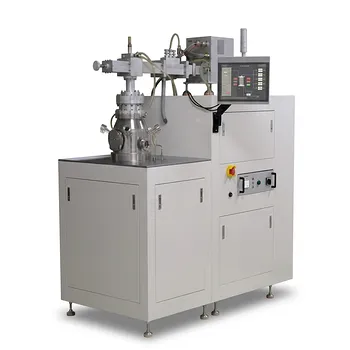
Cylindrical Resonator MPCVD Machine System for Microwave Plasma Chemical Vapor Deposition and Lab Diamond Growth
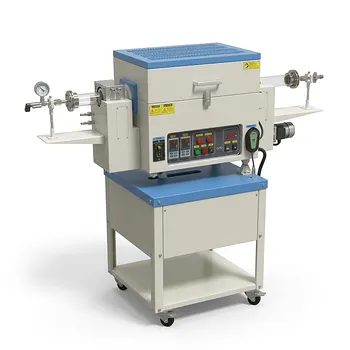
4 Inch Two Zone Rotary CVD Tube Furnace for High Temperature Battery Material Synthesis and Advanced Material Calcination
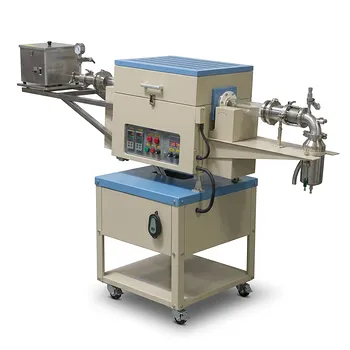
Two Zone Rotary CVD Furnace with Automatic Feeding and Receiving System for Powder Processing
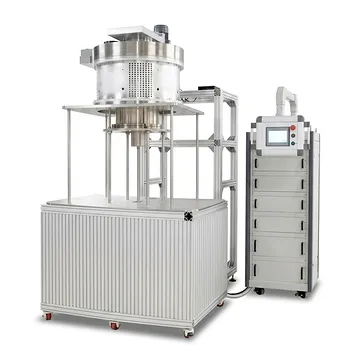
915MHz MPCVD Diamond Machine Microwave Plasma Chemical Vapor Deposition System Reactor
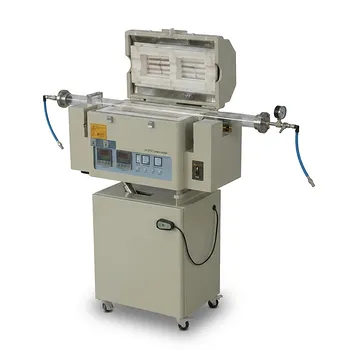
Double Temperature Revolving Tube Furnace with Precision Rotation and Adjustable Inclination for Advanced Material Research
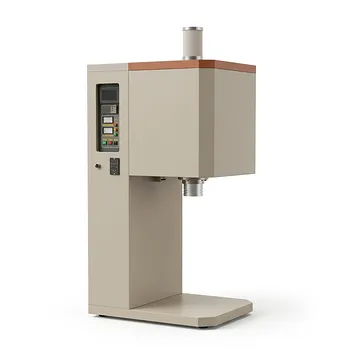
Vertical Openable Tube Furnace 0-1700c High Temperature Laboratory System for CVD and Vacuum Heat Treatment
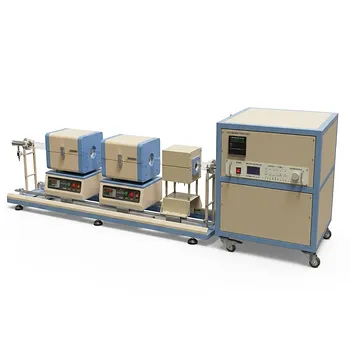
1200C Dual Sliding Tube Furnace with Dual Tubes and Flanges for PECVD Processes
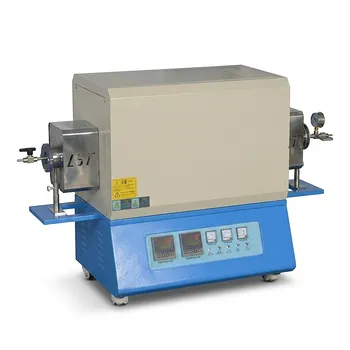
High Temperature Dual Zone Vacuum Tube Furnace for Material Research and CVD Processing
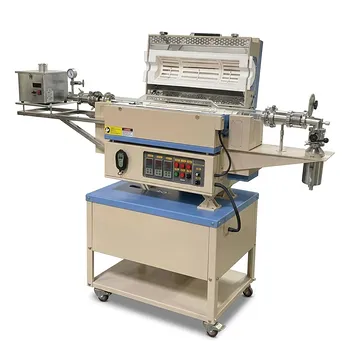
5 Inch Rotary Tube Furnace with Automatic Feeding and Receiving System 1200C Three Zone CVD Powder Processing
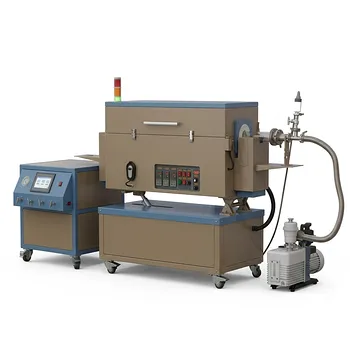
5 Inch Three Zone Rotary Tube Furnace with Integrated Gas Delivery System and 1200C Capability for Advanced Material CVD Processing
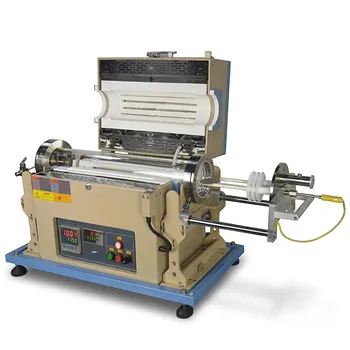
1200°C High Temperature 4 Inch Tube Furnace with Sliding Flange for CVD Systems

High Temperature 1700C Tube Furnace with High Vacuum Turbomolecular Pump System and Multi Channel Mass Flow Controller Gas Mixer
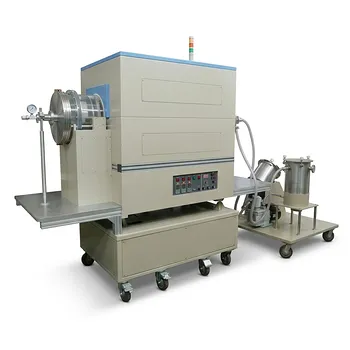
Three Zone Rotary Tube Furnace with Automatic Powder Feeding for Large Scale CVD Coating 1100C
Split Chamber CVD Tube Furnace with Vacuum Station Chemical Vapor Deposition System Machine
Three Temperature Zone High Temperature Vacuum Tube Furnace for CVD and Material Sintering
Three Zone Quartz Tube Furnace with 3 Channel Gas Mixer Vacuum Pump and Anti Corrosive Vacuum Gauge