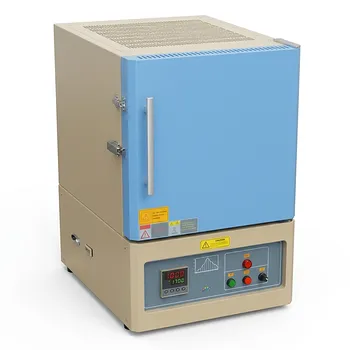
Why is a high-precision temperature controller critical during the heat treatment of Yb123? Maximize Material Purity
Updated 3 months ago
High-precision temperature control is the deciding factor in the phase purity of Yb123 materials. This specialized level of accuracy is required because Yb123 exists within a razor-thin thermal window, typically centered around 927°C or 937°C. Even minor temperature deviations during annealing trigger the formation of undesirable impurity phases, such as Yb211 or BaCuO2, which compromise the material's integrity.
Precise temperature regulation is mandatory for Yb123 because the material’s chemical stability is highly sensitive to thermal fluctuations. By "locking" the environment within a narrow target window, a high-precision controller prevents the emergence of secondary phases that would otherwise degrade the final product’s performance.
The Sensitivity of Phase Formation in Yb123
The Narrow Thermal Window
Research indicates that Yb123 achieves its highest purity only when held at specific, narrow temperature points like 927°C or 937°C. Unlike more forgiving materials, Yb123 does not tolerate broad ranges; the reaction environment must remain strictly controlled to ensure the correct atomic arrangement.
The Risk of Impurity Phases
When temperatures fluctuate even slightly, the chemical balance shifts, leading to the growth of impurity phases such as Yb211 and BaCuO2. These impurities act as contaminants that disrupt the desired superconducting or physical properties of the Yb123 matrix.
Impact on Microscopic Structure
Similar to the behavior seen in In2Se3-based materials, the energy differences between various phases are relatively small. Precision control is the only way to induce the stability of the target phase while suppressing the formation of non-functional polymorphic structures.
Technical Role of High-Precision Controllers
Minimizing Fluctuations via Thermocouple Synergy
High-precision controllers work in tandem with high-quality thermocouples to provide real-time feedback and rapid adjustments. This synergy ensures that the reaction environment remains "locked," preventing the thermal "drifting" that often occurs in standard furnace systems.
Regulating Solid Solution and Diffusion
In complex alloy and ceramic systems, precise heating allows alloying elements to fully dissolve into the matrix, forming a supersaturated solid solution. For Yb123, this ensures that the constituent elements are distributed uniformly, preventing the localized structural gradients that weaken the material.
Preventing Undesirable Grain Growth
Drawing from observations in nanocrystalline alloys, stable thermal processes are essential to restrict grain growth. In Yb123, maintaining the correct temperature prevents excessive grain coarsening, which is critical for maintaining the specific mechanical and electromagnetic characteristics of the material.
Understanding the Trade-offs
Equipment Complexity vs. Reliability
The primary trade-off in high-precision systems is the increased complexity of calibration and maintenance. While these systems offer superior control, any failure in the microprocessor or a slight drift in the thermocouple calibration can lead to catastrophic batch failure.
Thermal Inertia Challenges
High-precision controllers must manage thermal inertia, where the furnace temperature continues to rise even after the heating element is powered down. Failing to account for this can lead to "overshoot," pushing the Yb123 into a temperature zone where BaCuO2 begins to dominate the composition.
Cost of Precision
Implementing high-precision regulation increases the initial capital expenditure for laboratory or industrial furnaces. However, this cost is generally offset by the significantly higher yield of pure-phase materials and the reduction in wasted precursor chemicals.
Achieving Optimal Results in Yb123 Heat Treatment
Effective heat treatment requires a balance between precise setpoints and environmental stability.
- If your primary focus is Phase Purity: You must utilize a controller capable of maintaining a stability of ±1°C or better to avoid the transition into Yb211 or BaCuO2 phases.
- If your primary focus is Structural Integrity: Implement extremely slow and stable cooling curves to eliminate internal thermal stresses and prevent the formation of micro-cracks.
- If your primary focus is Material Uniformity: Ensure the furnace provides a uniform thermal field to prevent unintended structural gradients across the sample.
By strictly adhering to these narrow thermal windows through advanced digital control, you ensure the synthesis of Yb123 remains both repeatable and chemically pure.
Summary Table:
| Key Feature | Requirement/Detail | Impact on Yb123 Phase |
|---|---|---|
| Target Temperature | 927°C or 937°C | Ensures correct atomic arrangement |
| Control Stability | ±1°C or better | Prevents formation of Yb211 & BaCuO2 |
| Feedback System | Thermocouple Synergy | Eliminates thermal drifting during reaction |
| Cooling Rate | Slow and Stable | Minimizes internal stress and micro-cracks |
| Field Uniformity | High Thermal Homogeneity | Prevents unintended structural gradients |
Elevate Your Research with THERMUNITS Precision Solutions
For high-stakes material science and industrial R&D, success depends on thermal accuracy. THERMUNITS is a leading manufacturer specializing in high-temperature laboratory equipment. Our comprehensive range of thermal processing solutions—including Muffle, Vacuum, Atmosphere, Tube, and Rotary furnaces, as well as CVD/PECVD systems, VIM, and Electric Rotary Kilns—are engineered to maintain the razor-thin thermal windows required for Yb123 and other sensitive materials.
Don't let temperature fluctuations compromise your phase purity. Partner with THERMUNITS for reliable, high-precision heat treatment equipment that guarantees superior yields and repeatable results.
Contact our technical experts today to find your perfect thermal solution!
References
- Yanan Wang, Qiuliang Wang. Exploring the preparation of YbBa2Cu3O7−y superconductor in flowing oxygen atmosphere. DOI: 10.1038/s41598-024-59829-3
Mentioned Products
- 1200C Five Side Heating Muffle Furnace with Sliding Door 125L Volume High Temperature Heat Treatment System for Large Scale Sintering and Annealing
- Five Side Heating Muffle Furnace 1200C High Uniformity 64L Chamber 16x16x16 Inch Industrial Heat Treatment
- 1650C High Temperature Atmosphere Controlled Box Furnace with 65L Chamber for Advanced Material Sintering and Industrial Heat Treatment
- Laboratory Tilting Rotary Tubular Furnaces for Material Science and Industrial Heat Treatment
- Three Temperature Zone Fast Heating Furnace 1500C Laboratory High Precision Thermal Processing System
People Also Ask
- What is the role of the muffle furnace in h-BN precursor preparation? Optimize Morphology and Chemical Purity.
- How does the heating mechanism of a muffle furnace differ from that of an open-flame furnace? Indirect vs Direct Heat
- Why is the muffle design advantageous for the production of ceramics and glass? Ensure Purity and Structural Integrity
- What are the benefits of using muffle furnaces in pharmaceutical and biomedical applications? Maximize Purity & Compliance
- What are the typical operating temperature ranges for standard and advanced muffle furnaces? Expert Temperature Guide.

Tech Team · ThermUnits
Last updated on Jun 02, 2026
Related Products
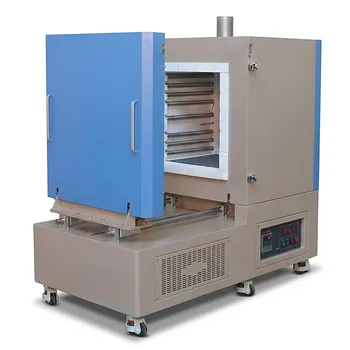
1200C Five Side Heating Muffle Furnace with Sliding Door 125L Volume High Temperature Heat Treatment System for Large Scale Sintering and Annealing
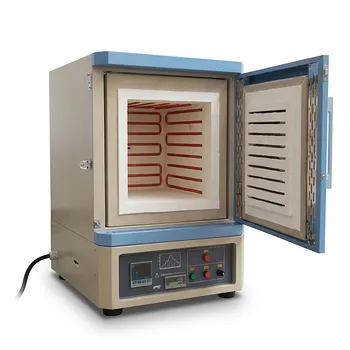
Five Side Heating Muffle Furnace 1200C High Uniformity 64L Chamber 16x16x16 Inch Industrial Heat Treatment
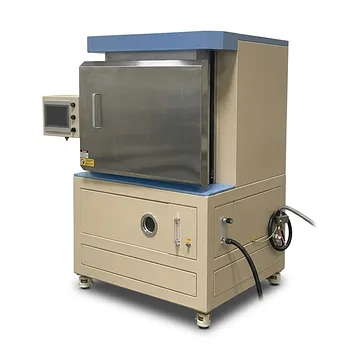
1650C High Temperature Atmosphere Controlled Box Furnace with 65L Chamber for Advanced Material Sintering and Industrial Heat Treatment
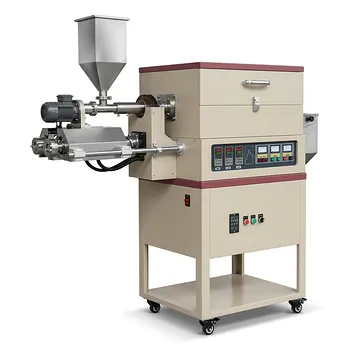
Laboratory Tilting Rotary Tubular Furnaces for Material Science and Industrial Heat Treatment
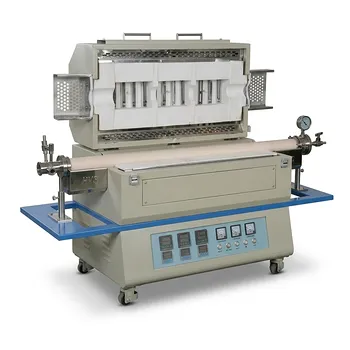
Three Temperature Zone Fast Heating Furnace 1500C Laboratory High Precision Thermal Processing System
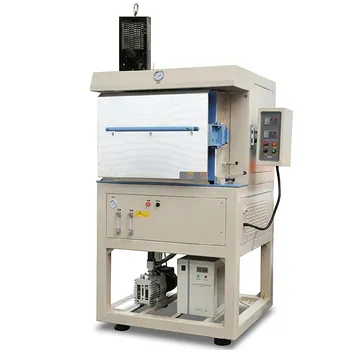
1200C Hydrogen Atmosphere Box Furnace with 5 Heated Sides and 64L Chamber
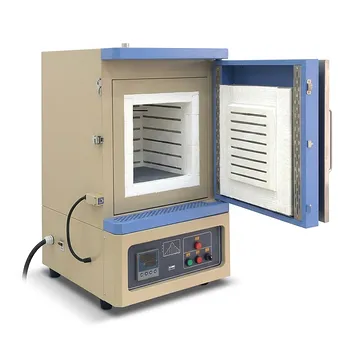
Five Side Heating Muffle Furnace High Purity Alumina Fiber 27L Chamber 1200C High Temperature Thermal Processing System for Sintering Annealing and Materials Research

High Temperature Tube Furnace 1500C with Sliding Flanges and 50mm OD for Rapid Thermal Processing Fast Heating and Cooling
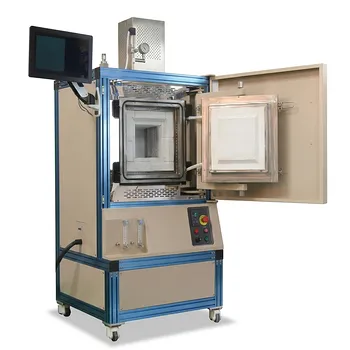
High Temperature Hydrogen Atmosphere Box Furnace 1650C Max Reducing Environment Material Synthesis System 8x8x8 Chamber
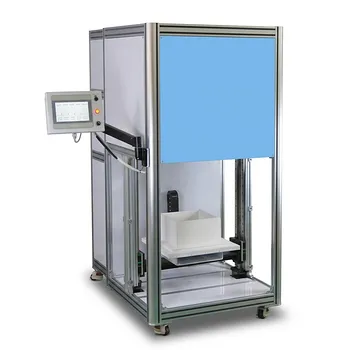
High Temperature 1600°C Three Zone Heated Bottom Loading Box Furnace with Rapid Thermal Processing Chamber 72L Volume
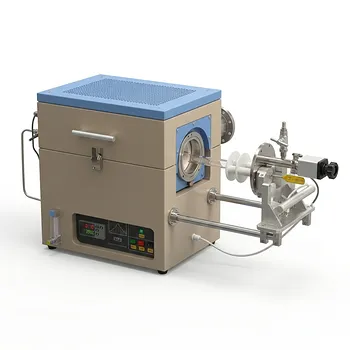
Compact Atmosphere Controlled Rapid Thermal Processing RTP Furnace with 4 Inch ID Quartz Tube 1100C
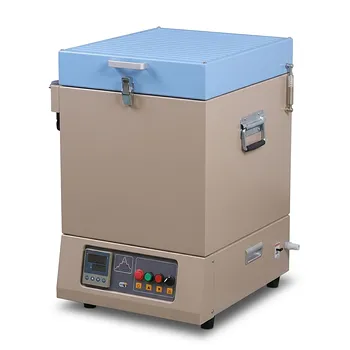
High Temperature Vertical Crucible Furnace with 22L Heating Chamber and 1200C Maximum Temperature
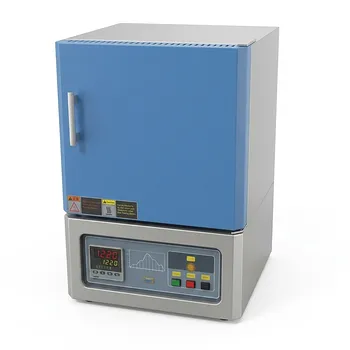
High Temperature Benchtop Muffle Furnace 1700C 10L Chamber Alumina Fiber Insulation MoSi2 Heating Elements
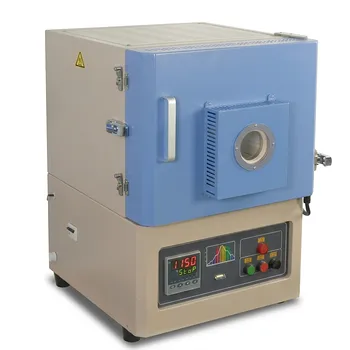
High Temperature Benchtop Muffle Furnace with Quartz Observation Window for Thermal Imaging and Material Analysis
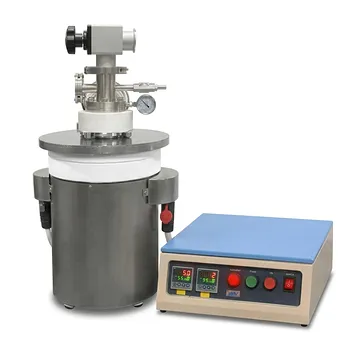
1100C High Temperature Vacuum Crucible Furnace with Quartz Chamber for Thermal Processing and Sintering

High Temperature 1700C Benchtop Tube Furnace with 5 Inch Heating Zone High Purity Alumina Tube and Vacuum Sealing Flanges
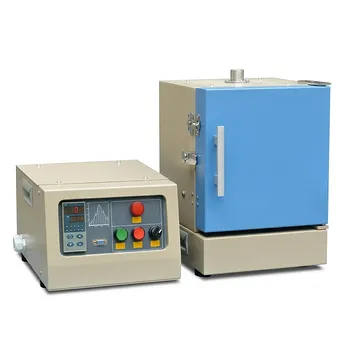
1200C Small Box Muffle Furnace with Separated Programmable Controller and 4.2L Alumina Fiber Chamber
High Temperature Muffle Furnace with Alloy Chamber for Debinding and Sintering Applications
1800C Bench Top Muffle Furnace 18 Liters with Kanthal Super 1900 Heating Elements for High Purity Ceramic Sintering and Material Research