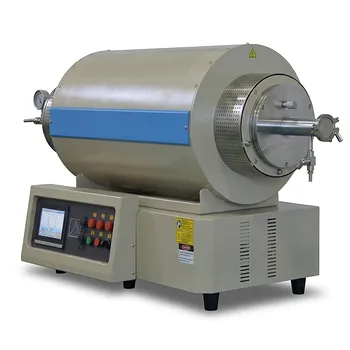
Why is high-purity nitrogen flow necessary in atmosphere tube furnaces? Prevent oxidation & ensure material purity.
Updated 3 months ago
In high-temperature heat treatment, oxygen is often the enemy of material integrity. High-purity nitrogen flow is necessary to displace oxygen and moisture, preventing the unintended oxidation or combustion of samples while preserving the purity of active chemical phases. Beyond simple protection, it serves as a critical mechanical carrier gas that uniformly distributes reactive vapors and removes volatile by-products to maintain reaction equilibrium.
High-purity nitrogen functions as both a chemical shield and a process facilitator. By maintaining an inert environment and managing mass transport, it ensures that thermal reactions proceed toward the intended chemical composition and physical morphology without atmospheric interference.
Preventing Unwanted Chemical Reactions
Exclusion of Oxygen and Atmospheric Contaminants
At temperatures ranging from 500°C to 1000°C, most carbonaceous and metallic materials react aggressively with even trace amounts of oxygen. A continuous nitrogen flow effectively displaces air from the furnace chamber, preventing oxidative combustion or "ashing" of samples such as biomass, coke, or carbon electrodes.
Preserving the Active Phase and Purity
For catalysts and advanced ceramics, maintaining the chemical purity of the active phase is critical for performance. In materials like SiCN ceramics or boron nitride fibers, nitrogen prevents oxygen from compromising the matrix, ensuring that metallic components are correctly reduced rather than oxidized.
Driving Reduction Reactions
An inert nitrogen atmosphere is essential for creating the conditions necessary for reduction reactions. It allows metals like nickel, antimony, and lead to precipitate into their metallic or silicide forms by ensuring the reducing agents (like coke) are not consumed by atmospheric oxygen first.
Facilitating Mass Transport and Distribution
Uniform Distribution of Reactive Vapors
In processes involving chemical vapor reactions, nitrogen acts as a carrier gas to transport sublimated elements like phosphorus and sulfur. The stable flow ensures these vapors are distributed uniformly over the sample surface, which is vital for achieving a homogeneous chemical composition and stable morphology.
Removal of Volatile By-products
During pyrolysis and carbonization, materials release volatile organic compounds and other by-products. A steady nitrogen flow sweeps these volatiles out of the hot zone, which helps maintain reaction equilibrium and protects the internal components of the tube furnace from corrosive buildup.
Managing Volatile Metal Vapors
In specific metallurgical processes, nitrogen flow is used to facilitate the transport of volatile vapors, such as zinc, to downstream collection systems. This ensures the target elements are efficiently recovered rather than settling back onto the sample or furnace walls.
Enhancing Structural and Electrical Properties
Promoting Graphitization and N-Doping
The presence of a nitrogen atmosphere during the heat treatment of carbon materials allows for the thermal rearrangement of atoms. This process is crucial for the graphitization of the carbon structure and the successful doping of nitrogen into the lattice, which significantly improves electrical conductivity.
Optimization of Pore Structure
For the production of activated carbon or biochar, nitrogen flow ensures that the carbonization reaction occurs under strictly controlled conditions. This optimization is necessary to develop the specific surface area and intricate pore structures required for high-performance filtration or energy storage applications.
Understanding the Trade-offs
Purity Levels vs. Material Defects
Using "standard" nitrogen instead of high-purity (99.99%+) nitrogen can introduce trace oxygen or moisture. Even parts-per-million levels of contamination can cause surface defects in sensitive materials like Hexagonal Boron Nitride Fibers or specialized catalysts.
Flow Rate Dynamics
Maintaining a specific flow rate is a delicate balance. A flow that is too slow may fail to fully displace oxygen or remove volatiles, while a flow that is too fast can cause thermal gradients or "cold spots" in the furnace, potentially cracking ceramic tubes or leading to non-uniform heat treatment.
Optimizing Nitrogen Flow for Your Goal
How to Apply This to Your Project
To achieve the best results in your atmosphere tube furnace, tailor your nitrogen usage to your specific material requirements:
- If your primary focus is carbon material conductivity: Maintain a steady flow at high temperatures (above 800°C) to facilitate nitrogen atom rearrangement and graphitization without mass loss.
- If your primary focus is chemical vapor deposition/reaction: Calibrate the flow rate precisely to ensure that sublimated phosphorus or sulfur vapors are distributed evenly without being swept away too quickly.
- If your primary focus is preventing metal oxidation: Prioritize high-purity nitrogen (5.0 grade or higher) and ensure the furnace is purged thoroughly before the temperature exceeds 200°C.
- If your primary focus is maximizing biochar yield: Use a consistent flow to remove volatile by-products quickly, which prevents secondary reactions that could collapse the developing pore structure.
By treating nitrogen flow as a controllable process variable rather than a passive background setting, you ensure the structural and chemical integrity of your high-temperature reactions.
Summary Table:
| Function | Impact on Material | Process Role |
|---|---|---|
| Oxygen Displacement | Prevents oxidative combustion | Chemical Shield |
| Mass Transport | Uniformly distributes reactive vapors | Carrier Gas |
| By-product Removal | Sweeps out volatiles/by-products | Equilibrium Management |
| Lattice Doping | Enhances electrical conductivity | Structural Optimization |
Achieve Process Excellence with THERMUNITS
As a leading manufacturer of high-temperature laboratory equipment, THERMUNITS specializes in providing advanced thermal solutions for material science and industrial R&D. Our high-performance Atmosphere Tube Furnaces are designed to deliver precise atmosphere control, ensuring the chemical and structural integrity of your samples.
Beyond tube furnaces, we offer a comprehensive range of equipment, including Muffle, Vacuum, Rotary, and Hot Press furnaces, CVD/PECVD systems, Dental Furnaces, Vacuum Induction Melting (VIM) units, and Thermal Elements. Partner with us to enhance your heat treatment precision and research outcomes.
Contact our technical team today to find the perfect solution for your lab!
References
- Yikun Cheng, Long Chen. Modulation of the multiphase phosphorus/sulfide heterogeneous interface via rare earth for solar‐enhanced water splitting at industrial‐level current densities. DOI: 10.1002/cnl2.157
Mentioned Products
- Vertical 1700C Vacuum and Atmosphere Tube Furnace with 80mm Alumina Tube
- 1200C Hybrid Muffle and Tube Furnace for Material Research with Dual Atmosphere Control Quartz Tubes
- 1200°C Atmosphere Controlled Automatic Bottom Loading Furnace with 6 Inch Quartz Tube
- Compact Hybrid Muffle and Tube Furnace for 1000C Controlled Atmosphere Laboratory Material Sintering
- Compact Vertical Split Quartz Tube Furnace with Stainless Steel Vacuum Flanges for Rapid Thermal Quenching and Controlled Atmosphere Material Processing
People Also Ask
- How is an industrial-grade vertical tube furnace utilized in smelting leaching residues? Enhance Metal Recovery Efficiency
- What is the function of a laboratory-grade vertical tube furnace in fast pyrolysis? Optimize Composite Research.
- How does a vertical tube furnace facilitate thermoelectric alloy melting? Precision synthesis for material homogeneity.
- Why is a thermocouple sensor indispensable for monitoring the vertical tube furnace during gallium oxide nanowire production? Optimize VLS Growth
- What are the advantages of using a vertical tube furnace for crucible experiments simulating steel-slag interactions?

Tech Team · ThermUnits
Last updated on Jun 02, 2026
Related Products

Vertical 1700C Vacuum and Atmosphere Tube Furnace with 80mm Alumina Tube
1200C Hybrid Muffle and Tube Furnace for Material Research with Dual Atmosphere Control Quartz Tubes
1200°C Atmosphere Controlled Automatic Bottom Loading Furnace with 6 Inch Quartz Tube
Compact Hybrid Muffle and Tube Furnace for 1000C Controlled Atmosphere Laboratory Material Sintering

Compact Vertical Split Quartz Tube Furnace with Stainless Steel Vacuum Flanges for Rapid Thermal Quenching and Controlled Atmosphere Material Processing

Three Zone Tube Furnace with 11 Inch or 15 Inch Quartz Tube and Hinged Flanges for Vacuum Atmosphere Heat Treatment
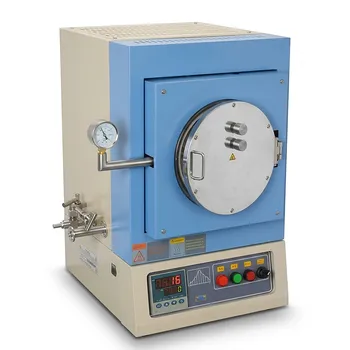
1100°C High Temperature Quartz Chamber Furnace 8 Inch OD with 7.6 Liter Capacity and Vacuum Atmosphere Capability
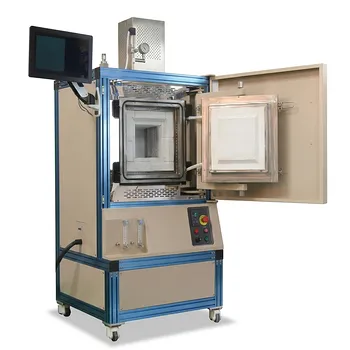
High Temperature Hydrogen Atmosphere Box Furnace 1650C Max Reducing Environment Material Synthesis System 8x8x8 Chamber

High Temperature 1700C Vertical Tube Furnace for Powder Spherification and Material Sintering

Compact High Temperature 1600C Tube Furnace with 50mm Alumina Tube and Vacuum Flanges for Material Sintering

High Temperature 1700C Six Zone Split Tube Furnace with Alumina Tube and Water Cooled Flanges

High Temperature 1700C Tube Furnace with High Vacuum Turbomolecular Pump System and Multi Channel Mass Flow Controller Gas Mixer

1800C High Temperature Compact Vacuum Tube Furnace with 60mm OD Alumina Tube and Kanthal MoSi2 Heating Elements

1100C Tube Furnace with Vacuum Flange and Programmable Temperature Controller for Material Science and Industrial Heat Treatment

High Temperature 1700C Benchtop Tube Furnace with 5 Inch Heating Zone High Purity Alumina Tube and Vacuum Sealing Flanges
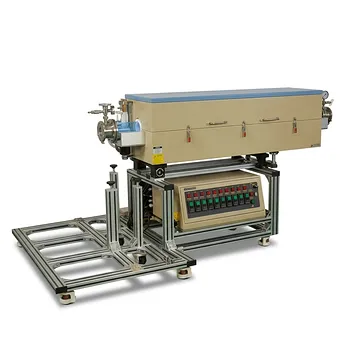
Ten Zone Multi Orientation Laboratory Tube Furnace for 1200C High Temperature Gradient Thermal Processing

1200C High Throughput Multi Channel Tube Furnace with 50mm Quartz Tubes for Annealing and Material Phase Diagram Research

High Temperature Automated 5 Inch Tube Furnace for Autonomous Material Research and Advanced Laboratory R&D

1700C Hydrogen Gas Tube Furnace with 60mm Alumina Process Tube and Integrated Hydrogen Safety Detector