Why is a high vacuum or atmosphere tube furnace required for pre-carbonization? Critical for Graphene & CNT Integrity
Updated 3 months ago
The requirement for a high vacuum or atmosphere tube furnace centers on oxygen exclusion and precise thermal management. At the high temperatures necessary for carbonization, carbon materials like graphene oxide (GO) and carbon nanotubes (CNTs) will spontaneously combust if exposed to oxygen. These specialized furnaces provide the inert environment—typically using argon or nitrogen—required to remove oxygen-containing functional groups and restore the material's conductive network without destroying the carbon skeleton.
A controlled atmosphere furnace is the only way to facilitate the thermal decomposition of functional groups while preventing the catastrophic oxidative loss of the carbon structure. This process is what transforms a non-conductive precursor into a high-performance, semi-metallic film.
Preventing Oxidative Loss and Material Combustion
The Danger of High-Temperature Oxidation
Carbon materials are highly susceptible to oxidative destruction when heated in the presence of even trace amounts of oxygen. Without a vacuum or an inert gas shield, graphene oxide and carbon nanotube films would undergo combustion rather than carbonization at temperatures exceeding 400°C.
Maintaining the Carbon Skeleton
The tube furnace provides a stable inert protective environment, such as an argon or nitrogen atmosphere, to isolate the material from the surrounding air. This isolation ensures that the organic framework decomposes into a stable, conductive carbon skeleton under anaerobic conditions rather than burning away.
Protecting Metal and Heteroatom Integrity
Many GO and CNT films involve composite materials or catalysts, such as cobalt or nitrogen/sulfur dopants, which are also prone to intense oxidation. The furnace environment ensures that these metal ions can be reduced into catalytically active nanoparticles or successfully incorporated into the carbon network.
Engineering Electrical and Chemical Properties
Restoring the Conductive Network
Graphene oxide begins as an electrical insulator due to the presence of oxygen-containing functional groups on its surface. At approximately 700°C, the thermal energy within the furnace triggers the thermal decomposition of these groups, restoring the conductive network between carbon atomic layers.
Transforming Material Properties
This thermal treatment transitions the flexible composite "filter cake" into a film with semi-metallic properties. By precisely controlling the heating rate and holding time, the furnace allows the material to develop the high electrical conductivity and chemical stability required for sensors and electrodes.
Facilitating Precision Pyrolysis
Industrial-grade furnaces allow for programmed temperature increases, which are critical for the pyrolysis of organic precursors like phenolic resins or biomass. This precision ensures that non-carbon elements are removed systematically, resulting in a refined, high-performance nanoreactor structure or carbon fiber.
Understanding the Trade-offs
Atmosphere Purity vs. Material Quality
The effectiveness of the carbonization depends entirely on the purity of the inert gas or the depth of the vacuum. Even slight oxygen leaks can cause non-uniformity in the film, leading to "hot spots" where the carbon lattice is degraded, resulting in lower conductivity.
Heating Rates and Structural Stress
Rapid heating in a tube furnace can cause "thermal shock," where the rapid release of gases (like CO2) from decomposing functional groups creates structural defects. Balancing the heating rate with the gas flow is necessary to ensure the film remains intact and doesn't become overly porous or brittle.
How to Apply This to Your Project
When selecting a furnace or setting a protocol for pre-carbonization, your choice should be dictated by the specific chemical sensitivity of your precursors.
- If your primary focus is restoring maximum conductivity: Prioritize an argon atmosphere with a precise ramp-up to 700°C to ensure complete removal of oxygen groups without damaging the lattice.
- If your primary focus is in-situ growth of nanotubes: Use a nitrogen-controlled furnace to facilitate the reduction of metal catalysts while preventing the oxidation of the organic framework.
- If your primary focus is delicate nanostructure formation: Opt for a high-vacuum setting to ensure the cleanest possible environment for the pyrolysis of sensitive resins or polymers.
By mastering the inert environment of the tube furnace, you ensure that the transition from precursor to carbon film is a controlled chemical evolution rather than a destructive thermal event.
Summary Table:
| Feature | Purpose | Key Benefit for Graphene/CNT |
|---|---|---|
| Oxygen Exclusion | Prevents combustion at T > 400°C | Maintains the integrity of the carbon skeleton. |
| Inert Atmosphere | Uses Argon/Nitrogen shielding | Protects metal catalysts and functional dopants. |
| Thermal Precision | Programmed temperature control | Restores conductivity by removing oxygen groups. |
| High Vacuum | Clean pyrolysis environment | Minimizes structural defects and impurities. |
Optimize Your Carbonization Process with THERMUNITS
Ready to elevate your material science research? As a leading manufacturer of high-temperature laboratory equipment, THERMUNITS provides the specialized thermal processing solutions required for high-performance Graphene and CNT film production. Whether you are conducting initial R&D or industrial-scale carbonization, our equipment ensures the inert environments and precise temperature control essential for your success.
Our Comprehensive Solutions Include:
- Furnaces: Muffle, Vacuum, Atmosphere, Tube, Rotary, and Hot Press models.
- Advanced Systems: CVD/PECVD systems, Vacuum Induction Melting (VIM), and Dental Furnaces.
- Components: High-quality Thermal Elements and lab heat treatment accessories.
Don't let oxidative loss compromise your results. Contact THERMUNITS today to find the ideal heat treatment solution for your laboratory!
References
- Yu-Ze Xing, Cheng‐Meng Chen. Revealing the essential effect mechanism of carbon nanotubes on the thermal conductivity of graphene film. DOI: 10.1039/d3tc03840h
Mentioned Products
- Vertical 1700C Vacuum and Atmosphere Tube Furnace with 80mm Alumina Tube
- 1200C Hybrid Muffle and Tube Furnace for Material Research with Dual Atmosphere Control Quartz Tubes
- 1200°C Atmosphere Controlled Automatic Bottom Loading Furnace with 6 Inch Quartz Tube
- Compact Hybrid Muffle and Tube Furnace for 1000C Controlled Atmosphere Laboratory Material Sintering
- Compact Vertical Split Quartz Tube Furnace with Stainless Steel Vacuum Flanges for Rapid Thermal Quenching and Controlled Atmosphere Material Processing
People Also Ask
- How is an industrial-grade vertical tube furnace utilized in smelting leaching residues? Enhance Metal Recovery Efficiency
- What is the function of a laboratory-grade vertical tube furnace in fast pyrolysis? Optimize Composite Research.
- How does a vertical tube furnace facilitate thermoelectric alloy melting? Precision synthesis for material homogeneity.
- Why is a thermocouple sensor indispensable for monitoring the vertical tube furnace during gallium oxide nanowire production? Optimize VLS Growth
- What are the advantages of using a vertical tube furnace for crucible experiments simulating steel-slag interactions?

Tech Team · ThermUnits
Last updated on Jun 03, 2026
Related Products

Vertical 1700C Vacuum and Atmosphere Tube Furnace with 80mm Alumina Tube
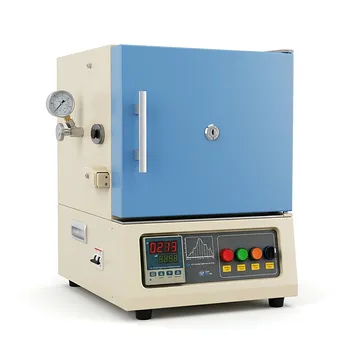
1200C Hybrid Muffle and Tube Furnace for Material Research with Dual Atmosphere Control Quartz Tubes
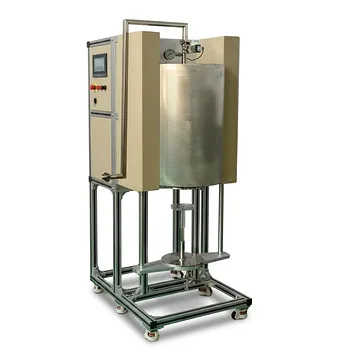
1200°C Atmosphere Controlled Automatic Bottom Loading Furnace with 6 Inch Quartz Tube
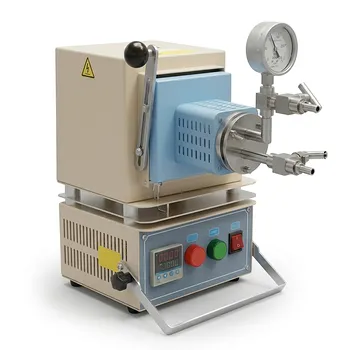
Compact Hybrid Muffle and Tube Furnace for 1000C Controlled Atmosphere Laboratory Material Sintering

Compact Vertical Split Quartz Tube Furnace with Stainless Steel Vacuum Flanges for Rapid Thermal Quenching and Controlled Atmosphere Material Processing
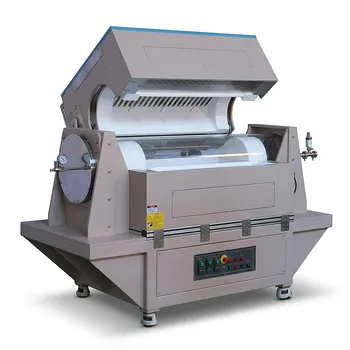
Three Zone Tube Furnace with 11 Inch or 15 Inch Quartz Tube and Hinged Flanges for Vacuum Atmosphere Heat Treatment
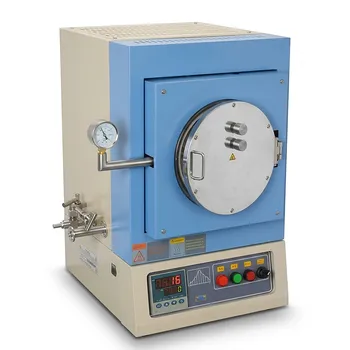
1100°C High Temperature Quartz Chamber Furnace 8 Inch OD with 7.6 Liter Capacity and Vacuum Atmosphere Capability
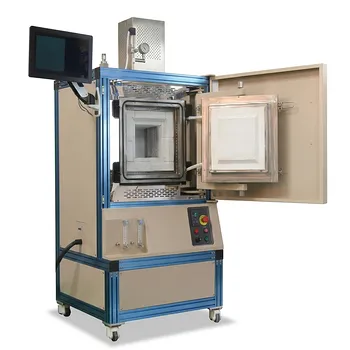
High Temperature Hydrogen Atmosphere Box Furnace 1650C Max Reducing Environment Material Synthesis System 8x8x8 Chamber

High Temperature 1700C Vertical Tube Furnace for Powder Spherification and Material Sintering

Compact High Temperature 1600C Tube Furnace with 50mm Alumina Tube and Vacuum Flanges for Material Sintering

High Temperature 1700C Six Zone Split Tube Furnace with Alumina Tube and Water Cooled Flanges

High Temperature 1700C Tube Furnace with High Vacuum Turbomolecular Pump System and Multi Channel Mass Flow Controller Gas Mixer

1800C High Temperature Compact Vacuum Tube Furnace with 60mm OD Alumina Tube and Kanthal MoSi2 Heating Elements

1100C Tube Furnace with Vacuum Flange and Programmable Temperature Controller for Material Science and Industrial Heat Treatment

High Temperature 1700C Benchtop Tube Furnace with 5 Inch Heating Zone High Purity Alumina Tube and Vacuum Sealing Flanges
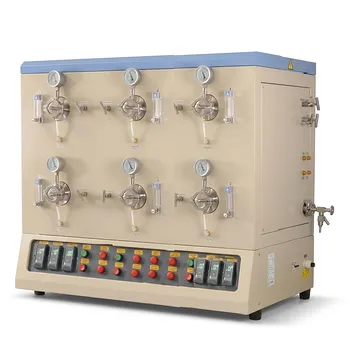
1200C High Throughput Multi Channel Tube Furnace with 50mm Quartz Tubes for Annealing and Material Phase Diagram Research
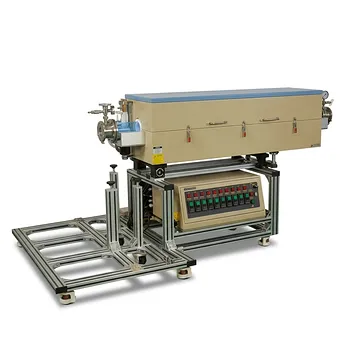
Ten Zone Multi Orientation Laboratory Tube Furnace for 1200C High Temperature Gradient Thermal Processing

High Temperature Automated 5 Inch Tube Furnace for Autonomous Material Research and Advanced Laboratory R&D
1200C Max Three Zone Tube Furnace 6 Inch OD Max with Tube and Flange
