Why is a hot press used for PVA and boehmite nanofibers? Maximize Thermal Conductivity and Structural Integrity
Updated 3 months ago
The primary purpose of hot pressing PVA and boehmite precursor nanofibers is to transform a disordered fiber mat into a dense, thermally efficient composite. This post-treatment process applies simultaneous mechanical pressure and heat (typically around 120°C) to bridge the physical gaps between individual fibers. By facilitating fiber alignment and fusion, the hot press establishes the continuous pathways necessary for high-performance heat dissipation.
Core Takeaway: Hot pressing serves as a critical structural catalyst that converts loose, insulating nanofiber mats into a cohesive network, significantly boosting thermal conductivity by eliminating air voids and inducing inter-fiber cross-linking.
Structural Reorganization of Nanofibers
Forcing Directional Alignment
In their raw state, electrospun nanofibers are often deposited in a disordered, "spaghetti-like" arrangement. The mechanical pressure from a hot press forces these fibers into a directional alignment, creating a more organized internal architecture.
Promoting Cross-linking and Fusion
At elevated temperatures like 120°C, the Polyvinyl Alcohol (PVA) and boehmite particles reach a state where they can effectively cross-link and fuse. This process turns a collection of individual strands into a singular, integrated matrix with improved mechanical stability.
Maximizing Thermal Transport Efficiency
Eliminating Insulating Air Gaps
Air is a natural thermal insulator that trapped within fiber voids significantly hinders heat flow. The hot press physically collapses these air gaps and voids, increasing the density of the material and ensuring that heat does not have to jump across empty spaces.
Establishing Continuous Heat Paths
By fusing the fibers together, the process creates continuous and efficient heat conduction paths. These paths allow for significantly enhanced thermal conductivity in both the through-thickness (vertical) and in-plane (horizontal) directions.
Understanding the Trade-offs
Temperature and Pressure Sensitivity
The window for successful post-treatment is narrow; temperatures must be high enough to induce fusion but low enough to avoid polymer degradation. Incorrect settings can lead to a brittle material or a loss of the very nanofiber structures that provide the composite's unique benefits.
Loss of Porosity
While densification is beneficial for thermal conductivity, it inherently reduces the porosity and surface area of the fiber mat. If the end application requires high permeability or specific filtration properties, the hot pressing duration and pressure must be carefully balanced.
How to Apply This to Your Project
When utilizing a hot press for PVA and boehmite composites, your specific goal determines the ideal configuration:
- If your primary focus is maximum heat dissipation: Maximize the pressure to eliminate all possible air voids and create the densest possible conduction network.
- If your primary focus is mechanical flexibility: Moderate the pressing temperature to ensure fiber fusion occurs without making the PVA matrix too rigid or brittle.
- If your primary focus is through-thickness conductivity: Ensure uniform pressure application across the entire surface area to maintain consistent heat paths from top to bottom.
Effective hot pressing is the bridge between a simple fiber mixture and a high-performance thermal interface material.
Summary Table:
| Feature | Impact of Hot Pressing Post-Treatment |
|---|---|
| Internal Structure | Converts disordered fibers into a dense, directionally aligned architecture |
| Connectivity | Induces inter-fiber cross-linking and fusion at optimized temperatures |
| Thermal Efficiency | Eliminates insulating air gaps to establish continuous heat conduction paths |
| Mechanical State | Increases material density and establishes a cohesive, stable matrix |
Optimize Your Composite Research with THERMUNITS
Achieving the perfect balance of fiber fusion and thermal performance requires precision equipment. THERMUNITS is a leading manufacturer of high-temperature laboratory equipment for material science and industrial R&D. Whether you are developing PVA/boehmite composites or advanced ceramic materials, our thermal solutions are engineered for excellence.
Our specialized equipment range includes:
- Advanced Hot Press Furnaces for precise densification and bonding.
- Muffle, Vacuum, and Atmosphere Furnaces for versatile heat treatments.
- Tube, Rotary, and CVD/PECVD Systems for sophisticated material synthesis.
- Vacuum Induction Melting (VIM), Dental Furnaces, and high-quality Thermal Elements.
Don't let voids or improper temperature control hinder your R&D breakthroughs. Let our experts help you select the ideal furnace to enhance your laboratory's efficiency and output.
Contact THERMUNITS Today for a Professional Consultation
References
- Md. Shakhawat Hossain, Koji Nakane. Enhancing heat dissipation in polyurethane sheets through the incorporation of freeze‐dried aluminum nitride nanofiber. DOI: 10.1111/ijac.14725
Mentioned Products
- High Temperature Vacuum Lamination Hot Press Furnace Machine for Semiconductor Wafer Bonding and Advanced Composite Thermal Processing
- Industrial Vacuum Hot Press Furnace Machine and High Temperature Heated Vacuum Press for Advanced Material Sintering
- High Pressure 600T Vacuum Induction Hot Press Furnace for Advanced Material Heat Treatment and Sintering
- Industrial High Temperature Vacuum Hot Press Furnace and Heated Vacuum Press Machine for Material Science Sintering
- 2500C High Vacuum Ultrafast Heating Pellet Press with Automated 8 Sample Loading System
People Also Ask
- What types of heating systems and insulation are used in Vacuum Hot Press Furnaces? Optimize Your Thermal Processing
- What is a Vacuum Hot Press Furnace and what are its primary industrial applications? Achieve Maximum Material Density
- What are the structural features of the furnace body and chamber in a Vacuum Hot Press Furnace? Master Material Density
- Why is graphite the preferred material for dies and heating elements in Vacuum Hot Press Furnaces? High-Temp Solutions
- What are the primary operational components and mechanisms of a vacuum hot press furnace? A Technical Breakdown

Tech Team · ThermUnits
Last updated on Jun 02, 2026
Related Products
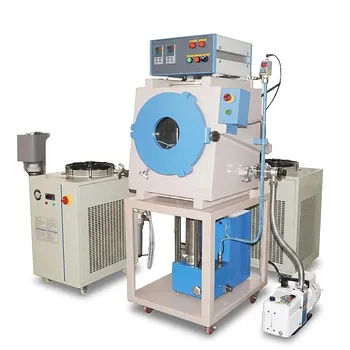
High Temperature Vacuum Lamination Hot Press Furnace Machine for Semiconductor Wafer Bonding and Advanced Composite Thermal Processing
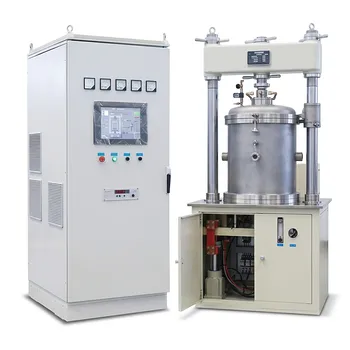
Industrial Vacuum Hot Press Furnace Machine and High Temperature Heated Vacuum Press for Advanced Material Sintering
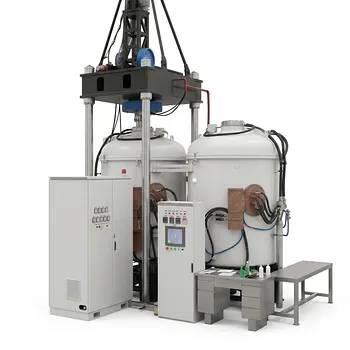
High Pressure 600T Vacuum Induction Hot Press Furnace for Advanced Material Heat Treatment and Sintering
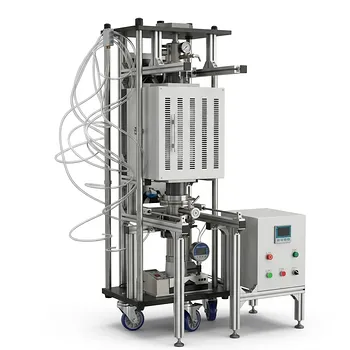
Industrial High Temperature Vacuum Hot Press Furnace and Heated Vacuum Press Machine for Material Science Sintering
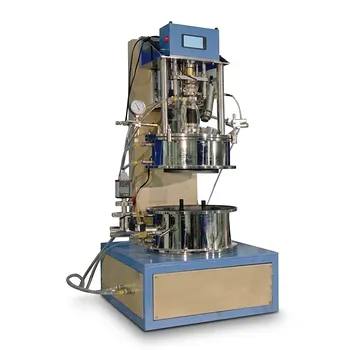
2500C High Vacuum Ultrafast Heating Pellet Press with Automated 8 Sample Loading System
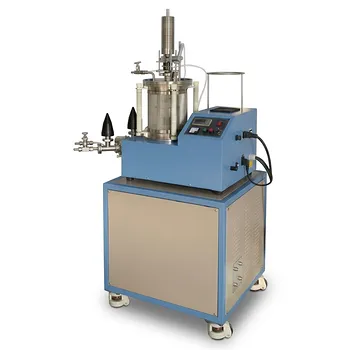
Ultrafast Thermal Pressing Furnace 2900C Max Temperature 200K per Second Heating Rate Vacuum Atmosphere Rapid Processing System
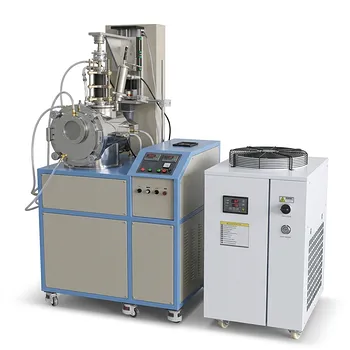
High Temperature Ultrafast Heating Pressing Furnace 2900C Max 100kgf Rapid Thermal Processing System
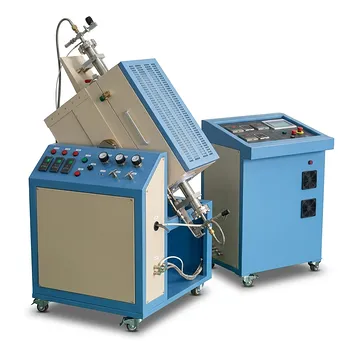
1100C High Pressure Rocking Tube Furnace with 2 Inch Super Alloy Processing Tube for Material Synthesis
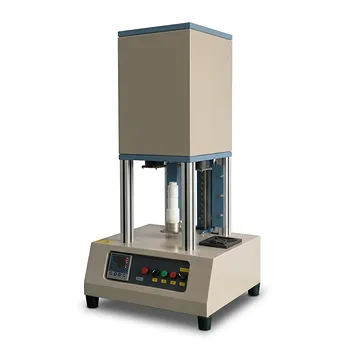
Compact High Temperature Bottom Loading Furnace 1700C Rapid Heating Cooling System Small Sample Thermal Cycling Equipment
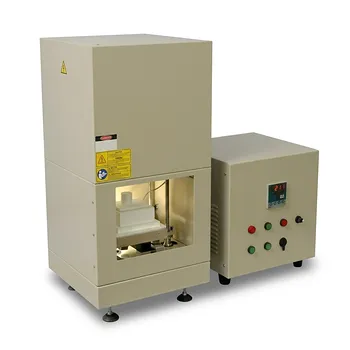
High Temperature Compact Automatic Bottom Loading Furnace with Rapid Cooling for Autonomous Material Research
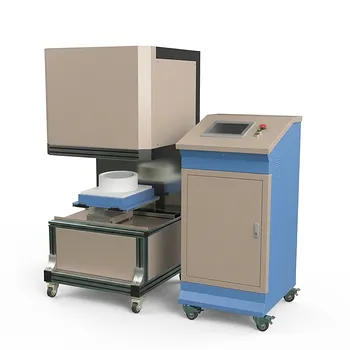
High Temperature Bottom Loading Box Furnace for Rapid Thermal Processing 1700C 40L Capacity