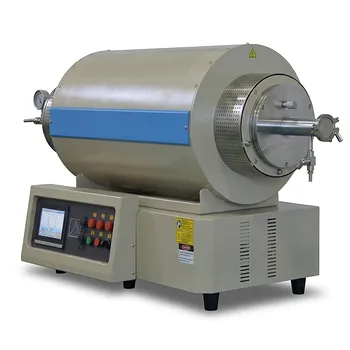
Why is a hydrogen reduction atmosphere within a tube furnace essential for preparing IF-MoS2 hollow nanospheres? Mechanism
Updated 3 months ago
A hydrogen reduction atmosphere is the essential catalyst for the "outside-in" growth mechanism required to transform solid precursors into hollow IF-MoS2 nanospheres. Within the controlled environment of a tube furnace, hydrogen reacts with the surface of molybdenum trioxide ($MoO_3$) precursors to create oxygen vacancies. These vacancies act as specific docking sites for sulfur atoms, allowing a thin $MoS_2$ shell to form rapidly around the oxide core, which subsequently guides the internal chemical transformation.
Core Takeaway: Hydrogen reduction is not merely a protective measure; it is the active chemical driver that initiates surface sulfidation and manages the structural evolution of the nanosphere. Without this precise reducing environment, the material would fail to develop the hollow, fullerene-like (IF) structure necessary for its specialized applications.
The Chemical Engine of the "Outside-In" Mechanism
Creating Oxygen Vacancies as Nucleation Sites
At elevated temperatures, hydrogen gas strips oxygen atoms from the surface of the $MoO_3$ precursor. This process creates oxygen vacancies, which are essentially chemical "holes" in the crystal lattice.
These vacancies are highly reactive and serve as the primary landing spots for sulfur atoms. By providing these sites, hydrogen ensures that the sulfidation process begins uniformly across the entire surface of the nanosphere.
Forcing Surface-First Sulfidation
The presence of hydrogen ensures that the transformation into $MoS_2$ occurs at the surface before the interior of the particle is affected. This creates a closed $MoS_2$ shell that acts as a template for the rest of the reaction.
Once this shell is established, the hydrogen continues to penetrate the structure. It drives the "outside-in" conversion, where the internal oxides are systematically replaced by sulfides.
The Structural Evolution of Hollow Nanospheres
From Solid Oxide to Hollow Sulfide
As the reducing gas induces the transformation of internal oxides, the density and volume of the material shift. This chemical progression, facilitated by the hydrogen environment, results in the evacuation of the core.
The final result is a hollow cavity structure. This hollow nature is a defining characteristic of Inorganic Fullerene-like (IF) materials, providing them with unique mechanical and lubricating properties.
Promoting Lattice Rearrangement
Hydrogen does more than just move atoms; it promotes the rearrangement of the crystal lattice. The reducing atmosphere allows the $MoS_2$ layers to curve and close in on themselves.
This specific lattice alignment is what gives the nanospheres their "fullerene-like" appearance. High-temperature reduction provides the energy and environment needed for these layers to achieve their most stable, curved configuration.
The Role of the Tube Furnace in Atmosphere Control
Isolation and Protection from Oxidation
A tube furnace is critical because it creates a strictly sealed environment that isolates the sample from ambient oxygen. If oxygen were present, the $MoS_2$ would undergo oxidative degradation at high temperatures.
By maintaining a continuous flow of hydrogen or a hydrogen/argon mixture, the furnace purges the chamber of impurities. This protects the semiconductor properties and ensures the chemical integrity of the $MoS_2$ layers.
Precision Thermodynamic Regulation
The tube furnace allows for the fine-tuning of the thermal field and gas partial pressure. This precision is necessary to ensure that the reduction happens at a controlled rate.
Stable thermodynamic conditions prevent the particles from growing too large or "coarsening." Without this control, the nanospheres might fuse together (sinter), destroying the delicate hollow structure.
Understanding the Trade-offs
The Risk of Over-Reduction
While hydrogen is necessary, an excessive concentration or an overly long exposure time can lead to over-reduction. If the process is not carefully timed, the molybdenum may be reduced all the way to a metallic state rather than stopping at the desired sulfide phase.
Managing Particle Sintering
High temperatures are required for lattice rearrangement, but they also increase the risk of particle coarsening. If the hydrogen flow rate and temperature profile are not perfectly balanced, the nanospheres may lose their high surface area and activity due to sintering.
How to Apply This to Your Project
Making the Right Choice for Your Goal
- If your primary focus is structural integrity: Ensure a continuous flow of high-purity hydrogen (UHP H2) to act as both a reductant and a protective shield against oxidation.
- If your primary focus is controlling sphere size: Precisely regulate the reduction temperature (typically between 550 °C and 900 °C) and time to prevent particle coarsening.
- If your primary focus is achieving the "IF" morphology: Use a hydrogen/argon mixture to create a stable, moderate reducing environment that favors the "outside-in" shell formation over rapid bulk reduction.
By mastering the hydrogen-driven reduction process, you gain the ability to dictate the precise nanostructural characteristics of IF-MoS2.
Summary Table:
| Process Factor | Chemical Mechanism | Structural Impact |
|---|---|---|
| Oxygen Vacancies | Hydrogen strips oxygen from MoO3 | Creates uniform sulfur nucleation sites |
| Shell Formation | Outside-in sulfidation | Establishes the hollow internal cavity |
| Lattice Curving | High-temp reduction energy | Promotes fullerene-like (IF) morphology |
| Atmosphere Isolation | Sealed furnace environment | Prevents oxidation and preserves integrity |
Achieve precision in your material science research with THERMUNITS. As a leading manufacturer of high-temperature laboratory equipment, we offer advanced Tube, Vacuum, and Atmosphere furnaces, along with CVD/PECVD systems perfectly suited for hydrogen-driven reduction processes. Empower your synthesis of IF-MoS2 hollow nanospheres and other advanced materials with our reliable thermal solutions. Contact our experts today to find the ideal furnace for your R&D needs!
References
- Kai Du, Ronghui Wei. Synthesis and lubrication properties of hollow IF-MoS2 nanospheres. DOI: 10.1063/5.0207159
Mentioned Products
- 1500C Compact Hydrogen Gas Tube Furnace with 2 Inch Alumina Tube and Hydrogen Detector
- 1100C Dual Zone Hydrogen Gas Tube Furnace with Quartz Tube and Integrated H2 Leak Detection System
- 1100C Hydrogen Gas Atmosphere Tube Furnace with 5 Inch Fused Quartz Tube and Integrated Safety Monitoring System
- Three Zone Hydrogen Gas Tube Furnace with 82mm Superalloy Tube and Dual Hydrogen Detectors 1200C High Temperature Material Processing System
- 1700C Hydrogen Gas Tube Furnace with 60mm Alumina Process Tube and Integrated Hydrogen Safety Detector
People Also Ask
- How does a push rod mechanism contribute to the workflow within a tube furnace? Optimize Your Hydrogen Reduction Process
- What technical advantages does a tube furnace offer for phosphate reduction? Maximize yield with hydrogen flow control.
- Why is a gas-tight tube furnace combined with high-purity argon flow necessary for OBO-MXenes? Protect Your Materials
- How do high-precision gas flow meters contribute to the precise oxidation of Hollow Carbon Nanospheres (HCNS)? - Key Facts
- Why use a H2/Ar tube furnace for Pt/TiNxOy catalysts? Create SFLPs and Optimize CO2 Conversion Performance.

Tech Team · ThermUnits
Last updated on Jun 02, 2026
Related Products
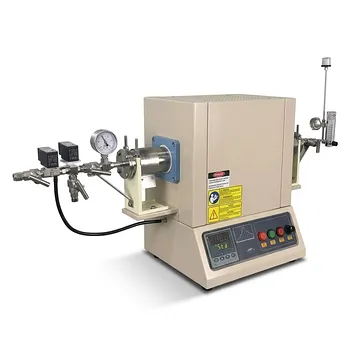
1500C Compact Hydrogen Gas Tube Furnace with 2 Inch Alumina Tube and Hydrogen Detector
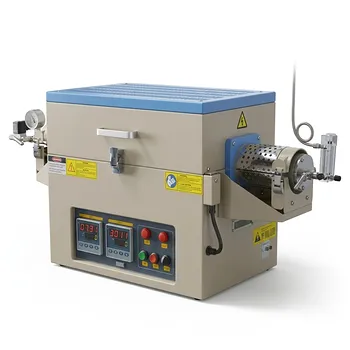
1100C Dual Zone Hydrogen Gas Tube Furnace with Quartz Tube and Integrated H2 Leak Detection System
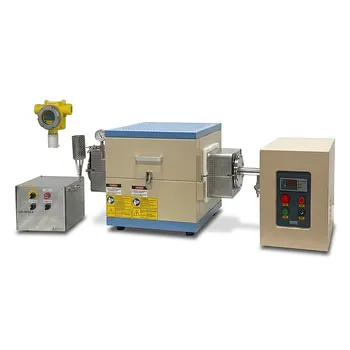
1100C Hydrogen Gas Atmosphere Tube Furnace with 5 Inch Fused Quartz Tube and Integrated Safety Monitoring System
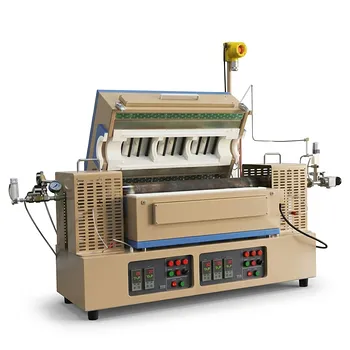
Three Zone Hydrogen Gas Tube Furnace with 82mm Superalloy Tube and Dual Hydrogen Detectors 1200C High Temperature Material Processing System

1700C Hydrogen Gas Tube Furnace with 60mm Alumina Process Tube and Integrated Hydrogen Safety Detector
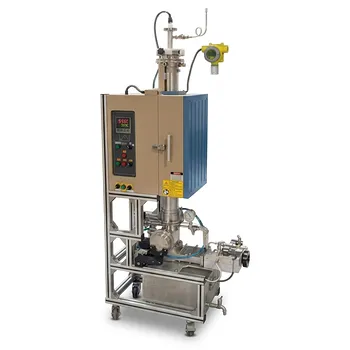
High Temperature 1000C Hydrogen Vertical Quenching Furnace with 4 Inch Stainless Steel Tube
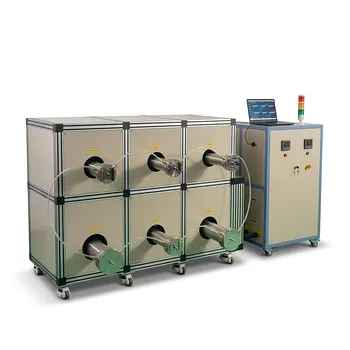
1200C Max 6 Channel High Cleanliness Hydrogen Furnace for High Throughput Annealing
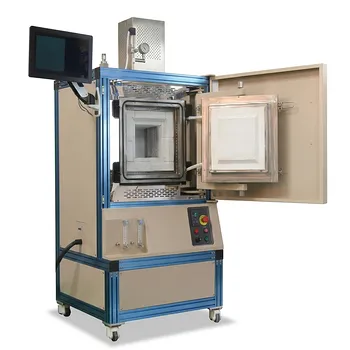
High Temperature Hydrogen Atmosphere Box Furnace 1650C Max Reducing Environment Material Synthesis System 8x8x8 Chamber
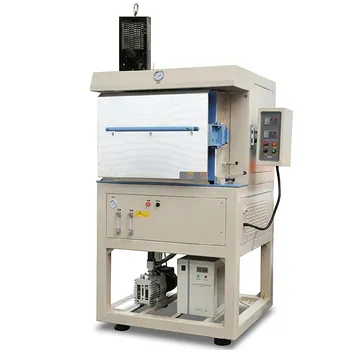
1200C Hydrogen Atmosphere Box Furnace with 5 Heated Sides and 64L Chamber

Compact Vertical Split Quartz Tube Furnace with Stainless Steel Vacuum Flanges for Rapid Thermal Quenching and Controlled Atmosphere Material Processing
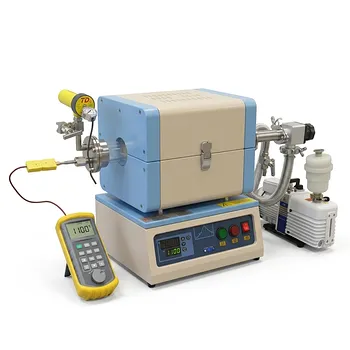
Compact Split Tube Furnace with Insertable Temperature Calibrator and Integrated Vacuum System
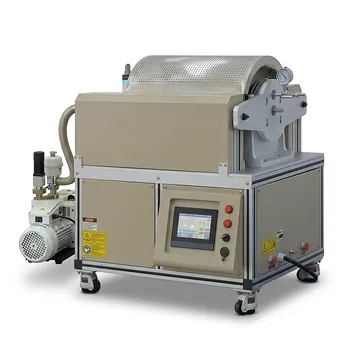
Automated 1200 C Tube Furnace for AI Material Research with 6 Inch OD and Sliding Flange

Vertical 1700C Vacuum and Atmosphere Tube Furnace with 80mm Alumina Tube
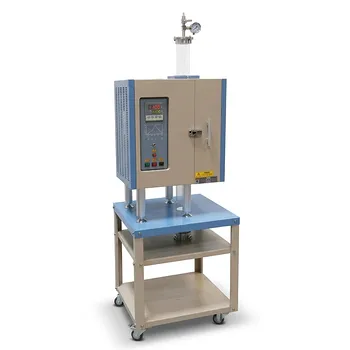
1100°C Split Vertical Tube Furnace with 80mm Quartz Tube and Stainless Steel Vacuum Flanges
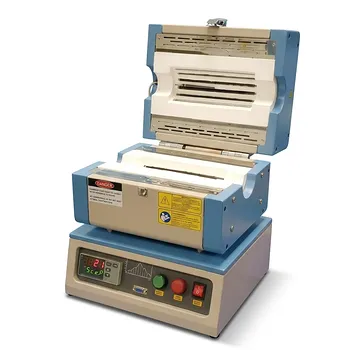
1250C Compact Split Tube Furnace with 8 Inch Heating Zone and Programmable Controller

Compact High Temperature 1600C Tube Furnace with 50mm Alumina Tube and Vacuum Flanges for Material Sintering
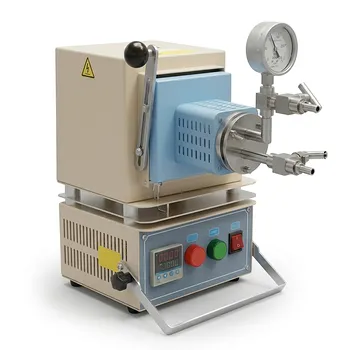
Compact Hybrid Muffle and Tube Furnace for 1000C Controlled Atmosphere Laboratory Material Sintering
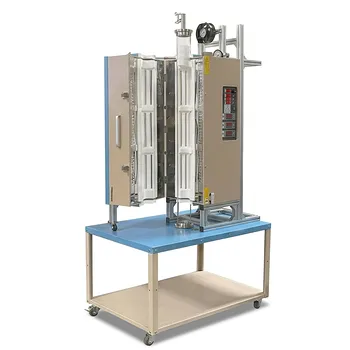
1200C Three Zone Split Vertical Tube Furnace 4 Inch Quartz Tube Stainless Steel Vacuum Flanges

1200C High Throughput Multi Channel Tube Furnace with 50mm Quartz Tubes for Annealing and Material Phase Diagram Research