How does a tube furnace induce the Kirkendall effect for CoNiPS nanotubes? Precision Heat Treatment Guide
Updated 3 months ago
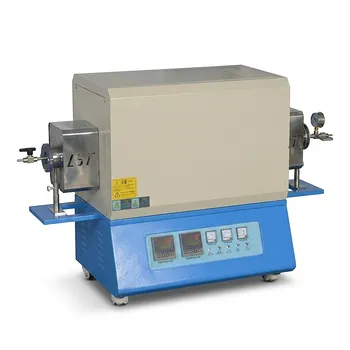
The transformation of CoNiP nanoneedles into hollow CoNiPS nanotubes is achieved by exploiting differential atomic diffusion rates during a controlled sulfurization process. In a tube furnace maintained at a constant 400 °C, sulfur vapor reacts with the metal surface, triggering the Kirkendall effect. This process causes metal atoms to migrate outward faster than sulfur atoms move inward, leaving behind a hollow core and creating a highly porous, high-surface-area structure.
The Kirkendall effect leverages non-equilibrium diffusion within a stable thermal environment to convert solid nanostructures into hollow ones. By precisely controlling the temperature in a tube furnace, researchers can engineer high-surface-area CoNiPS nanotubes by inducing a controlled imbalance in atomic migration.
The Role of the Tube Furnace in Thermal Treatment
Maintaining a Stable Thermal Field
The tube furnace acts as a critical reaction environment by providing a constant 400 °C temperature profile. This thermal stability is essential because the rate of atomic diffusion is highly sensitive to temperature fluctuations.
Facilitating Surface Reactions
As the temperature stabilizes, sulfur sources within the furnace vaporize and diffuse onto the surface of the CoNiP nanoneedles. This creates the chemical gradient necessary for the subsequent phase transformation from a phosphate-based structure to a sulfur-doped CoNiPS composition.
Mechanics of the Kirkendall Effect
Inducing Non-Equilibrium Diffusion
The core of this transformation is the Kirkendall effect, which occurs when two species diffuse across an interface at different speeds. In this specific system, the metal atoms (Co and Ni) move outward toward the sulfur-rich surface significantly faster than the sulfur atoms move into the center.
The Formation of Voids and Hollowing
As the metal atoms vacate the interior of the nanoneedle to react at the surface, they leave behind lattice vacancies. Over time, these vacancies coalesce to form a central void, effectively hollowing out the solid nanoneedle to create a nanotube structure.
Structural Evolution to CoNiPS Nanotubes
Developing Porous Architectures
The resulting CoNiPS nanotubes are not just hollow; they are characterized by porous structures. This porosity is a byproduct of the rapid atomic migration and the internal reorganization of the material during the sulfurization process.
Maximizing Specific Surface Area
The transition from a solid needle to a hollow tube significantly increases the specific surface area of the material. This structural evolution is highly desirable for applications like catalysis, where increased surface exposure directly improves performance.
Understanding the Trade-offs and Challenges
Precision in Temperature Control
While 400 °C is the target, any deviation can disrupt the diffusion balance. If the temperature is too low, the Kirkendall effect may not initiate; if it is too high, the nanostructure may melt or lose its intended morphology.
Balancing Porosity and Mechanical Integrity
Increasing the hollowing effect improves surface area but can lead to structural fragility. Achieving the ideal CoNiPS nanotube requires a delicate balance between creating a hollow interior and maintaining a shell thick enough to remain stable during use.
How to Apply This to Your Project
To successfully utilize the Kirkendall effect in a tube furnace for nanostructure synthesis, consider your primary objective:
- If your primary focus is Maximum Surface Area: Ensure a prolonged soak time at 400 °C to allow for complete vacancy coalescence and the development of a highly porous shell.
- If your primary focus is Structural Longevity: Limit the sulfur concentration or reaction time to prevent the shell from becoming too thin or overly brittle during the hollowing process.
- If your primary focus is Material Uniformity: Use a high-quality tube furnace with a long heating zone to ensure every nanoneedle experiences the exact same thermal environment.
By mastering the kinetics of non-equilibrium diffusion, you can transform simple solid precursors into complex, high-performance hollow nanostructures.
Summary Table:
| Process Component | Role in Synthesis | Impact on Nanostructure |
|---|---|---|
| Tube Furnace | Provides stable 400 °C environment | Ensures uniform atomic diffusion rates |
| Sulfurization | Introduces sulfur vapor | Creates the chemical gradient for phase change |
| Kirkendall Effect | Induces non-equilibrium diffusion | Metal atoms migrate outward faster than sulfur moves in |
| Vacancy Coalescence | Hollowing mechanism | Merges lattice gaps into a central hollow core |
| Final Structure | CoNiPS Nanotube | High specific surface area and porous architecture |
Elevate Your Material Research with THERMUNITS Precision
Achieving the delicate balance required for the Kirkendall effect demands uncompromising thermal stability. THERMUNITS is a leading manufacturer of high-temperature laboratory equipment for material science and industrial R&D. We provide the precision tools necessary to transform solid precursors into high-performance hollow nanostructures.
Our comprehensive thermal processing solutions include:
- Advanced Furnaces: Tube, Muffle, Vacuum, Atmosphere, Rotary, and Hot Press Furnaces.
- Specialized Systems: CVD/PECVD systems, Dental Furnaces, and Vacuum Induction Melting (VIM) furnaces.
- Components: Electric rotary kilns, Thermal Elements, and custom laboratory heat treatment equipment.
Whether you are engineering CoNiPS nanotubes or developing next-generation catalysts, our equipment ensures the exact temperature control your project demands.
Ready to optimize your thermal treatment? Contact us today to discuss your laboratory requirements!
References
- Siyang Xing, Jie Ma. Reactive P and S co-doped porous hollow nanotube arrays for high performance chloride ion storage. DOI: 10.1038/s41467-024-49319-5
Mentioned Products
- Automated 1200 C Tube Furnace for AI Material Research with 6 Inch OD and Sliding Flange
- 1000C Mini Tube Furnace with 20mm Quartz Tube and Vacuum Flanges for Material Science Research and Controlled Atmosphere Small Sample Processing
- Compact High Temperature 1600C Tube Furnace with 50mm Alumina Tube and Vacuum Flanges for Material Sintering
- High Temperature Vertical Split Tube Furnace with PID Temperature Controller for 1 and 2 Inch Processing Tubes
- High Temperature 1700C Vertical Tube Furnace for Powder Spherification and Material Sintering
People Also Ask
- Why is it necessary to heat a tube furnace to 900 °C for high-temperature burn-out? Ensure Data Precision & Longevity
- What are the technical advantages of using a tube-in-tube design within a tube furnace? Enhance Thin-Film Uniformity
- What are the advantages of Mesh Bias in Mist CVD? Improve Thin Film Quality & Uniformity.
- What is the primary role of a Tubular Furnace in the preparation of biochar? Precise Thermal Control for Biochar R&D
- What role does a Tubular Furnace play during the pyrolysis stage of BNBT-xBMN thin film preparation? Essential Insights

Tech Team · ThermUnits
Last updated on Jun 03, 2026
Related Products
Automated 1200 C Tube Furnace for AI Material Research with 6 Inch OD and Sliding Flange
1000C Mini Tube Furnace with 20mm Quartz Tube and Vacuum Flanges for Material Science Research and Controlled Atmosphere Small Sample Processing

Compact High Temperature 1600C Tube Furnace with 50mm Alumina Tube and Vacuum Flanges for Material Sintering
High Temperature Vertical Split Tube Furnace with PID Temperature Controller for 1 and 2 Inch Processing Tubes

High Temperature 1700C Vertical Tube Furnace for Powder Spherification and Material Sintering

Vertical 1700C Vacuum and Atmosphere Tube Furnace with 80mm Alumina Tube

High Temperature Automated 5 Inch Tube Furnace for Autonomous Material Research and Advanced Laboratory R&D
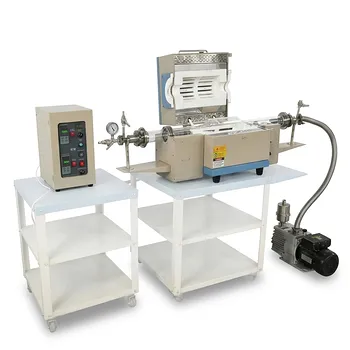
Two Zone Rotary Tube Furnace for Powder CVD Coating and Core Shell Material Synthesis 1100C
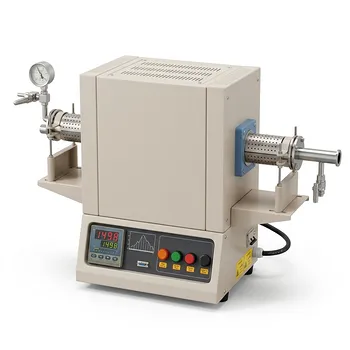
1500C High Temperature Compact Tube Furnace 2 Inch OD with Vacuum Flanges and Complete Accessories
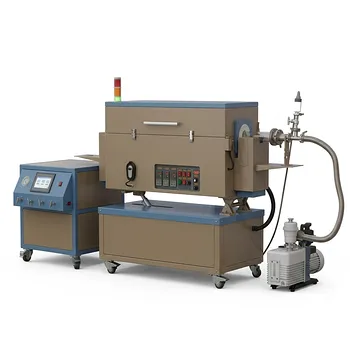
5 Inch Three Zone Rotary Tube Furnace with Integrated Gas Delivery System and 1200C Capability for Advanced Material CVD Processing
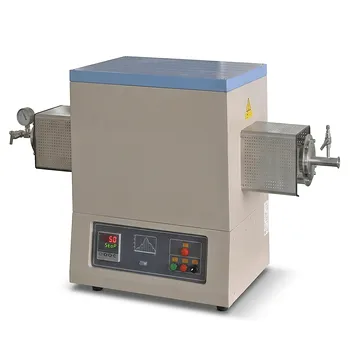
High Temperature 1700C Tube Furnace with 4 Inch OD Alumina Tube and Vacuum Sealing Flanges
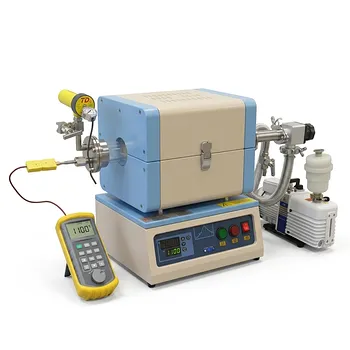
Compact Split Tube Furnace with Insertable Temperature Calibrator and Integrated Vacuum System
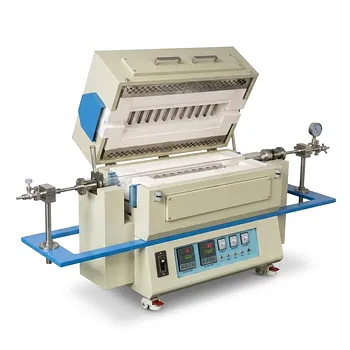
High Temperature Dual Zone Rotating Tube Furnace 1500C Silicon Carbide Heating for Advanced Material Synthesis

High Vacuum Compact Tube Furnace 1200C with Integrated Turbo Pump System and 8 Inch Heating Zone
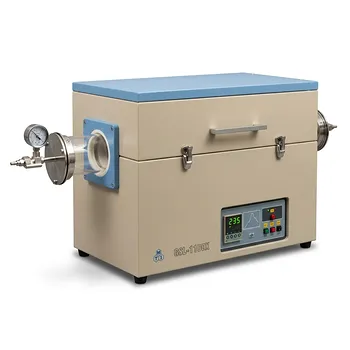
Single Zone Tube Furnace 5 Inch Quartz Tube 36 Inch Heating Zone Vacuum Flanges

1800C High Temperature Compact Vacuum Tube Furnace with 60mm OD Alumina Tube and Kanthal MoSi2 Heating Elements
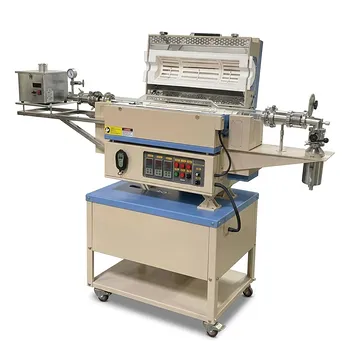
5 Inch Rotary Tube Furnace with Automatic Feeding and Receiving System 1200C Three Zone CVD Powder Processing
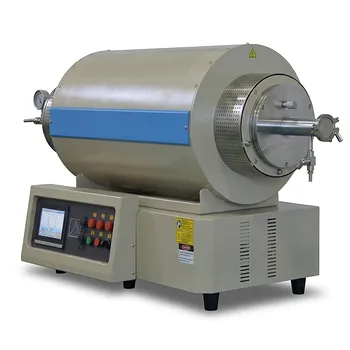
1200C Max Three Zone Tube Furnace 6 Inch OD Max with Tube and Flange
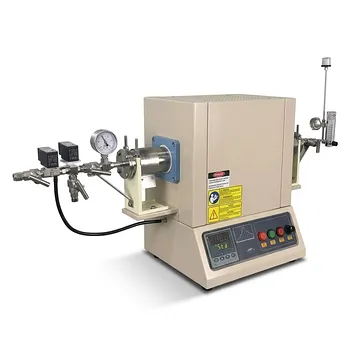
1500C Compact Hydrogen Gas Tube Furnace with 2 Inch Alumina Tube and Hydrogen Detector