Why is a laboratory-grade tube furnace required for CuCo2O4@rGO annealing? Maximize Crystallinity & Stability
Updated 3 months ago
The requirement for a laboratory-grade tube furnace in the synthesis of $CuCo_2O_4@rGO$ is driven by the need for precise thermal excitation to reorganize the material's atomic structure. By maintaining a constant, high-temperature environment (typically 500°C), the furnace promotes the ordering of the crystal lattice, which significantly increases the crystallinity of the metal oxides. This transformation is vital for ensuring the material achieves the high electrical conductivity and structural stability necessary for effective electrochemical performance.
The tube furnace serves as the definitive tool for structural refinement, shifting the $CuCo_2O_4@rGO$ from a disordered precursor to a highly crystalline, stable composite. Without this controlled annealing, the material lacks the lattice integrity and interfacial strength required to survive the stresses of electrochemical cycling.
Enhancing Material Properties through Crystallinity
Lattice Ordering and Electrical Conductivity
Initial synthesis often leaves metal oxides in a state of low crystallinity or amorphous disorder. The tube furnace provides the thermal energy required for solid-state reactions and recrystallization, allowing atoms to migrate into their ideal positions within the lattice.
As the crystal lattice becomes more ordered, the internal resistance of the material drops significantly. This increase in electrical conductivity is essential for $CuCo_2O_4@rGO$ to function as an efficient active material in energy storage or catalytic applications.
Structural Stability for Electrochemical Cycling
Materials used in electrochemical cells undergo repeated stress during charging and discharging cycles. A high-temperature annealing step ensures that the $CuCo_2O_4$ nanoparticles are robustly bonded and structurally sound.
This enhanced stability prevents the material from degrading or pulverizing during operation. By using a tube furnace to achieve a high degree of crystallinity, researchers ensure the long-term durability of the active material.
The Role of the Controlled Environment
Atmospheric Precision and Phase Purity
A laboratory-grade tube furnace allows for the use of inert atmospheres, such as Argon, which are critical for preventing unwanted oxidation or side reactions. This controlled environment ensures that the cobalt and copper ions maintain their intended valence state distributions.
Precise temperature control, often including specific heating rates (e.g., 2°C/min), prevents the formation of secondary, undesirable phases. This ensures the final product is a pure phase composite with predictable chemical properties.
Optimizing Interfacial Bonding with rGO
The interaction between the $CuCo_2O_4$ nanoparticles and the reduced Graphene Oxide (rGO) carrier is strengthened during the annealing process. Thermal treatment in the furnace facilitates stronger interfacial bonding, which stabilizes the chemical structure of the entire composite.
Furthermore, the furnace treatment helps optimize the pore structure of the material. This ensures a high specific surface area, which is necessary for maximizing the contact between the material and the electrolyte.
Understanding the Trade-offs and Pitfalls
The Risk of Over-Annealing
While high temperatures promote crystallinity, excessive heat or overly long durations can lead to particle sintering. This causes nanoparticles to clump together, reducing the active surface area and diminishing the material's performance.
Atmosphere Sensitivity
Failing to maintain a vacuum or an inert atmosphere can lead to the combustion of the rGO component or the formation of incorrect oxide phases. The sealing integrity of a tube furnace is therefore just as important as its heating capabilities.
Temperature Gradient Inconsistencies
Low-grade heating equipment may suffer from temperature fluctuations or "hot spots." Inconsistent thermal fields result in non-uniform crystallinity, where parts of the sample are well-ordered while others remain amorphous or over-processed.
How to Apply This to Your Project
When utilizing a tube furnace for $CuCo_2O_4@rGO$ or similar composites, your specific synthesis goals should dictate your furnace parameters.
- If your primary focus is Maximum Conductivity: Prioritize a constant temperature soak (e.g., 500°C) to ensure full lattice ordering and minimize internal resistance.
- If your primary focus is High Surface Area: Use shorter annealing durations or lower heating rates to prevent nanoparticle agglomeration and maintain a porous structure.
- If your primary focus is Phase Purity: Ensure the tube furnace is perfectly sealed and purged with inert gas to regulate valence states and prevent contamination.
By masterfully controlling the thermal environment of the tube furnace, you transform a raw precursor into a high-performance, structurally stable electrochemical material.
Summary Table:
| Key Requirement | Impact on CuCo2O4@rGO | Scientific Benefit |
|---|---|---|
| Lattice Ordering | Solid-state recrystallization | Drastic drop in internal resistance |
| Atmosphere Control | Prevents rGO combustion | Ensures phase purity and valence stability |
| Thermal Uniformity | Stronger interfacial bonding | Prevents sample degradation during cycling |
| Precision Ramp Rates | Controlled nanoparticle growth | Prevents sintering and loss of surface area |
Elevate Your Advanced Material Synthesis with THERMUNITS
Achieving the precise lattice ordering and phase purity required for materials like $CuCo_2O_4@rGO$ demands more than just heat—it requires the absolute atmospheric and thermal control offered by THERMUNITS. As a leading manufacturer of high-temperature laboratory equipment, we specialize in providing material science researchers and industrial R&D teams with the precision tools needed for breakthrough results.
How THERMUNITS Empowers Your Research:
- Comprehensive Furnace Range: From precision Tube and Vacuum furnaces to specialized CVD/PECVD systems and Vacuum Induction Melting (VIM) units, we cover all thermal processing needs.
- Precision & Reliability: Our equipment ensures uniform thermal fields and airtight sealing, critical for preventing oxidation and ensuring structural integrity in electrochemical materials.
- Customized Solutions: Whether you are working on energy storage, dental ceramics, or industrial heat treatment, we offer tailored solutions including Rotary, Muffle, and Hot Press furnaces.
Don’t let inconsistent thermal environments compromise your research data. Contact THERMUNITS today to find the perfect high-performance furnace for your laboratory and ensure your materials achieve their maximum potential!
References
- Xue Fang, Jiali Yu. Introducing CuCo2S4 Nanoparticles on Reduced Graphene Oxide for High-Performance Supercapacitor. DOI: 10.3390/nano14020182
Mentioned Products
- 1200C High Throughput Multi Channel Tube Furnace with 50mm Quartz Tubes for Annealing and Material Phase Diagram Research
- High Throughput 1200C Four Channel Tube Furnace with 3 Inch Quartz Tubes for Multi Zone Annealing and Material Research
- 1200C High Temperature 5 Inch Sliding Tube Furnace for Rapid Thermal Processing RTP and Wafer Annealing
- High Temperature 1500C Four Channel Tube Furnace with Alumina Tubes for High Throughput Annealing and Phase Diagram Research
- High Temperature 1700C 4 Channel Tube Furnace 1 Inch Alumina Tube for Hi-Throughput Annealing
People Also Ask
- Why is high-purity alumina selected for sample trays? Key to High-Throughput Sintering Success
- How does a high-throughput tube furnace achieve precise sulfurization? Expert Control for CoS2–Co(OH)F Nanostructures
- How does the precise temperature control of a tube furnace influence the formation of V2AlC MAX phase? Expert Insights.
- What is the function of argon gas flow within a tube furnace during the selenization of MOFs? Essential Process Guide
- What is the effect of introducing camphor as a carbon source in a tube furnace CVD? Boost CNT Density and Growth

Tech Team · ThermUnits
Last updated on Jun 03, 2026
Related Products
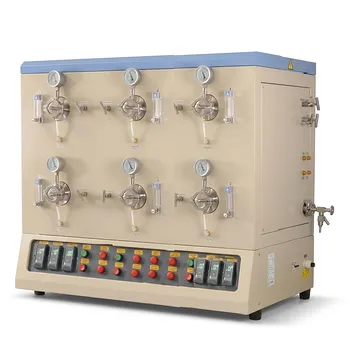
1200C High Throughput Multi Channel Tube Furnace with 50mm Quartz Tubes for Annealing and Material Phase Diagram Research
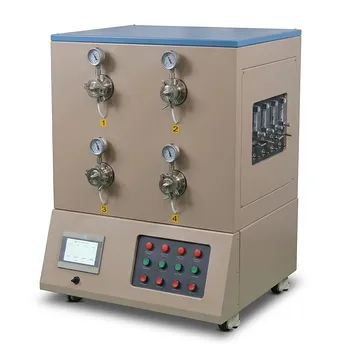
High Throughput 1200C Four Channel Tube Furnace with 3 Inch Quartz Tubes for Multi Zone Annealing and Material Research
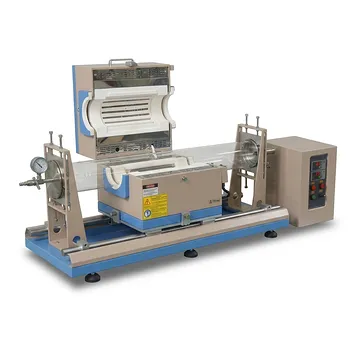
1200C High Temperature 5 Inch Sliding Tube Furnace for Rapid Thermal Processing RTP and Wafer Annealing
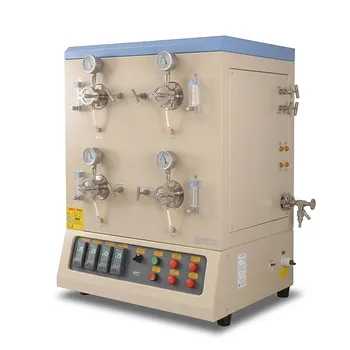
High Temperature 1500C Four Channel Tube Furnace with Alumina Tubes for High Throughput Annealing and Phase Diagram Research
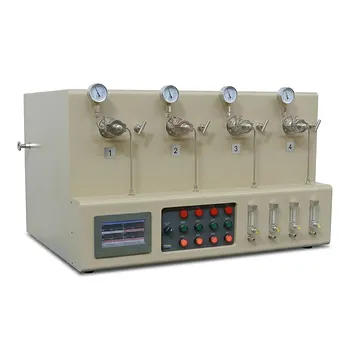
High Temperature 1700C 4 Channel Tube Furnace 1 Inch Alumina Tube for Hi-Throughput Annealing
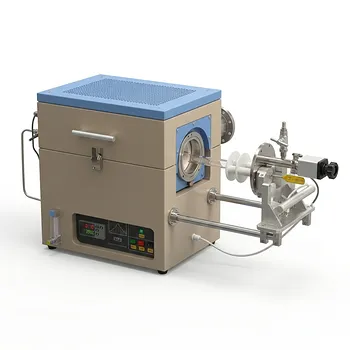
Compact Atmosphere Controlled Rapid Thermal Processing RTP Furnace with 4 Inch ID Quartz Tube 1100C
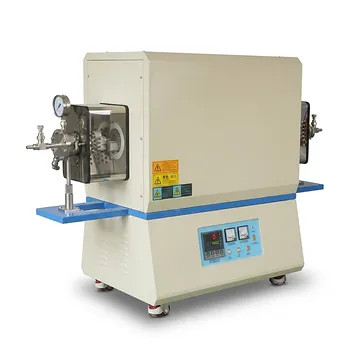
High Temperature 1800C Atmosphere Tube Furnace for CVD Research and Vacuum Sintering Precision Heat Treatment
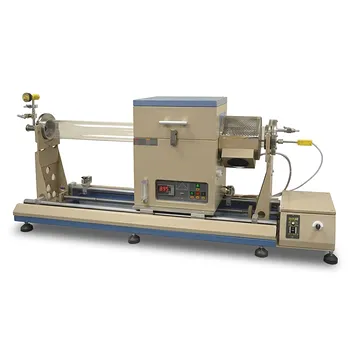
900 ºC Max Sliding RTP Tube Furnace with Rapid IR Heating and 4 Inch OD Quartz Tube

Compact Vertical Split Quartz Tube Furnace with Stainless Steel Vacuum Flanges for Rapid Thermal Quenching and Controlled Atmosphere Material Processing
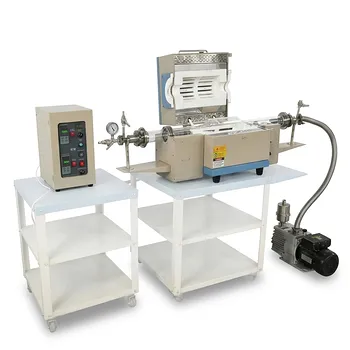
Two Zone Rotary Tube Furnace for Powder CVD Coating and Core Shell Material Synthesis 1100C
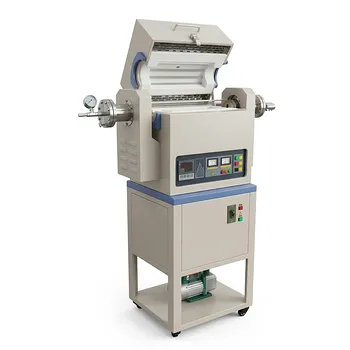
High Temperature Rotary Tilt Tubular Furnaces for Advanced Powder Sintering and Material Processing

High Temperature 1700C Vertical Tube Furnace for Powder Spherification and Material Sintering
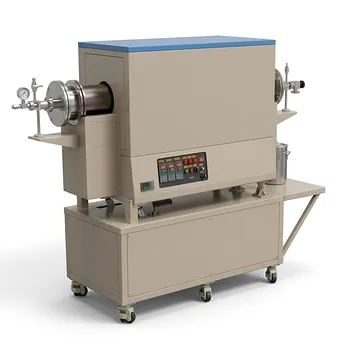
900°C Max Rotary Tube Furnace with 8 Inch 310S Alloy Tube and Optional Multi Zone Heating for Industrial Material Calcination

1800C High Temperature Compact Vacuum Tube Furnace with 60mm OD Alumina Tube and Kanthal MoSi2 Heating Elements
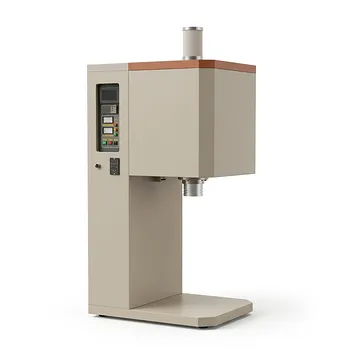
Vertical Openable Tube Furnace 0-1700c High Temperature Laboratory System for CVD and Vacuum Heat Treatment
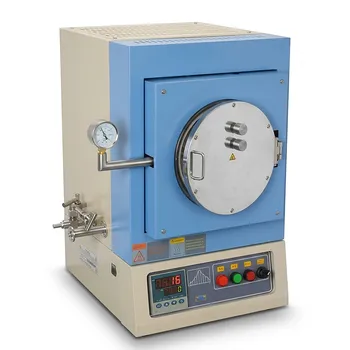
1100°C High Temperature Quartz Chamber Furnace 8 Inch OD with 7.6 Liter Capacity and Vacuum Atmosphere Capability
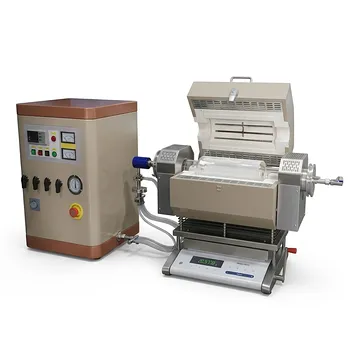
Mini Rotary Tubular Furnaces for Precision Powder Heat Treatment and Thermogravimetric Analysis
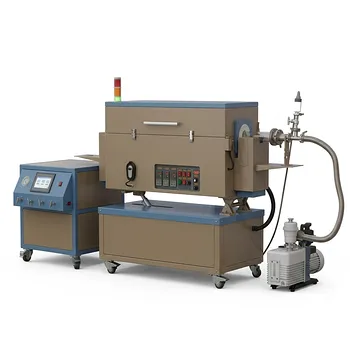
5 Inch Three Zone Rotary Tube Furnace with Integrated Gas Delivery System and 1200C Capability for Advanced Material CVD Processing
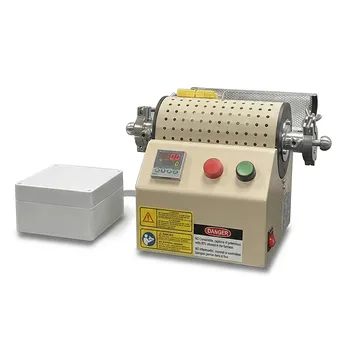
1000C Mini Tube Furnace with 20mm Quartz Tube and Vacuum Flanges for Material Science Research and Controlled Atmosphere Small Sample Processing
