What is the function of argon gas flow within a tube furnace during the selenization of MOFs? Essential Process Guide
Updated 3 months ago
The primary function of argon gas flow during MOF selenization is to provide a rigorous inert atmosphere that prevents the oxidation of metal centers and the combustion of organic ligands. At high temperatures, typically around 600°C, the continuous flow of argon displaces oxygen and moisture within the furnace chamber. This environment ensures that organic components are converted into a protective amorphous carbon network rather than being destroyed by oxidation.
The argon flow acts as a chemical shield that enables controlled thermal decomposition. By excluding oxygen, it facilitates the transformation of metal-organic frameworks into high-performance carbon-coated metal selenides while maintaining structural and chemical integrity.
Maintaining Chemical Integrity through Oxygen Displacement
Prevention of Metal Center Oxidation
During the heating process, metal centers within the MOF are highly susceptible to reacting with ambient oxygen. The presence of argon ensures that these metals react exclusively with the selenium source to form metal selenides rather than unwanted metal oxides.
Protection of Organic Ligands
In an oxygen-rich environment, organic ligands like gallic acid would simply burn away or undergo oxidative degradation. The inert argon atmosphere allows these ligands to undergo thermal decomposition, which preserves the carbon content and integrates it into the final material structure.
Elimination of Atmospheric Moisture
Argon flow effectively purges moisture from the tube furnace, which is critical for moisture-sensitive MOF precursors. This prevents unwanted chemical side reactions or the premature degradation of aliphatic ligands before they reach their required reaction temperature.
Facilitating the Carbonization Process
Formation of the Amorphous Carbon Network
The absence of oxygen forces the organic components of the MOF to carbonize, creating a stable carbon-coated architecture. This network is essential for improving the electrical conductivity and mechanical stability of the resulting metal selenide material.
Control of Thermal Decomposition
Argon provides a stable environment for the precise breakdown of the MOF structure. This controlled decomposition is vital for ensuring that the chemical composition of the final product remains consistent with the original crystalline framework.
Secondary Kinetic Functions of Argon Flow
Carrier Gas for Selenization Reagents
Beyond protection, the continuous argon stream often acts as a carrier gas to transport selenium vapors or other gaseous reagents to the reaction zone. This ensures a uniform distribution of reactants across the MOF precursor, leading to a more homogeneous final product.
Removal of Reaction Byproducts
As the MOF decomposes and reacts with selenium, various gaseous byproducts are released. The argon flow facilitates the continuous removal of these byproducts from the furnace chamber, preventing them from interfering with the forward reaction or contaminating the sample.
Understanding the Trade-offs and Constraints
Purity and Cost Considerations
The effectiveness of the process is highly dependent on the purity of the argon. While industrial-grade argon may suffice for some applications, high-purity argon is often required to prevent trace oxygen from causing internal diffusion or surface oxidation during long-duration treatments.
Flow Rate Management
Choosing the correct flow rate is a critical balancing act for the operator. If the flow is too slow, oxygen may back-diffuse into the chamber; if it is too fast, it may cause excessive cooling of the reaction zone or carry away reactants before they have time to react.
Temperature-Dependent Stability
While argon is inert, the structural stability of the resulting glass or crystalline phase is influenced by how the atmosphere is managed during quenching or cooling. Improper atmosphere control during the transition from high temperatures can lead to unwanted crystallization or phase changes in the final material.
How to Apply This to Your Project
Recommendations for Process Optimization
- If your primary focus is material purity: Utilize high-purity argon (99.999%) and implement a pre-heating purge cycle to ensure all residual oxygen is displaced before the furnace reaches 200°C.
- If your primary focus is structural uniformity: Maintain a constant, metered flow rate throughout the entire heating and cooling cycle to ensure consistent reagent delivery and byproduct removal.
- If your primary focus is carbon shell thickness: Carefully monitor the argon flow during the ligand decomposition phase to ensure that no oxidative "burn-off" of the organic network occurs.
By mastering the management of the argon atmosphere, you can precisely control the chemical transition from a molecular framework to a functionalized metal selenide.
Summary Table:
| Function | Primary Benefit | Impact on Final Material |
|---|---|---|
| Oxygen Displacement | Prevents oxidation and combustion | Ensures chemical purity and integrity |
| Carbonization Support | Enables ligand thermal decomposition | Creates a protective carbon-coated network |
| Carrier Gas | Transports selenization reagents | Achieves uniform reaction and composition |
| Byproduct Removal | Expels gaseous waste products | Prevents sample contamination |
| Moisture Elimination | Purges atmospheric humidity | Avoids unwanted chemical side reactions |
Maximize Your Material Synthesis with THERMUNITS
Precision in gas flow and atmosphere control is vital for successful MOF selenization. THERMUNITS is a leading manufacturer of high-temperature laboratory equipment for material science and industrial R&D. We offer a comprehensive range of thermal processing solutions, including Tube, Vacuum, Atmosphere, Muffle, and Rotary furnaces, as well as CVD/PECVD systems and vacuum induction melting furnaces (VIM).
Whether you are developing carbon-coated metal selenides or advanced semiconductors, our equipment provides the stability and control your research demands.
Contact THERMUNITS today to find the perfect heat treatment solution for your lab!
References
- Meral Aydın, Rezan Demir‐Cakan. Transition Metal (Co, Ni, Fe) Selenides by Selenization of Gallic Acid based MOFs used as Na‐Ion Battery Anodes. DOI: 10.1002/celc.202400385
Mentioned Products
- High Temperature Tube Furnace 1500C with Sliding Flanges and 50mm OD for Rapid Thermal Processing Fast Heating and Cooling
- Vertical 1700C Vacuum and Atmosphere Tube Furnace with 80mm Alumina Tube
- 1100C Tube Furnace with Vacuum Flange and Programmable Temperature Controller for Material Science and Industrial Heat Treatment
- Compact High Temperature 1600C Tube Furnace with 50mm Alumina Tube and Vacuum Flanges for Material Sintering
- 900°C Max Rotary Tube Furnace with 8 Inch 310S Alloy Tube and Optional Multi Zone Heating for Industrial Material Calcination
People Also Ask
- How are high-temperature tube furnaces utilized to repair etching damage? Precision Lattice Restoration Solutions
- What role does a high-temperature tube furnace play in CVD synthesis of silicon nanowires? Master VLS Growth Precision.
- What role does a high-temperature tube furnace play in the sulfidation heat treatment of CoS@C/MXene nanocomposites? Guide
- How does precision tube furnace control influence CoFe nanoparticle formation? Master Your Bimetallic Synthesis.
- What core conditions does a high-temperature tube furnace provide for rGO aerogels? Mastering Precision Synthesis.

Tech Team · ThermUnits
Last updated on Jun 02, 2026
Related Products

High Temperature Tube Furnace 1500C with Sliding Flanges and 50mm OD for Rapid Thermal Processing Fast Heating and Cooling

Vertical 1700C Vacuum and Atmosphere Tube Furnace with 80mm Alumina Tube

1100C Tube Furnace with Vacuum Flange and Programmable Temperature Controller for Material Science and Industrial Heat Treatment

Compact High Temperature 1600C Tube Furnace with 50mm Alumina Tube and Vacuum Flanges for Material Sintering
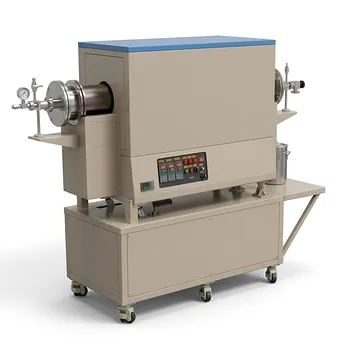
900°C Max Rotary Tube Furnace with 8 Inch 310S Alloy Tube and Optional Multi Zone Heating for Industrial Material Calcination

1700C Hydrogen Gas Tube Furnace with 60mm Alumina Process Tube and Integrated Hydrogen Safety Detector

High Temperature 1700C Tube Furnace with High Vacuum Turbomolecular Pump System and Multi Channel Mass Flow Controller Gas Mixer

5 Inch Three Zone Rotary Tube Furnace with Integrated Gas Delivery System and 1200C Capability for Advanced Material CVD Processing

1200C High Throughput Multi Channel Tube Furnace with 50mm Quartz Tubes for Annealing and Material Phase Diagram Research

Three Zone Tube Furnace with 11 Inch or 15 Inch Quartz Tube and Hinged Flanges for Vacuum Atmosphere Heat Treatment
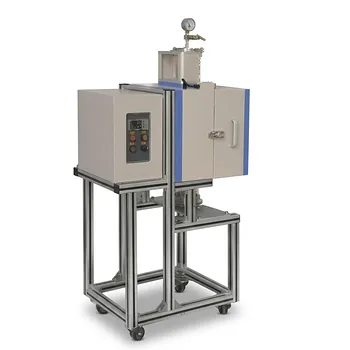
1200°C 5 Inch Vertical Quartz Tube Furnace with Stainless Steel Vacuum Flanges
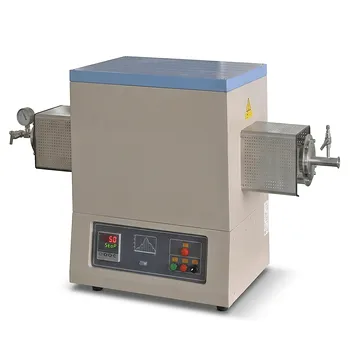
High Temperature 1700C Tube Furnace with 4 Inch OD Alumina Tube and Vacuum Sealing Flanges

High Temperature 1700C Six Zone Split Tube Furnace with Alumina Tube and Water Cooled Flanges

High Temperature 1700C Benchtop Tube Furnace with 5 Inch Heating Zone High Purity Alumina Tube and Vacuum Sealing Flanges

Compact Vertical Split Quartz Tube Furnace with Stainless Steel Vacuum Flanges for Rapid Thermal Quenching and Controlled Atmosphere Material Processing

1800C High Temperature Compact Vacuum Tube Furnace with 60mm OD Alumina Tube and Kanthal MoSi2 Heating Elements
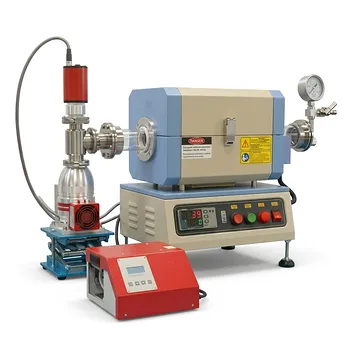
High Vacuum Compact Tube Furnace 1200C with Integrated Turbo Pump System and 8 Inch Heating Zone
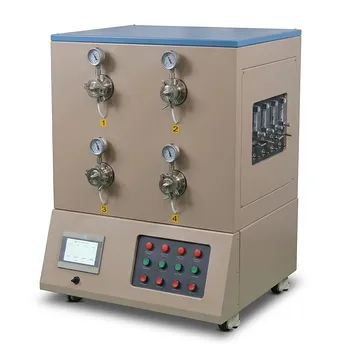
High Throughput 1200C Four Channel Tube Furnace with 3 Inch Quartz Tubes for Multi Zone Annealing and Material Research

High Temperature Automated 5 Inch Tube Furnace for Autonomous Material Research and Advanced Laboratory R&D
