How does the precise temperature control of a tube furnace influence the formation of V2AlC MAX phase? Expert Insights.
Updated 3 months ago
Precise temperature control is the governing factor that dictates the solid-state reaction pathway required to synthesize the $V_2AlC$ MAX phase. At the critical threshold of 1500°C, accurate thermal management ensures that reactants remain at specific energy levels long enough to complete the transformation from intermediate sub-carbides into a high-quality ternary layered structure.
The success of $V_2AlC$ synthesis depends on maintaining a stable 1500°C environment to facilitate complete atomic diffusion. Without precise control, the material fails to transition fully from sub-carbides, resulting in residual impurities and the loss of its characteristic fine-layered morphology.
Defining the Solid-State Reaction Pathway
Reaching the 1500°C Optimal Threshold
Research identifies 1500°C as the ideal temperature for the formation of the $V_2AlC$ MAX phase. The tube furnace must provide this extreme heat consistently to trigger the necessary thermochemical reactions between vanadium, aluminum, and carbon.
Navigating Intermediate Sub-Carbide Phases
The formation of MAX phases is not instantaneous; it involves a transition through intermediate sub-carbides. Precise temperature control ensures the reaction dwells at specific stages long enough to allow these sub-carbides to fully transform into the final ternary layered structure.
Ensuring Full Atomic Diffusion
High-precision thermal management facilitates the diffusion kinetics required for atoms to arrange themselves into the hexagonal lattice structure. If the temperature fluctuates, the atoms may lack the kinetic energy to reach their intended positions, leading to an incomplete or "frozen" intermediate state.
Maintaining Structural Integrity and Morphology
Homogeneity of the Thermal Field
A stable thermal field distribution within the furnace tube is essential for uniform crystal growth. Unstable fields create local temperature gradients where some areas are too hot and others too cold, causing inconsistent phase development across the sample.
Preserving the Fine-Layered Morphology
The "MAX" designation refers to a specific ternary layered architecture that gives the material its unique properties. Precise control prevents "thermal shocks" or localized overheating that could disrupt this delicate morphology, ensuring the final product exhibits the typical fine-layered appearance.
Atmospheric Influence on Crystal Quality
While temperature is the primary driver, the furnace's ability to maintain a stable atmosphere flow rate of high-purity argon is a critical secondary factor. This inert environment prevents the oxidation of metal raw materials at 1500°C, which would otherwise introduce oxides that interfere with the layered structure.
Understanding the Trade-offs and Pitfalls
The Risk of Localized Overheating
If the furnace control system allows temperatures to exceed the 1500°C target significantly, it can lead to the evaporation of aluminum or the formation of unwanted secondary phases. Excessive heat can also cause grain coarsening, which destroys the "fine" aspect of the layered morphology.
Consequences of Thermal Under-performance
Temperatures even slightly below the 1500°C mark often result in residual intermediate impurities. These sub-carbides act as defects within the crystal lattice, compromising the mechanical and electrical performance of the $V_2AlC$ phase.
Impact of Cooling Rates
The precision of the temperature curve during the cooling phase is just as vital as the heating phase. Rapid, uncontrolled cooling can induce internal stresses that lead to micro-cracking within the layered MAX phase structure.
How to Apply This to Your Project
Recommendations for Successful Synthesis
To achieve a high-purity $V_2AlC$ MAX phase with a pristine layered structure, consider the following technical priorities:
- If your primary focus is Phase Purity: Utilize a programmable controller to maintain a strict 1500°C soak time, ensuring all sub-carbide intermediates are fully converted.
- If your primary focus is Morphological Integrity: Ensure the tube furnace has a large "constant temperature zone" to provide a uniform thermal field that prevents structural distortions.
- If your primary focus is Preventing Oxidation: Verify the integrity of the furnace seals and use a continuous flow of high-purity argon to exclude oxygen during the high-temperature dwell.
Mastering the precision of the thermal environment is the only way to reliably unlock the complex, layered potential of the $V_2AlC$ MAX phase.
Summary Table:
| Key Factor | Impact at 1500°C Target | Role of Precision Control |
|---|---|---|
| Phase Transformation | Converts sub-carbides to ternary MAX phase | Ensures sufficient dwell time for complete reaction |
| Atomic Diffusion | Arranges atoms into a hexagonal lattice | Provides stable kinetic energy for structural alignment |
| Morphology | Preserves the fine-layered architecture | Prevents thermal shocks and grain coarsening |
| Thermal Field | Enables uniform crystal growth | Eliminates local gradients to ensure phase consistency |
| Atmosphere | Prevents raw material oxidation | Maintains high-purity Argon flow at peak temperatures |
Unlock High-Purity MAX Phase Synthesis with THERMUNITS
Are you looking to achieve the perfect layered morphology in $V_2AlC$ or other advanced material systems? THERMUNITS is a leading manufacturer of high-temperature laboratory equipment specifically engineered for material science and industrial R&D. Our systems offer the high-precision thermal management and atmospheric stability required for complex solid-state reactions.
Our comprehensive range of thermal processing solutions includes:
- Tube Furnaces & CVD/PECVD Systems: Ideal for precision phase synthesis and thin-film deposition.
- Vacuum & Atmosphere Furnaces: Ensuring oxygen-free environments for sensitive materials.
- Advanced Equipment: Including Muffle, Rotary, Hot Press, Dental Furnaces, and Vacuum Induction Melting (VIM) systems.
Don't let temperature fluctuations compromise your research integrity. Contact our technical experts today to find the ideal furnace solution for your laboratory needs!
References
- Process Optimization for the Synthesis of V2AlC MAX Phase to Enhance Sustainable Production. DOI: 10.55373/mjchem.v26i3.161
Mentioned Products
- High Temperature Tube Furnace 1500C with Sliding Flanges and 50mm OD for Rapid Thermal Processing Fast Heating and Cooling
- Vertical 1700C Vacuum and Atmosphere Tube Furnace with 80mm Alumina Tube
- 1100C Tube Furnace with Vacuum Flange and Programmable Temperature Controller for Material Science and Industrial Heat Treatment
- Compact High Temperature 1600C Tube Furnace with 50mm Alumina Tube and Vacuum Flanges for Material Sintering
- 900°C Max Rotary Tube Furnace with 8 Inch 310S Alloy Tube and Optional Multi Zone Heating for Industrial Material Calcination
People Also Ask
- How are high-temperature tube furnaces utilized to repair etching damage? Precision Lattice Restoration Solutions
- What role does a high-temperature tube furnace play in CVD synthesis of silicon nanowires? Master VLS Growth Precision.
- What core conditions does a high-temperature tube furnace provide for rGO aerogels? Mastering Precision Synthesis.
- What role does a high-temperature tube furnace play in the sulfidation heat treatment of CoS@C/MXene nanocomposites? Guide
- How does precision tube furnace control influence CoFe nanoparticle formation? Master Your Bimetallic Synthesis.

Tech Team · ThermUnits
Last updated on Jun 02, 2026
Related Products

High Temperature Tube Furnace 1500C with Sliding Flanges and 50mm OD for Rapid Thermal Processing Fast Heating and Cooling

Vertical 1700C Vacuum and Atmosphere Tube Furnace with 80mm Alumina Tube
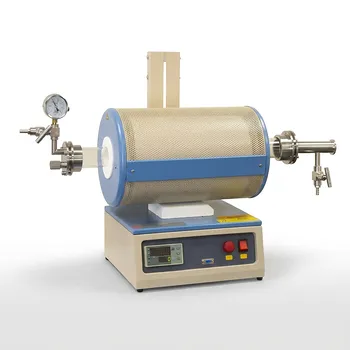
1100C Tube Furnace with Vacuum Flange and Programmable Temperature Controller for Material Science and Industrial Heat Treatment

Compact High Temperature 1600C Tube Furnace with 50mm Alumina Tube and Vacuum Flanges for Material Sintering
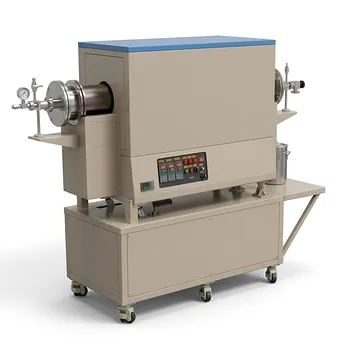
900°C Max Rotary Tube Furnace with 8 Inch 310S Alloy Tube and Optional Multi Zone Heating for Industrial Material Calcination
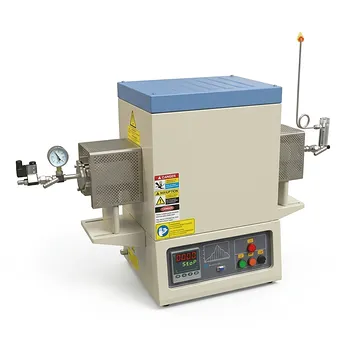
1700C Hydrogen Gas Tube Furnace with 60mm Alumina Process Tube and Integrated Hydrogen Safety Detector

High Temperature 1700C Tube Furnace with High Vacuum Turbomolecular Pump System and Multi Channel Mass Flow Controller Gas Mixer
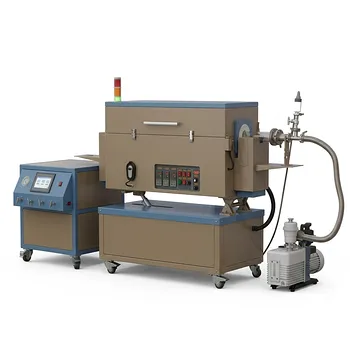
5 Inch Three Zone Rotary Tube Furnace with Integrated Gas Delivery System and 1200C Capability for Advanced Material CVD Processing
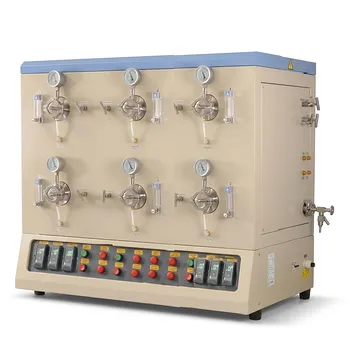
1200C High Throughput Multi Channel Tube Furnace with 50mm Quartz Tubes for Annealing and Material Phase Diagram Research
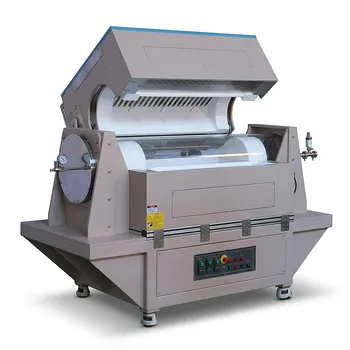
Three Zone Tube Furnace with 11 Inch or 15 Inch Quartz Tube and Hinged Flanges for Vacuum Atmosphere Heat Treatment
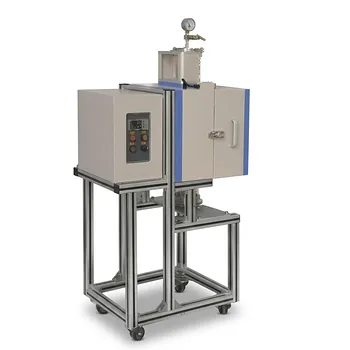
1200°C 5 Inch Vertical Quartz Tube Furnace with Stainless Steel Vacuum Flanges
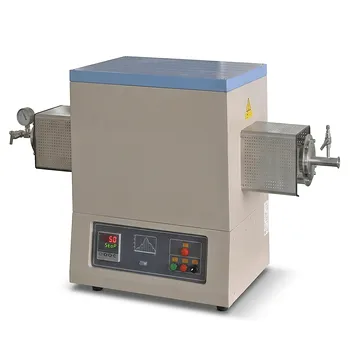
High Temperature 1700C Tube Furnace with 4 Inch OD Alumina Tube and Vacuum Sealing Flanges

1800C High Temperature Compact Vacuum Tube Furnace with 60mm OD Alumina Tube and Kanthal MoSi2 Heating Elements

High Temperature 1700C Benchtop Tube Furnace with 5 Inch Heating Zone High Purity Alumina Tube and Vacuum Sealing Flanges

High Temperature 1700C Six Zone Split Tube Furnace with Alumina Tube and Water Cooled Flanges

Compact Vertical Split Quartz Tube Furnace with Stainless Steel Vacuum Flanges for Rapid Thermal Quenching and Controlled Atmosphere Material Processing
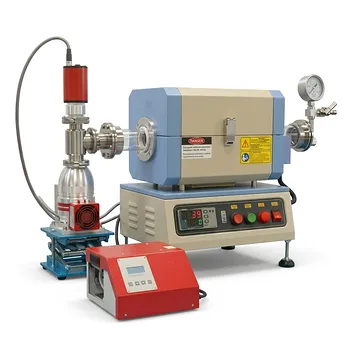
High Vacuum Compact Tube Furnace 1200C with Integrated Turbo Pump System and 8 Inch Heating Zone
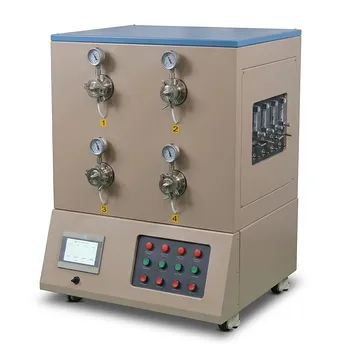
High Throughput 1200C Four Channel Tube Furnace with 3 Inch Quartz Tubes for Multi Zone Annealing and Material Research

High Temperature Automated 5 Inch Tube Furnace for Autonomous Material Research and Advanced Laboratory R&D